Haworthia Cymbiformis
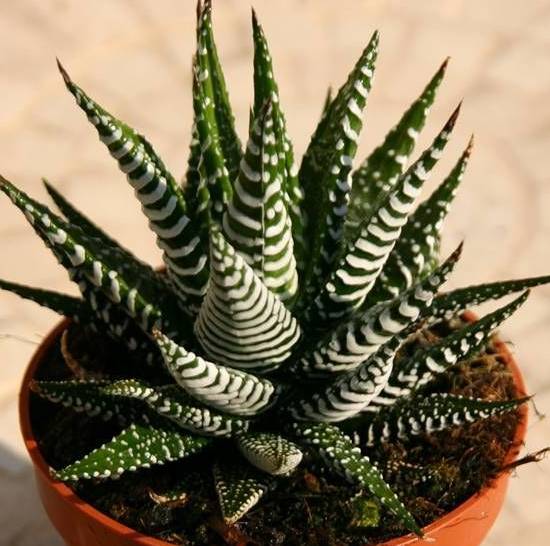
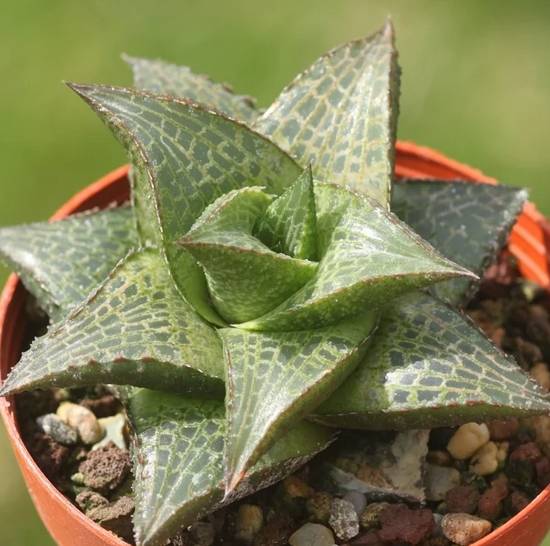
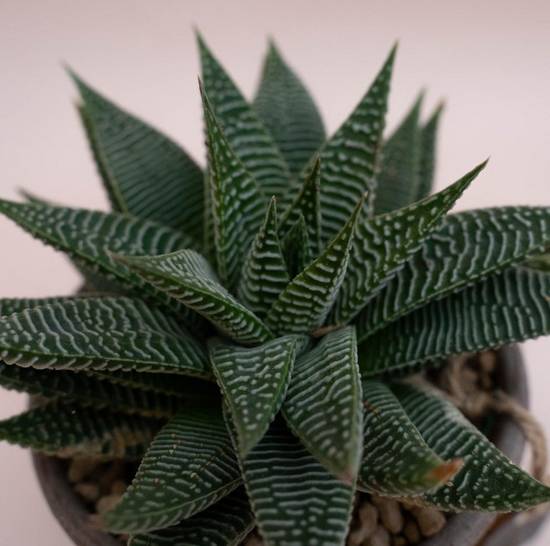
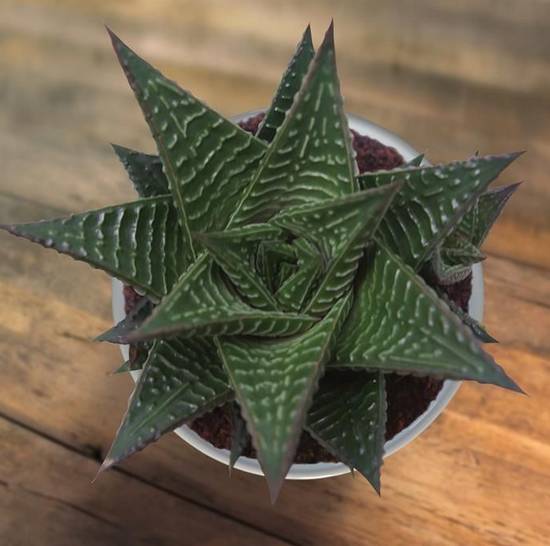
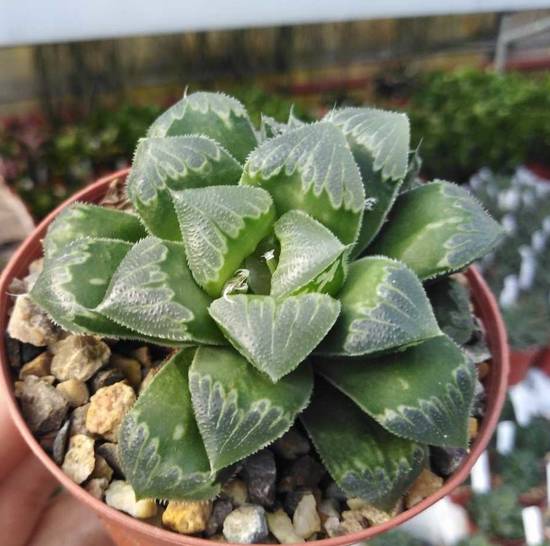
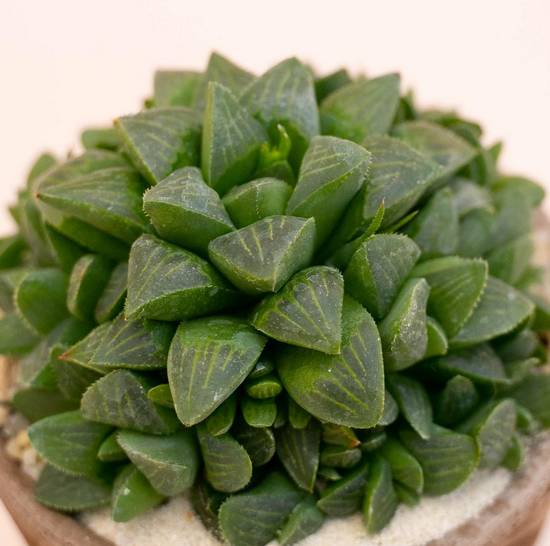
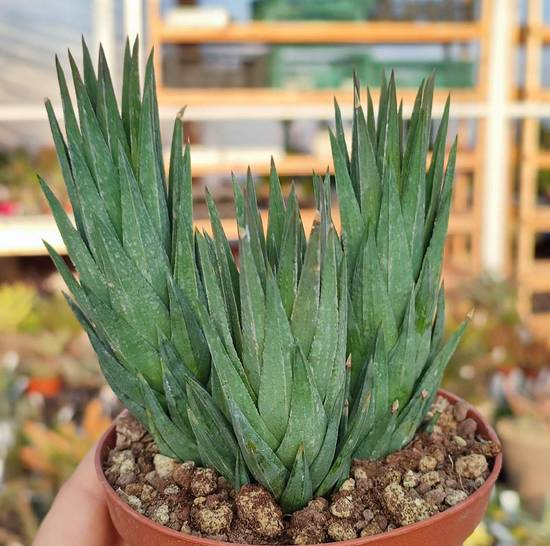
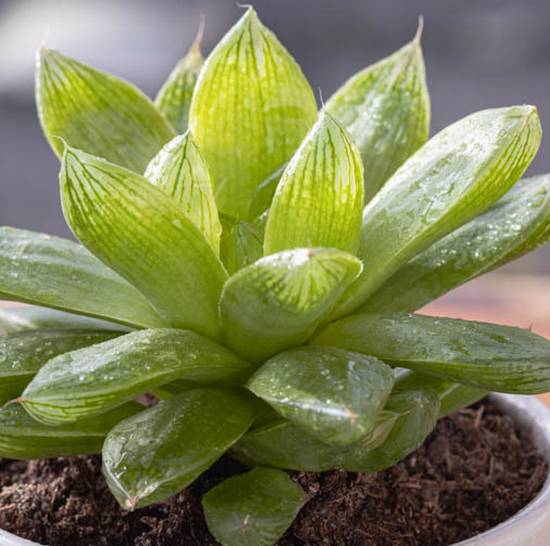
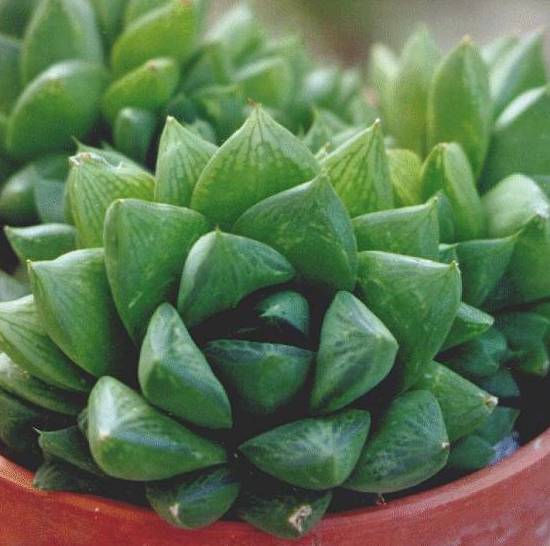
The Haworthia Cymbiformis is a succulent highly appreciated for its fleshy boat-shaped leaves, hence its name ("cymbiformis" meaning boat-shaped). It forms beautiful dense rosettes composed of light green to translucent green leaves, with slightly rounded tips sometimes marked with fine transparent lines. These natural "windows" allow light to penetrate deeply into the tissues, an ingenious adaptation mechanism to bright but shaded environments.
The Haworthia Cymbiformis is one of the most accessible species of the genus Haworthia. It remains small in size (8 to 12 cm in diameter for the main rosette) and naturally forms offsets that give rise to attractive clumps. Thanks to its compact habit, easy care and drought resistance, it is ideal for beginners, small spaces and open terrariums.
With its soft appearance and its ability to multiply quickly, Haworthia Cymbiformis easily finds its place in any succulent collection, whether on a windowsill, a desk or in an indoor garden.
🌤️ Indirect light or partial shade : It fears intense direct sun, especially in summer.
🏠 Indoors : Place it near an east-facing window or behind a light curtain. Diffused light is more than sufficient.
☁️ Signs of stress : If its leaves turn red or brown, it is probably receiving too much light.
💧 Growing period : Water every 2 to 3 weeks, only when the substrate is completely dry.
❄️ Winter : Very rare watering, or none at all if kept in a cool room.
⚠️ Warning : Excess water is the main cause of rot. It is better to forget it for a week than to water too early.
🌡️ Ideal : Between 18 and 25 °C during the active season.
❄️ Minimum : Down to 5 °C if the substrate is dry. It mainly fears cold humidity.
🏠 In winter : Place it in a dry, bright and slightly cool location (10 to 15 °C).
🪨 Recommended mix : 50% of cactus substrate, 25% perlite, and 25% pozzolana.
This airy mix allows rapid water evacuation and drastically reduces the risk of rot.
🌸 Period : From late spring to summer.
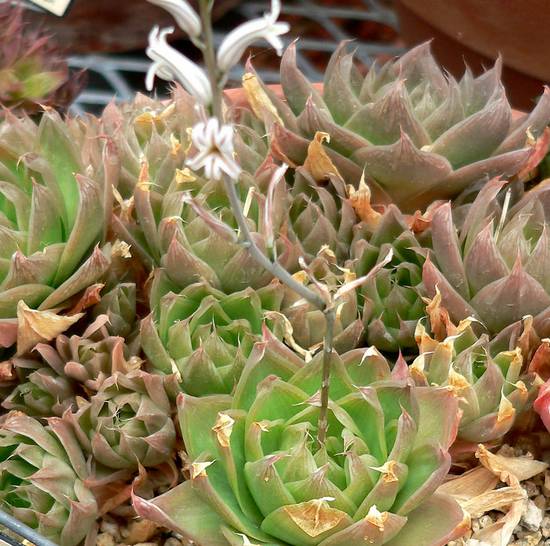
🎨 Appearance : Small white tubular flowers carried on a long flower stalk.
💡 It blooms readily when the plant is mature, well exposed and lightly watered in winter.