Haworthia Pygmaea
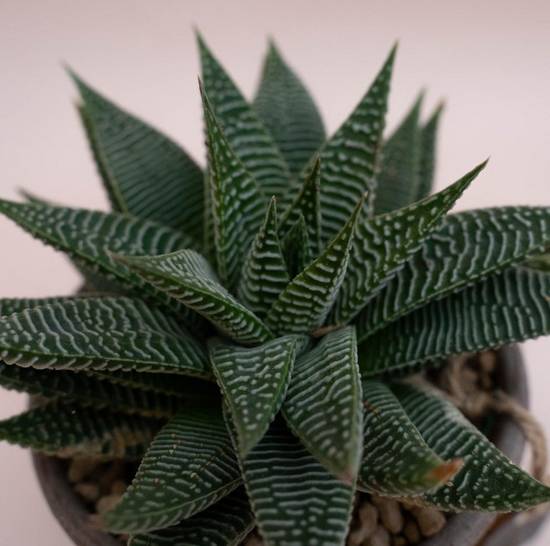
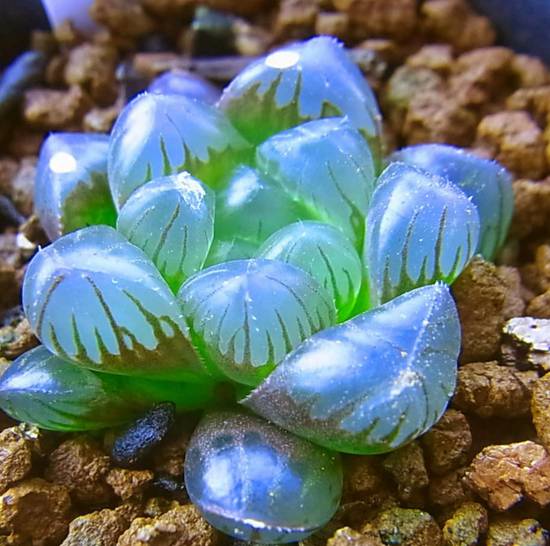
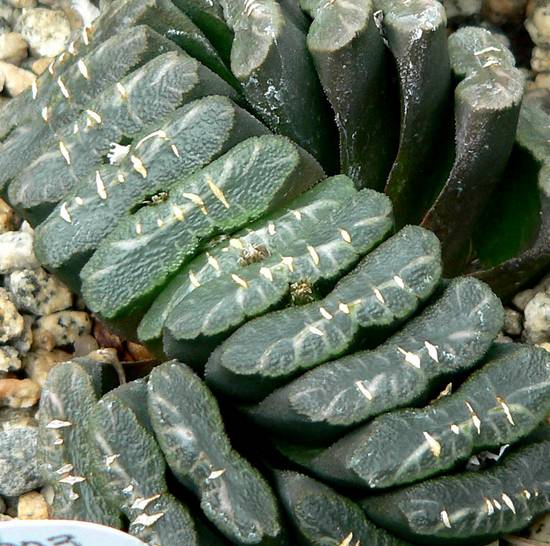
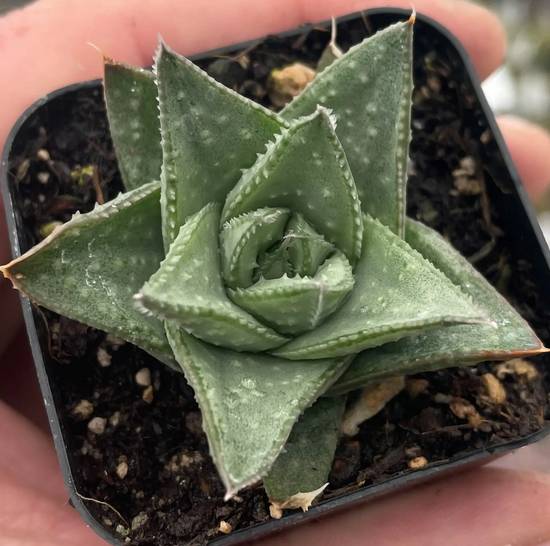
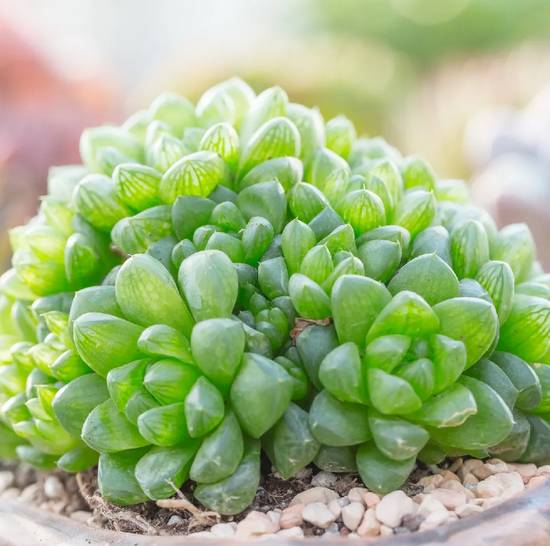
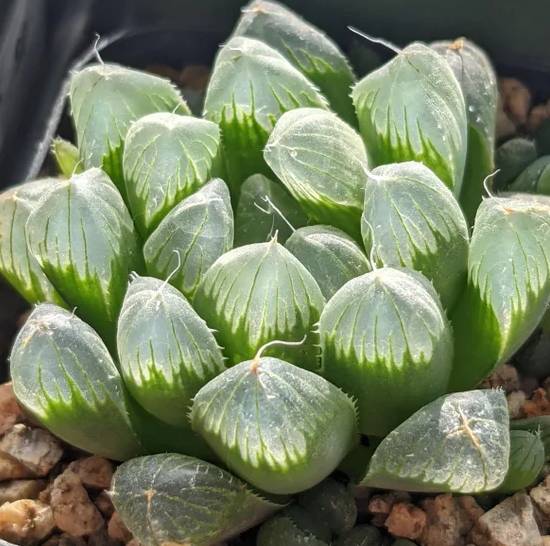
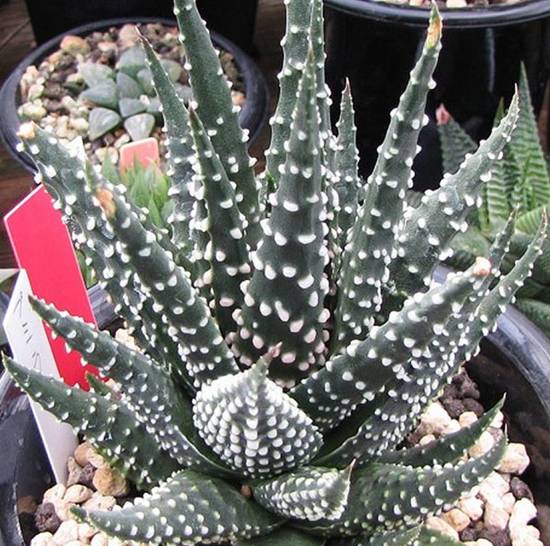
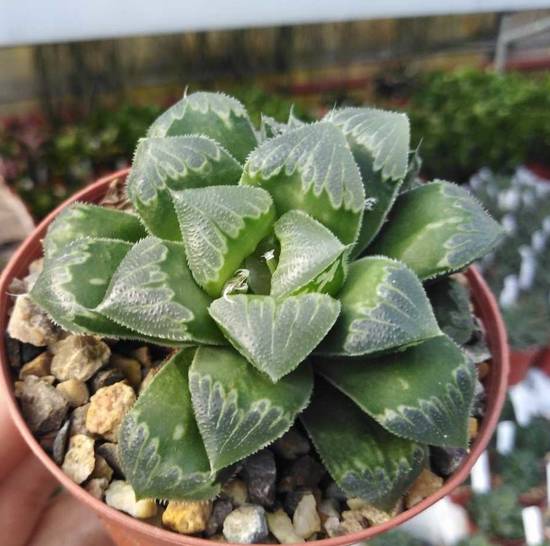
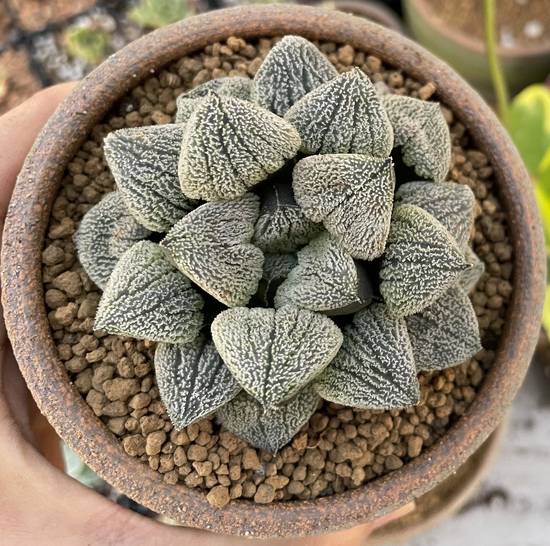
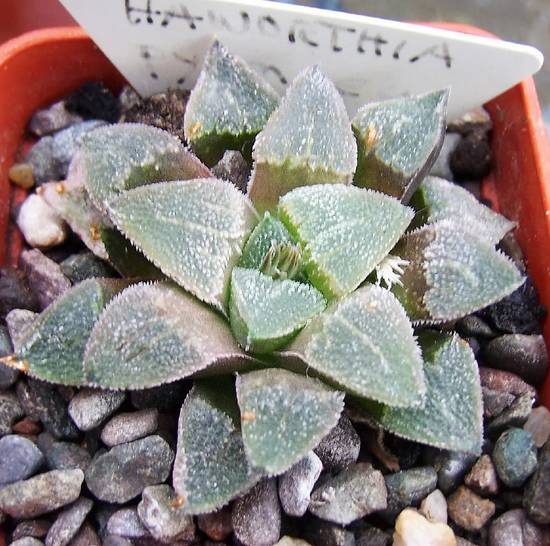
The Haworthia Pygmaea is a true gem of the succulent world. Appreciated for its small size and graphic appearance, it forms a flattened rosette of thick, triangular leaves, adorned with translucent patterns or wart-like textures depending on the forms. This mini-succulent fascinates with its subtlety and beauty, ideal for lovers of rare plants or fans of minimalist elegance.
Its slow growth, almost geometric appearance, and tones ranging from soft green to brownish-green make it an ideal candidate for zen arrangements, open terrariums, or bright shelves. Indoors as well as in sheltered outdoor conditions, it brings a refined and understated touch to any collection.
The Haworthia Pygmaea is native to the Eastern Cape province of South Africa. It grows in semi-arid areas, often in partial shade under shrubs or between rocks. During periods of intense heat, it retracts into the soil to limit water loss, a behavior typical of xerophytic species.
To thrive, Haworthia Pygmaea prefers soft, filtered light.
☀️ Bright indirect light : Ideal behind an east- or west-facing window. Intense direct sun can burn the delicate leaves, especially in summer.
🌿 Suitable for partial shade : It tolerates filtered exposure well, but prolonged excess shade will slow its growth and dull its beautiful tones.
☀️ Bright indirect light : Ideal behind an east- or west-facing window. Intense direct sun can burn the delicate leaves, especially in summer.
🌿 Suitable for partial shade : It tolerates filtered exposure well, but prolonged excess shade will slow its growth and dull its beautiful tones.
Watering Haworthia Pygmaea must be precise to avoid any risk of rot.
💧 Spring / Summer : Water once the substrate is dry deep down, approximately every 2 to 3 weeks.
❄️ Autumn / Winter : Greatly reduce watering, or stop completely during vegetative rest.
⚠️ Beware of excess : Too much water causes leaves to soften. It is better to underwater than to overwater!
💧 Spring / Summer : Water once the substrate is dry deep down, approximately every 2 to 3 weeks.
❄️ Autumn / Winter : Greatly reduce watering, or stop completely during vegetative rest.
⚠️ Beware of excess : Too much water causes leaves to soften. It is better to underwater than to overwater!
Accustomed to a warm temperate climate, Haworthia Pygmaea enjoys mild temperatures.
🌡️ Ideal temperature : Between 18 °C and 26 °C during its active phase.
❄️ Minimum tolerated : Down to 5 °C, if the substrate is perfectly dry. It does not tolerate frost.
🌡️ Ideal temperature : Between 18 °C and 26 °C during its active phase.
❄️ Minimum tolerated : Down to 5 °C, if the substrate is perfectly dry. It does not tolerate frost.
The secret to successful cultivation lies in perfectly draining substrate.
🪨 Ideal soil : Mix cactus substrate with 30% perlite and a little pozzolana to improve structure and prevent any water retention.
🪨 Ideal soil : Mix cactus substrate with 30% perlite and a little pozzolana to improve structure and prevent any water retention.
Although discreet, the flowering of Haworthia Pygmaea has its charm.
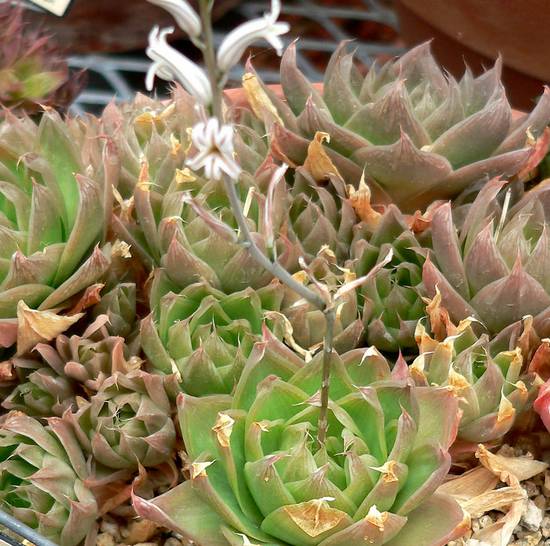
🌸 Appearance : Generally in summer, in the form of a thin flower stalk.
🎨 Flowers : White to cream, shaped like small bells.
⏳ Duration : Only a few days, but it remains a sign of good health and balance.
🌸 Appearance : Generally in summer, in the form of a thin flower stalk.
🎨 Flowers : White to cream, shaped like small bells.
⏳ Duration : Only a few days, but it remains a sign of good health and balance.
FAQ - Haworthia Pygmaea
What is the distinctive feature of Haworthia Pygmaea compared to other Haworthia?
Haworthia Pygmaea stands out for its small size and flat leaves, often marked with translucent patterns. It has an almost graphic appearance and remains more compact than its relatives, making it a favorite among collectors.
How can I tell if I am overwatering my Haworthia Pygmaea?
If the leaves become soft, change color (brown or translucent), or start splitting, there is too much water. To avoid this, use a very well-draining substrate and water only when the soil is completely dry.
What is the best indoor location for Haworthia Pygmaea?
Place it near an east- or west-facing window for bright light without direct sun. It also tolerates cooler rooms in winter.
Can Haworthia Pygmaea be placed in a terrarium?
Yes, provided it is open to allow good ventilation. The soil should consist of a well-draining cactus potting mix with perlite.
Should Haworthia Pygmaea be repotted often?
Not at all! Every 3 to 4 years is enough, or when the roots completely fill the pot. Choose a slightly larger pot.
Can Haworthia Pygmaea be easily propagated?
It produces few offsets, but it can be propagated by sowing or division. Young plants should be placed in a suitable substrate and watered moderately.
Is Haworthia Pygmaea sensitive to pests?
It is not very prone to disease, but it can be attacked by mealybugs. Regular cleaning and a dry environment reduce the risks.
What is the average lifespan of a Haworthia Pygmaea?
With good care, it can live more than 10 years! Its slow development makes it even more valuable over time.
Can Haworthia Pygmaea be fertilized?
Yes, a light application of a special succulent fertilizer every 6 to 8 weeks in spring and summer stimulates its growth.
Can Haworthia Pygmaea live outdoors?
Yes, but only in summer, sheltered from direct sun and heavy rain. Bring it indoors as soon as temperatures drop below 10°C.