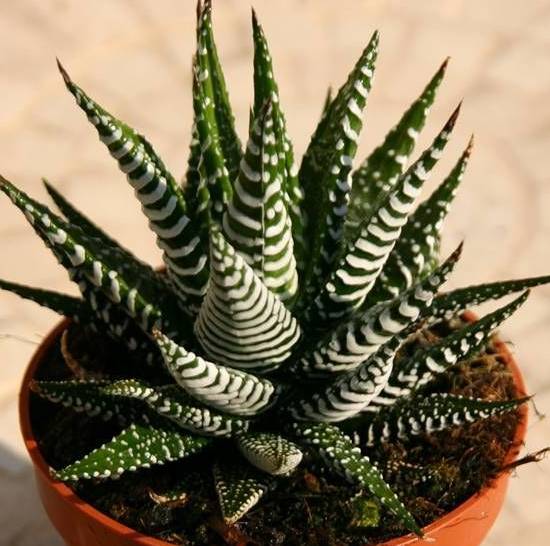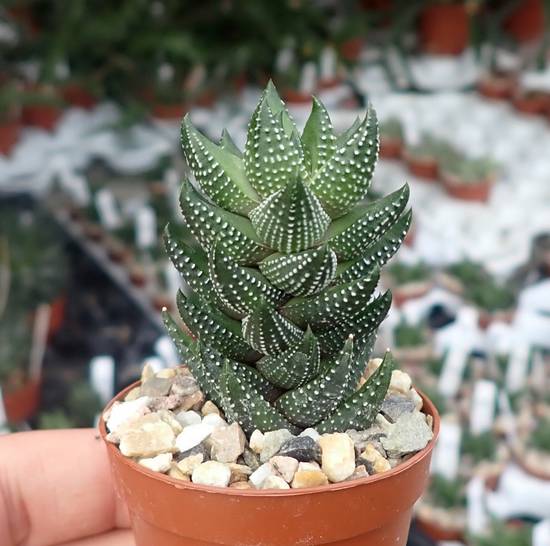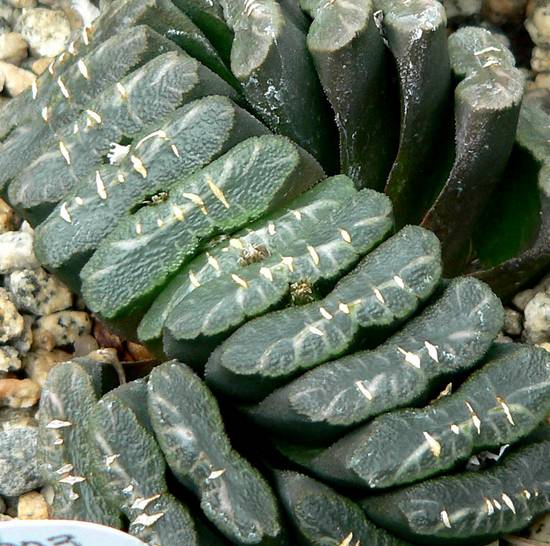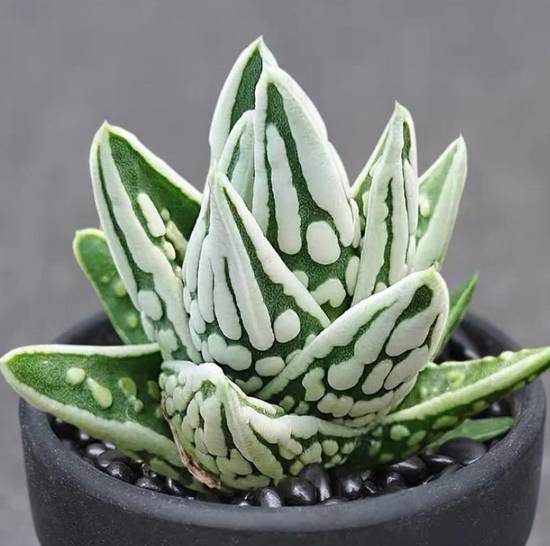
Haworthia Cooperi
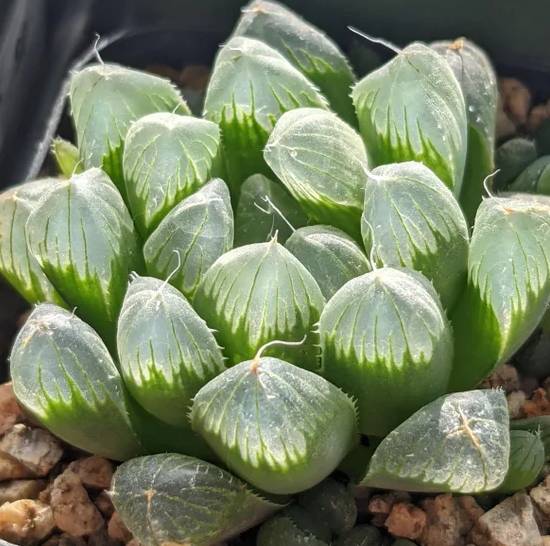
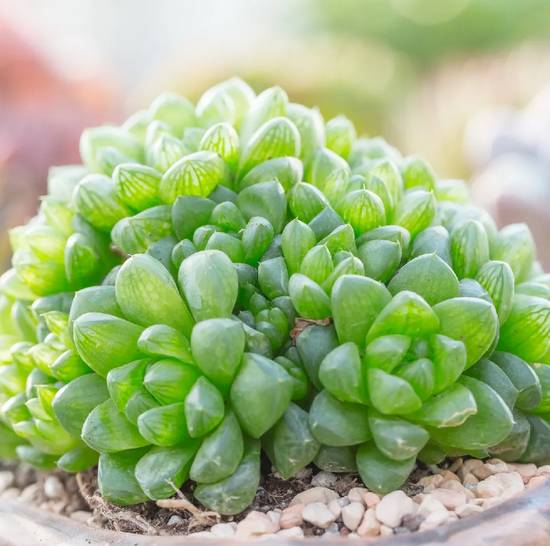
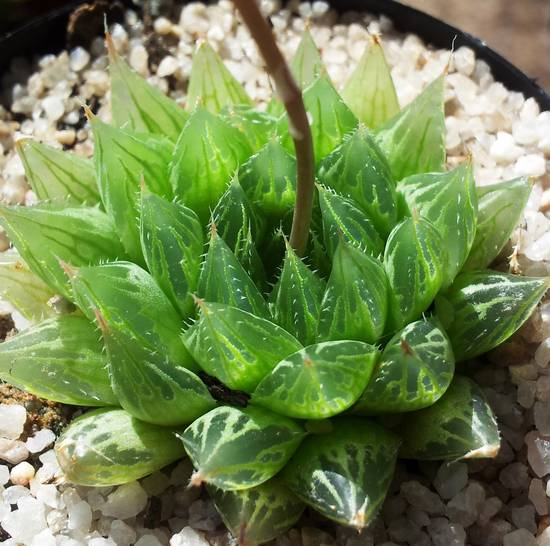
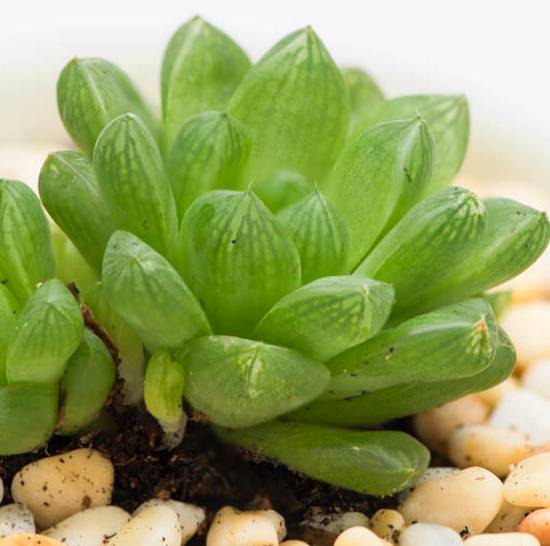
The Haworthia Cooperi is one of the most fascinating species of the genus Haworthia. What makes it so remarkable are its translucent leaves shaped like small gelatinous bubbles, often compared to frozen water droplets. Soft to the touch and light green in color, these semi-transparent leaves filter light, allowing the plant to continue photosynthesis even when partially buried. An ingenious adaptation to its arid native habitat.
Its compact rosette shape gives it the appearance of a plant jewel. Space-saving and highly decorative, it adapts perfectly to pot cultivation, even indoors. Haworthia Cooperi grows slowly but steadily without requiring complex care, making it an ideal plant for succulent enthusiasts as well as beginners.
Native to the semi-desert areas of the Eastern Cape in South Africa, Haworthia Cooperi naturally grows in rock crevices or in the shade of grasses and shrubs. It adapts to harsh conditions by limiting direct sun exposure, hence its partially transparent leaves that barely emerge from the soil. This strategy allows it to capture light while avoiding sunburn.
Haworthia Cooperi prefers soft and diffused light:
🌤️ Ideal exposure : Bright indirect light near an east- or north-facing window.
☀️ Avoid direct sun : Its sensitive leaves can quickly dehydrate or mark if exposed to direct sunlight.
🏠 Perfect indoors : This species is particularly well suited to apartment living.
🌤️ Ideal exposure : Bright indirect light near an east- or north-facing window.
☀️ Avoid direct sun : Its sensitive leaves can quickly dehydrate or mark if exposed to direct sunlight.
🏠 Perfect indoors : This species is particularly well suited to apartment living.
Like all Haworthias, it does not like excess water:
💧 Spring / Summer : Spaced watering every 2 to 3 weeks, always allowing the substrate to dry deeply.
❄️ Autumn / Winter : Very reduced watering, once a month or less if kept in a cool place.
⚠️ The main enemy of this plant is stagnant moisture. It is better to forget watering than to overwater.
💧 Spring / Summer : Spaced watering every 2 to 3 weeks, always allowing the substrate to dry deeply.
❄️ Autumn / Winter : Very reduced watering, once a month or less if kept in a cool place.
⚠️ The main enemy of this plant is stagnant moisture. It is better to forget watering than to overwater.
Haworthia Cooperi prefers temperate to warm temperatures:
🌡️ Optimal range : Between 18 °C and 28 °C.
❄️ Minimum resistance : Down to 5 °C, provided it is completely dry. Frost is fatal.
🏠 Indoors : Ideal in pots, it thrives in temperate homes all year round.
🌡️ Optimal range : Between 18 °C and 28 °C.
❄️ Minimum resistance : Down to 5 °C, provided it is completely dry. Frost is fatal.
🏠 Indoors : Ideal in pots, it thrives in temperate homes all year round.
A very well-draining substrate is essential to prevent any risk of rot:
🪨 Recommended mix: 50% cactus substrate, 30% perlite, and 20% pozzolana. This mix ensures excellent root aeration while mimicking its natural habitat.
🪨 Recommended mix: 50% cactus substrate, 30% perlite, and 20% pozzolana. This mix ensures excellent root aeration while mimicking its natural habitat.
The flowering of Haworthia Cooperi is modest but elegant:
🌼 Flowering : In summer or sometimes late spring.
🌸 Flowers : White or greenish, shaped like small bells on a long flower stalk.
🌿 Tip : A well-established and slightly stressed plant (little water, sufficient light) is more likely to bloom.
🌼 Flowering : In summer or sometimes late spring.
🌸 Flowers : White or greenish, shaped like small bells on a long flower stalk.
🌿 Tip : A well-established and slightly stressed plant (little water, sufficient light) is more likely to bloom.
FAQ - Haworthia Cooperi
Why are the leaves of Haworthia Cooperi transparent?
This transparency is an adaptation to its arid habitat in South Africa. The leaves, partially buried, allow light to pass to the core of the plant, enabling photosynthesis while protecting it from sunburn. This ingenious mechanism is typical of many Haworthia.
How can I tell if I am overwatering or underwatering my Haworthia Cooperi?
Soft and dark leaves indicate overwatering, while shriveled or retracted leaves signal underwatering. To avoid mistakes, always wait until the substrate is dry deep down before watering. Use a well-draining substrate with perlite to make watering safer.
Can Haworthia Cooperi be grown outdoors?
Yes, but only in summer, in shade or partial shade. This plant does not tolerate frost, so bring it indoors as soon as nighttime temperatures drop below 10°C. Outdoors, protect it from direct sun which could burn its sensitive leaves.
What is the ideal repotting frequency?
Repotting is done every 2 to 3 years, preferably in spring. This allows you to renew the substrate and remove offsets. Use a slightly larger pot with a draining mix based on pumice and perlite.
Can fertilizer be used to stimulate its growth?
Yes, but in moderation. A special cactus fertilizer at low dosage, applied every two months in spring and summer, is more than sufficient. Too many nutrients could compromise its compact shape.
What are the enemies of Haworthia Cooperi?
The main enemies are mealybugs and root rot. To prevent them, regularly monitor the plant and maintain good drainage. Good air circulation, low humidity, and sufficient light are the keys to successful care.
Is it a toxic plant for animals?
Haworthia Cooperi is considered non-toxic to pets. It is therefore suitable for indoor cultivation even if you have a cat or dog, provided you limit their access to avoid nibbling.
How can Haworthia Cooperi be propagated?
The easiest way is to remove the offsets formed at the base. Let them dry for a few days before replanting them in a suitable substrate. This method offers an excellent success rate. Leaf cuttings are more difficult but possible.
Why does my plant seem to be sinking into the pot?
This is normal behavior for this species. In nature, it partially buries itself to protect from the sun. As long as the base is not soft or black, there is no problem. It is even a good sign of adaptation.
Can it live in a low-light room?
Yes, Haworthia Cooperi tolerates low-light rooms better than other succulents. However, moderate indirect light is still necessary to maintain its shape and colors. Rotate the pot regularly to prevent the plant from deforming.