Haworthia Reinwardtii

Haworthia Reinwardtii

Haworthia Reinwardtii

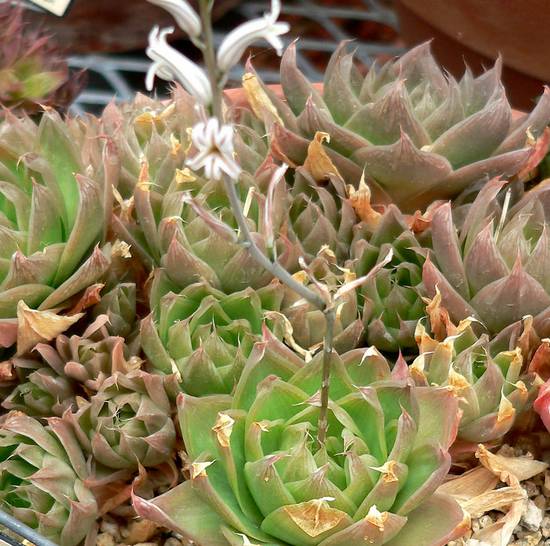
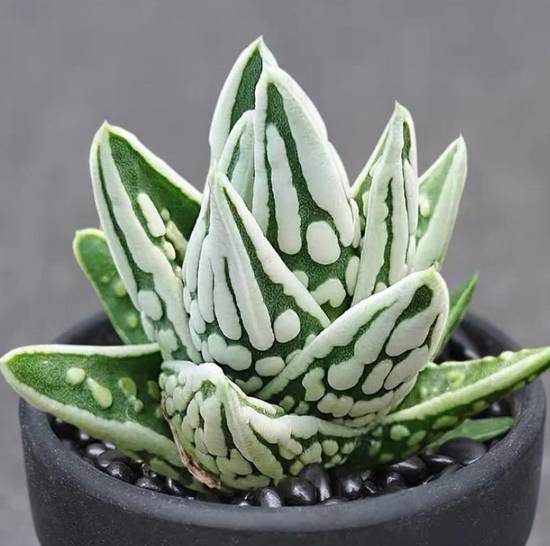
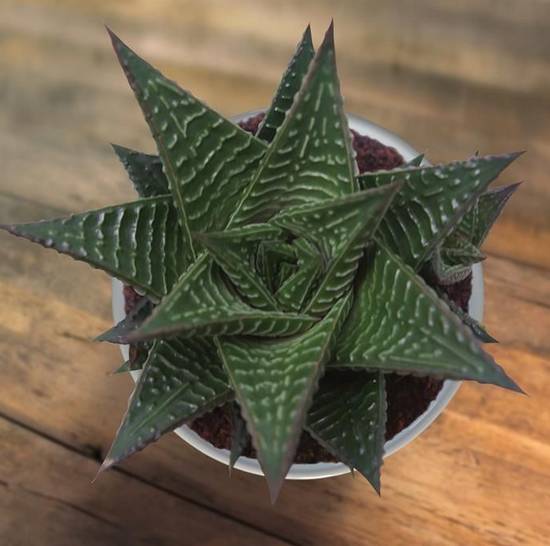
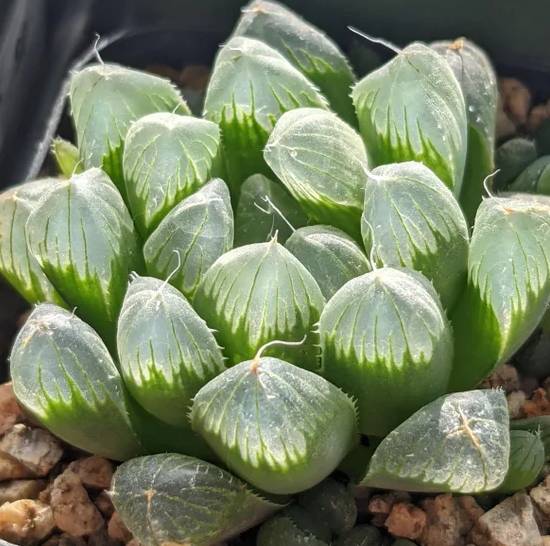
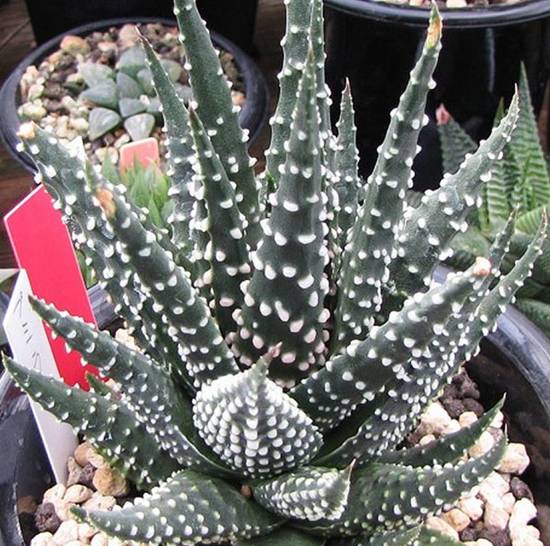
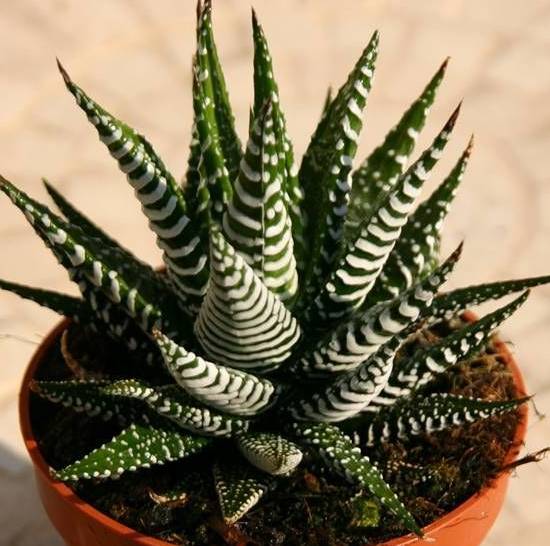
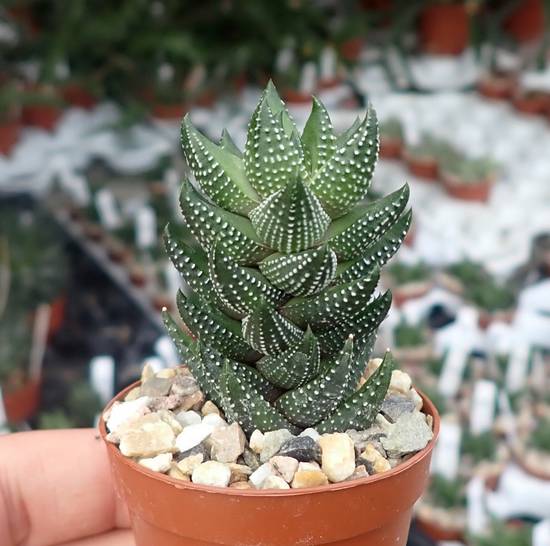
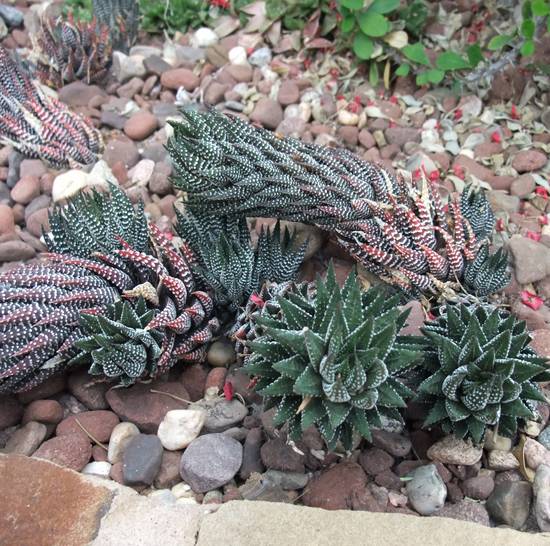
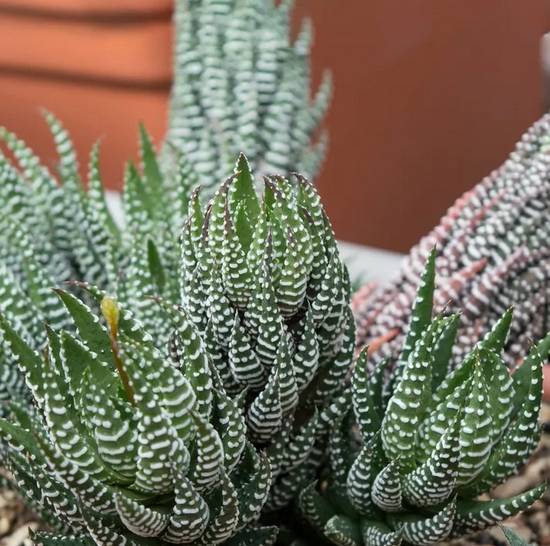
An icon of architectural mini succulents, Haworthia Reinwardtii stands out with its narrow rosettes stacked into small columns adorned with white tubercles, as if hand-beaded. This textured relief catches the light and reveals a deep green sometimes tinged with glaucous hues, giving the plant a pixel-like sculptural look. Up close, each triangular leaf fits into the next, forming a neat spiral that remains decorative year-round, even out of bloom.

Naturally compact, Haworthia Reinwardtii gains presence without overwhelming space: it offsets at the base and gradually forms a uniform clump, ideal for shallow pots, succulent trays and minimalist displays. Its textured columns pair beautifully with raw containers (terracotta, concrete) as well as contemporary finishes (matte ceramics, light gravel). Its “mini totem” silhouette lends itself to repetition on shelves or as a solitary accent on a desk, bringing a calm, graphic contrast.

Native to southern Africa, Haworthia Reinwardtii grows on rocky slabs, gravel slopes and rock crevices in filtered light beneath xeric shrubs and under brief, quickly drained rains. In cultivation, imitate this gradient: strong non-scorching brightness, spaced watering and very draining mix.
For compact, well-textured rosettes, Haworthia Reinwardtii requires generous but non-scorching light.

🌞 Ideal: gentle morning sun + strong brightness; summer curtain behind glass.

🏠 Indoors: bright east/south exposure or LED 10–12 h with good ventilation.
A frugal succulent, Haworthia Reinwardtii prefers “thorough watering then a long pause.”

🌱 Warm season: water deeply when dry at depth, then drain completely.

🍂 Cool season: space watering significantly; substrate almost dry between applications.
Haworthia Reinwardtii enjoys mild brightness and fears cold humidity.

🌡️ Ideal: 15–26 °C; moving air.

❄️ Minimum: about 5–7 °C dry; avoid any frost.
To mimic its rocky slabs, Haworthia Reinwardtii requires a very draining and airy mix.

🪨 Base: cactus substrate or soil enriched with perlite; clean pozzolana top dressing at the collar.
Discrete but charming, Haworthia Reinwardtii flowers on slender stalks.

🌸 Period: late winter to spring (variable depending on culture).

🎨 Colors: small cream-white striped flowers in loose spikes.

🕑 Keys: bright filtered light, relative winter rest, very moderate feeding.
FAQ - Haworthia Reinwardtii

How to differentiate Haworthia Reinwardtii from Haworthia Attenuata?
Reinwardtii has narrower columns and more prominent tubercles; keep compact in airy cactus substrate.
Which pot best showcases a suckering Haworthia Reinwardtii?
A low, wide pot with a layer of perlite and clean pumice mulch on the surface.
What fertilizer routine for a compact Haworthia Reinwardtii?
Low nitrogen, very diluted, every 4–6 weeks in season: cactus fertilizer or succulent nutrients.
Can Haworthia Reinwardtii be grown under LED all year round?
Yes, 10–12 hours per day with ventilation; in spring, lightly support with liquid cactus fertilizer.
How to prevent etiolation of Haworthia Reinwardtii indoors?
Increase light (gentle morning sun), keep a snug pot and space watering; use light cactus potting soil.
When to divide offsets of Haworthia Reinwardtii?
During spring repotting: rooted offsets resume quickly; plant shallowly, water very sparingly then apply micro-doses of liquid succulent fertilizer.
Is Haworthia Reinwardtii suitable for an open terrarium?
Yes if very bright and airy; draining mix, rare watering and clean pumice mulch at the crown.
What is a sign of overwatering in Haworthia Reinwardtii?
Soft or translucent leaves at the base; keep dry, repot in clean cactus substrate and resume very gradually.
Which decorative plant pairings suit Haworthia Reinwardtii?
Other miniature Haworthia, dwarf Gasteria and light gravel; very moderate cactus fertilizer applications.
Why is the column of Haworthia Reinwardtii leaning?
Lack of light or pot too large; move closer to a window and repot snugly with a layer of perlite for stability.