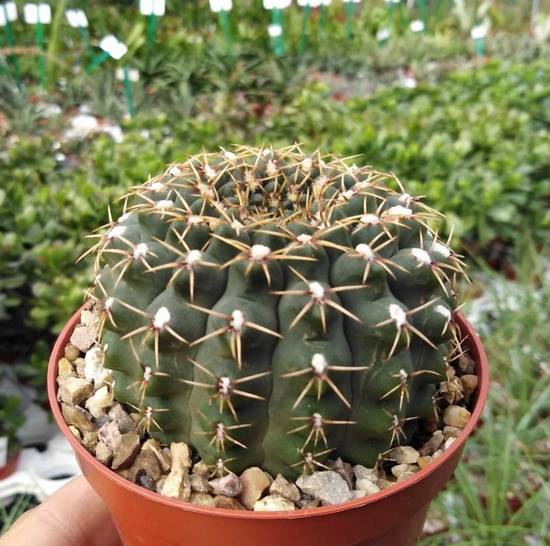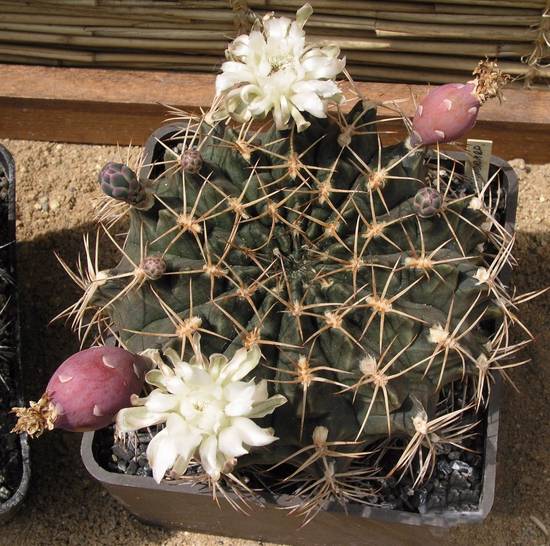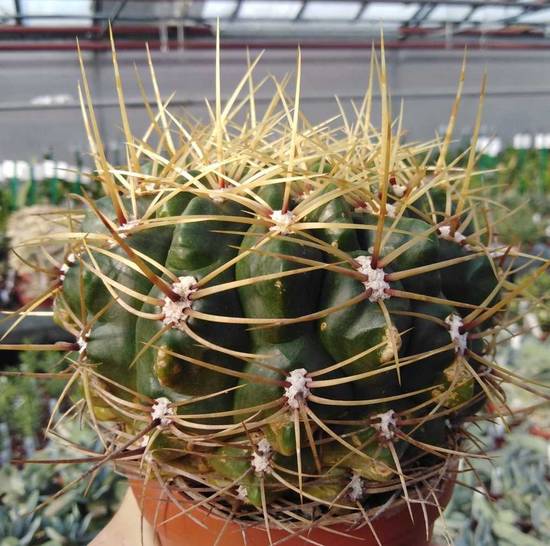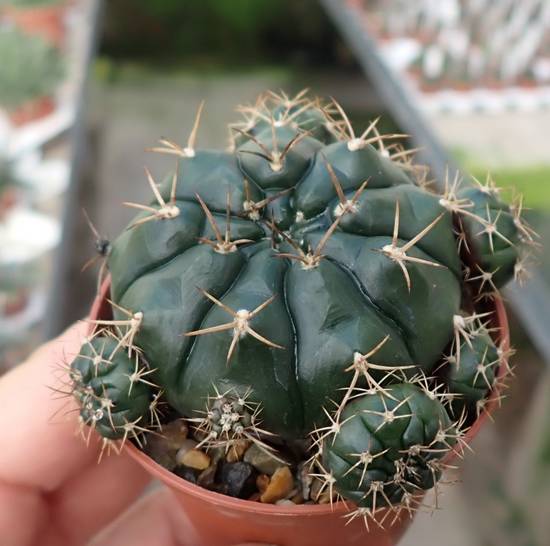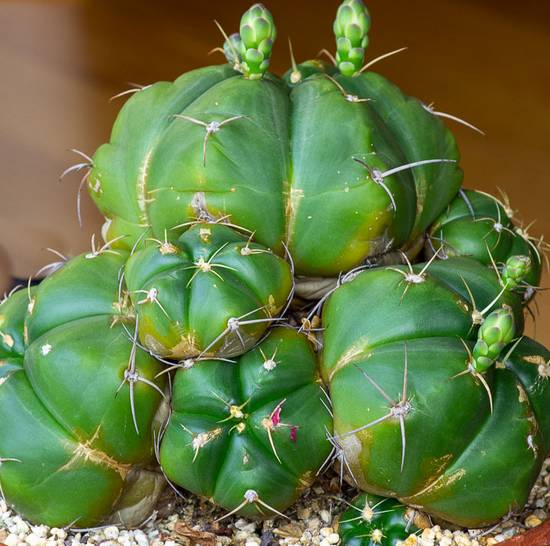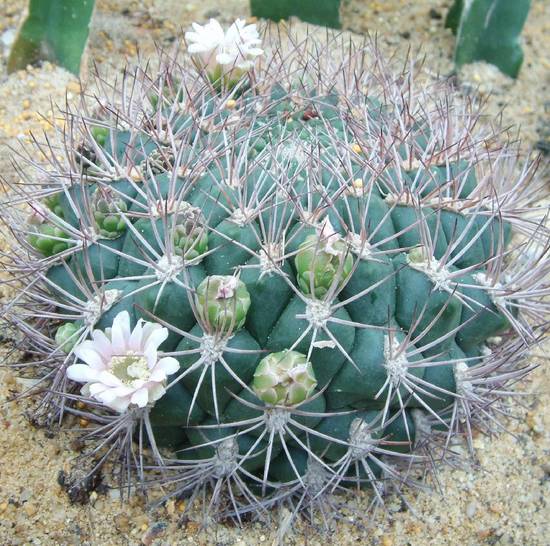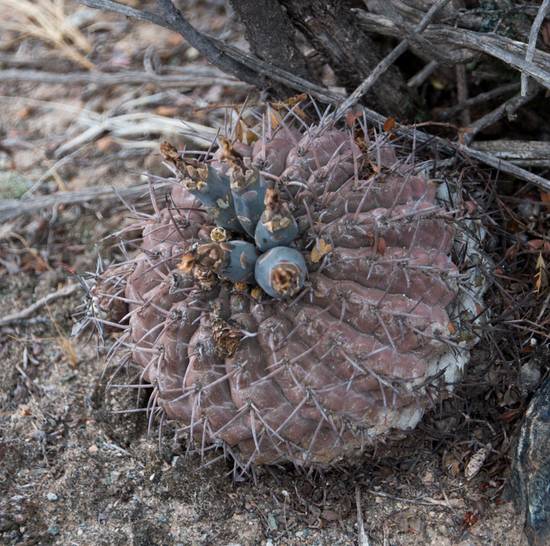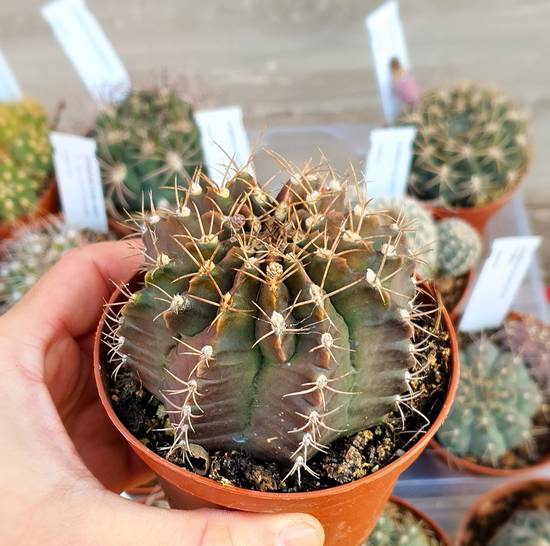
Gymnocalycium Mihanovichii
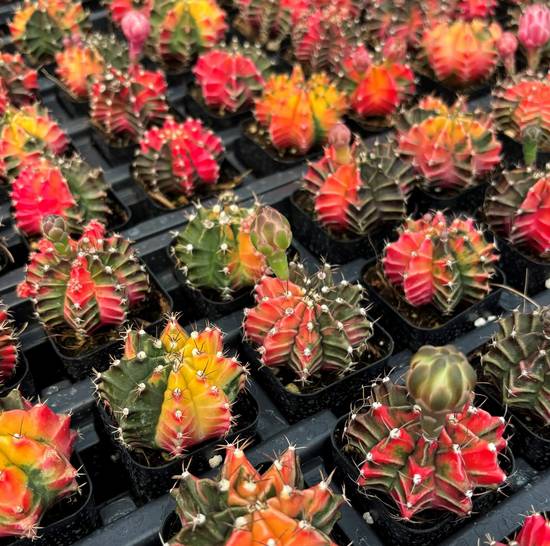
The Gymnocalycium mihanovichii, also known as the "Moon Cactus" or "Hibotan", is a true star in the world of ornamental cacti. Instantly recognizable, this small globular cactus stands out for its unusual and vivid colors: red, pink, orange, yellow. These colors are not produced by flowers, but by a genetic mutation that prevents chlorophyll production, which explains their intense appearance.
This unique trait means that the Gymnocalycium Mihanovichii must be grafted onto another green cactus in order to survive, most commonly a Hylocereus or a Myrtillocactus. Together, they form a unique living sculpture, highly appreciated for indoor decoration and perfect for brightening up a desk, shelf, or windowsill.
The Gymnocalycium Mihanovichii grows naturally in semi-arid areas, on poor, rocky soils, under sparse shrubs that lightly filter sunlight. It is a hardy cactus, well adapted to bright but not scorching environments.
For optimal growth of the Gymnocalycium Mihanovichii:
🌤️ Bright light without direct sun: An east- or west-facing window is ideal. Direct full sun can damage the plant, especially in summer.
🌞 Avoid excessive heat: Prolonged heat or strong sun exposure may cause fading or browning of its colors.
💡 Indoors: Place it in a bright location to preserve its intense coloration.
🌤️ Bright light without direct sun: An east- or west-facing window is ideal. Direct full sun can damage the plant, especially in summer.
🌞 Avoid excessive heat: Prolonged heat or strong sun exposure may cause fading or browning of its colors.
💡 Indoors: Place it in a bright location to preserve its intense coloration.
Like all cacti, the Gymnocalycium Mihanovichii prefers careful watering:
🌱 Spring / summer: Water every 2 to 3 weeks, letting the substrate dry thoroughly between waterings.
🍂 Autumn / winter: Reduce watering drastically (once a month at most) or stop completely depending on temperatures.
⚠️ Excess moisture can cause rot.
🌱 Spring / summer: Water every 2 to 3 weeks, letting the substrate dry thoroughly between waterings.
🍂 Autumn / winter: Reduce watering drastically (once a month at most) or stop completely depending on temperatures.
⚠️ Excess moisture can cause rot.
The Gymnocalycium Mihanovichii does not tolerate cold well:
🌞 Ideal temperature: Between 20°C and 30°C.
❄️ Minimum: 10°C. Does not tolerate frost.
🏡 Indoor cultivation: Suitable year-round.
🌞 Ideal temperature: Between 20°C and 30°C.
❄️ Minimum: 10°C. Does not tolerate frost.
🏡 Indoor cultivation: Suitable year-round.
To keep your Gymnocalycium Mihanovichii healthy:
🪨 Very well-draining soil: Use cactus potting soil mixed with mineral drainage materials.
💡 Repotting: About every 2 years.
🪨 Very well-draining soil: Use cactus potting soil mixed with mineral drainage materials.
💡 Repotting: About every 2 years.
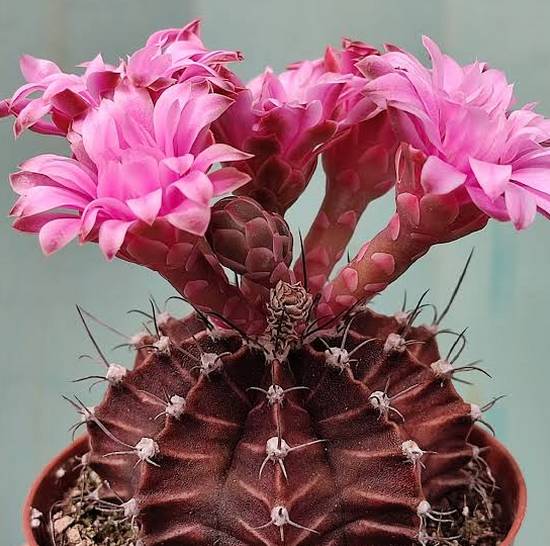
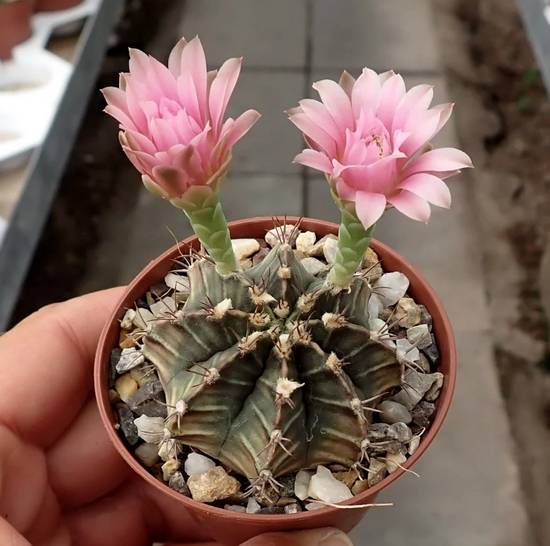
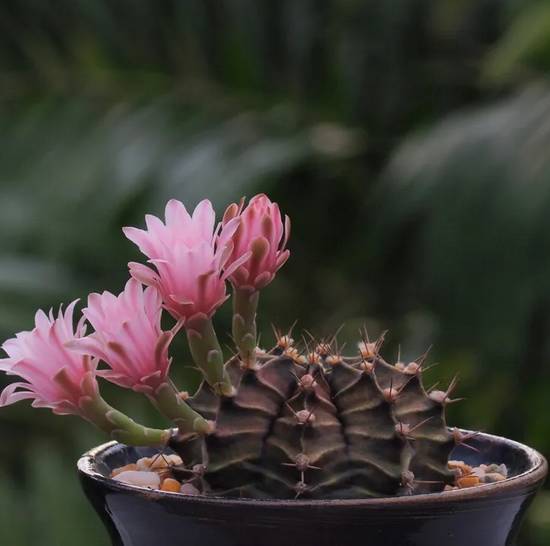
Unlike its colorful grafted top, the rootstock may produce real flowers:
🌼 Color: Usually pale pink or white.
🕑 Season: Spring or summer.
🔬 Note: The colored graft does not flower.
🌼 Color: Usually pale pink or white.
🕑 Season: Spring or summer.
🔬 Note: The colored graft does not flower.
FAQ - Gymnocalycium Mihanovichii
How to recognize excess moisture on Gymnocalycium Mihanovichii?
Excess water appears as softening.
How to detect underwatering in Gymnocalycium Mihanovichii?
The graft may wilt or slightly discolor.
What is the best substrate for Gymnocalycium Mihanovichii?
A light and very well-draining substrate is ideal.
Can Gymnocalycium Mihanovichii be propagated?
The colored graft is sterile on its own. It must be grafted.
Can Gymnocalycium Mihanovichii live without a rootstock?
No, without chlorophyll it cannot produce energy.
How often should Gymnocalycium Mihanovichii be repotted?
About every two years.
Is Gymnocalycium Mihanovichii toxic to animals?
It is not considered toxic, but it is better.
Can Gymnocalycium Mihanovichii bloom easily?
Only the rootstock can bloom, if well exposed.
What is the lifespan of a Gymnocalycium Mihanovichii?
With proper care, it can live for many years.
What is the best period to fertilize Gymnocalycium Mihanovichii?
From March to September.