Gymnocalycium Bodenbenderianum
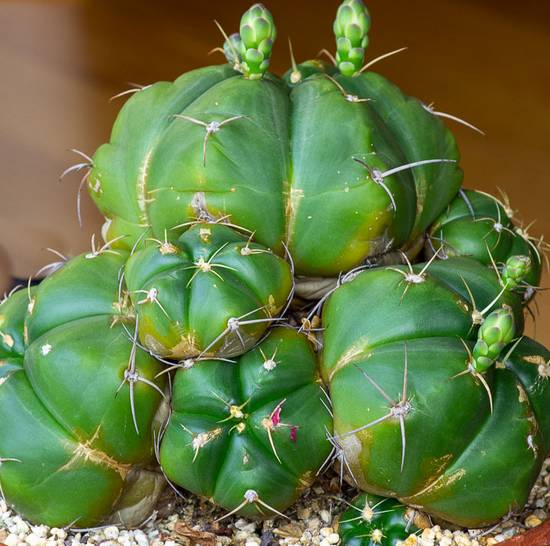
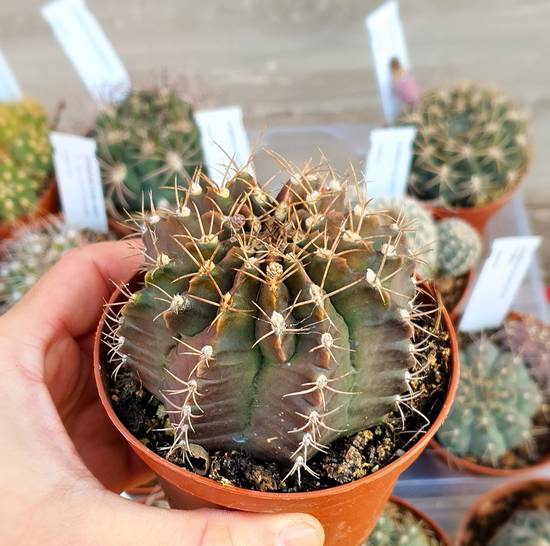
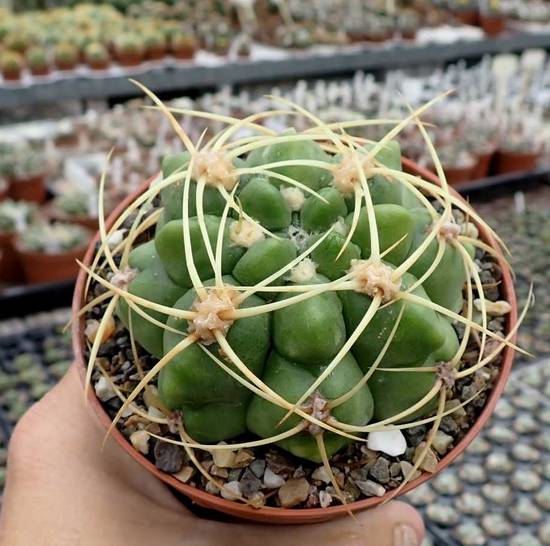
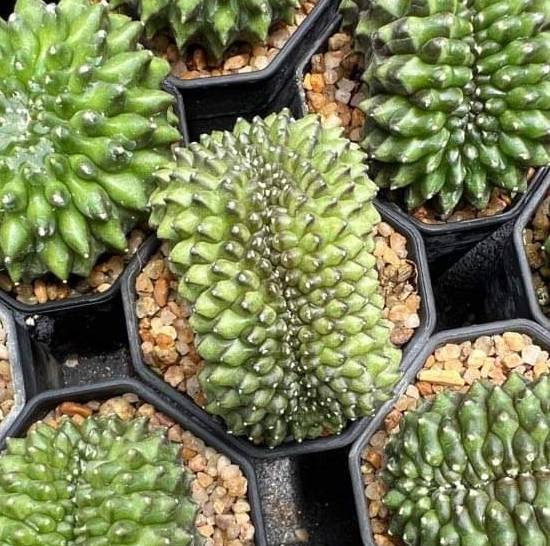
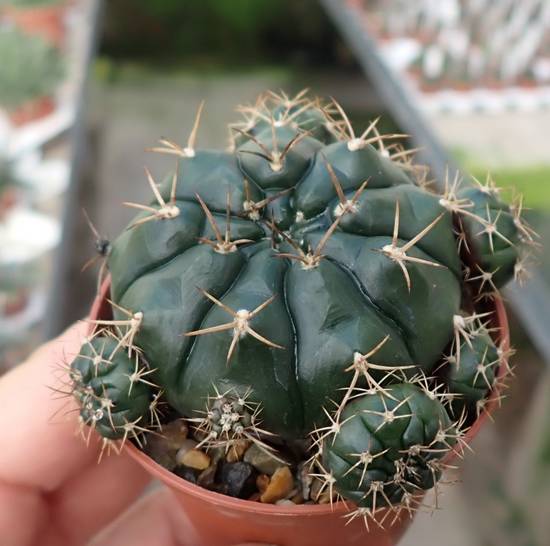
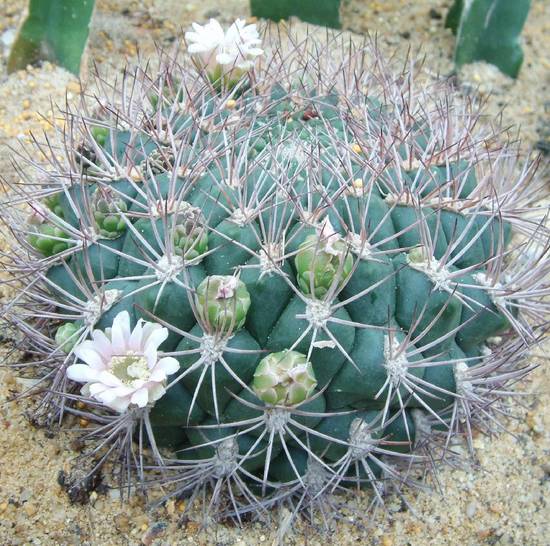
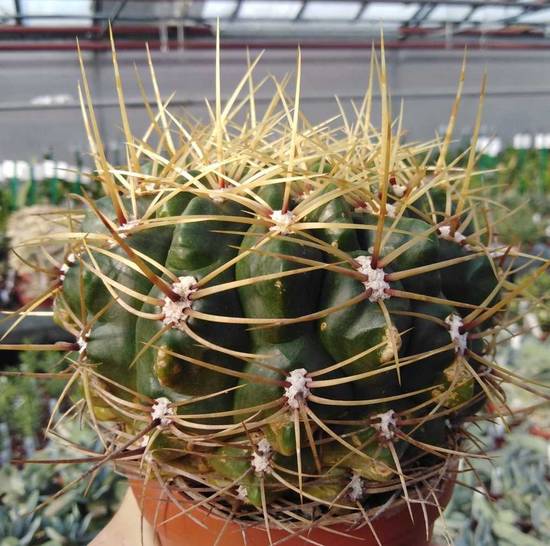
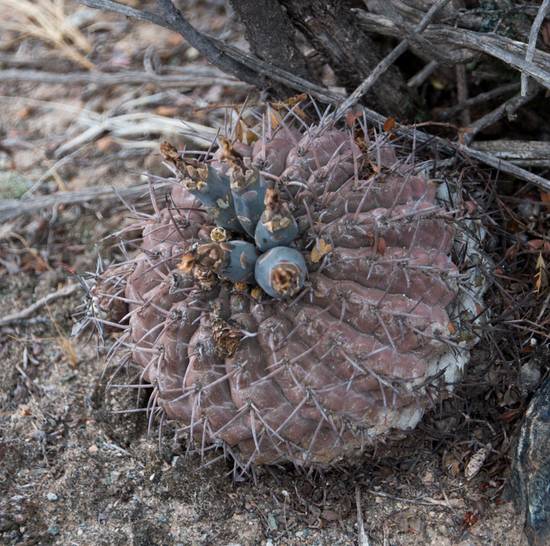
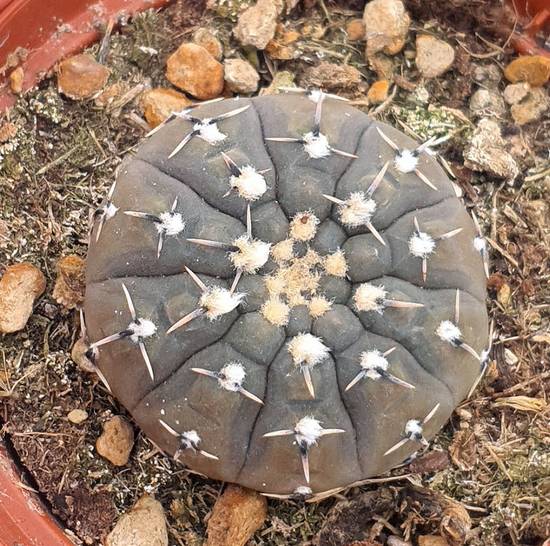
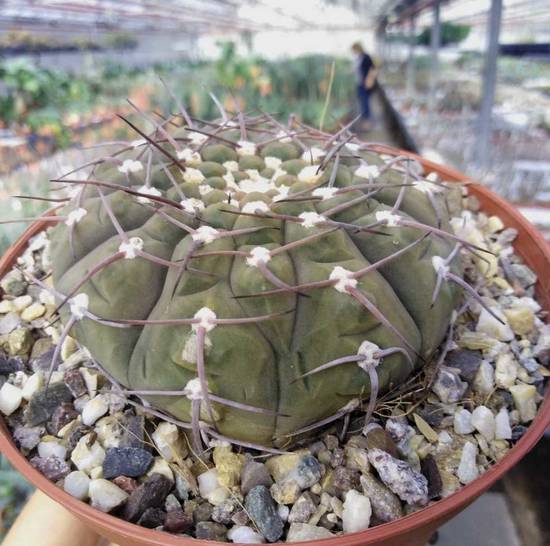
The Gymnocalycium Bodenbenderianum is a small globular to subglobular cactus appreciated for its compact shape, rounded ribs and olive-green to grey-green epidermis, sometimes slightly glaucous depending on exposure. The ribs are divided into broad tubercles ending in woolly areoles. The short to medium spines are generally radial and pressed against the body, giving Gymnocalycium Bodenbenderianum a neat, clean look compared to more heavily armed genera. With age, it may form small clumps through basal offsets but usually remains solitary and modest in size, perfect for pot culture on bright windowsills or in temperate greenhouses.
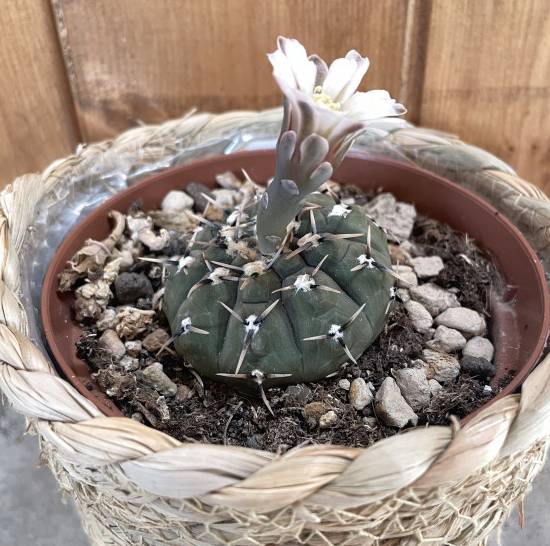
Flowering is one of its strongest assets: large funnel-shaped blooms emerge from the apex, opening into diurnal corollas in cream, pale pink to deeper pink tones depending on the strain, often with a lighter throat. The buds, covered with finely woolly scales, herald this delicate display which may repeat in waves when the seasonal cycle is respected. Gymnocalycium Bodenbenderianum appreciates a very draining substrate, thorough but spaced watering and generous yet well-balanced light to maintain a compact habit and neat spines.
🌞 Ideal: gentle morning sun (3–5 h) + bright light afterward.
🌤️ Summer: filter harsh sun behind south-facing glass.
🏠 Indoors: very bright south/east windowsill or grow lights; avoid shade.
🌱 Spring/Summer: every 10–14 days only if fully dry at depth.
🍂 Autumn/Winter: almost dry in cool bright conditions; resume gradually in spring.
⚡ Tip: terracotta pot + mineral top dressing = fast drying and dry collar.
🌡️ Ideal: 18–28 °C in growth with ventilation.
❄️ Minimum: 0–5 °C dry; no prolonged frost.
🏠 Rest: bright, cooler and almost dry winter.
🪨 Recommended base: cactus soil mixed with 50–60% minerals (coarse sand, perlite) + pozzolana top dressing around the collar.
🌸 Period: spring, sometimes again in summer.
🎨 Colors: cream, pale pink to deeper pink with lighter throat.
🕑 Keys: generous light, cool dry winter and very moderate low-nitrogen feeding.