Ferocactus Wislizeni Cristata
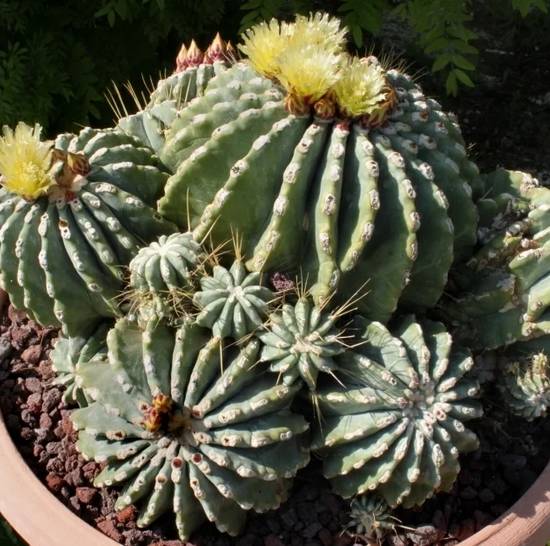
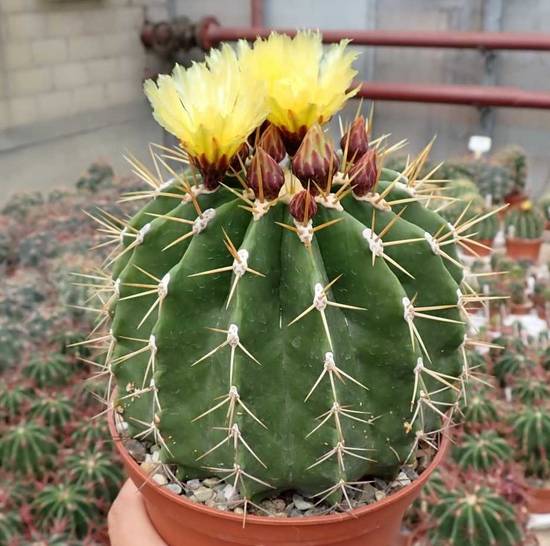
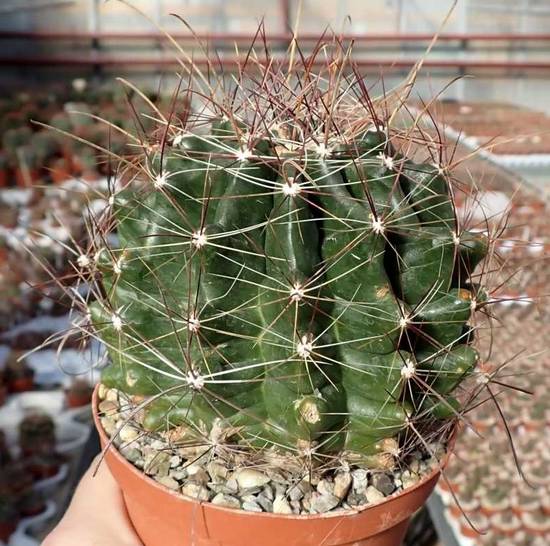
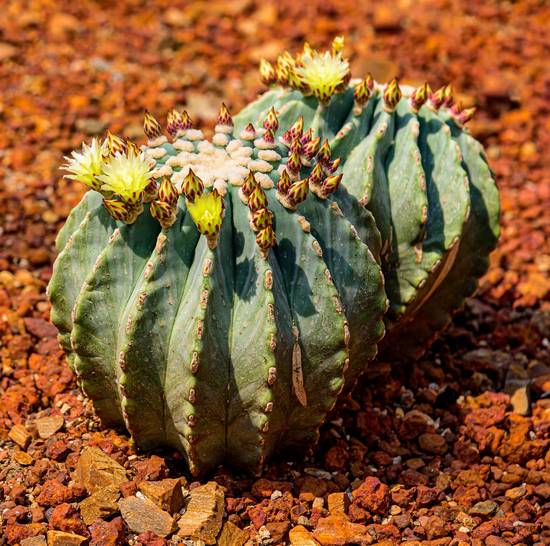
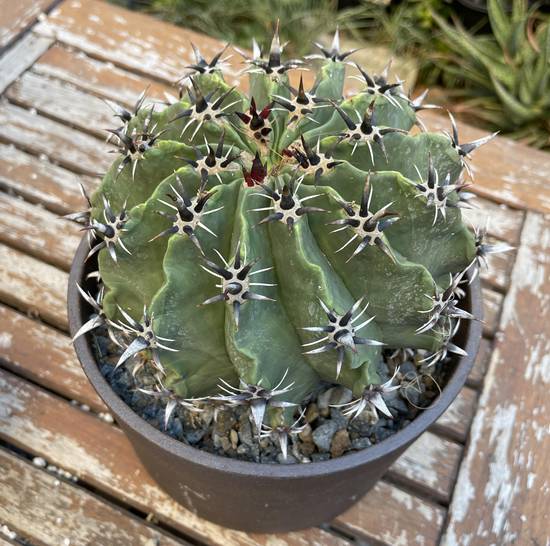
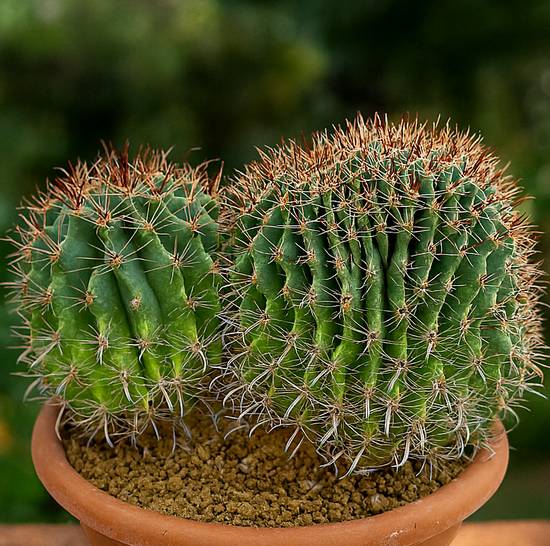
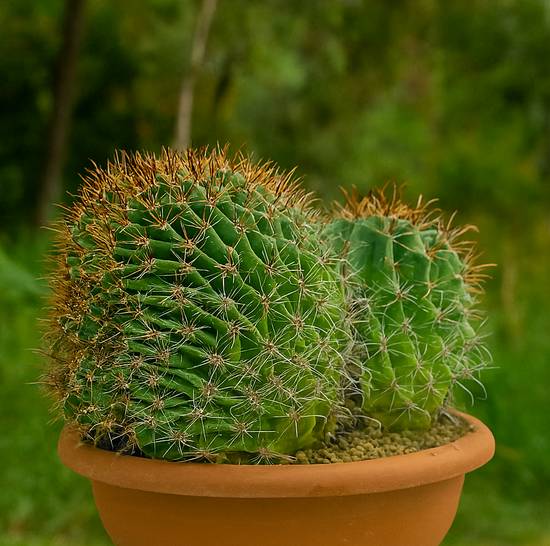
The Ferocactus Wislizeni Cristata is a rare and spectacular form of the Ferocactus Wislizeni, also known as the “Arizona barrel cactus.” In its crested form, this cactus develops a fascinating mutant growth: instead of growing as a rounded column, it spreads into sinuous ridges, like waves frozen in time.
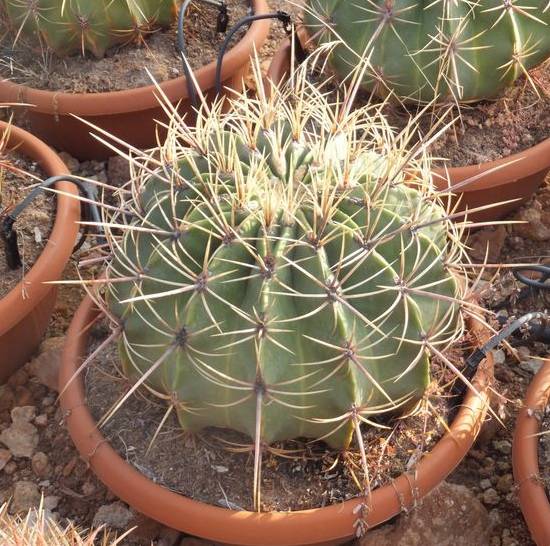
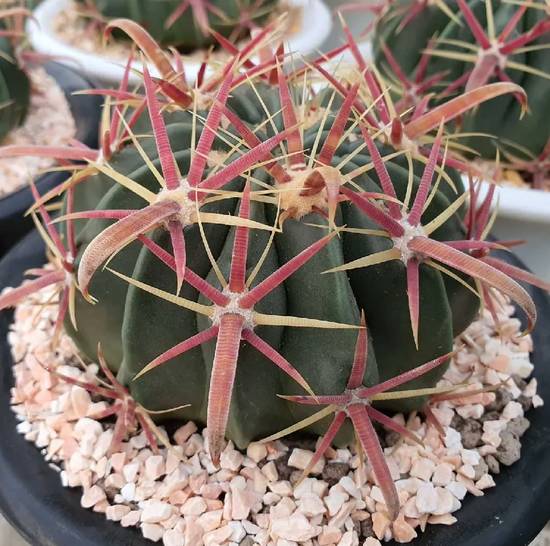
This crested form is sought after for its unique silhouette, where areoles follow an irregular line, creating an undulating pattern of powerful spines. Its dark green epidermis is adorned with formidable yellow to reddish spines, sometimes very long, forming a true protective armor.
This collector’s specimen is not only aesthetic, but also robust and well adapted to extreme conditions. Its artistic appearance makes it a choice piece for any discerning cactus enthusiast.
The crested form results from natural or cultivated mutations and is very rarely found in the wild. These mutations are often stabilized and propagated by grafting.
☀️ Recommended exposure: Full direct sun for several hours per day, especially in summer.
⛱️ Summer protection: Young plants may require light shade during the hottest hours to prevent burns on exposed crests.
🏡 Indoors: Place behind a south-facing window. If sunlight is insufficient, ensure very bright ambient light throughout the day.
💦 Growing season (April to September): Water approximately every 3 weeks, ensuring the substrate is completely dry beforehand.
❄️ Winter: Completely stop watering if temperatures fall below 10 °C.
⚠️ Important: Softening often indicates excess water. Slight shrinkage may simply signal dormancy.
🌡️ Ideal range: Between 20 and 35 °C.
❄️ Minimum tolerated: Down to 5 °C provided the substrate is perfectly dry.
🏠 Winter advice: Place in a bright, unheated space around 8–10 °C to encourage future flowering.
🪨 Ideal recipe: 40% cactus potting soil + 30% coarse sand + 30% pozzolana.
⛏️ Bottom drainage: Always add a drainage layer of perlite or gravel.
📆 Period: Late summer, from July to September.
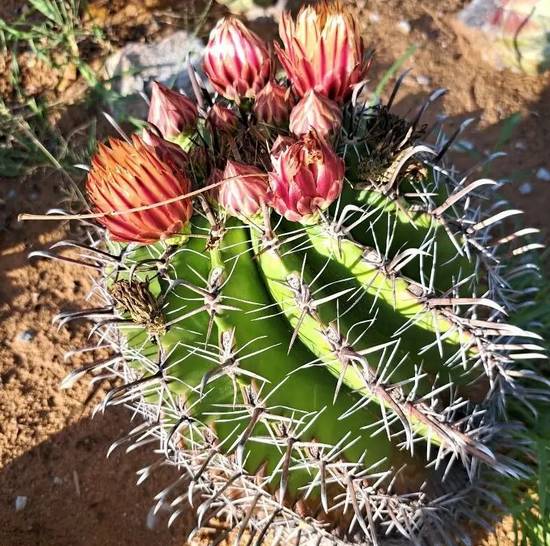
🌼 Flower: Large funnel-shaped flowers, red to orange, appearing on the crest tops.
🌿 Encouraging flowering: A cool, dry winter rest combined with spring fertilization increases flowering chances.