Ferocactus Hamatacanthus
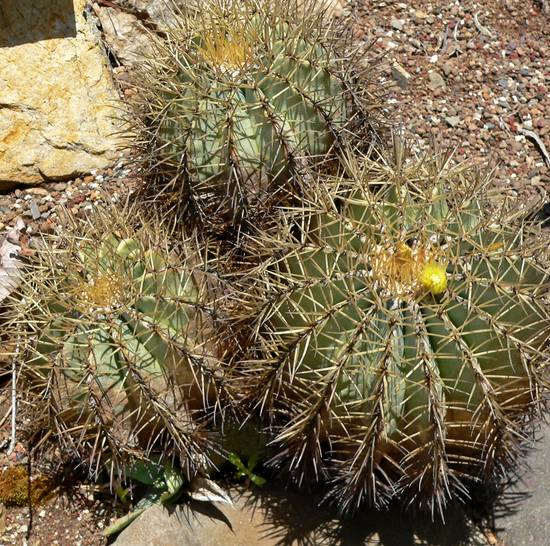
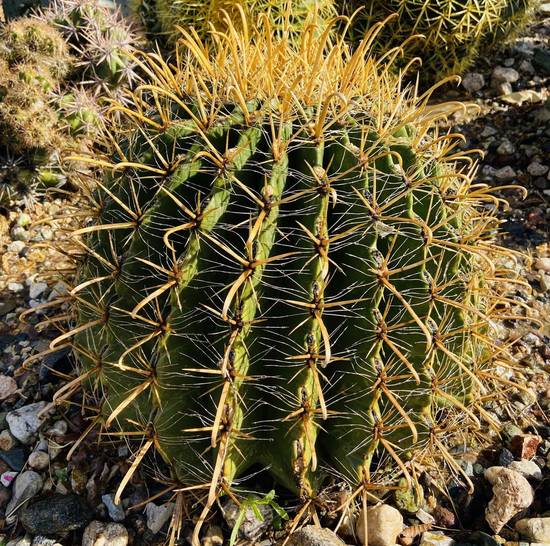
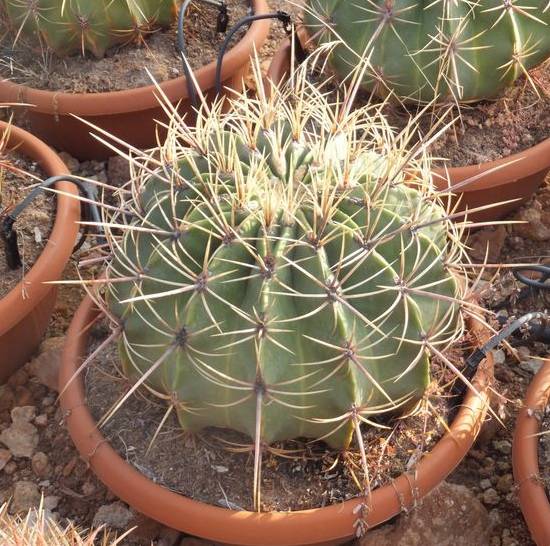
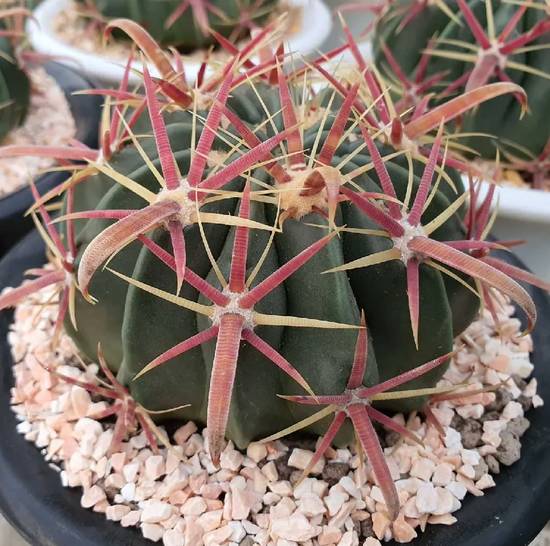
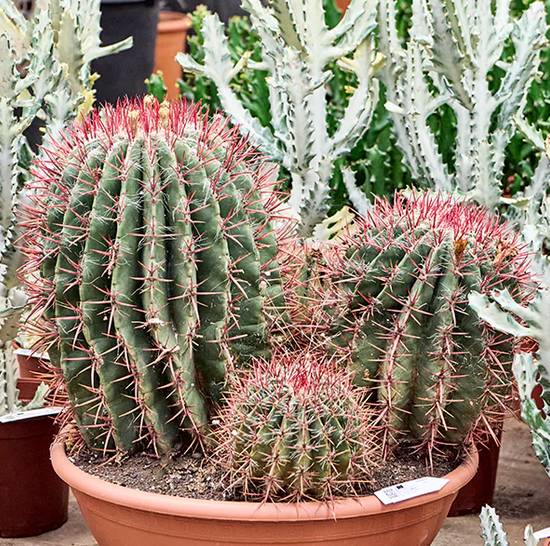
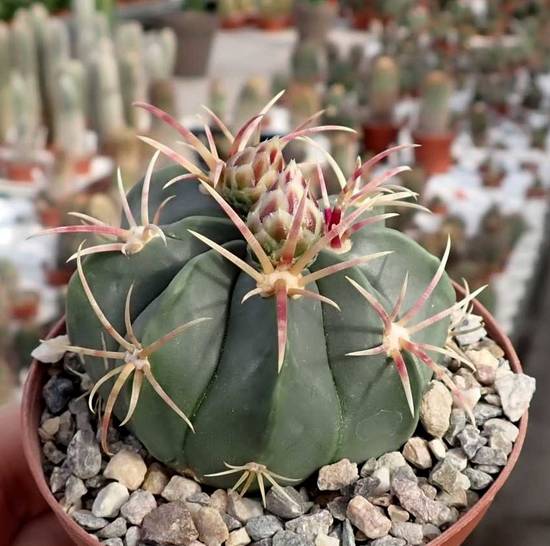
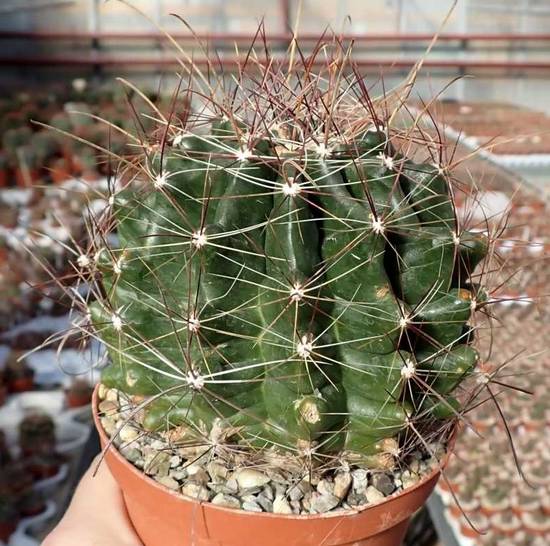
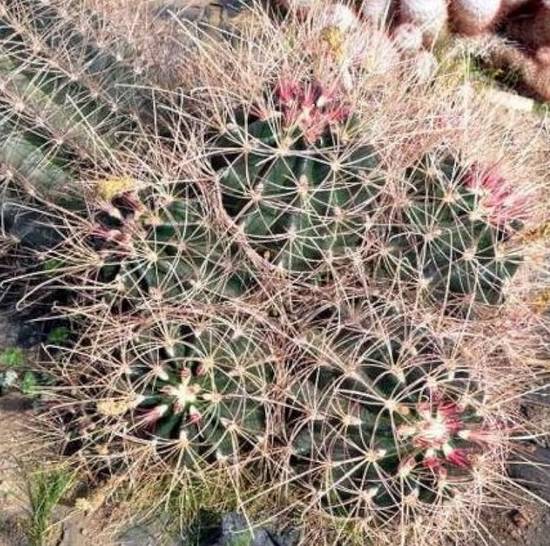
The Ferocactus Hamatacanthus is a spectacular cactus, renowned for its large colorful flowers and long hooked spines that give it a wild and defensive appearance. Native to the desert regions of the southern United States and northern Mexico, it thrives in extremely arid environments while offering generous and highly decorative flowering. This cactus, with a globular to slightly cylindrical shape, can reach 20 to 30 cm in diameter, with well-defined ribs and areoles bearing hooked central spines, reddish to dark brown.
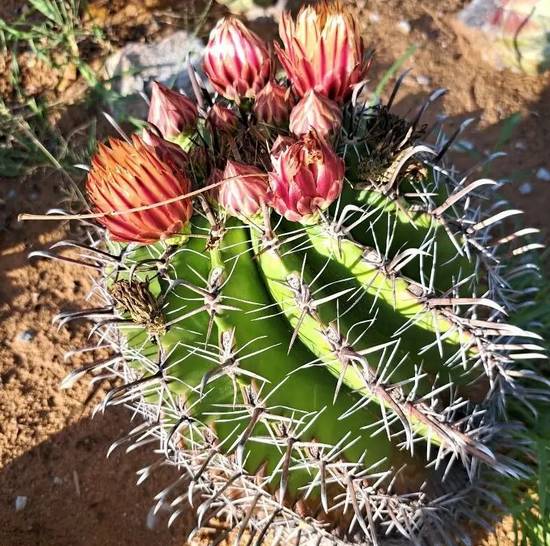
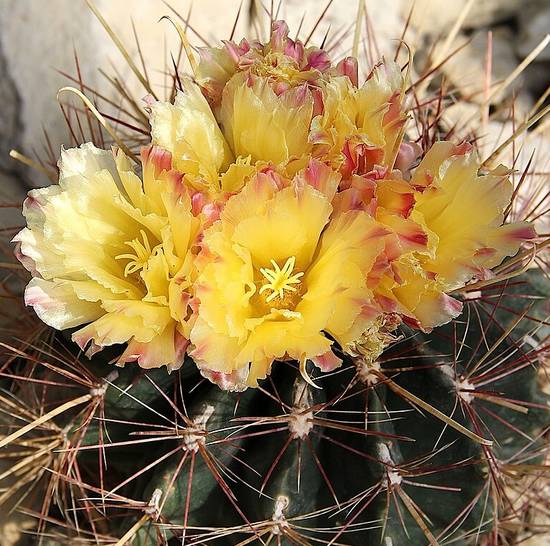
When it comes into bloom, the display is striking: it produces large, diurnal, funnel-shaped flowers of bright yellow, sometimes tinged with red at the center. They often appear in groups at the top of the plant and immediately draw attention.
These extreme conditions have shaped a very resilient cactus, capable of withstanding both intense heat and prolonged drought. Its slow growth reflects its adaptation to a harsh but stable environment.
🌞 Recommended exposure: Full sun, especially during the morning hours. A minimum of 5 to 6 hours of direct light is advised for optimal growth.
☀️ Summer caution: During intense heatwaves, provide light filtered shade to prevent sunburn on young specimens or delicate tissues.
🏡 Indoor cultivation: Place it behind a well-oriented window (south or west). In winter, supplemental grow lighting may be beneficial.
💧 Spring / Summer: Water every 15 to 20 days during warm periods. Allow the substrate to dry completely between waterings.
❄️ Autumn / Winter: Stop all watering as temperatures drop. The plant enters dormancy and prefers to stay dry.
⚠️ Tip: Excess moisture is the main enemy. Ensure impeccable drainage.
🌡️ Ideal temperatures: Between 20 and 30 °C during the active phase.
❄️ Minimum tolerated: Can withstand temperatures close to 0 °C only if the substrate is perfectly dry.
🏠 Advice: Bright overwintering between 5 and 10 °C is ideal to prepare for spring flowering.
🪨 Recommended mix: 50% cactus potting soil, 25% pozzolana, and 25% perlite or coarse sand.
⛏️ Drainage: Place a layer of clay pebbles or drainage granules at the bottom of the pot.
🌸 Season: Between May and August, depending on exposure and temperature.
🌼 Flowers: Bright yellow with a red center, up to 8 cm in diameter. They last several days and renew regularly.
💡 For good flowering: Respect a dry winter rest period and apply suitable fertilizer in spring.