Ferocactus Glaucescens Nudum Monstruoso
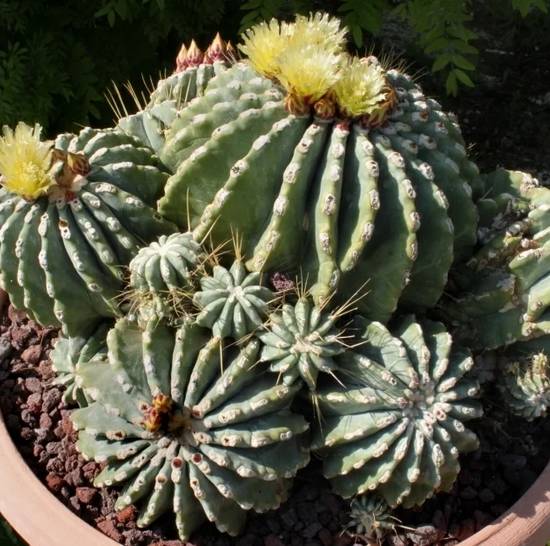
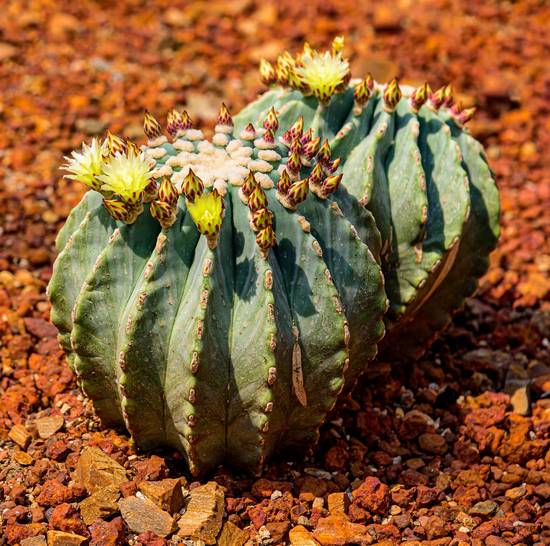
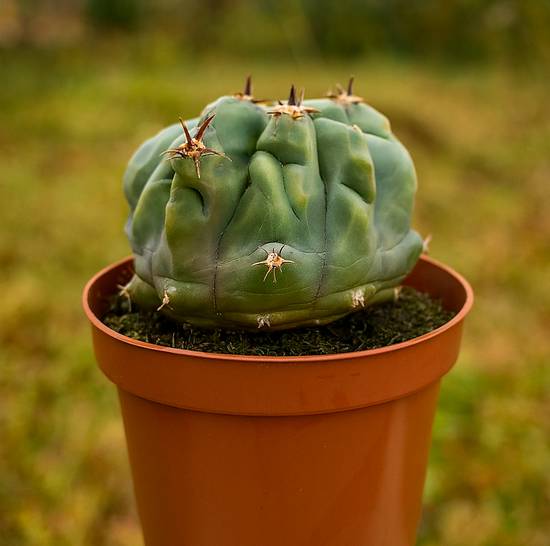
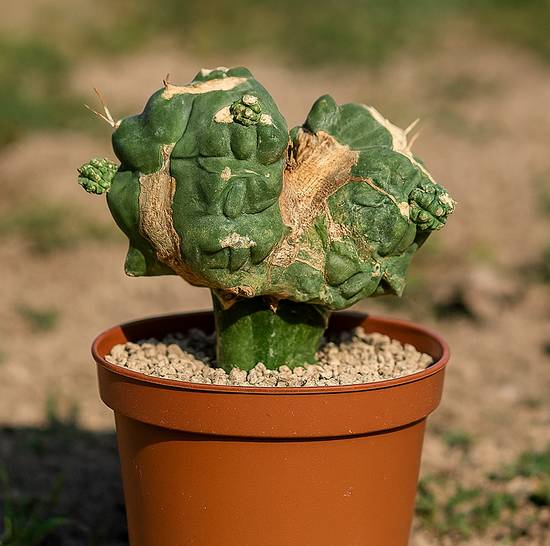
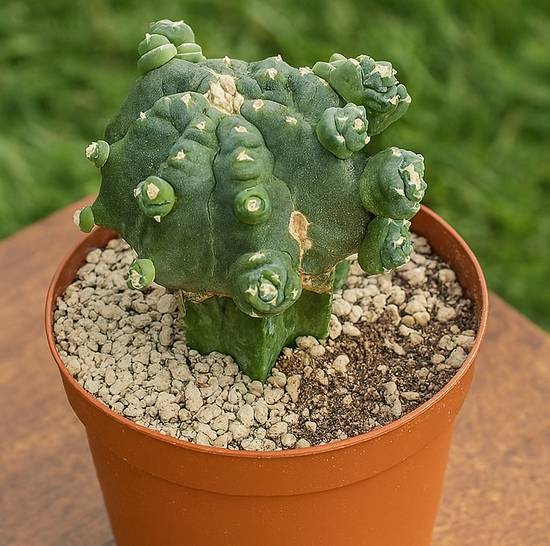
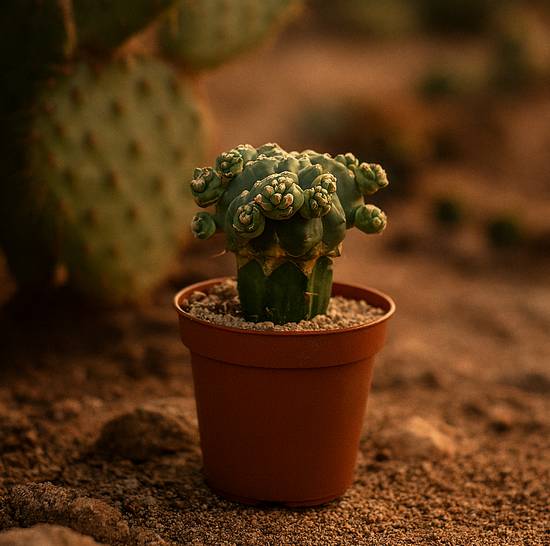
The Ferocactus Glaucescens Nudum Monstruoso is a rare and highly decorative variant of Ferocactus Glaucescens. This cactus stands out for its almost complete absence of pruina (nudum), revealing a glossy green epidermis, and for its so-called "monstruosa" growth, which produces irregular, twisted forms, sometimes spiral or surprisingly deformed.
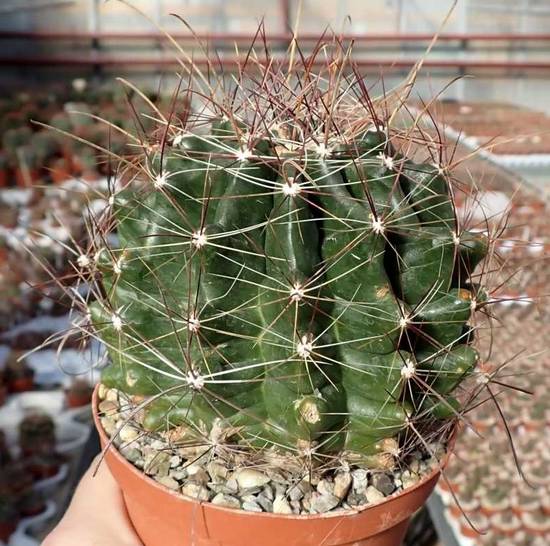
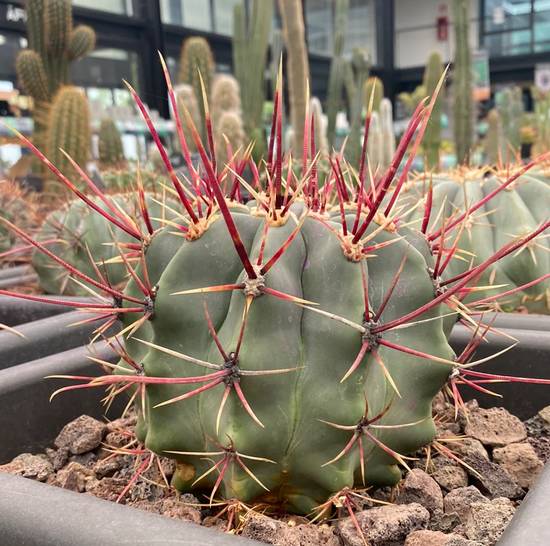
This cactus has a massive silhouette, with thick ribs that may be more or less pronounced depending on the specimen. It can develop bumps, crests or natural deformities, giving it a truly sculptural appearance. Its spines, generally yellow to golden, are fewer than on classic forms but remain clearly visible at the areoles. It is a perfect cactus for collectors looking for a truly unique plant.
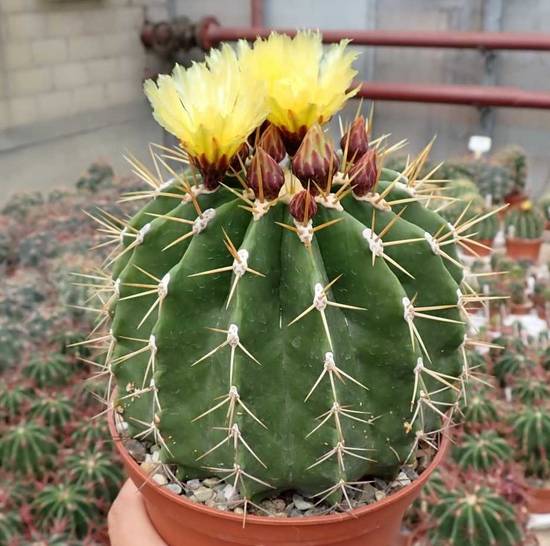
With age, it may form clumps or branched specimens while retaining its extravagant look. It is capable of producing beautiful yellow flowers in summer, often arranged in a crown around the apex.
🌞 Direct sun: At least 5 to 6 hours per day. Outdoors, place it in full sun.
🌤️ Summer protection: During intense heat waves, lightly shade young plants to prevent sunburn.
🏠 Indoor cultivation: Install it behind a well-exposed bay window. In winter, supplementing with a horticultural lamp is recommended.
💧 Growth period: Spring–summer, watering every 15 to 20 days is sufficient, once the substrate is completely dry.
❄️ Dormant period: Autumn–winter, almost completely stop watering to avoid any risk of rot.
⚠️ Tip: Overwatering is more harmful than forgetting to water. Ferocactus prefers drought.
🌡️ Ideal: Between 18 and 30 °C during the growing season.
❄️ Minimum: Tolerates down to 5 °C if the substrate is perfectly dry.
🏠 Wintering: Between 8 and 12 °C, with plenty of light, to encourage future flowering.
🪨 Recommended mix: 50% cactus potting soil, 30% perlite, 20% pozzolana or coarse sand.
⛏️ Drainage: A drainage layer at the bottom of the pot is essential.
🌼 Season: Late spring to summer.
🌸 Appearance: Large bright yellow funnel-shaped flowers at the top of the cactus.
💡 Tip: To stimulate flowering, apply a specific cactus fertilizer in spring and respect a bright, dry winter rest.