Euphorbia Inermis
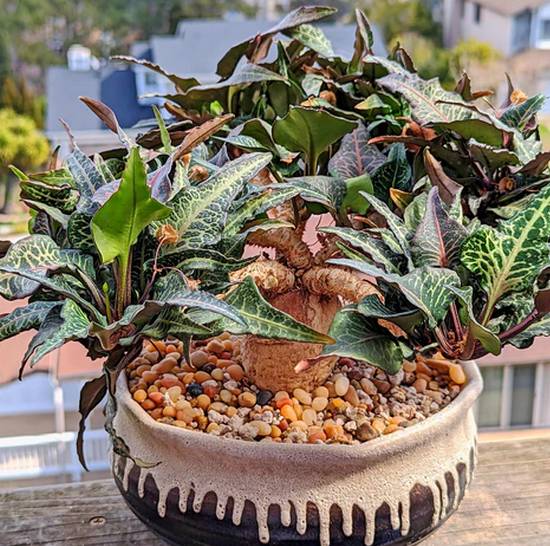
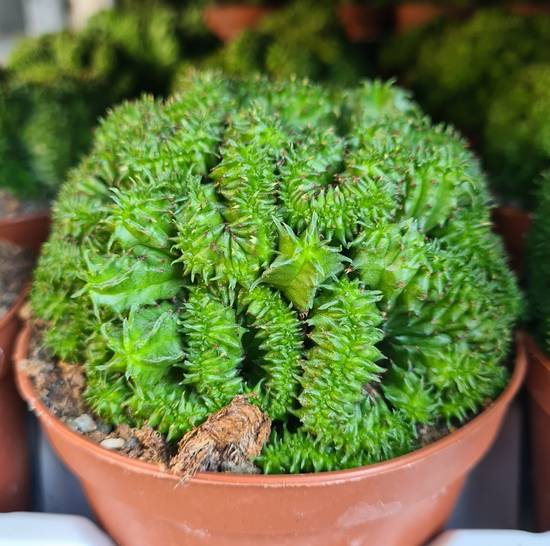
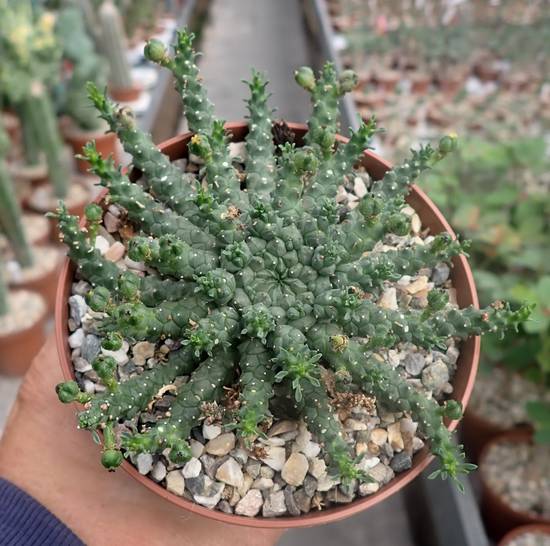
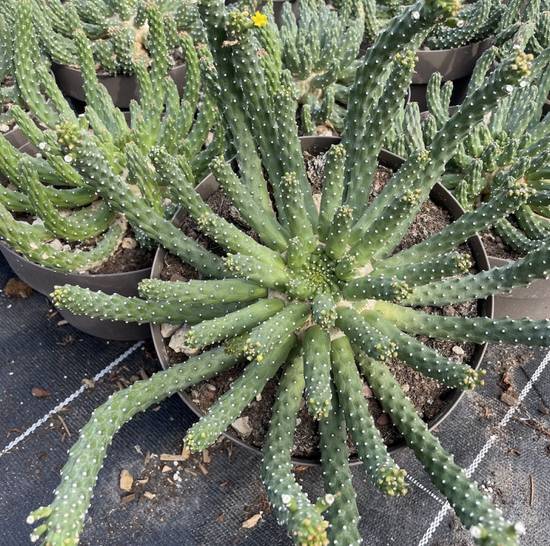
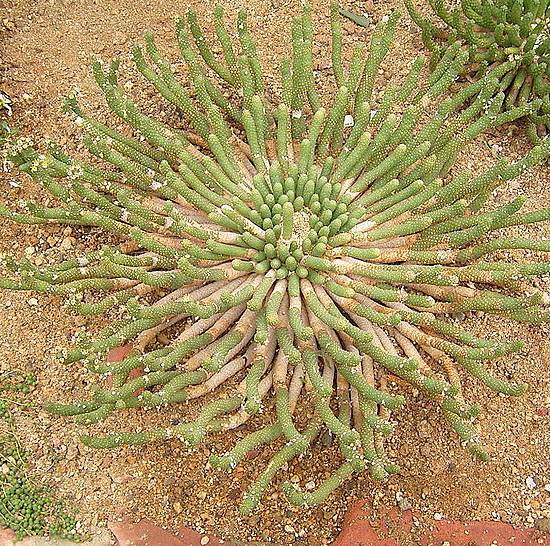
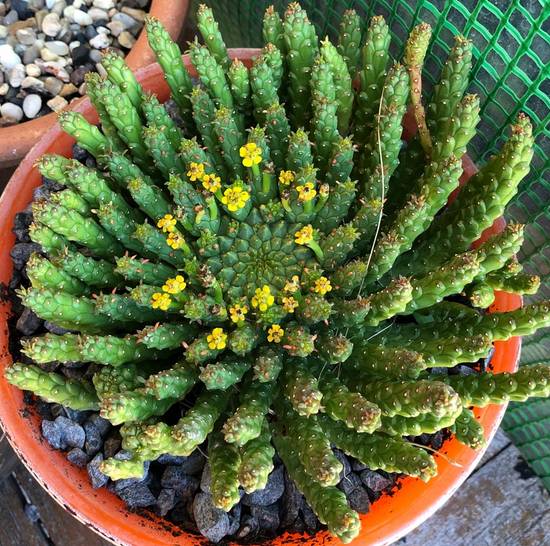
The Euphorbia Inermis is a South African euphorbia with an original and striking habit, immediately attracting attention with its compact, globular or cushion-like shape. Unlike other more elongated euphorbias, this plant develops multiple short and thick stems arranged in a rosette, forming dense and harmonious structures, sometimes almost spherical. This graphic and symmetrical habit makes it highly prized among collectors of rare succulents.
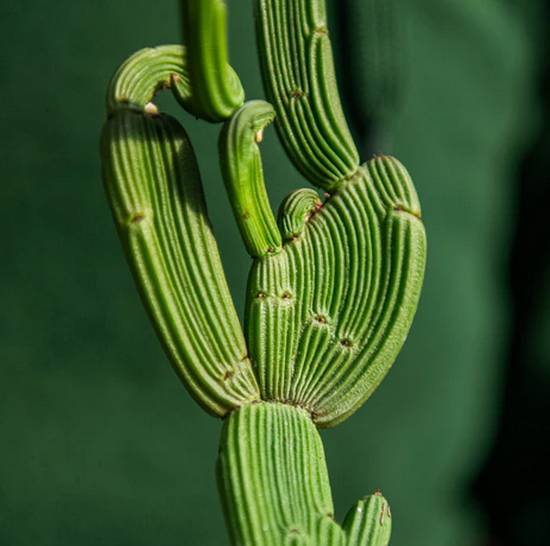
The stems are pale green to bluish-green, often slightly marbled or tinted with purple depending on growing conditions. The Euphorbia Inermis also stands out for its lack of spines, as reflected in its name ("inermis" meaning "unarmed"). Its sap, like all euphorbias, remains toxic and irritating, although the plant itself has no spines.
This compact plant is ideal for small potted collections, greenhouses, or very bright windowsills. It can live for many years in a pot, slowly forming highly aesthetic rosette colonies. An original flowering may appear in the warm season, with yellow or pale green cyathia contrasting nicely with the stems.
🌞 Direct exposure: It tolerates direct sun, even during hot hours, provided it is gradually acclimated.
🌤️ Indoors: Place it behind a south- or west-facing window for optimal growth. Too much shade causes unattractive etiolation.
💧 Spring/summer: Water every 3 weeks, allowing the substrate to dry completely.
❄️ Winter: Stop watering or space it to once a month, especially during vegetative rest.
⚠️ Too much moisture is the main danger for this plant.
🌡️ Ideal: between 20 and 30 °C during the growing period.
❄️ Minimum: It can tolerate brief drops to 5 °C, but not frost. In winter, keep it sheltered in a dry and bright place.
– Mix a cactus substrate with 50% perlite + a layer of pumice stone on the surface prevents stagnant moisture and promotes good aeration.
🌸 Season: in spring or summer.
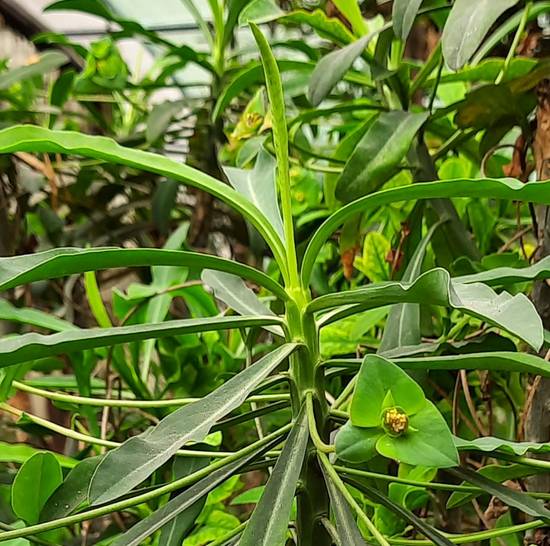
💡 Appearance: small yellow-green cyathia appear in the center of the rosettes, contrasting with the foliage.
🕑 Duration: a few days to one week depending on heat and light.