Echinopsis Subdenudata
The Echinopsis Subdenudata, also nicknamed “Domino Cactus”, is a small marvel of the Cactaceae family. Compact, elegant and deep green, this globular cactus native to South America stands out for its clean aesthetic and spectacular flowering.
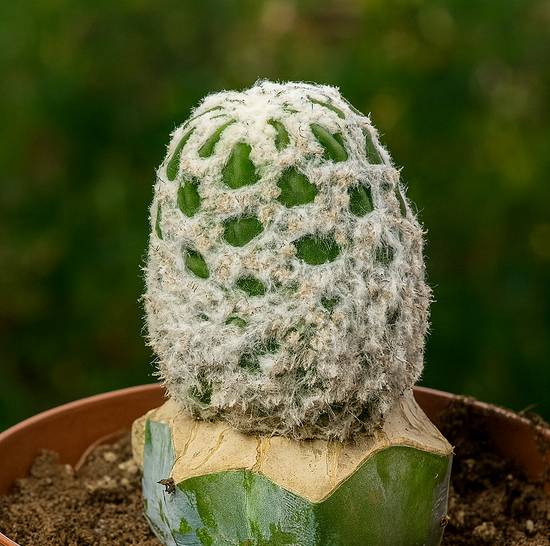
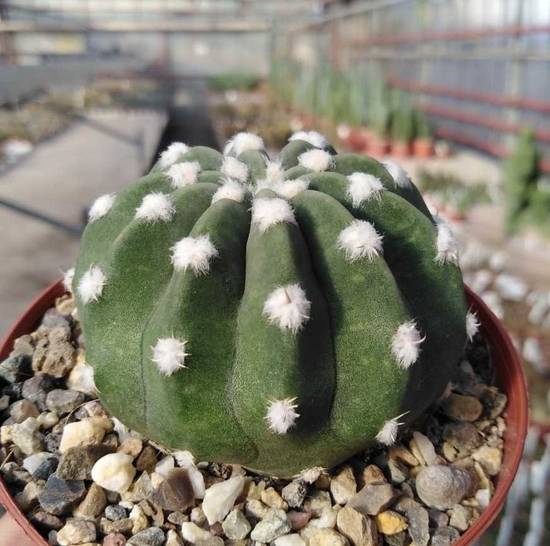
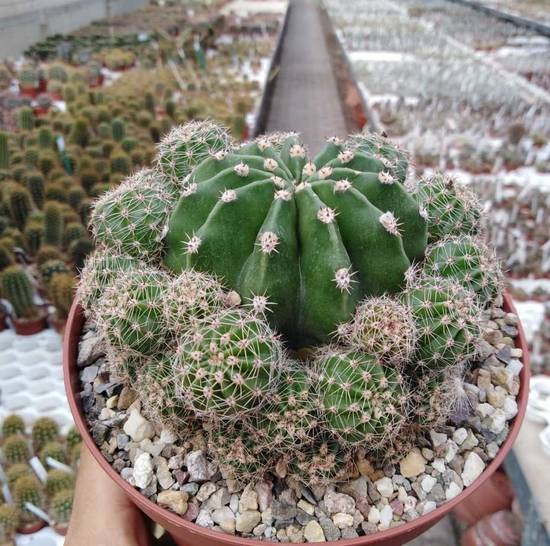
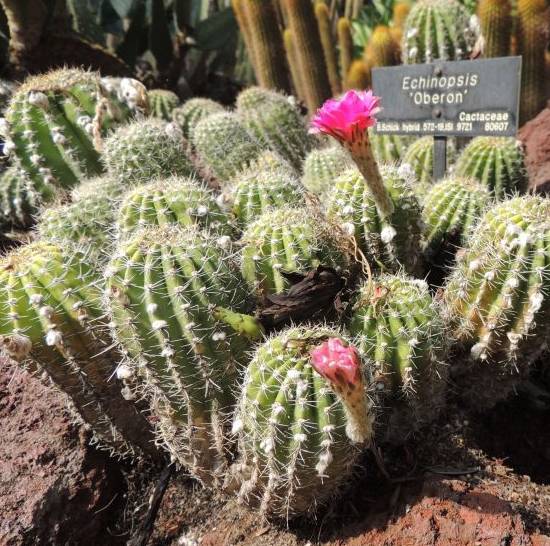
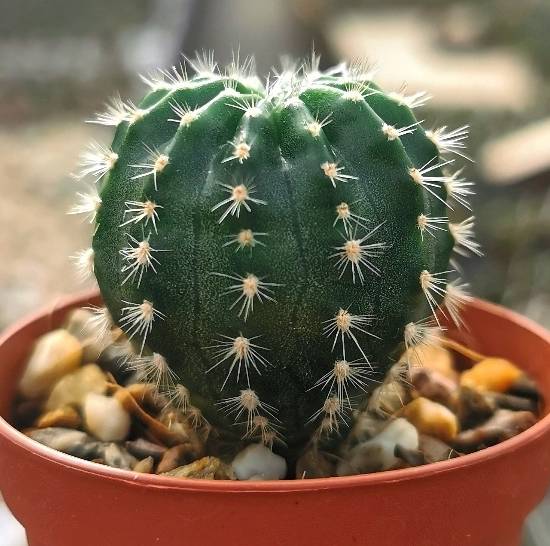
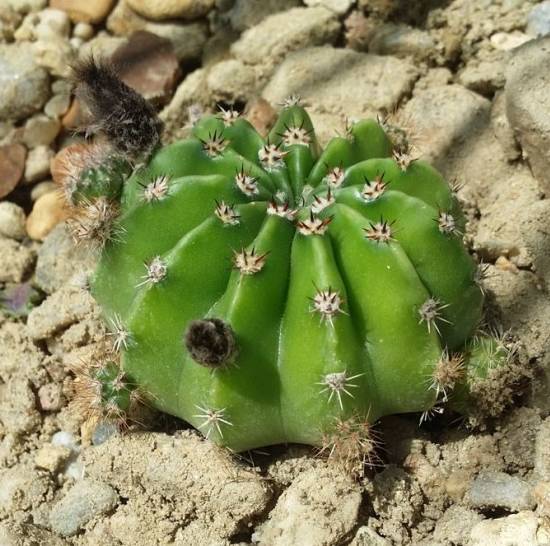
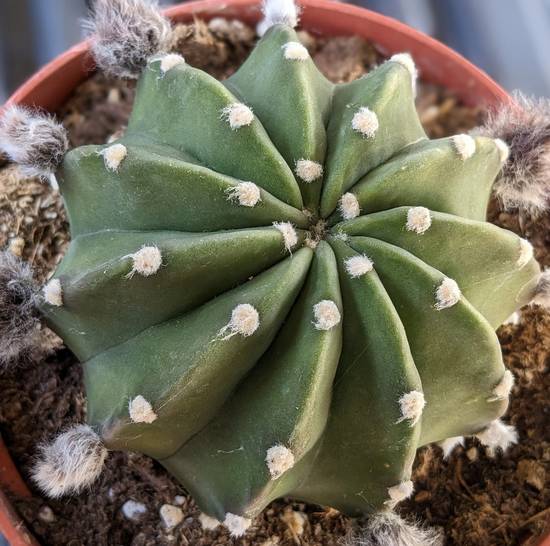
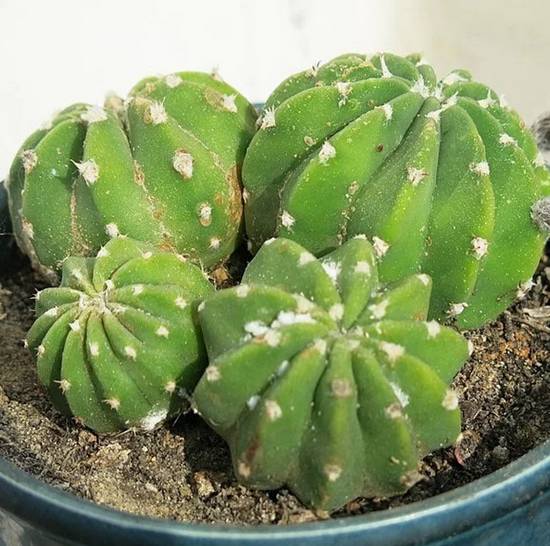
It is characterized by a rounded, often solitary body measuring 5 to 12 cm in diameter, adorned with smooth, regular ribs. The areoles are covered with white woolly fuzz, giving the impression of white dots on a green background — hence its nickname.
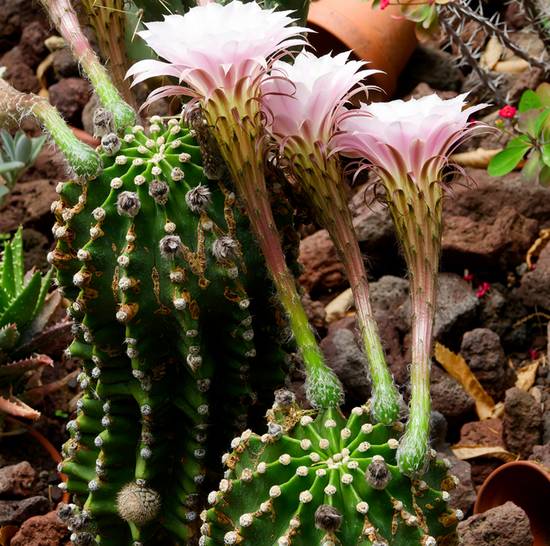
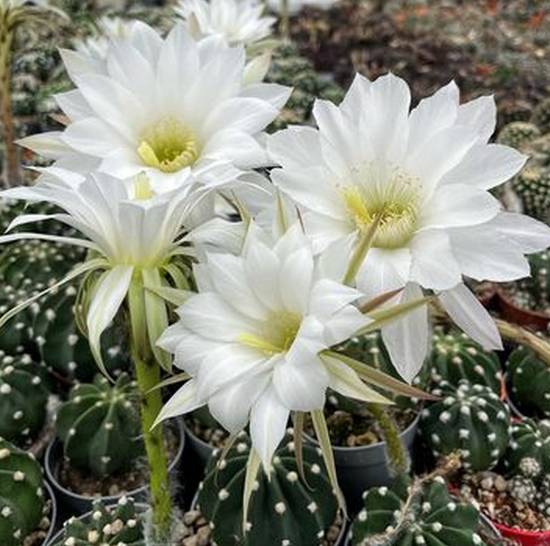
The true star here is the flower: large, white, trumpet-shaped, reaching up to 20 cm long, far exceeding the cactus body. It opens at night and releases a soft, almost intoxicating fragrance.
The Echinopsis Subdenudata is native to Bolivia, more precisely the semi-arid regions of Santa Cruz and Cochabamba. It often grows in rocky soils under partial shade from shrubs or stones, giving it good tolerance to difficult conditions, particularly strong temperature variations.
This cactus enjoys light, but in moderation.
🌤️ Ideal exposure: Bright light with a few hours of direct sun (morning or late afternoon).
⛱️ Warning: Too much sun in summer can cause burns on its smooth skin. Conversely, lack of light slows growth and prevents flowering.
🏠 Indoors: Place it behind a very bright south- or west-facing window, with light filtering if necessary.
🌤️ Ideal exposure: Bright light with a few hours of direct sun (morning or late afternoon).
⛱️ Warning: Too much sun in summer can cause burns on its smooth skin. Conversely, lack of light slows growth and prevents flowering.
🏠 Indoors: Place it behind a very bright south- or west-facing window, with light filtering if necessary.
Watering is the key to its health: neither too much nor too little.
💧 Growing season (spring/summer): Water every 15 to 20 days, only when the substrate is completely dry.
❄️ Winter: Rest period. No watering if temperatures fall below 10 °C.
💧 Growing season (spring/summer): Water every 15 to 20 days, only when the substrate is completely dry.
❄️ Winter: Rest period. No watering if temperatures fall below 10 °C.
This cactus is fairly tolerant but does not like cold humidity.
🌡️ Ideal range: 18 to 28 °C.
❄️ Minimum tolerance: Down to 0 °C if kept completely dry.
🏠 Wintering: Place it in a bright and cool place (between 5 and 10 °C) to respect its natural cycle.
🌡️ Ideal range: 18 to 28 °C.
❄️ Minimum tolerance: Down to 0 °C if kept completely dry.
🏠 Wintering: Place it in a bright and cool place (between 5 and 10 °C) to respect its natural cycle.
A well-draining and aerated soil is essential.
🪨 Recommended mix: 50 % cactus soil + 30 % perlite + 20 % pumice or coarse sand.
🪨 Recommended mix: 50 % cactus soil + 30 % perlite + 20 % pumice or coarse sand.
The highlight of the Echinopsis Subdenudata: its spectacular nocturnal flowering.
🌸 Period: Usually between May and July, sometimes several times per season.
🎨 Appearance: Pure white, trumpet-shaped flowers, up to 20 cm long. They bloom in the evening and usually last one night.
🌙 Feature: The flowers are fragrant, and their size contrasts beautifully with the small cactus body.
🌸 Period: Usually between May and July, sometimes several times per season.
🎨 Appearance: Pure white, trumpet-shaped flowers, up to 20 cm long. They bloom in the evening and usually last one night.
🌙 Feature: The flowers are fragrant, and their size contrasts beautifully with the small cactus body.
FAQ - Echinopsis Subdenudata
What is special about the flowering of Echinopsis Subdenudata?
Its flowering is nocturnal and spectacular: large white trumpet-shaped flowers open at sunset and last only one night, releasing a delicate fragrance. It is a true event not to be missed.
Can I grow Echinopsis Subdenudata in an apartment?
Yes, perfectly. Simply provide a bright location, ideally behind a south-facing window. Make sure it is not too close to a radiator in winter.
How often should I water my Echinopsis Subdenudata?
During the growing season (April to September), watering every two to three weeks is sufficient. In winter, it must be kept completely dry to respect its dormancy period.
What type of substrate is suitable for Echinopsis Subdenudata?
A very well-draining mix is essential. Use a special cactus potting mix supplemented with minerals such as perlite and pumice.
Should I fertilize Echinopsis Subdenudata?
Yes, during the growing season, a liquid cactus fertilizer every 4 weeks can encourage flowering.
Can Echinopsis Subdenudata be propagated by offsets?
It rarely produces offsets. Propagation is generally done by seed, which requires patience but allows you to obtain many plants.
Can Echinopsis Subdenudata tolerate cold?
Yes, down to 0°C if kept dry. It must never be exposed to cold moisture, which promotes rot.
How can I tell if my Echinopsis Subdenudata lacks light?
A cactus that becomes etiolated (elongated shape, pale green color) indicates a lack of light. In that case, move it closer to a light source or consider horticultural lighting.
Is it a good cactus for beginners?
Absolutely. It is resilient, undemanding, and its impressive flowering is a wonderful reward for minimal care.
How long does it take for an Echinopsis Subdenudata to bloom?
Generally, a well-grown plant can bloom after 2 to 3 years. Provide a proper winter rest and bright exposure to encourage flowering.