Echinopsis Subdenudata
Fuzzy Navel

Echinopsis Subdenudata Fuzzy Navel

Echinopsis Subdenudata Fuzzy Navel

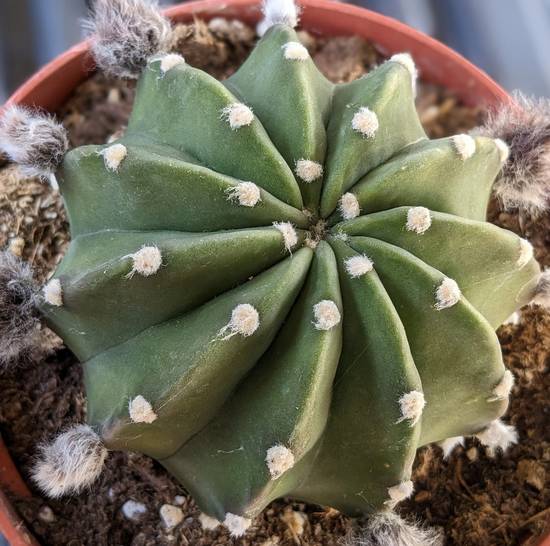
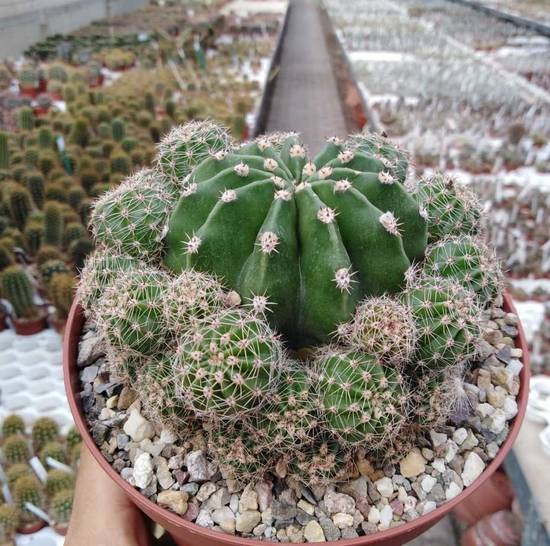
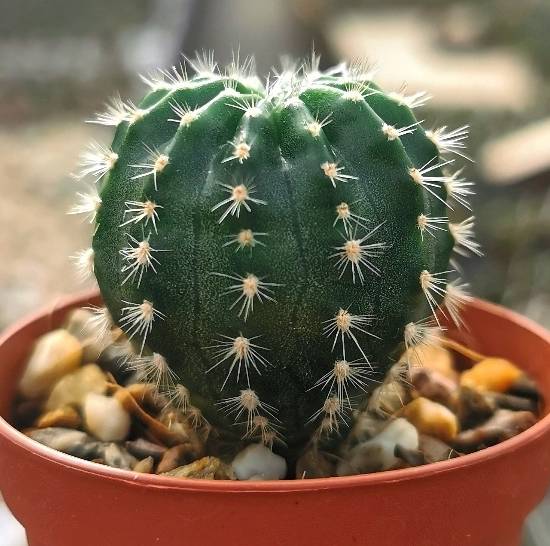
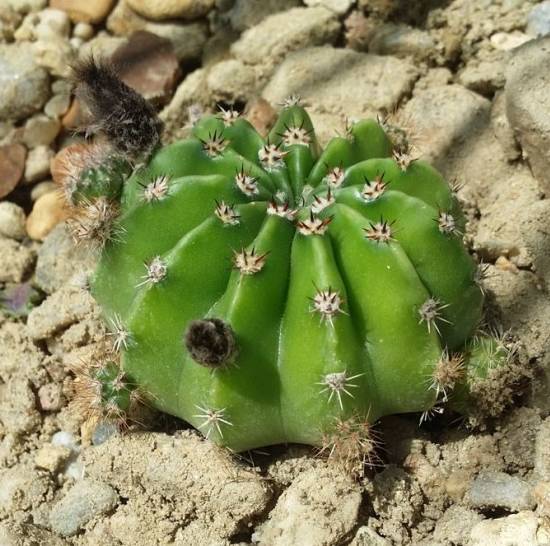
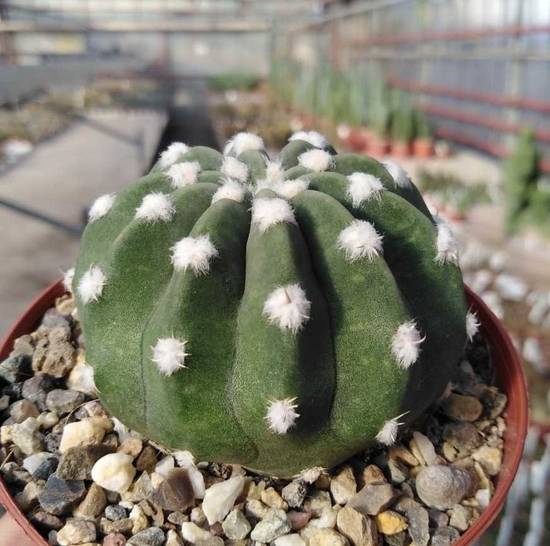
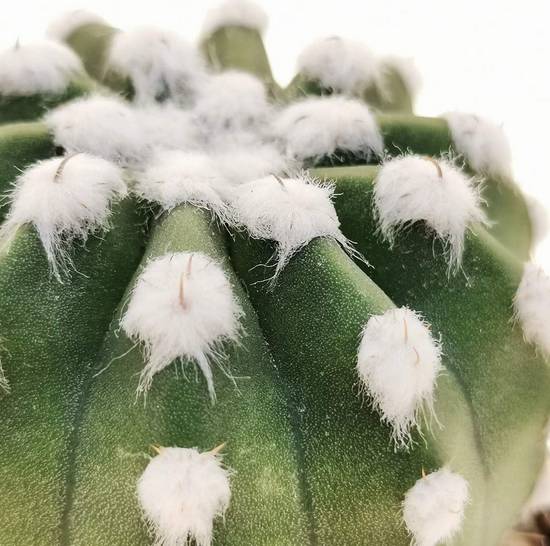
The Echinopsis Subdenudata Fuzzy Navel is a selected variety of the well-known domino cactus, recognized for its woolly areoles and an even more striking appearance. Its nickname "Fuzzy Navel" refers directly to the small white tufts that decorate the ribs of this spherical cactus.

Of modest size, this cactus grows slowly and forms a globular body reaching 10 to 12 cm in diameter. Its dark green color is punctuated by numerous white woolly areoles evenly distributed along rounded ribs. The absence or extreme discretion of spines highlights the velvety texture of the areoles, giving it a soft and almost plush appearance.

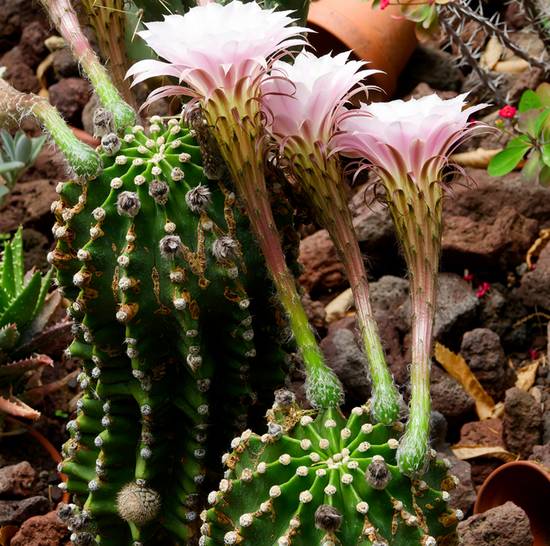
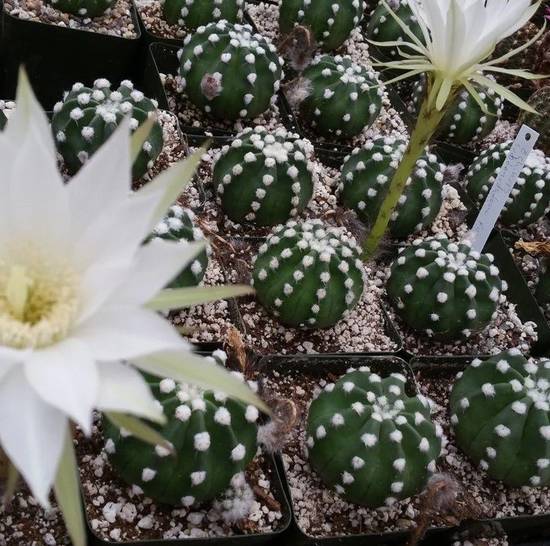
The true charm of the Echinopsis Subdenudata Fuzzy Navel lies in its spectacular flowering. It produces very large white tubular flowers that emerge in the evening and can reach 15 to 20 cm in length, creating a striking contrast with the small size of the cactus. These flowers are also delicately fragrant.

Like the botanical type, this variety originates from Bolivia, but was selected in cultivation for its particularly woolly appearance. It does not exist in the wild under this name, but retains the adaptive traits of Bolivian Echinopsis: hardiness, drought tolerance, and moderate light requirements.
The Fuzzy Navel prefers bright light without excess.

🌞 Ideal: Filtered direct sunlight or very bright indirect light, especially in summer. A few hours of morning sun are beneficial.

🚫 Avoid: Intense midday sun, which can damage its soft and delicate surface.

🏠 Indoors: Near a south- or west-facing window. Artificial lighting (horticultural LED) can be used in winter.
This cactus does not tolerate excess water.

💧 Active period (March to September): Water moderately every 15 to 20 days, only when the substrate is completely dry.

❄️ Winter rest: No watering if temperatures are cool (below 10°C).

💡 Tip: Bottom watering is possible but must be followed by complete drying. Always use a well-draining substrate to prevent excess moisture.
The Fuzzy Navel is sensitive to cold and humidity.

🌡️ Ideal: 18 to 28°C.

❄️ Lower limit: Tolerates 0 to 5°C only if kept completely dry.

🏠 Wintering: A cool, dry, and bright location will promote future flowering.
A very well-draining soil is essential.

🪨 Recommended mix: 50% cactus soil + 30% perlite + 20% pumice or coarse sand.
A spectacular and fragrant flowering not to be missed.

🌸 Season: Late spring to summer.

🎨 Appearance: Large white trumpet-shaped flowers extending well beyond the cactus body.

🌙 Duration: Flowers open in the evening and fade the next day.
FAQ - Echinopsis Subdenudata Fuzzy Navel

Why is Echinopsis Subdenudata Fuzzy Navel called that?
This name refers to its white, woolly areoles that give it a fuzzy appearance. It is a cultivated selection appreciated for its very distinctive decorative look.
How should I care for Echinopsis Subdenudata Fuzzy Navel indoors?
Provide a bright location near a sunny window, without direct contact with a heater. In winter, reduce watering and place it in a cooler spot to respect its dormancy period.
What is the ideal watering frequency for Fuzzy Navel?
In the warm season, watering every two to three weeks is sufficient. The substrate must be completely dry before watering again.
Can this cactus be grown outdoors?
Yes, but only between May and September, in a place sheltered from full sun and rain. Bring it indoors as soon as nighttime temperatures drop below 10°C.
What type of substrate is suitable for Fuzzy Navel?
A well-draining cactus substrate enriched with perlite and pumice is ideal to prevent excess moisture that causes rot.
What is special about the flowering of Fuzzy Navel?
The flowers, very large compared to the size of the cactus, open at night, release a sweet fragrance, and last only one day. It is a spectacular bloom to observe.
Should I fertilize this cactus?
Yes, during its growing period, use a gentle fertilizer once a month. This stimulates flowering and strengthens the plant.
Can Echinopsis Subdenudata Fuzzy Navel be propagated?
It is mainly propagated by seed, as offsets are rare. Sowing requires patience but allows you to obtain young cacti true to form.
Is this cactus suitable for beginners?
Absolutely. Its growth is slow but steady, and it tolerates occasional missed waterings. It is therefore ideal for enthusiasts wishing to discover the world of flowering cacti.
How can I get it to bloom every year?
Respect a dry winter rest period, provide abundant light from spring onward, and feed it with a suitable liquid fertilizer. These conditions will stimulate impressive annual blooming.