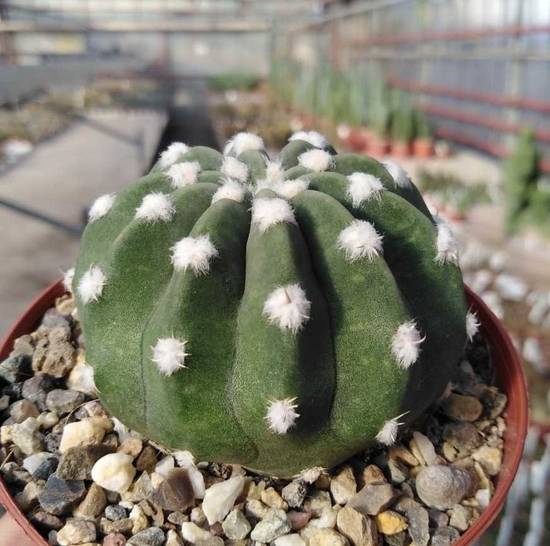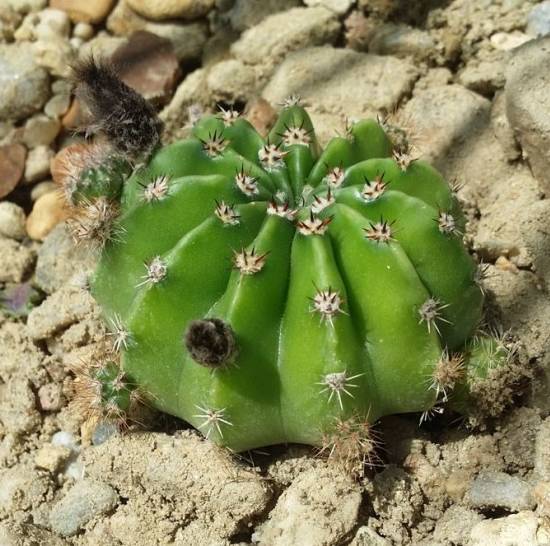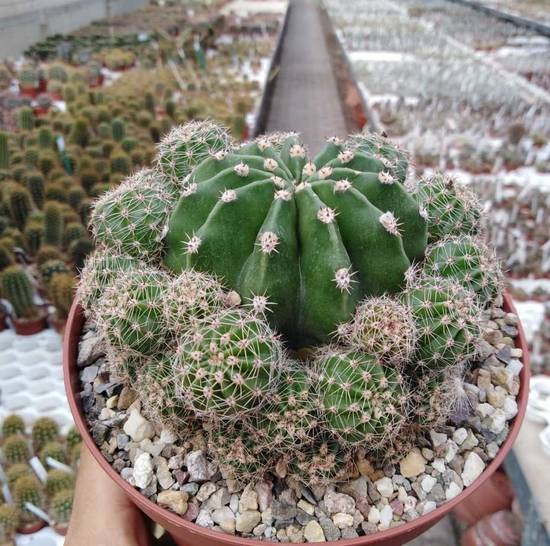
Echinopsis Silvestrii
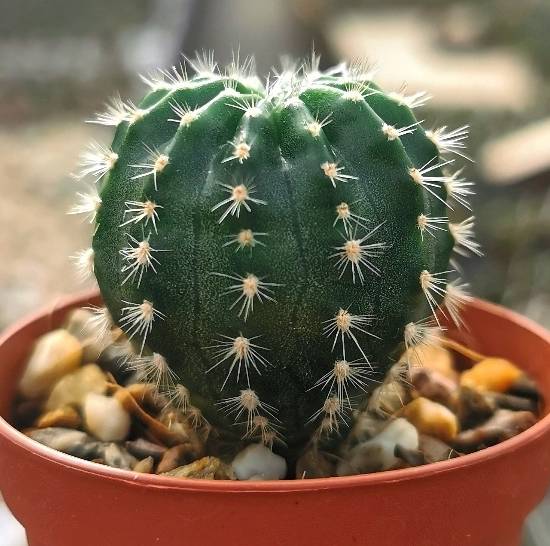
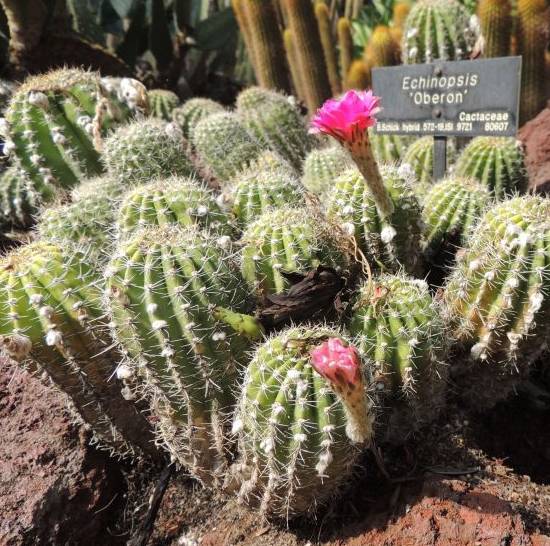
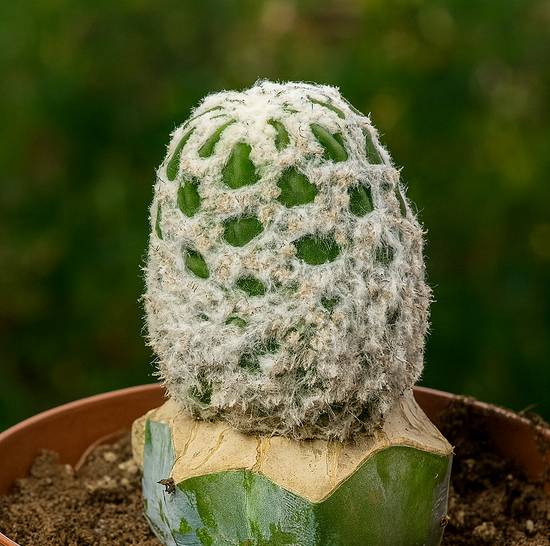
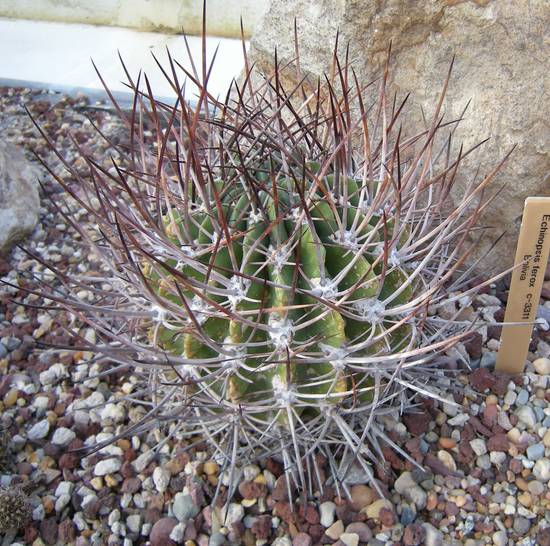
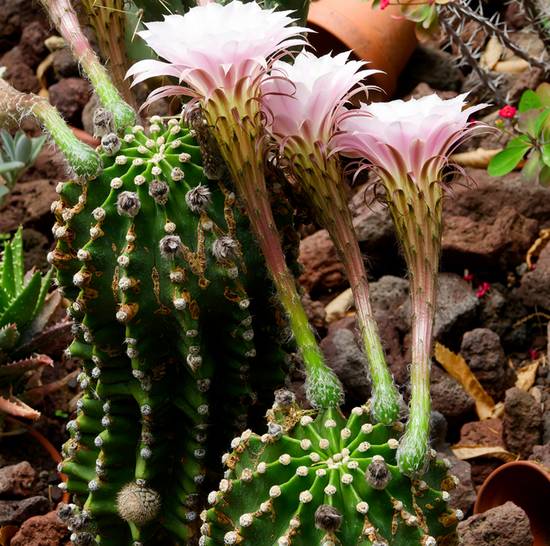
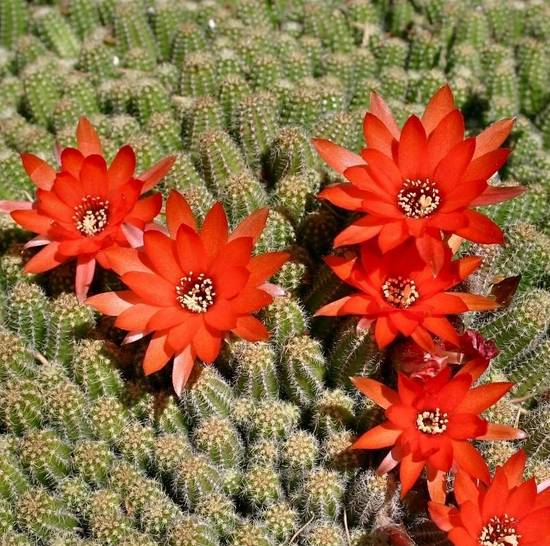
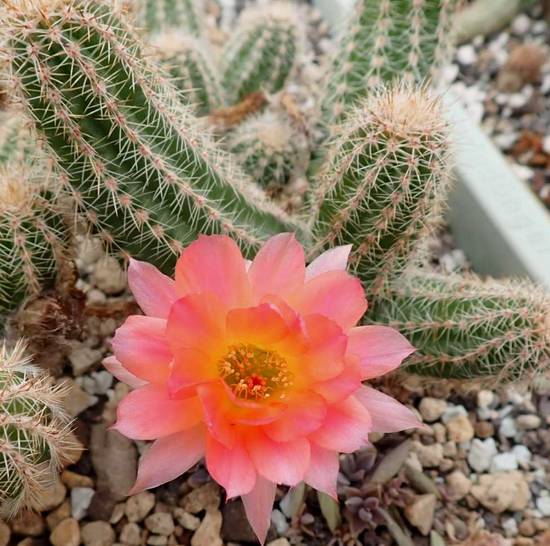
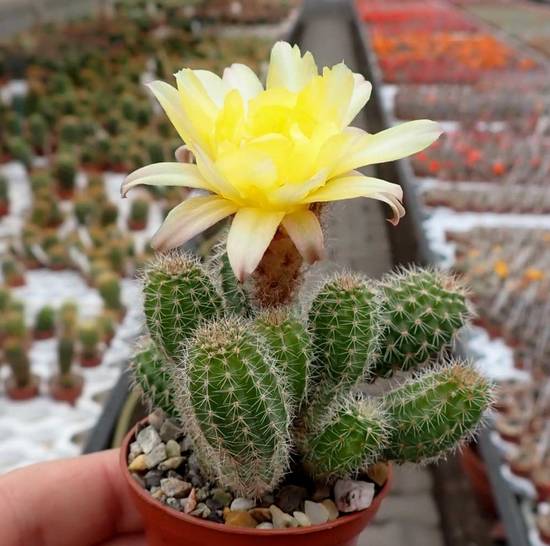
The Echinopsis Silvestrii (often linked to former Lobivia/Rebutia groups) forms globular to slightly cylindrical heads, sometimes clustering with age. Marked ribs divided into closely spaced areoles bear fine to medium spines protecting the bright to bluish green body. Growth is steady in pots with plenty of light, a truly draining substrate and measured watering. In the beautiful season, Echinopsis Silvestrii excels: long floral tubes emerge laterally and open at sunrise into satin-like corollas, pink to orange-red depending on the strain, often with a lighter throat attracting pollinators.
Because it tolerates thermal variations and occupies little space, Echinopsis Silvestrii is ideal for beginners or for completing a collection of small flowering cacti. A cooler, drier winter rest is key to ensuring generous spring blooming.
🌞 Ideal: 4–6 h gentle direct sun (morning) + bright light afterward.
🌤️ Summer: filter harsh midday sun behind south-facing glass.
🏠 Indoors: very bright south/east windowsill or grow lights.
🌱 Spring/Summer: every 10–14 days, only when completely dry at depth.
🍂 Autumn/Winter: greatly reduce or stop when cool and dry; resume gently in spring to stimulate flowering.
⚡ Tip: extra minerals and terracotta pots speed drying and reduce rot.
🌡️ Ideal: 18–28 °C in growth with ventilation.
❄️ Minimum: 5 °C dry; avoid prolonged frost.
🏠 Rest: bright winter at 8–12 °C, almost dry to induce buds.
🪨 Recommended base: cactus soil mixed with 50–60% minerals: coarse sand, perlite and a pozzolana layer at the bottom.
🌸 Period: mainly spring, sometimes again in summer under mild climates.
🎨 Colors: pink, red, orange depending on strain; diurnal flowers on elongated tubes.
🕑 Keys: abundant light, controlled watering and light low-nitrogen feeding.