Echinocereus Knippelianus
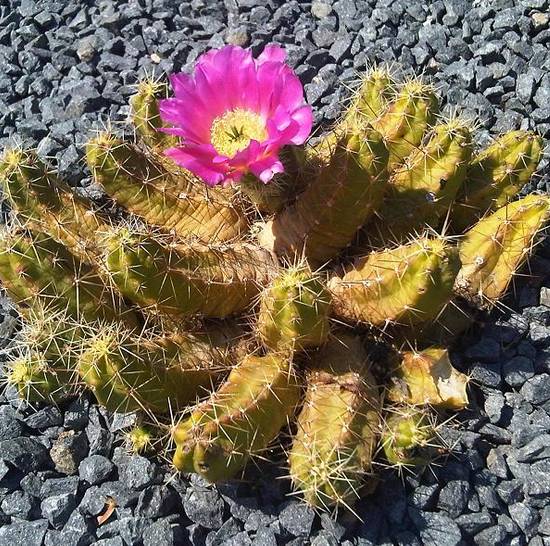
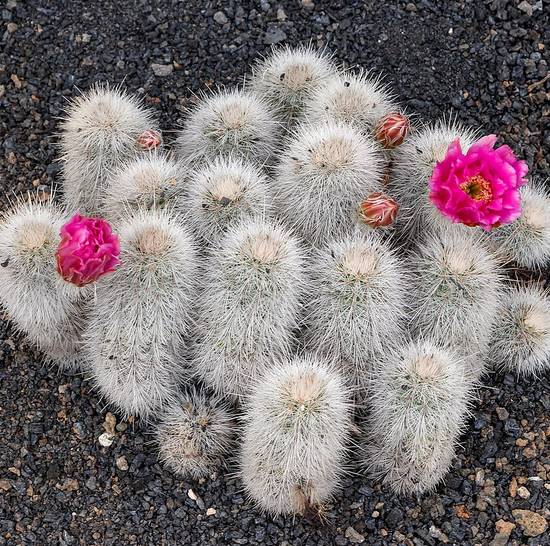
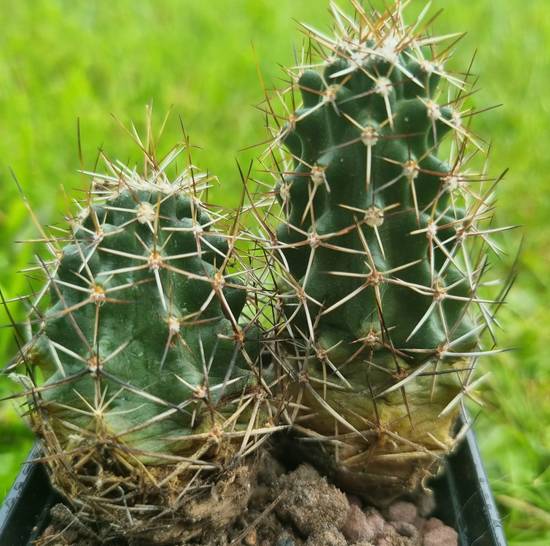
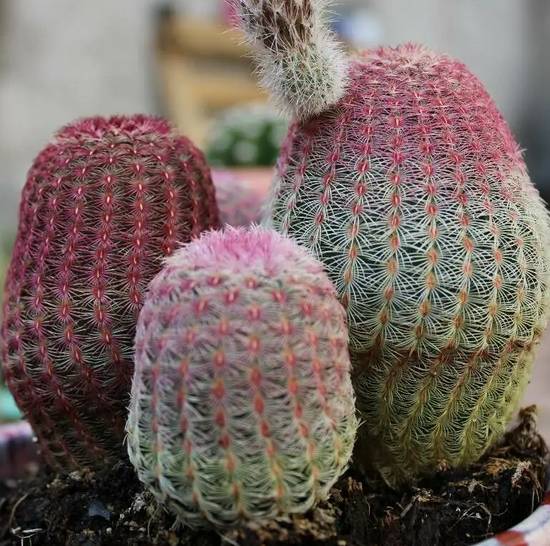
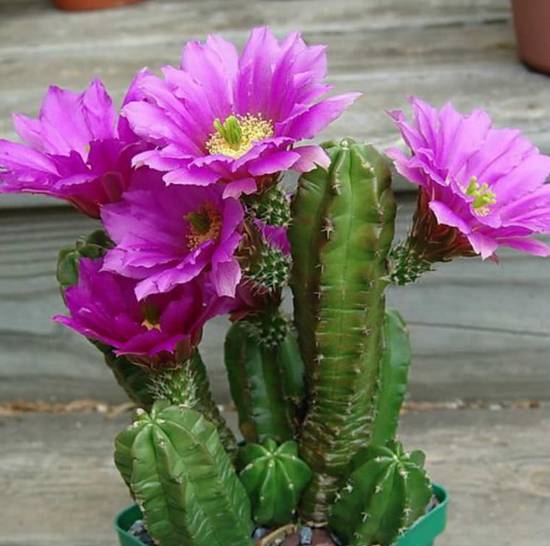
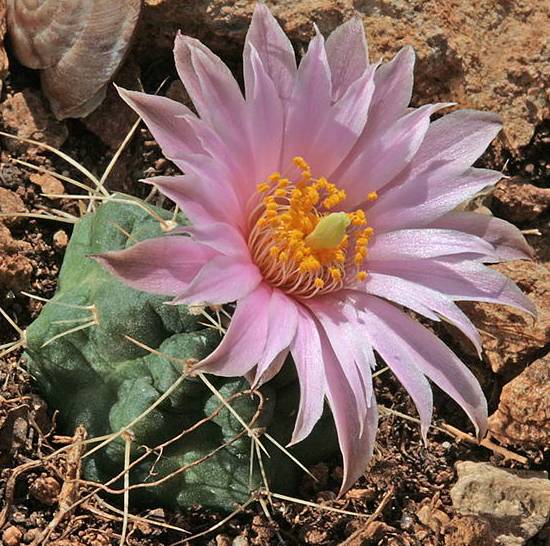
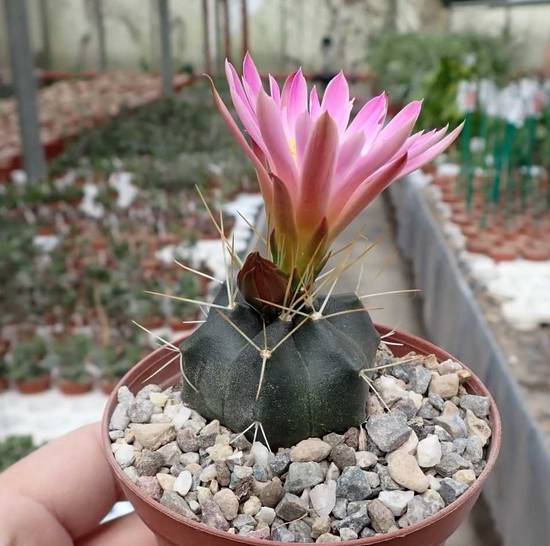
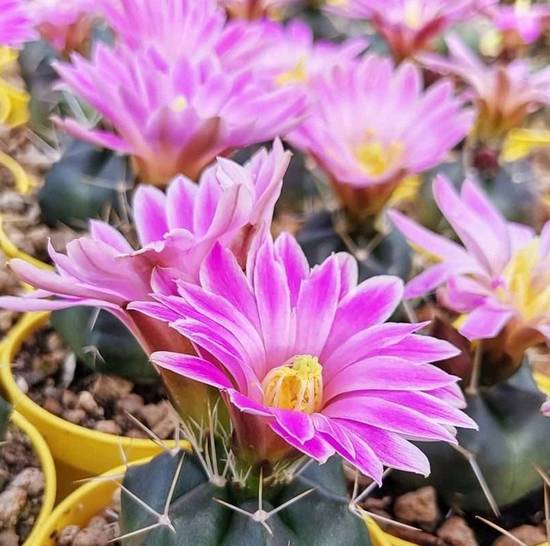
Among the small jewels of the cactus world, Echinocereus Knippelianus stands out with its discreet yet refined appearance. This globular to semi-buried cactus charms collectors with its small size, matte bluish-green to purplish epidermis, and above all its magnificent bright pink flowers that burst forth in striking contrast with its understated body. A rare and charming plant, ideal for lovers of miniature and floriferous cacti.
With its low and flattened habit, Echinocereus Knippelianus seems to sink into the substrate, mimicking the stones that surround it in its natural habitat. This behavior allows it to withstand extreme climatic conditions, especially cold and drought. In pots, it retains this habit, giving it a compact and aesthetic appearance.
It is particularly appreciated for its tolerance to cold, rare among cacti, and its ability to flower abundantly even when young. With its soft or absent spines, it is also easy to handle. An endearing and compact species, perfect for small collections or well-exposed windowsills.
🌞 Direct light: Full sun exposure from the morning, especially outdoors.
🌤️ Indoors: Place it strictly in a south-facing window, otherwise it loses its coloration and compact shape.
🌱 Acclimation: If moving it outdoors in spring, do so gradually to avoid sunburn.
💧 Growing period (spring-summer): Water every 2 to 3 weeks, only when the substrate is completely dry.
❄️ Winter: Stop watering completely during dormancy (November to March), especially if kept cool.
⚠️ Excess water is its main enemy: a waterlogged substrate can quickly rot its roots.
🌡️ Ideal range: between 20°C and 30°C in summer.
❄️ Winter resistance: It can withstand down to -10°C provided it is kept completely dry.
🏠 Recommended overwintering: Unheated, bright room between 0°C and 10°C to encourage future flowering.
🪨 Recommended mix: cactus soil (40%) + perlite (30%) + pozzolana (30%)
🌸 Period: Spring (often April to May)
🎨 Colors: Magenta pink to pale pink, sometimes with a lighter center
🕑 Duration: Each flower lasts several days, and the plant may produce several waves
🌿 This flowering is all the more impressive as the cactus itself remains very discreet!