Echinocereus Triglochidiatus

Echinocereus Triglochidiatus

Echinocereus Triglochidiatus

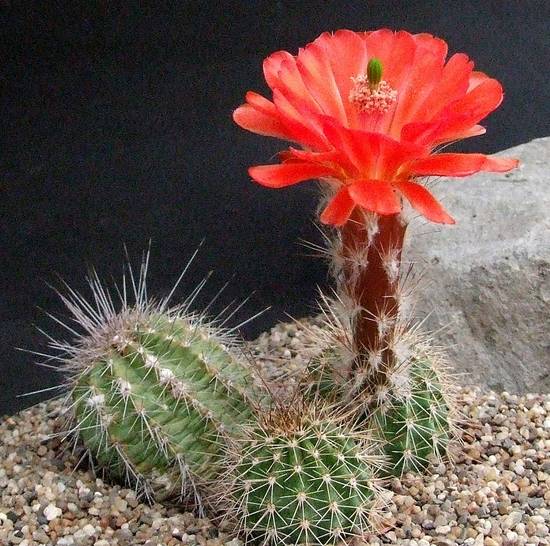
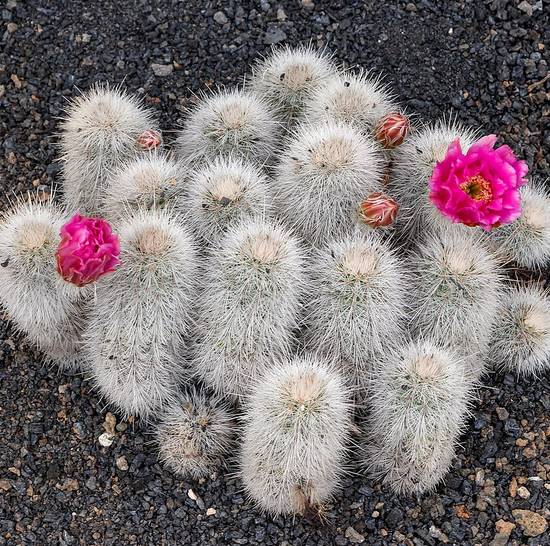
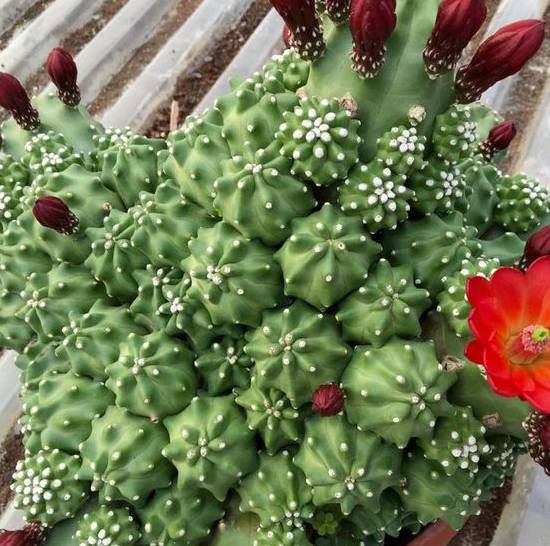
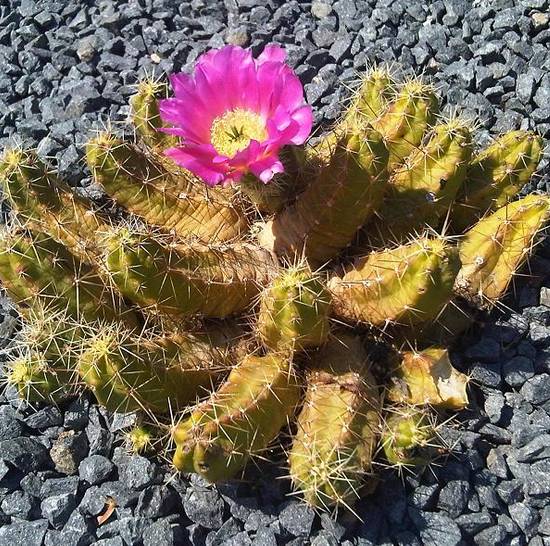
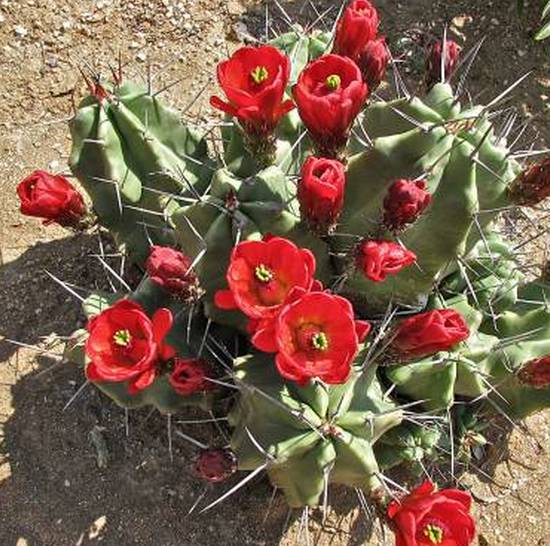
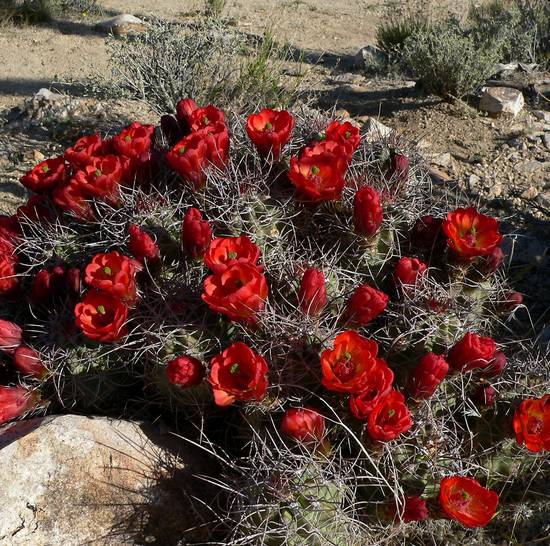
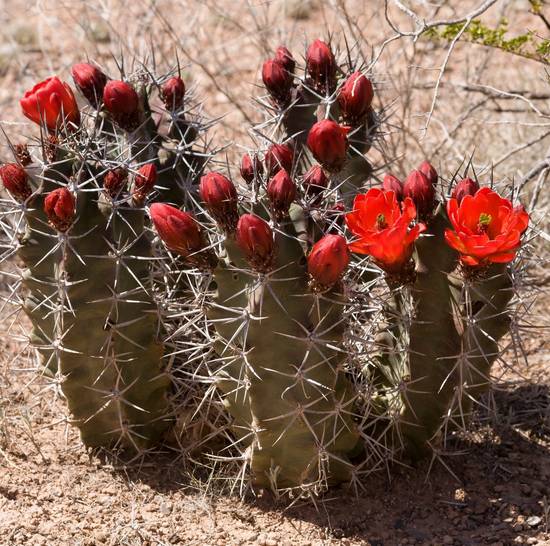
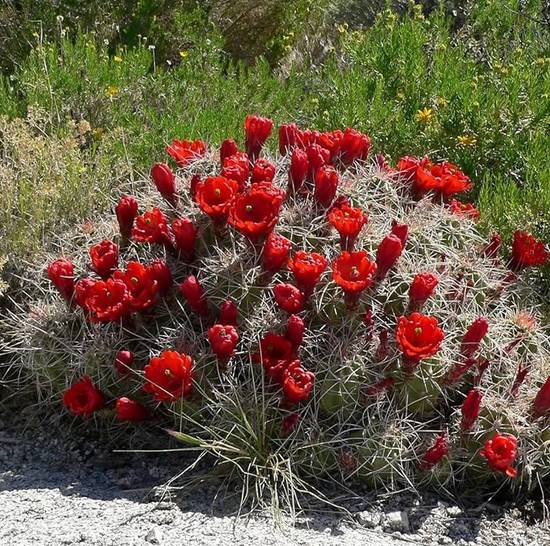
The Echinocereus Triglochidiatus, also known as the “Claret Cup Cactus,” is a hardy, mountain-dwelling species native to the southwestern United States and northern Mexico. It owes its name to its powerful areoles armed with strong spines, as well as to its intensely red flowers that emerge in spring, forming brilliant cup-shaped blooms worthy of a royal desert garden.

This cactus naturally grows in dense clumps composed of cylindrical stems about 5 to 15 cm in diameter, reaching up to 40 cm in height. It can sometimes form true spherical colonies made up of dozens of stems. Its robust, bristly appearance makes it highly decorative, especially when in bloom.

It is appreciated both for its resistance to extreme temperatures and for its strong visual appeal. It can live for many years in a pot or in the ground, provided it is planted in very well-drained soil and exposed to full sun.

The Echinocereus Triglochidiatus grows wild in the arid, mountainous areas of the southwestern United States (Utah, Arizona, New Mexico) and into northern Mexico. It settles on rocky slopes at altitudes that can reach up to 2,500 meters.

Its natural habitat is harsh, with alternating frost and drought, intense sunlight, and stony soils. This hardiness translates into excellent tolerance to cold and dry heat in cultivation.
For optimal growth of your Echinocereus Triglochidiatus, strong light is essential:

🌞 Direct sunlight: at least 6 hours per day – essential to encourage flowering.

🌤️ In hot climates: provide light afternoon shade in summer to avoid thermal stress.

🚫 Avoid: light that is too weak or overly filtered, which prevents flowering and slows growth.
The Echinocereus Triglochidiatus follows a strict watering cycle:

🌱 Growing period (March to September): moderate watering every 15 to 20 days, only when the substrate is dry deep down.

🍂 Rest period (October to February): completely stop watering.

Warning: too much water in winter leads to a high risk of root rot.
The Echinocereus Triglochidiatus tolerates impressive temperature variations:

🌞 Ideal temperature: 20°C to 30°C in summer.

❄️ Cold resistance: tolerates down to -10°C if kept completely dry.

🏠 Wintering: possible outdoors in sheltered locations in mild regions. Otherwise, place it in a bright, unheated room or conservatory.
The Echinocereus Triglochidiatus requires very well-drained soil:

🪨 Recommended substrate: 50% cactus potting mix + 25% pumice or crushed volcanic rock + 25% drainage gravel.

💡 Tip: add a thin layer of coarse sand on the surface to prevent stagnant moisture.
The flowering of the Echinocereus Triglochidiatus is simply spectacular:

🌼 Season: spring, sometimes extending into early summer.

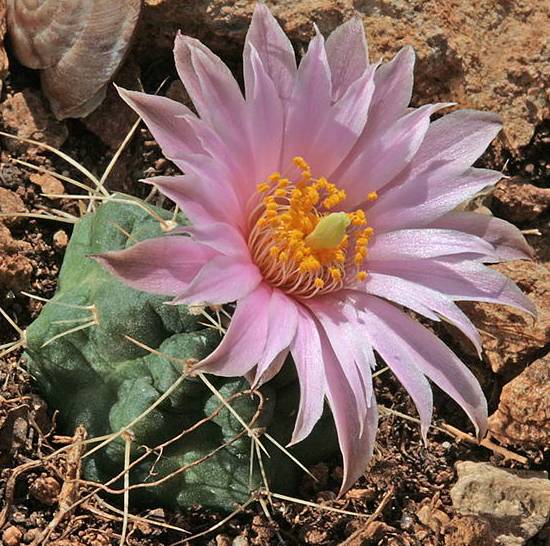
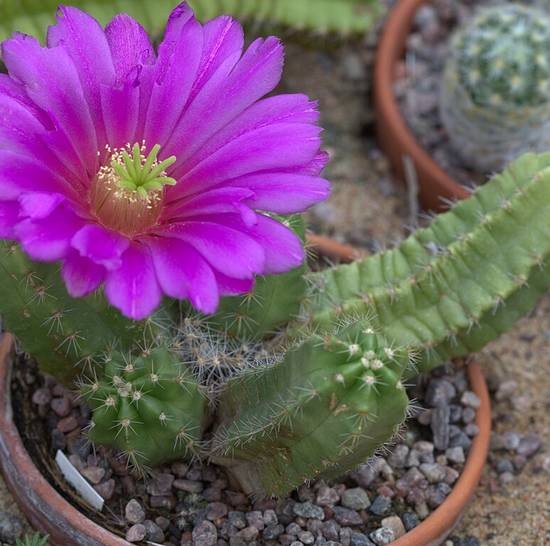
🎨 Color: bright red, sometimes orange, with open cup-shaped flowers.

🐝 Pollination: attracts hummingbirds, bees, and other pollinators outdoors.

Flowering conditions: full sun, slight water stress, and a well-kept dry winter rest.
FAQ - Echinocereus Triglochidiatus

Why is my Echinocereus Triglochidiatus not flowering?
Provide a winter rest period without watering, plenty of light in spring, and well-draining substrate. A light application of suitable fertilizer can help.
Can Echinocereus Triglochidiatus be grown outdoors?
Yes, in dry and sunny regions. It withstands moderate frost if kept dry. Otherwise, grow it in a pot and bring it indoors in winter.
What type of pot is suitable for Echinocereus Triglochidiatus?
A terracotta pot with a drainage hole is ideal. It allows water to evaporate quickly, preventing rot.
How should Echinocereus Triglochidiatus be watered in summer?
Water deeply, but wait until the substrate is completely dry before watering again. You may also use a diluted liquid cactus fertilizer once a month.
Is Echinocereus Triglochidiatus spiny?
Yes, it is covered with fairly rigid spines. Handle carefully or use gloves to avoid injuries.
When should Echinocereus Triglochidiatus be repotted?
Every 2–3 years, preferably in spring. Take the opportunity to renew the substrate and check the roots.
Is Echinocereus Triglochidiatus suitable for beginners?
Yes, if well exposed and lightly watered. It requires little maintenance but remains sensitive to humidity.
Can it be easily propagated?
Yes, by seed or by separating offsets. Sowing requires patience but produces beautiful results.
Should it be fertilized regularly?
A liquid cactus fertilizer during the growing period, every 4 to 6 weeks, is more than sufficient.
What is the growth rate of Echinocereus Triglochidiatus?
Moderate. It can form clumps over the years if conditions are favorable.