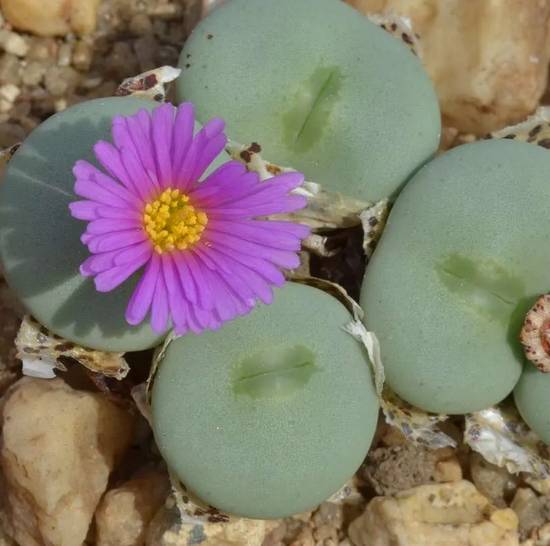
Conophytum Wettsteinii

Conophytum Wettsteinii

Conophytum Wettsteinii

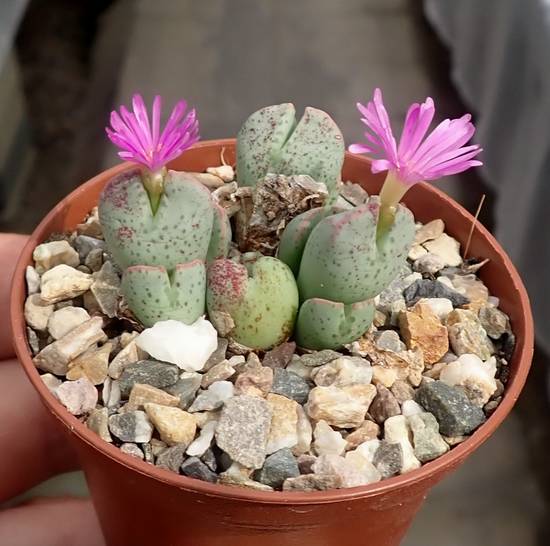
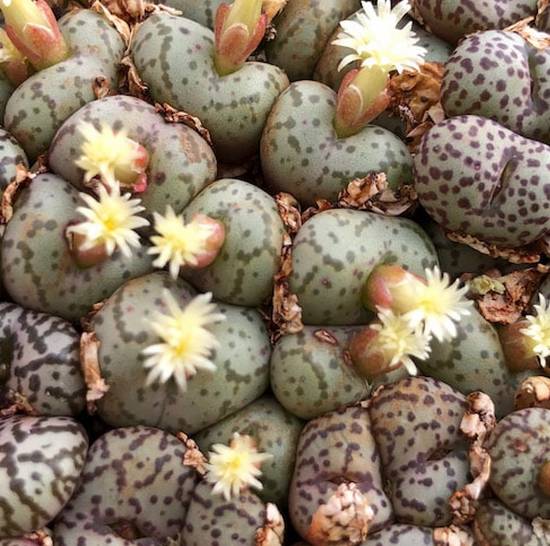
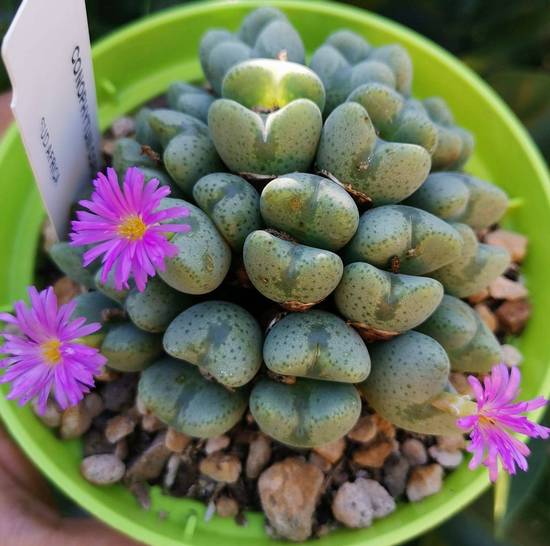
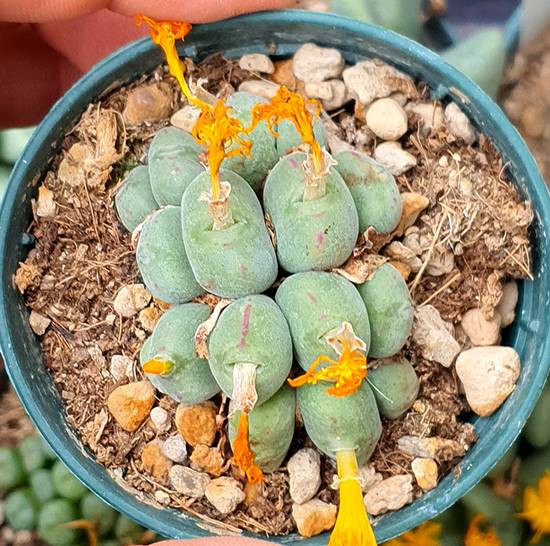
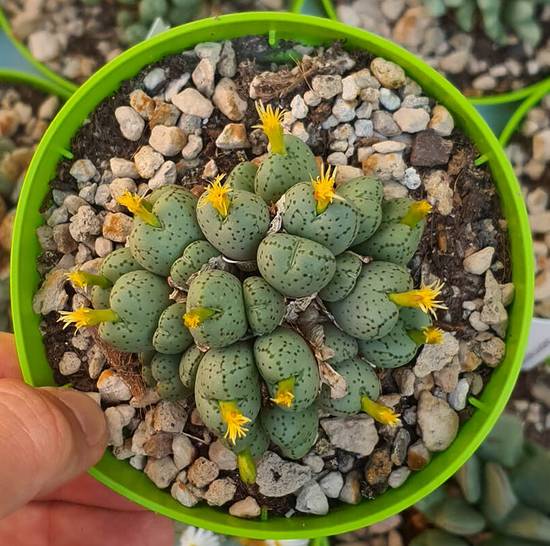
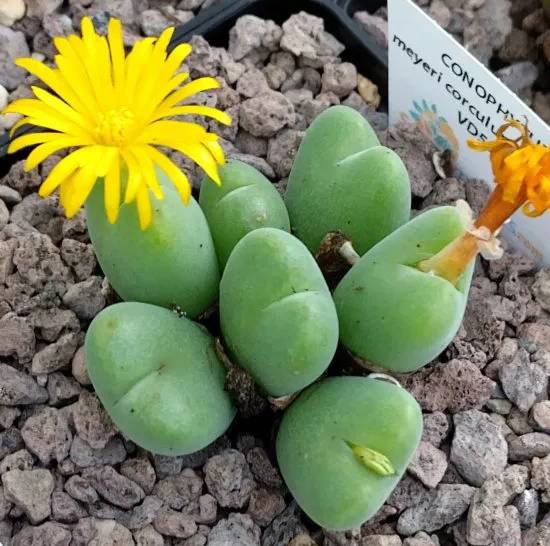
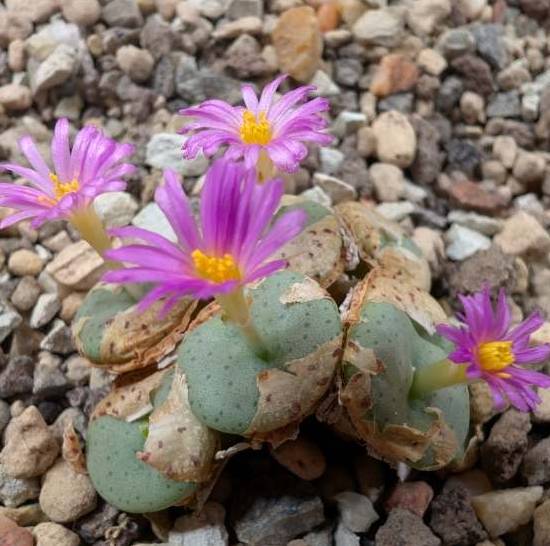
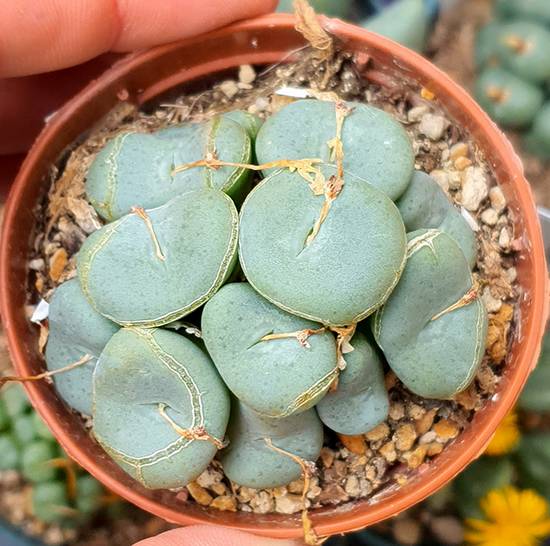
The Conophytum Wettsteinii is a fascinating botanical species belonging to the Aizoaceae family, native to the arid regions of southern Africa. This little botanical gem immediately attracts the attention of succulent enthusiasts with its compact, smooth appearance, shaped like small spheres or fused domes, sometimes slightly split at the top. Its coloration ranges from pale green to greyish green, sometimes tinged with pink or purple under light stress or drought, offering a changing spectacle through the seasons.

Particularly appreciated for its winter growth and atypical behavior, the Conophytum Wettsteinii follows a reversed growth cycle: it awakens at the end of summer, begins growing in autumn and continues through winter, before going dormant in spring. During the summer rest period, the old leaves dry and form a protective membrane around the new pairs, allowing the plant to survive extreme heat and aridity.

The Conophytum Wettsteinii is endemic to the desert regions of Namaqualand, a semi-arid area of the Northern Cape in South Africa. It grows in very dry micro-habitats, nestled in the shade of stones or small shrubs, in sandy soil mixed with gravel. This extreme adaptation explains its sensitivity to excess moisture in cultivation.
The Conophytum Wettsteinii requires bright but filtered light.

🌤️ Place it near an east- or west-facing window.

☀️ Absolutely avoid direct sun during the hottest hours.

🏠 Indoor cultivation is possible if light is abundant and diffused.

Prolonged lack of light can cause deformation of the heads and excessive greening.
The Conophytum Wettsteinii is sensitive to moisture and must be watered carefully.

🍁 Autumn: Start watering as soon as new heads appear. Water moderately every 10 to 15 days.

❄️ Winter: Reduce to one watering per month.

☀️ Summer: Never water. The plant is dormant and cannot tolerate moisture.

⚠️ It is better to forget a watering than to overdo it: excess water is fatal.
This plant enjoys temperate temperatures.

🌡️ Ideal growth: between 10 and 22 °C.

❄️ Can tolerate down to 4–5 °C if the substrate is dry.

🔥 In summer, tolerates up to 35 °C if kept dry and shaded.
The Conophytum Wettsteinii requires an extremely well-draining soil.

🪨 Use a mineral mix: coarse sand, perlite, fine gravel.
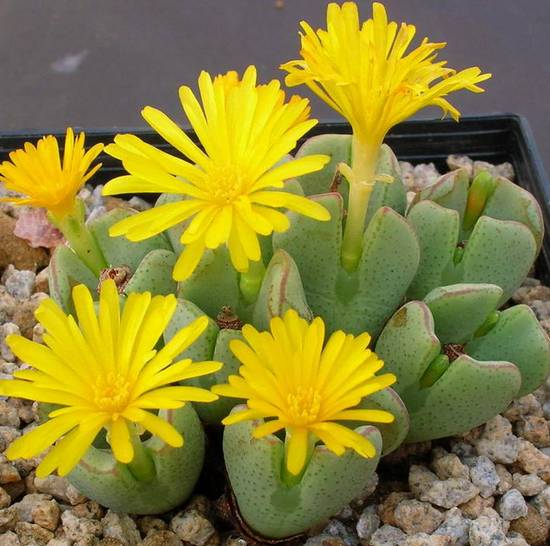
The flowering of the Conophytum Wettsteinii is a key moment.

🌸 Season: autumn

🎨 Color: bright yellow, sometimes with an orange center

🕑 Nocturnal flowers, opening at dusk and lasting several days
FAQ - Conophytum Wettsteinii

What is the growing season of Conophytum Wettsteinii?
Its growing season begins in late summer, continues through autumn and winter, and stops in spring.
How should Conophytum Wettsteinii be watered properly?
In autumn, water lightly every two weeks. In winter, once a month is enough. Do not water at all in summer.
Does Conophytum Wettsteinii tolerate direct sunlight?
No, it prefers bright but filtered light. Direct sun can burn its sensitive tissues.
What type of substrate is best for Conophytum Wettsteinii?
A mineral substrate is ideal. Use a homemade mix or a suitable cactus potting mix.
When does Conophytum Wettsteinii bloom?
It blooms in autumn. Yellow flowers appear at the top of the heads and often open at dusk.
Is Conophytum Wettsteinii suitable for indoor cultivation?
Yes, it can be grown indoors if it receives sufficient light, especially near a bright window.
How can you recognize dormancy in Conophytum Wettsteinii?
The plant becomes covered with a thin dry sheath and shows no new growth. It remains dormant during summer.
What are the signs of overwatering or underwatering Conophytum Wettsteinii?
Excess water causes softening and then rot. If slight shriveling occurs in autumn, moderate watering is needed.
Should Conophytum Wettsteinii be fertilized?
A single very light feeding in autumn is sufficient. Choose a suitable low-dose fertilizer.
Where can you obtain substrate or fertilizer for Conophytum Wettsteinii?
You can find well-draining substrate and liquid succulent fertilizer at specialized nurseries or garden centers.