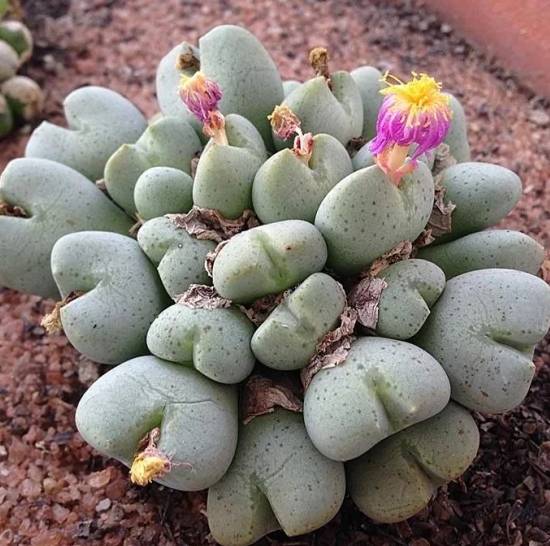
Conophytum Taylorianum
Ernianum

Conophytum Taylorianum Ernianum

Conophytum Taylorianum Ernianum

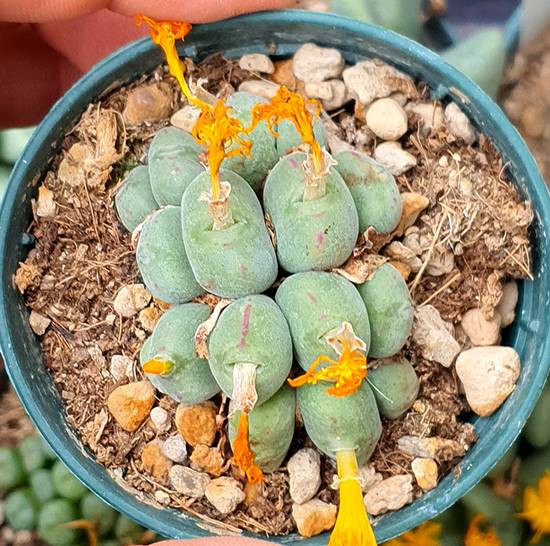
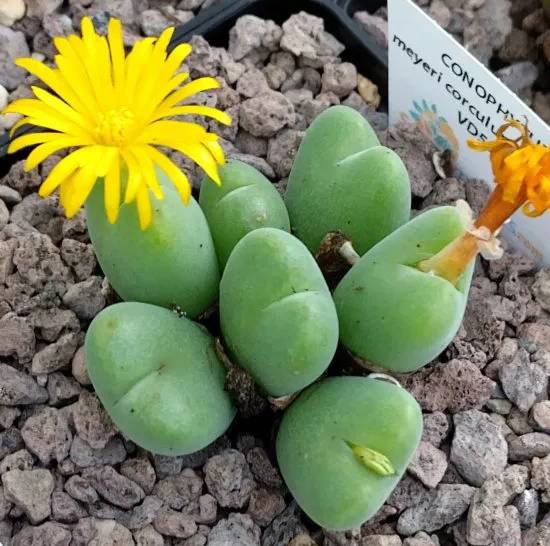
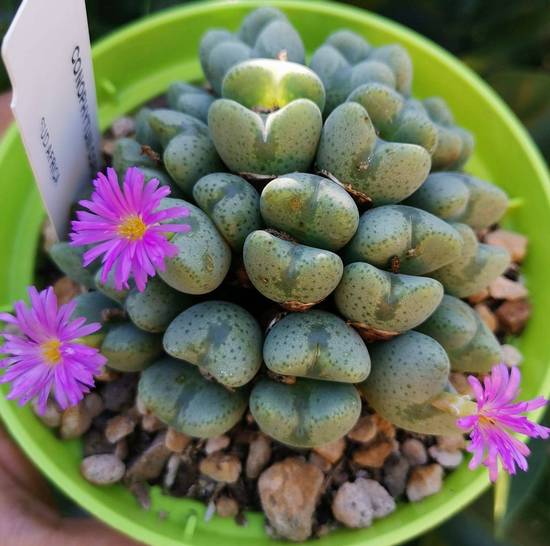
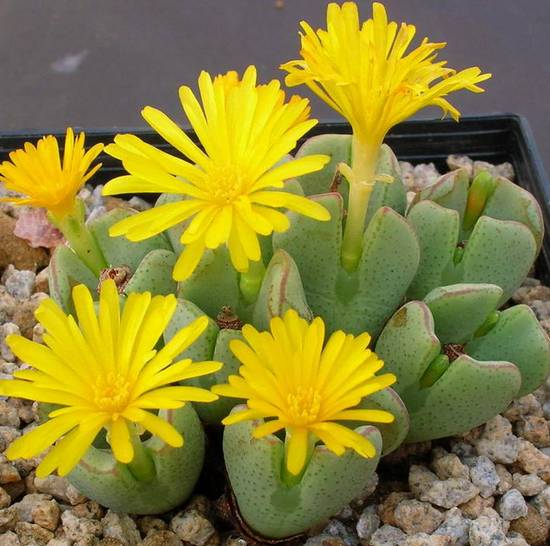
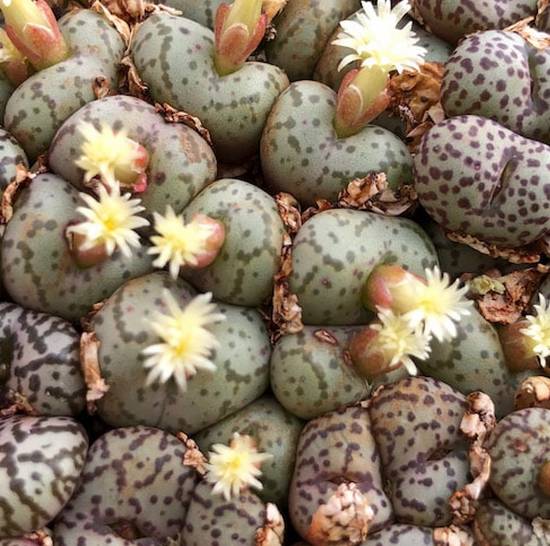
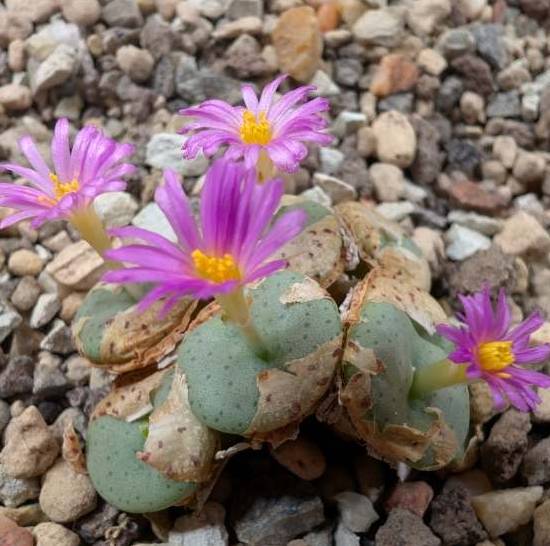
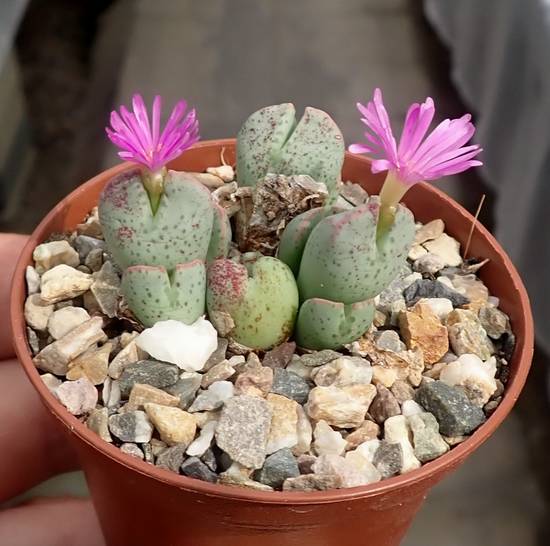
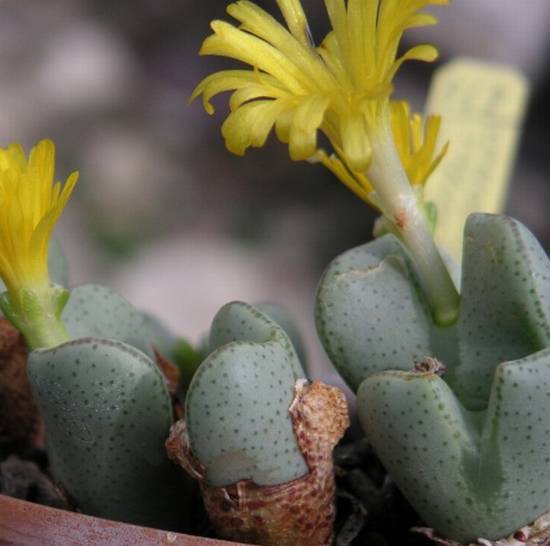
The Conophytum Taylorianum Ernianum is a rare and highly sought-after botanical form of the genus Conophytum, belonging to the Aizoaceae family. Native to southern Africa, this small succulent has a compact, spherical silhouette made up of pairs of fused leaves forming tiny green domes. This particular cultivar stands out for its often purplish or brownish coloration and its smooth, slightly translucent surface. With its discreet yet geometric form, it perfectly embodies the minimalist beauty of collectible succulents.

Like other Conophytums, this plant has a reversed growth cycle: it develops from autumn through late winter, then enters dormancy as summer temperatures return. During this resting phase, the old leaves dry out and form a protective sheath around the new heads that will emerge the following season. This remarkable adaptation allows it to survive long periods of drought in its native habitat.

The Conophytum Taylorianum Ernianum is native to the arid areas of the Northern Cape province, in South Africa’s Namaqualand region.

It grows in rock crevices, often sheltered by stones or low shrubs, in sandy, extremely well-drained soil. It takes advantage of the low autumn humidity to begin its growth cycle and goes completely dormant when heat returns.
The Conophytum Taylorianum Ernianum requires bright, indirect light.

🌤️ Ideal exposure: soft light, east- or west-facing.

☀️ Direct sunlight should be avoided, especially in summer.

🏠 Perfectly suited to bright indoor cultivation.
The reversed cycle of the Conophytum Taylorianum Ernianum requires very controlled watering.

🍁 Autumn: Light watering every 15 days once new heads appear.

❄️ Winter: Reduce to one watering per month.

☀️ Summer: No watering during dormancy.

⚠️ When in doubt, do not water. Even slight excess moisture is dangerous.
This species prefers moderate to cool temperatures.

🌡️ Optimal growth: between 10 and 20 °C.

❄️ Tolerance: down to 5 °C if the substrate is completely dry.

🔥 Can tolerate temperatures above 30 °C if kept totally dry during summer.
The Conophytum Taylorianum Ernianum requires an extremely well-draining soil.

🪨 Prefer a mix of coarse sand with perlite or gravel to ensure excellent drainage.
Flowering occurs in early autumn.

🌸 Season: September–October

🎨 Color: pale yellow to light pink

🕑 Nocturnal flowers opening at the end of the day
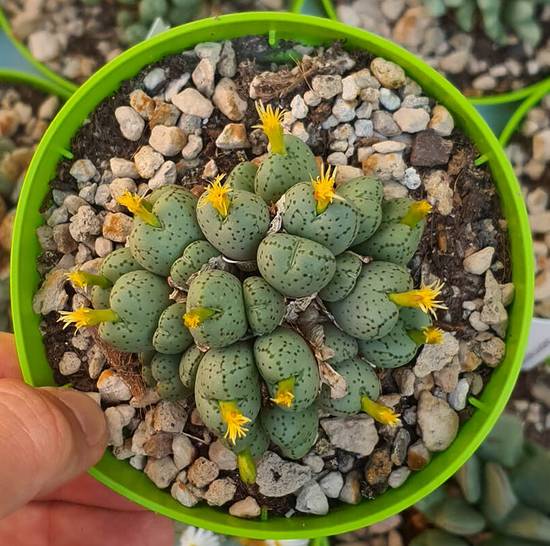
FAQ - Conophytum Taylorianum Ernianum

What is the growing season of Conophytum Taylorianum Ernianum?
Its growing season begins in autumn and continues until spring. It then enters full dormancy during summer.
How should Conophytum Taylorianum Ernianum be watered properly?
Water lightly every 10 to 15 days in autumn. In winter, reduce to once a month. Never water in summer.
Does Conophytum Taylorianum Ernianum tolerate direct sunlight?
No, it prefers bright but filtered light. Direct sun can burn its delicate tissues.
What substrate is recommended for Conophytum Taylorianum Ernianum?
Use a very well-draining substrate made of perlite and sand, or a ready-made cactus potting mix.
When and how does Conophytum Taylorianum Ernianum bloom?
It blooms in early autumn. Small pale yellow flowers open in late afternoon or evening.
Can Conophytum Taylorianum Ernianum be grown indoors?
Yes, it is well suited for a bright room. Avoid direct sunlight through glass.
What are the signs of dormancy in Conophytum Taylorianum Ernianum?
The outer leaves dry out and form a protective film. The plant stops all activity during summer.
What are the effects of overwatering or underwatering Conophytum Taylorianum Ernianum?
Overwatering causes rot. Slight shriveling in autumn is normal and indicates that watering can resume.
Should Conophytum Taylorianum Ernianum be fertilized?
A single feeding at the beginning of autumn is sufficient. Use a mild cactus fertilizer.
Where can you find suitable substrate or fertilizer for Conophytum Taylorianum Ernianum?
You can find suitable substrate and fertilizer at specialized cactus nurseries or garden centers.