Astrophytum Capricorne

Astrophytum Capricorne

Astrophytum Capricorne

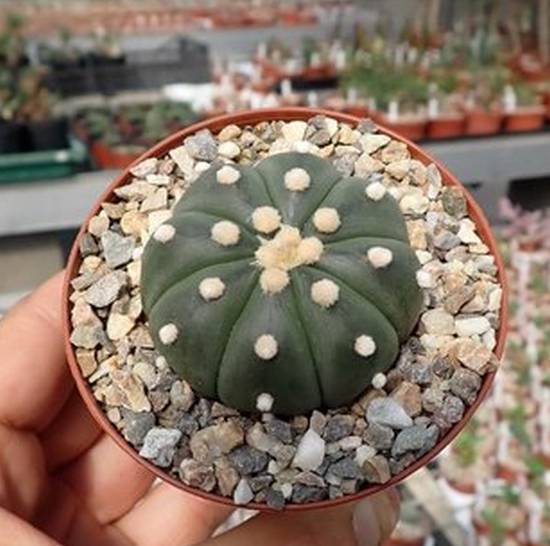
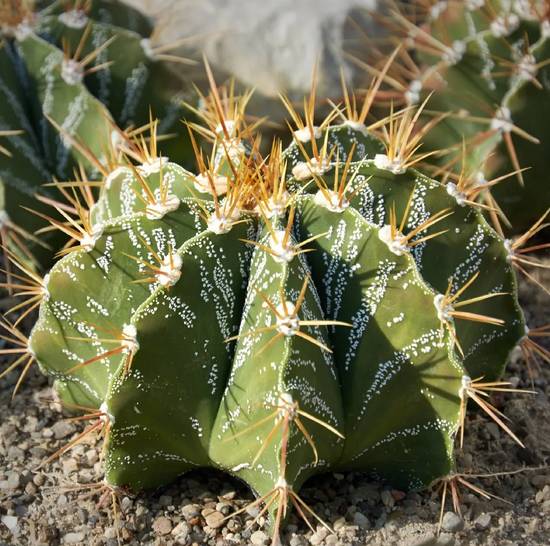
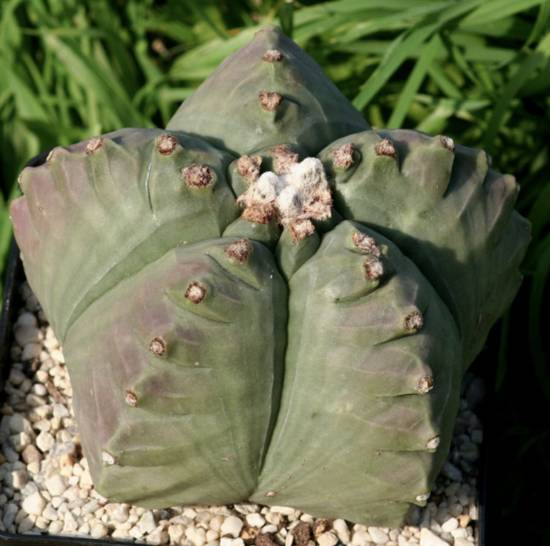
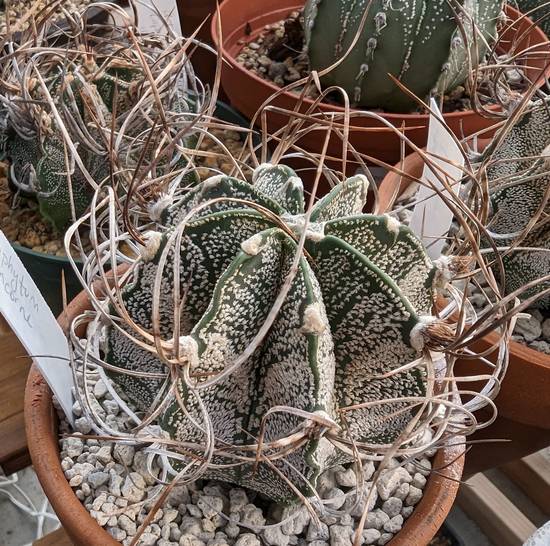
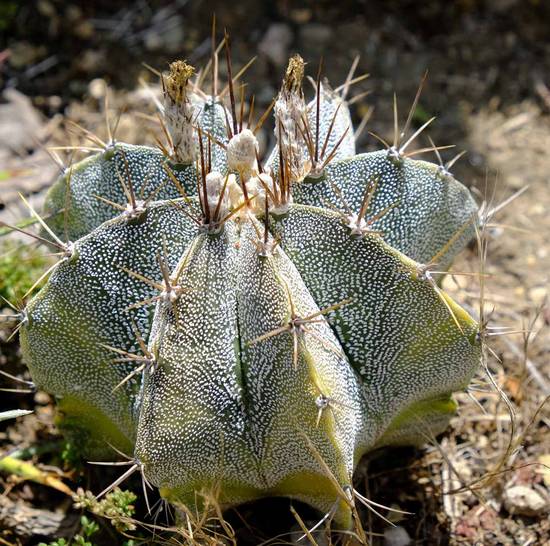
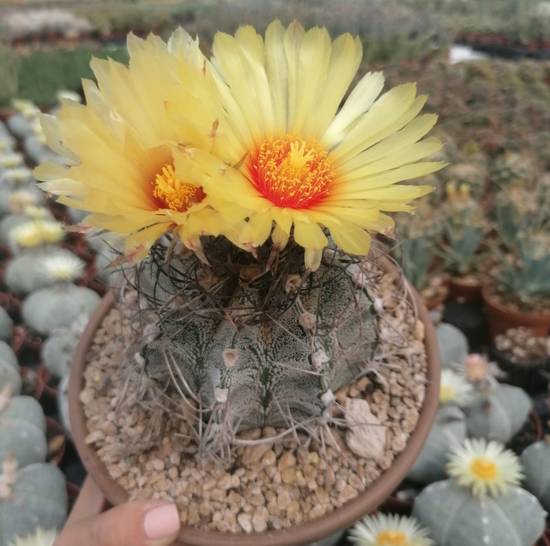
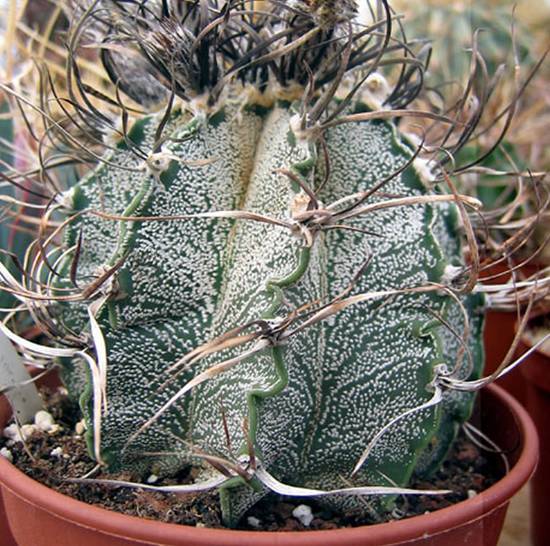
The Astrophytum Capricorne is one of the most elegant and hardy cactus species. Its globular, slightly flattened shape resembles a natural shield topped with well-defined, long and sinuous ribs adorned with light golden spines. With age, it may develop a slightly branched silhouette, enhanced by a remarkably refined architectural structure.

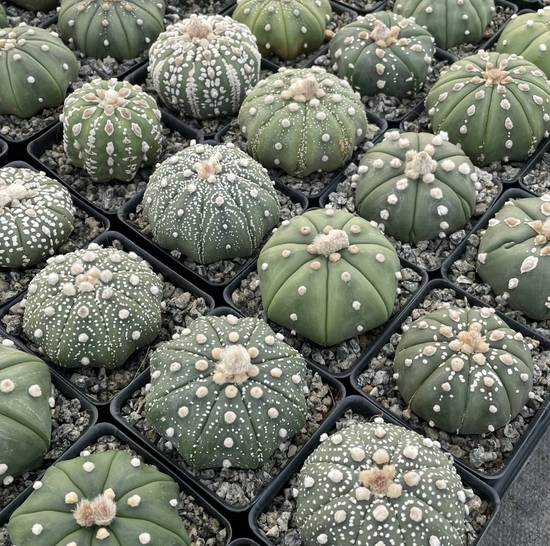
This cactus displays grey-green skin dotted with small white flecks (woolly flakes) that create a subtle visual contrast. Each specimen is distinguished by the unique distribution of these flecks, giving Astrophytum capricorne a highly sought-after individual charm among collectors.

In cultivation, it can reach up to 30 cm in diameter and develop a crown of spectacular flowers. Its growth is slow but steady, forming a beautiful solitary specimen ideal for collections or ornamental pots.

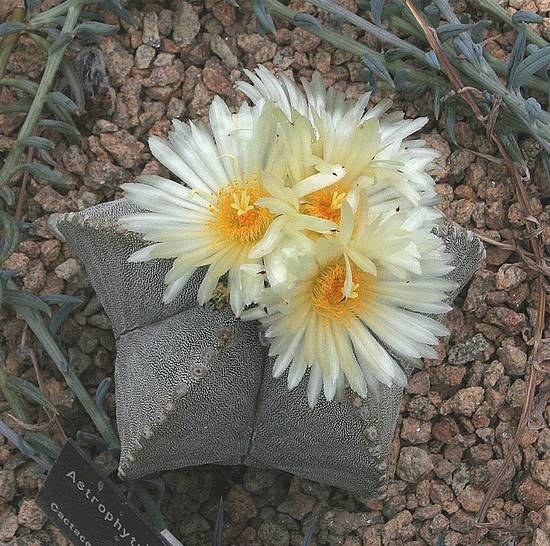
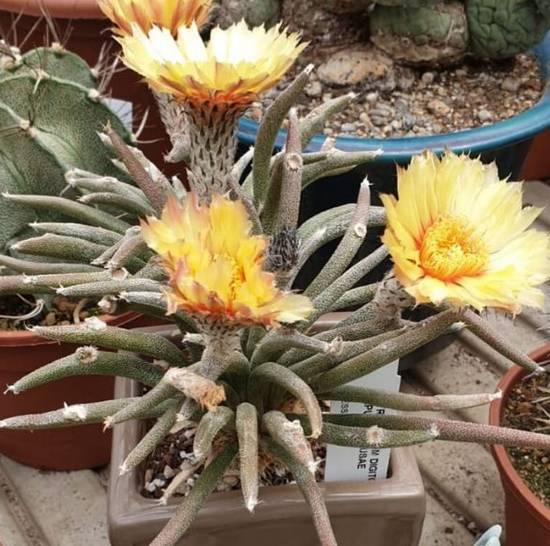
When it flowers, usually in spring, it produces large star-shaped bright yellow flowers with an orange center — a luminous display framed by its sculptural ribs.

The Astrophytum Capricorne is native to the semi-arid regions of central-northern Mexico (states of Coahuila, Durango and Nuevo León), where it grows on rocky limestone soils subjected to strong day/night temperature variations.
For proper development of your Astrophytum Capricorne, ideal exposure is crucial:

🌞 Bright sunlight: at least 5 to 6 hours of direct light daily.

🌤️ Hot summer: in scorching climates, provide light shade at midday to prevent sunburn.

Lack of light slows flowering and promotes a loose growth habit.
This cactus, highly drought-tolerant, follows these rules:

🌱 Spring / summer: moderate watering every 2 to 3 weeks, with completely dry substrate between waterings.

🍂 Autumn / winter: minimal watering, once a month or less during severe droughts. Stop watering at the first frosts.

Golden rule: too much water = root rot.
The Astrophytum Capricorne prefers mild temperatures:

🌞 Optimal: between 18 °C and 28 °C.

❄️ Minimum tolerance: tolerates down to 0 °C briefly, but prolonged frost should be avoided.

🏠 Wintering: place it in a dry, cool (10–12 °C), bright location.
The Astrophytum Capricorne requires very well-drained substrate to prevent root rot.

🪨 Recommended mix: cactus soil + pumice + pozzolana in equal parts.
The flowering of the Astrophytum Capricorne is an exceptional event:

🌸 Season: late April to June.

🎨 Color: bright yellow, orange center, often edged with red.

🕑 Duration: 4 to 7 days.

💡 Flowers appear at the apex, in groups of 5 to 8, on well-established plants exposed to full sun. It requires proper water stress (dry substrate) and a cool winter rest.
FAQ - Astrophytum Capricorne

How to detect overwatering in Astrophytum Capricorne?
If the base becomes soft, dark, or the plant collapses, it is often due to overwatering. Use a substrate composed of cactus potting soil, pumice, and pozzolana to prevent this issue.
How to recognize lack of water in Astrophytum Capricorne?
The plant slightly retracts and its skin becomes wrinkled. Moderate watering and application of fertilizer can restart growth.
What substrate is recommended for Astrophytum Capricorne?
A mix of 1/3 cactus potting soil, 1/3 pumice, and 1/3 pozzolana is ideal.
Can Astrophytum Capricorne grow indoors?
Yes, provided it is placed in a very bright area. A grow light can also help.
How often should Astrophytum Capricorne be repotted?
Every 2 to 3 years, or when the plant becomes too large for its pot.
Which fertilizer should be used for Astrophytum Capricorne?
A cactus fertilizer, low in nitrogen. Apply once a month in spring and summer.
Can Astrophytum Capricorne stay outdoors all year round?
No, bring it indoors as soon as temperatures drop below 5°C.
Does Astrophytum Capricorne grow fast?
No, it is a slow-growing species, but steady.
How to obtain flowers on Astrophytum Capricorne?
Respect a dry winter rest period and provide strong light during the growing season.
How to propagate Astrophytum Capricorne?
Propagation is done exclusively by seed, as it does not produce offsets.