Agave Titanota

Agave Titanota
Agave Titanota
Agave Titanota

Agave Titanota

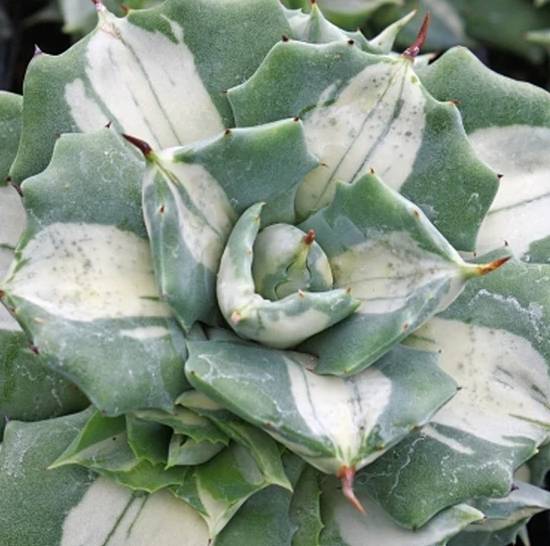
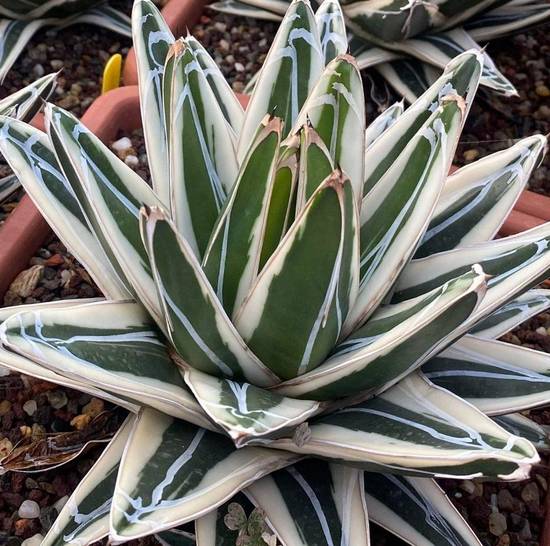
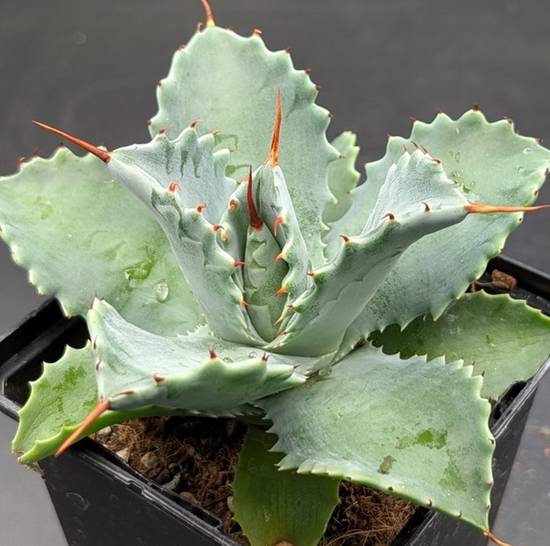
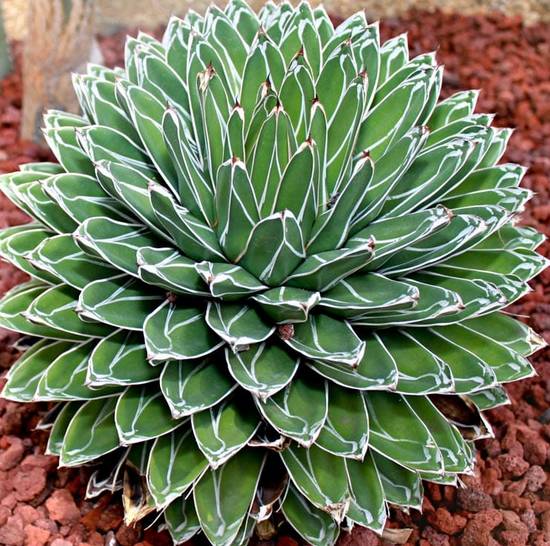
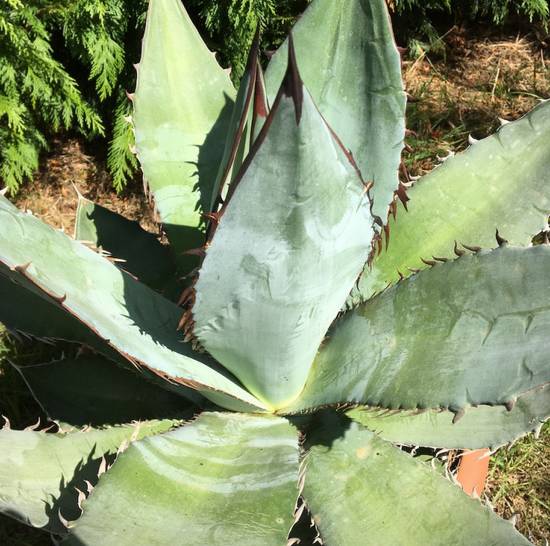
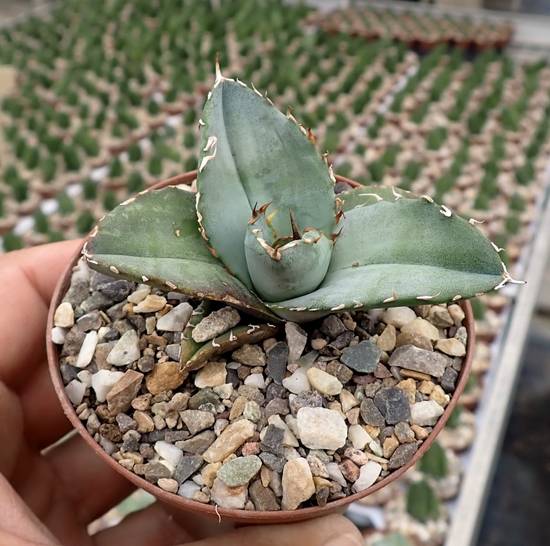
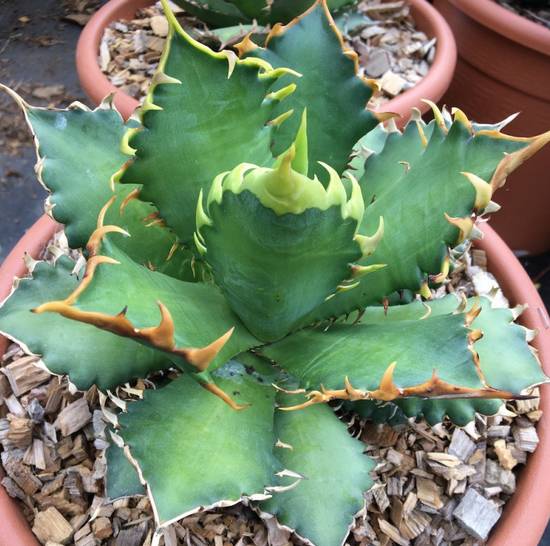
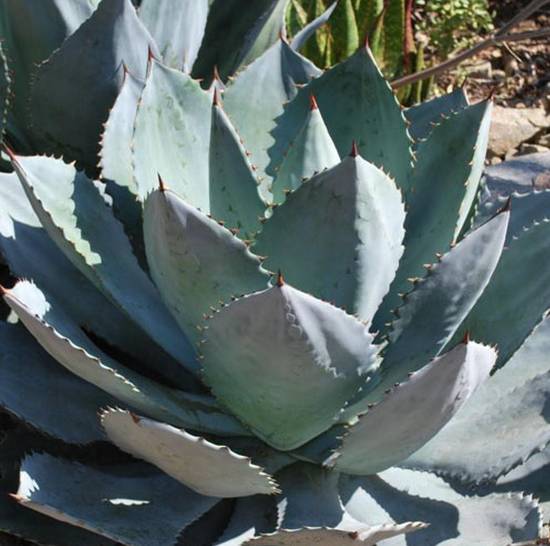
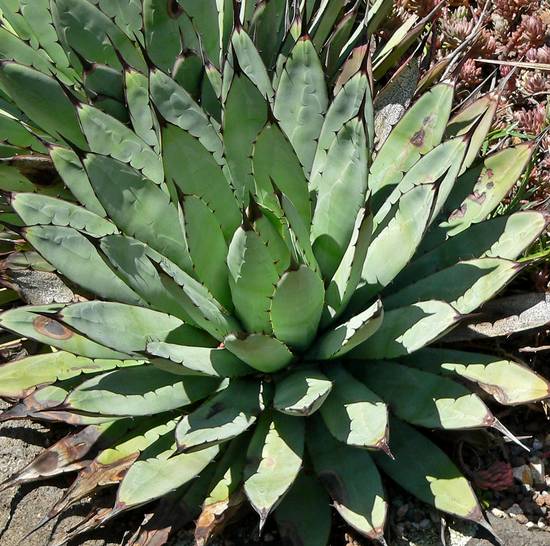
The Agave Titanota is undoubtedly one of the most spectacular species of the genus Agave. This succulent plant native to Mexico is highly prized for its graphic appearance, its broad, thick and powerfully armed leaves, as well as its slow and sculptural growth. Each rosette forms a true natural masterpiece, with glaucous or bluish-green leaves covered in a waxy bloom that gives them a very elegant matte appearance. The leaf margins are adorned with large white or rust-brown spines that create a strongly defined, almost artistic silhouette.

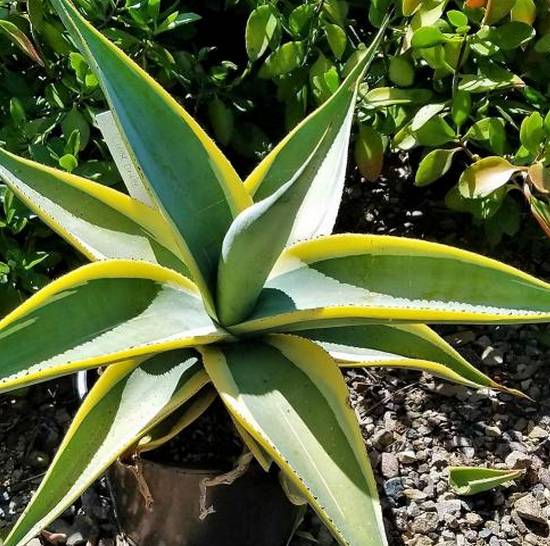
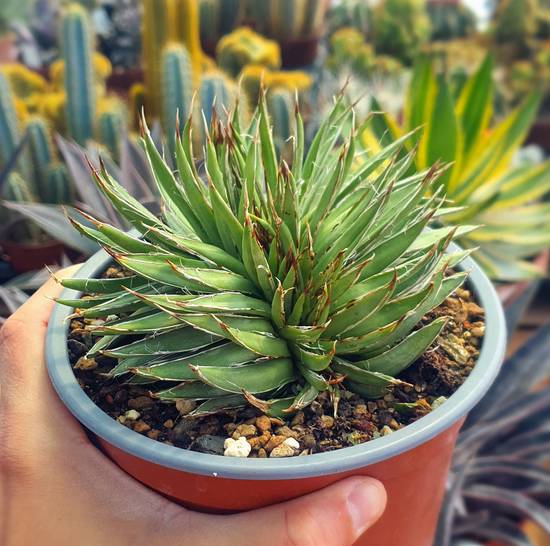
What makes Agave Titanota so appealing is the combination of robustness, compactness and mineral beauty. It grows slowly, generally reaching 30 to 60 cm in diameter at maturity, making it ideal for pot cultivation or open ground in dry climates. Numerous cultivars and selections exist, with variations in shape, color and spine size, making each specimen unique and highly collectible.

In nature, Agave Titanota grows on rocky, often limestone hills in semi-arid to very sunny areas. It develops slowly in poor and perfectly draining soils. This adaptation to extreme conditions explains its great drought resistance and tolerance to temperature fluctuations. It is endemic to restricted areas of southern Mexico, which explains its relative rarity in cultivation.
Agave Titanota loves intense, even harsh light:

🌞 Full sun : outdoors, it should receive at least 6 hours of sun per day to maintain its compact shape and typical coloration.

🌤️ Indoors : choose a very bright location, ideally a veranda or a south-facing bay window.

⚠️ Insufficient light makes its leaves softer and promotes etiolation, harming its geometric appearance.
Like all agaves, Agave Titanota prefers dry conditions to humidity:

🌱 Spring / summer : water every 2 to 3 weeks, only when the substrate is completely dry.

🍂 Autumn / winter : reduce or stop watering, especially if the plant is kept in a cool location.

💧 Excess water is the main danger: rot can set in very quickly, especially in cold weather.
Agave Titanota tolerates heat well and withstands moderate cold:

🌡️ Ideal temperatures : between 20°C and 35°C.

❄️ Hardiness threshold : around –4°C in dry soil. To avoid any risk, bring it indoors in winter if you live in a cold area.

🏠 Container cultivation : it is perfectly suited to pot culture on balconies or terraces, provided drainage is excellent.
Agave Titanota requires very well-draining soil to prevent stagnant moisture:

🪨 Use a cactus substrate mixed with 50% pozzolana or perlite. A layer of clay pebbles or gravel at the bottom will also help ensure rapid water drainage.
The flowering of Agave Titanota is as rare as it is majestic:

🌸 Period : after 10 to 20 years of cultivation, sometimes more.

🎨 Inflorescence : a large flower stalk reaching 2 to 4 meters, bearing numerous cream or pale yellow tubular flowers.

🕑 Monocarpic : the rosette dies after flowering, but may produce offsets at the base, allowing regeneration.
FAQ - Agave Titanota

How should Agave Titanota be grown in a pot?
Use a wide, shallow pot with good drainage. Fill it with a well-draining substrate enriched with perlite or pumice. Place in full sun and avoid excess water.
How cold hardy is Agave Titanota?
It can tolerate brief drops to –4°C if the soil is perfectly dry. In cold or humid regions, it is best brought indoors during winter to prevent rot.
How many times per month should Agave Titanota be watered?
During the growing season (spring–summer), water every 15 to 20 days. In autumn and winter, drastically reduce watering, especially if temperatures are cool.
Does Agave Titanota produce offsets?
It depends on the specimen, but some produce basal offsets, especially after flowering. These can be separated and propagated.
Should Agave Titanota be fertilized?
Yes, sparingly. A low-nitrogen succulent fertilizer can be applied monthly during the growing season to support healthy growth.
What should you do if Agave Titanota leaves become soft?
This is usually a sign of overwatering. Stop watering immediately, check the substrate, and repot into a drier mix if necessary.
Can Agave Titanota be grown indoors?
Yes, if it receives sufficient light. Place it in a very bright room or conservatory. Avoid excessively warm indoor conditions in winter, as they may disrupt its dormancy.
Are the spines of Agave Titanota dangerous?
Yes, they are very hard and sharp. Handle the plant carefully and keep it out of reach of children and pets.
How can you enhance the leaf coloration?
Provide maximum light, good ventilation, and slight water stress. This enhances contrast between leaves and spines and intensifies the bluish coloration.
What is the life cycle of Agave Titanota?
It is monocarpic: it dies after flowering, which occurs after many years. However, it may produce offsets to ensure its continuation.