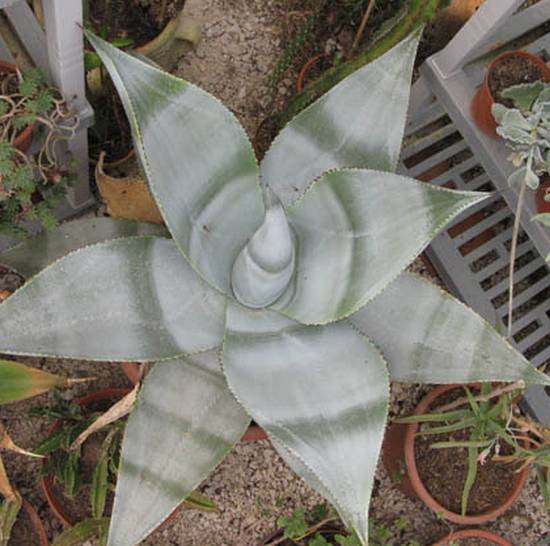
Agave Guiengola

Agave Guiengola
Agave Guiengola
Agave Guiengola

Agave Guiengola

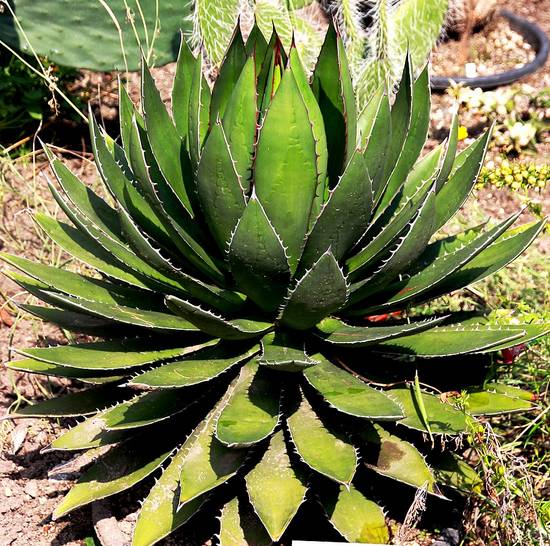
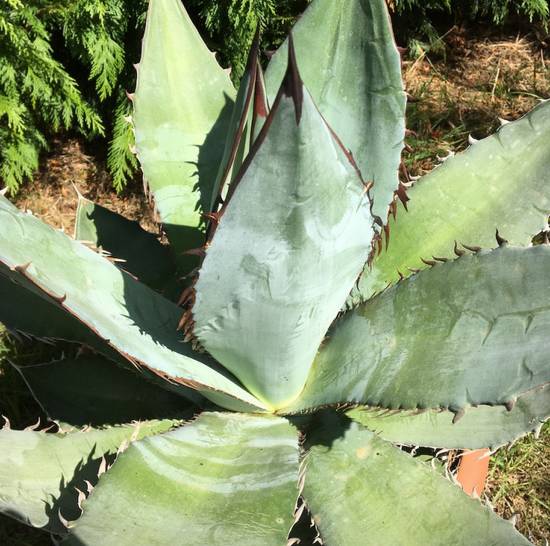
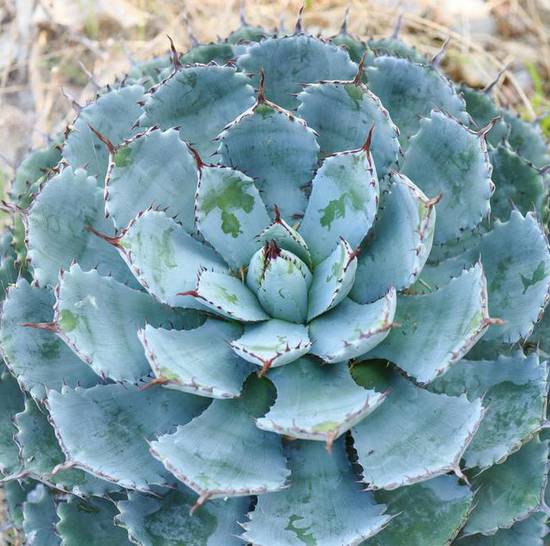
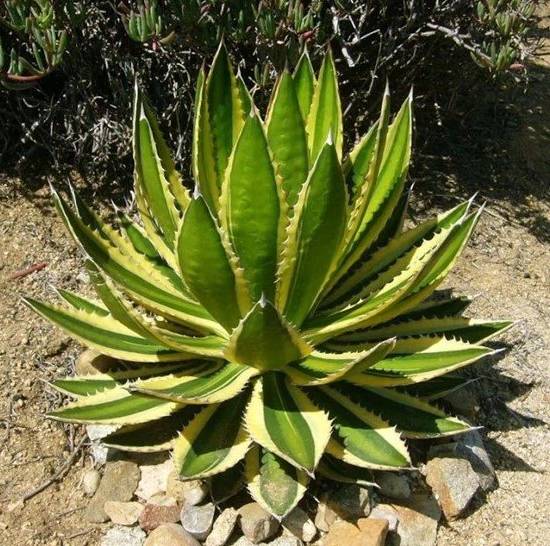
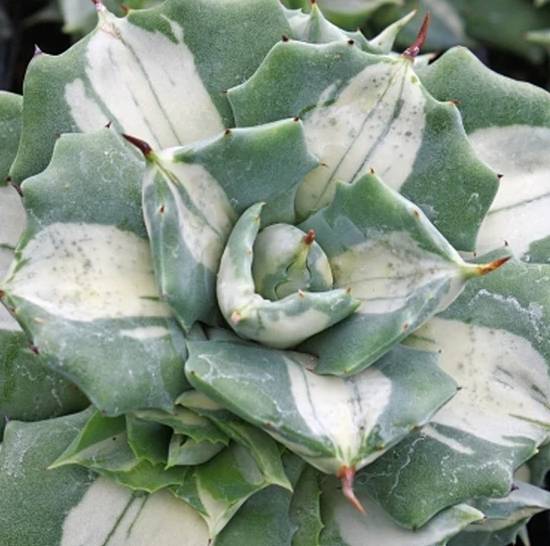
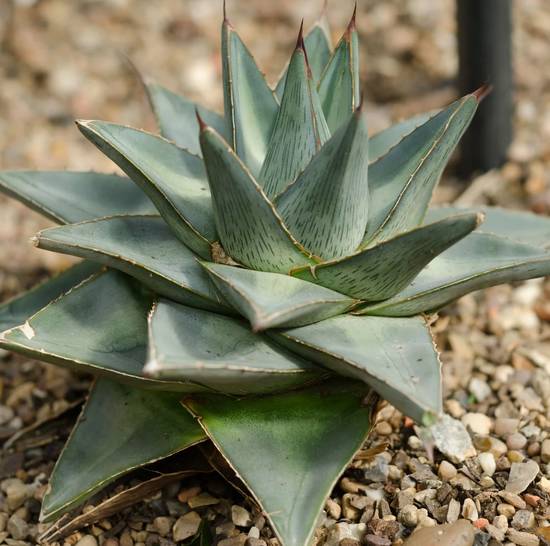
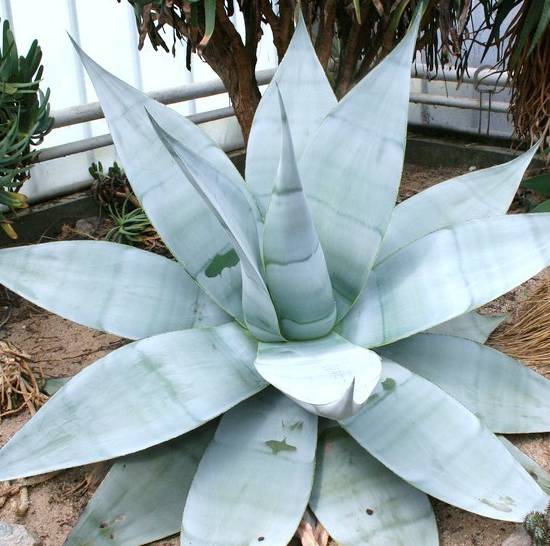
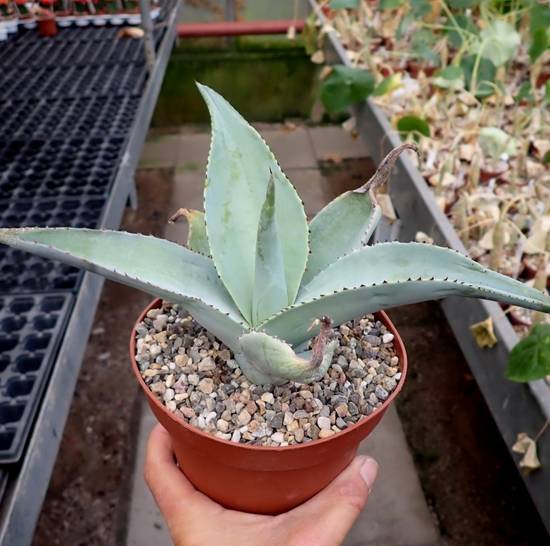
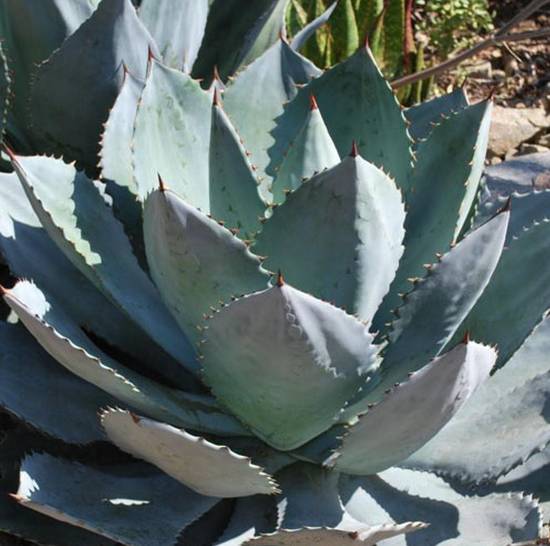
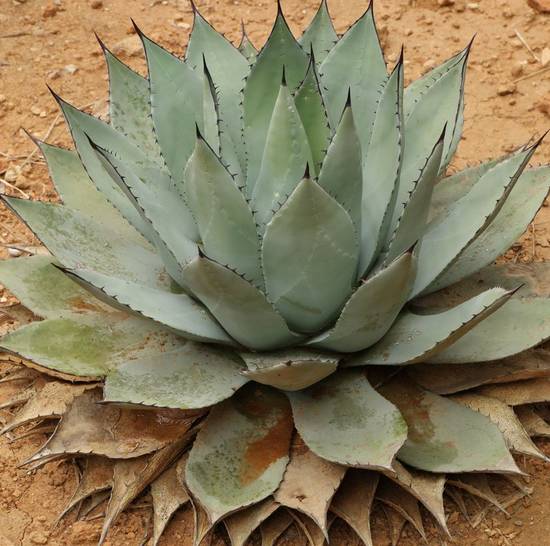
The Agave Guiengola is a remarkable Agave known for its elegance and distinctive habit. Native to the arid regions of Oaxaca in Mexico, it stands out for its broad, thick, curved leaves of luminous gray-blue. Unlike most agaves, it displays a more supple, almost sculptural growth, making it highly sought after for botanical collections or contemporary dry gardens.

Its elongated silhouette, with leaves that can reach up to 60 cm long, gives the plant a graphic and sophisticated look. The foliage, although fleshy, is slightly curved outward, and each leaf is edged with small spaced teeth, ending in a dark tip. At maturity, this agave can form an impressive rosette 1 to 1.5 meters in diameter.

Its light gray color, often coated with pruina, reflects light exceptionally well, making it an ideal candidate for sunny exposures. Undemanding once well rooted, it is suited to hot and dry climates, but requires some precautions in cooler or more humid climates.

Agave Guiengola originates from the rocky and dry areas of the state of Oaxaca, southern Mexico. It grows at medium altitude on well-drained volcanic soils, often exposed to scorching sun. Its name comes from Mount Guiengola, a Zapotec archaeological site. This geographic origin gives it good heat tolerance, but some sensitivity to stagnant humidity, especially in winter.
Agave Guiengola requires generous light to express its full potential :

🌞 Outdoors : it thrives in full sun, at least 6 hours per day.

🌤️ Indoors : possible in a veranda, greenhouse or very bright room (south exposure recommended).

☁️ Warning : if grown in shade, it may become etiolated and lose its beautiful bluish tones.
This species, like most agaves, fears excess water more than drought :

💧 Spring and summer : moderate watering every 2 to 3 weeks, depending on temperatures. Always allow the substrate to dry between waterings.

🍂 Autumn and winter : greatly reduce watering. Indoors, light monthly watering may be sufficient.

⚠️ Advice : avoid stagnant water in the central rosette.
Agave Guiengola is rather frost-sensitive :

🌡️ Ideal temperature : between 20 and 30 °C.

❄️ Cold resistance : it tolerates occasionally 0 to –2 °C, but only in dry soil. It does not tolerate prolonged frost.

🏡 Recommended wintering : bring indoors from 5 °C, especially in humid or rainy regions.
🪨 A well-draining soil is essential to avoid any risk of rot: cactus substrate base mixed with 30-40% perlite and add pozzolana to stabilize the surface and enhance drainage
The flowering of Agave Guiengola is rare but spectacular :

🌸 Timing : after several years, sometimes more than 10 years.

🌼 Appearance : long upright flower stalk bearing pale yellow to greenish flowers.

☠️ End of cycle : like all agaves, the plant dies after flowering, but it may produce offsets beforehand.
FAQ - Agave Guiengola

Is Agave Guiengola frost hardy?
It can tolerate brief light frosts down to –2°C, but it is very sensitive to humidity and prolonged freezing. It is best brought indoors during winter.
What substrate should be chosen for Agave Guiengola?
Use a well-draining cactus substrate enriched with perlite and pumice.
How often should Agave Guiengola be watered?
In summer, water every 2 to 3 weeks, allowing the substrate to dry completely. In winter, water very little or not at all.
What is the mature size of Agave Guiengola?
It can reach 1 to 1.5 meters in diameter under optimal conditions, with wide and arching leaves.
Can Agave Guiengola be grown indoors?
Yes, if placed in a very bright space such as a veranda or near a south-facing window.
What fertilizer should be used for Agave Guiengola?
A cactus fertilizer can be applied once a month between April and August.
When does Agave Guiengola bloom?
It blooms rarely, usually after more than 10 years. Flowering is terminal and followed by the death of the rosette.
What are the signs of overwatering in Agave Guiengola?
Soft, blackened, or drooping leaves are often caused by excess moisture. Stop watering and improve drainage.
How should Agave Guiengola be repotted?
Repot in spring into a wider pot with very well-draining substrate. Avoid burying the base too deeply.
Does Agave Guiengola produce offsets?
Yes, under good conditions it can produce offsets at the base, especially before or after flowering.