Seyrigia Humbertii
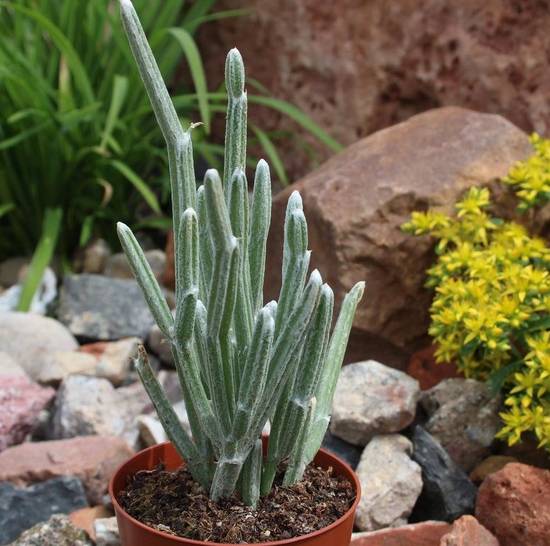
The Seyrigia Humbertii is a rare and still little-known succulent, native to Madagascar, which attracts collectors for its original appearance and adaptation to arid environments. This plant belongs to the Didiereaceae family, a fascinating botanical group gathering species endemic to dry and rocky environments.
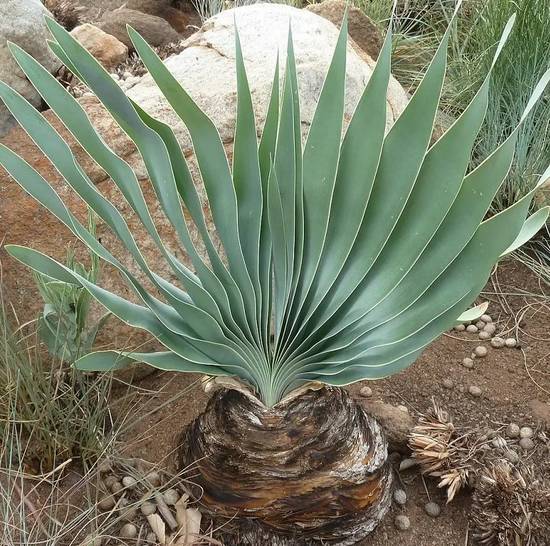
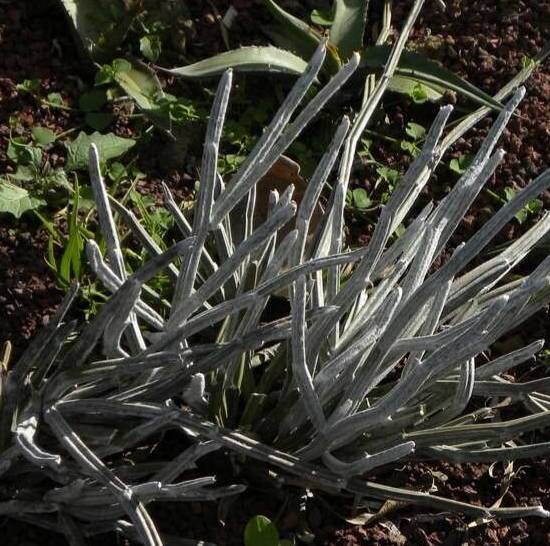
The Seyrigia Humbertii stands out with its upright habit and thick, often branched stems, giving it a very architectural appearance. These stems may have a rough texture and are generally covered with spines or small outgrowths, contributing to its unique decorative character.
Its foliage is discreet and often seasonal. Small leaves appear during the growth period, then disappear when the plant enters dormancy, leaving behind an almost mineral structure. This behavior is typical of plants adapted to arid climates, where reducing foliage helps limit water loss.
It evolves in environments subjected to high heat and prolonged periods of drought.
🌞 Direct sun to very bright light: ideally 6 to 8 hours of light per day to maintain a compact habit and healthy growth.
🌤️ Gradual acclimation: essential if the plant moves from indoor to outdoor environment to avoid burns.
🏠 Indoor cultivation: place it near a south or west-facing window, with maximum natural light.
🌱 Growth period (spring / summer): water moderately only when the substrate is completely dry, about every 2 to 3 weeks depending on conditions.
🍂 Dormancy period (autumn / winter): greatly reduce watering, or even almost complete stop if temperatures drop.
⚡ Essential rule: better too little water than too much, as the plant is very sensitive to root rot.
🌞 Ideal temperature: between 20°C and 30°C, conditions favorable to active growth.
🔥 Heat resistance: tolerates high temperatures very well if the substrate remains dry.
🌡️ Thermal amplitude: tolerates day/night variations, typical of desert environments.
🪨 Recommended mix: 20 to 30% special cactus soil + 40 to 50% perlite + 20 to 30% pouzzolane
🌸 Period: generally during the growth season, in spring or summer depending on conditions
🎨 Color: discreet flowers, often in pale tones
🌼 Shape: small barely visible flowers, appearing along the stems
📏 Feature: not very spectacular flowering, but a sign of good growing conditions