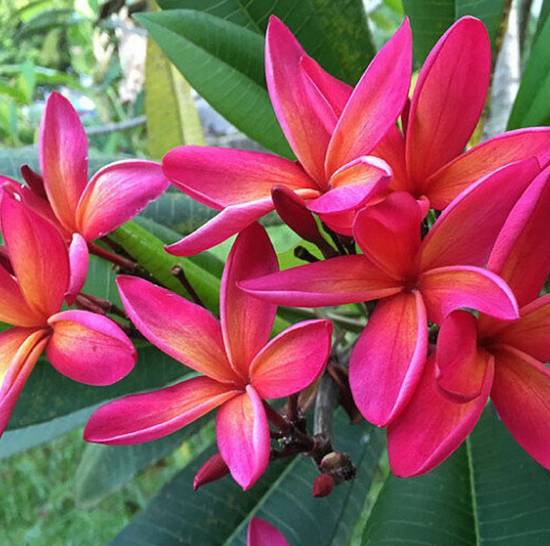
Plumeria Rubra
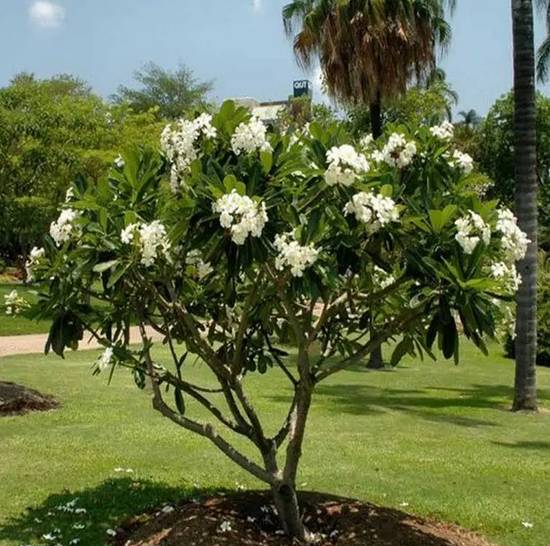
The Plumeria Rubra is without doubt one of the most iconic tropical shrubs of the Plumeria genus. Renowned for its intoxicating flowers and intense fragrance, it is also known as the “Frangipani.” Native to Central America, this plant fascinates as much by its beauty as by its spiritual symbolism in many cultures.
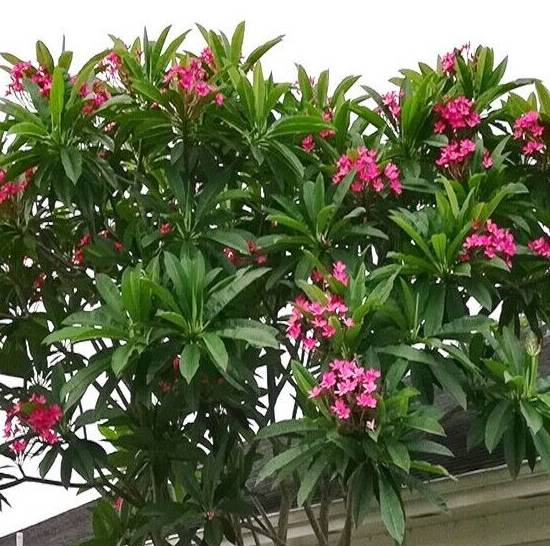
With its large dark green leaves and star-shaped flowers in shades ranging from white to bright pink, red, yellow or multicolored, the Plumeria Rubra is a must-have for exotic gardens. It is particularly appreciated in warm climates or grown in pots that can be brought indoors during winter. Its graphic habit and fragrant inflorescences instantly evoke tropical islands and Hawaiian flower leis.
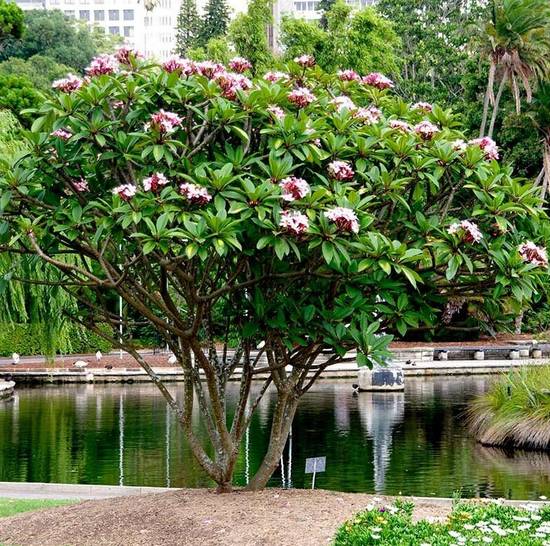
The Plumeria Rubra originates from Mexico, Guatemala, Honduras and El Salvador. It grows naturally in tropical and semi-arid areas, often in volcanic or calcareous, well-drained soils. In its natural habitat, it can reach up to 8 meters in height, but remains more compact when grown in pots.
It belongs to the Apocynaceae family. Its thick branches, filled with white latex, form a often sinuous trunk. Its deciduous, long and narrow leaves fall in winter, leaving a surprisingly bare silhouette. This behavior is normal and indicates its vegetative rest.
It belongs to the Apocynaceae family. Its thick branches, filled with white latex, form a often sinuous trunk. Its deciduous, long and narrow leaves fall in winter, leaving a surprisingly bare silhouette. This behavior is normal and indicates its vegetative rest.
The Plumeria Rubra needs maximum light to grow and flower abundantly.
🔆 Outdoors: Place it in full sun, sheltered from wind, on a terrace, balcony or in the ground in mild climates (minimum zone 10).
🏠 Indoors: Behind a south-facing bay window or in a bright veranda. In winter, it tolerates lower light levels during its rest period.
🔆 Outdoors: Place it in full sun, sheltered from wind, on a terrace, balcony or in the ground in mild climates (minimum zone 10).
🏠 Indoors: Behind a south-facing bay window or in a bright veranda. In winter, it tolerates lower light levels during its rest period.
Plumeria enjoys generous watering in summer… but beware of excess water!
🌱 Spring / Summer: Water as soon as the substrate is dry on the surface. A rhythm of 1 to 2 times per week is usually sufficient.
🍂 Autumn / Winter: When the plant enters dormancy, drastically reduce watering, or even stop completely if the leaves fall.
⚠️ Excess moisture can cause root rot, especially during colder periods.
🌱 Spring / Summer: Water as soon as the substrate is dry on the surface. A rhythm of 1 to 2 times per week is usually sufficient.
🍂 Autumn / Winter: When the plant enters dormancy, drastically reduce watering, or even stop completely if the leaves fall.
⚠️ Excess moisture can cause root rot, especially during colder periods.
A tropical plant, the Plumeria Rubra cannot tolerate frost.
🌡️ Ideal temperature: between 20 °C and 30 °C.
❄️ Below 10 °C, it must be brought indoors. It can tolerate an occasional minimum of 5 °C if kept dry, but this remains risky.
🌡️ Ideal temperature: between 20 °C and 30 °C.
❄️ Below 10 °C, it must be brought indoors. It can tolerate an occasional minimum of 5 °C if kept dry, but this remains risky.
The soil must be very well-draining.
🪨 Recommended substrate: mix 50 % special cactus soil, 30 % coarse sand or pumice, 20 % perlite.
🪨 Recommended substrate: mix 50 % special cactus soil, 30 % coarse sand or pumice, 20 % perlite.
This is THE reason to grow the Plumeria Rubra: its magnificent fragrant flowers!
📅 Period: from May to October, depending on growing conditions.
🎨 Colors: pink, red, white, yellow, sometimes variegated.
🌼 Fragrance: intoxicating, sweet and floral, perfuming the surroundings over several meters.
💡 Flowering tip: a winter rest, full sun exposure and a spring application of a potassium-rich fertilizer will stimulate flower buds.
📅 Period: from May to October, depending on growing conditions.
🎨 Colors: pink, red, white, yellow, sometimes variegated.
🌼 Fragrance: intoxicating, sweet and floral, perfuming the surroundings over several meters.
💡 Flowering tip: a winter rest, full sun exposure and a spring application of a potassium-rich fertilizer will stimulate flower buds.
FAQ - Plumeria Rubra
How can Plumeria Rubra be encouraged to flower in a pot?
To promote flowering, provide a dry winter rest, full sun exposure from spring onward, and regular feeding with a potassium-rich fertilizer.
Can Plumeria Rubra be grown indoors?
Yes, provided it receives very bright light. In winter, it enters dormancy and loses its leaves, which is normal.
What is the minimum temperature tolerated by Plumeria Rubra?
It does not tolerate frost. It may withstand short periods at 5°C, but it is best brought indoors once temperatures drop below 10°C.
What substrate should be used for Plumeria Rubra?
Use a very well-draining substrate, combining cactus soil with mineral components to ensure proper drainage.
Is it normal for Plumeria Rubra to lose its leaves?
Yes, this is normal during dormancy. It is a deciduous plant and naturally loses its leaves in winter.
How should Plumeria Rubra be watered?
In summer, water when the substrate is dry at the surface. In winter, reduce or completely stop watering if the plant is dormant.
Why is my Plumeria Rubra not flowering?
Lack of sunlight, excessive watering, or absence of a rest period can prevent flowering. Ensure strong light and appropriate feeding during the growing season.
Should Plumeria Rubra be pruned?
Pruning is not mandatory, but light trimming can encourage branching. Avoid pruning in winter or on very old wood.
Is Plumeria Rubra toxic?
Yes, the white latex sap is toxic if ingested and may also irritate the skin. Handle with care.
Is Plumeria Rubra suitable for beginners?
Yes, provided it receives sufficient light and proper watering. Growing it in a pot makes it accessible even for beginners.