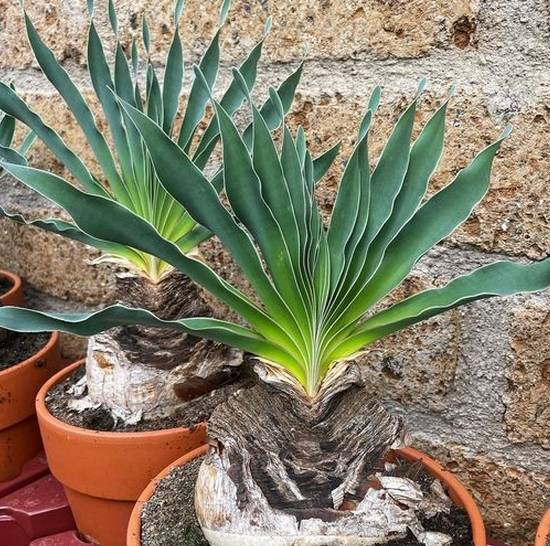
Boophone Disticha
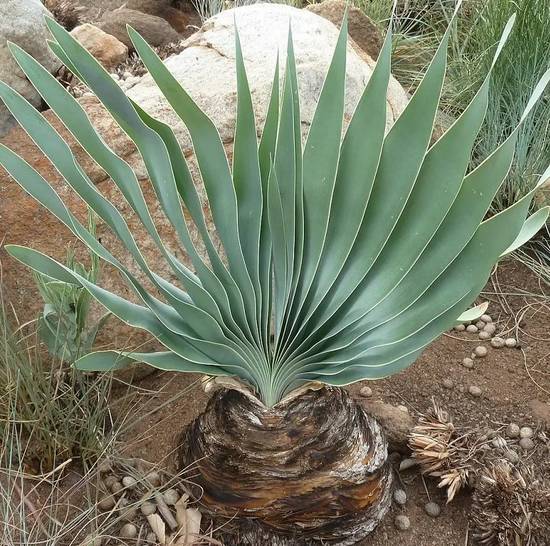
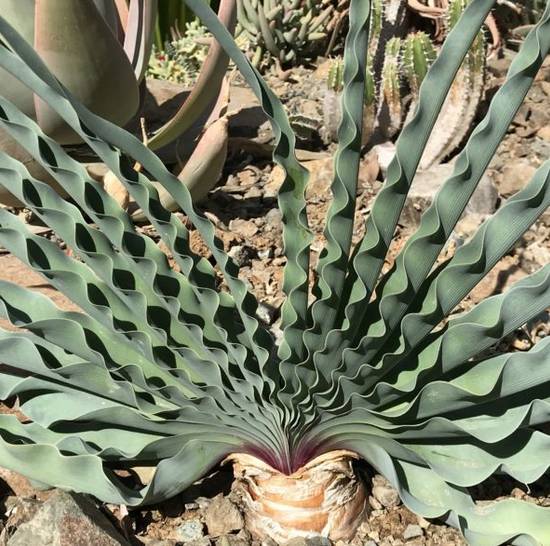
The Boophone Disticha is an exceptional and fascinating bulbous plant native to southern Africa. It is renowned for its unique fan-shaped silhouette formed by long, rigid leaves arranged symmetrically. During flowering, it emerges from its massive bulb to produce a spectacular umbel inflorescence composed of numerous star-shaped flowers, often pink to purple, carried on long stems. A plant of contrast and strong character, it appeals to both collectors and exotic plant enthusiasts for its graphic appearance and adaptation to arid climates.
The Boophone Disticha is native to the semi-desert regions of southern Africa, particularly South Africa, Botswana, and Namibia. It naturally grows in open grasslands, often at altitude, on rocky soils where it withstands intense drought. The bulb, partially exposed above ground, captures heat and helps the plant survive extreme climatic conditions.
This adaptation gives it a remarkable ability to endure long periods of drought.
This adaptation gives it a remarkable ability to endure long periods of drought.
Light is essential for the proper development of this plant:
☀️ Outdoors: Place your Boophone disticha in full sun or partial shade, depending on climate intensity. It particularly enjoys dry heat.
🏡 Indoors: Choose a south- or west-facing window. The plant requires a large amount of direct light to maintain healthy growth and annual flowering.
☀️ Outdoors: Place your Boophone disticha in full sun or partial shade, depending on climate intensity. It particularly enjoys dry heat.
🏡 Indoors: Choose a south- or west-facing window. The plant requires a large amount of direct light to maintain healthy growth and annual flowering.
The Boophone is a plant of water contrast:
🌿 Growing period (spring/summer): Water moderately when leaves are present. Always wait until the substrate has completely dried between waterings.
❄️ Dormant period (autumn/winter): When the leaves dry out, stop watering entirely. The bulb then enters dormancy and tolerates complete dryness.
🌿 Growing period (spring/summer): Water moderately when leaves are present. Always wait until the substrate has completely dried between waterings.
❄️ Dormant period (autumn/winter): When the leaves dry out, stop watering entirely. The bulb then enters dormancy and tolerates complete dryness.
The Boophone disticha prefers warm climates:
🌡️ Ideal: 20 to 30 °C during growth.
❄️ Minimum tolerance: Can tolerate drops down to 5 °C, but only when kept dry. If frost is expected, the plant must be sheltered.
🌡️ Ideal: 20 to 30 °C during growth.
❄️ Minimum tolerance: Can tolerate drops down to 5 °C, but only when kept dry. If frost is expected, the plant must be sheltered.
This plant prefers a very well-drained, poor, and mineral substrate. Excess water would be fatal to the bulb.
🪨 Recommended mix: 50% special cactus potting soil, 30% coarse sand, and 20% perlite or pumice.
⛏️ Proper drainage is crucial to prevent bulb rot, especially during winter.
🪨 Recommended mix: 50% special cactus potting soil, 30% coarse sand, and 20% perlite or pumice.
⛏️ Proper drainage is crucial to prevent bulb rot, especially during winter.
The Boophone produces a spectacular inflorescence directly from the top of the bulb:
📆 Period: Before leaf emergence, in late winter or early spring.
🌼 Flowers: Pink to purple, star-shaped, grouped in a dense umbel on a long floral stalk.
💡 Tip: A well-defined rest period with dry substrate and cool light encourages the next flowering.
📆 Period: Before leaf emergence, in late winter or early spring.
🌼 Flowers: Pink to purple, star-shaped, grouped in a dense umbel on a long floral stalk.
💡 Tip: A well-defined rest period with dry substrate and cool light encourages the next flowering.
FAQ - Boophone Disticha
What is the best substrate for Boophone Disticha?
It requires a very well-draining substrate to prevent bulb rot. A mix of cactus soil, coarse sand, and mineral drainage materials is strongly recommended.
How should Boophone Disticha be watered properly?
During its growing period (spring and summer), water moderately and allow the substrate to dry thoroughly between waterings. In winter dormancy, stop watering completely.
What is the minimum temperature tolerated by Boophone Disticha?
It can tolerate temperatures down to about 5°C if kept completely dry. Below that, it should be protected indoors.
Can Boophone Disticha be grown indoors?
Yes, provided it receives very bright exposure, ideally behind a south-facing window. Direct light is essential for proper development.
Is Boophone Disticha toxic?
Yes, especially the bulb, which contains powerful alkaloids. It should be handled carefully and kept away from children and pets.
When does Boophone Disticha bloom?
It blooms in late winter or very early spring, before the leaves appear, producing a spectacular star-shaped inflorescence.
My Boophone Disticha is not producing leaves, is this normal?
Yes, this can be normal during dormancy. The bulb may remain bare for part of the year. Wait until spring for new leaves to emerge.
Can fertilizer be used for Boophone Disticha?
A low-nitrogen fertilizer applied at the beginning of the growing season can help support leaf development.
How can Boophone Disticha be propagated?
Propagation is usually done by seed. Dividing the bulb is very difficult and risks damaging the plant.
Why are the leaves of my Boophone Disticha turning yellow?
This may indicate the natural end of its growth cycle (entry into dormancy) or overwatering. Respect proper watering periods and maintain a highly draining substrate.