Jatropha Podagrica

Jatropha Podagrica
Jatropha Podagrica
Jatropha Podagrica

Jatropha Podagrica

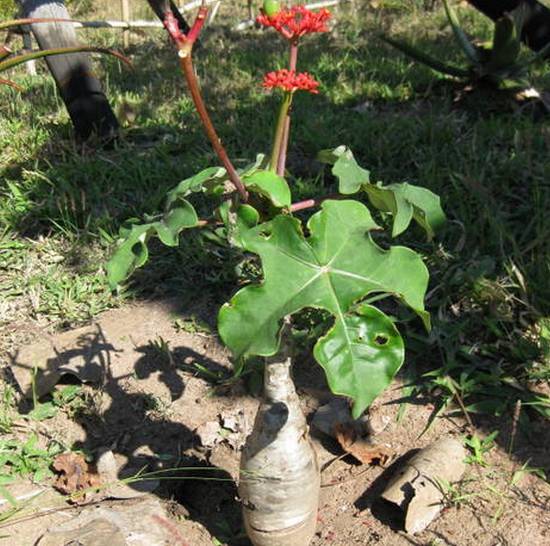
The Jatropha Podagrica, often nicknamed "bottle plant" or "Buddha Belly plant", is a fascinating species that leaves no one indifferent. Native to the tropical regions of Central America, this atypical plant belongs to the Euphorbiaceae family and stands out immediately with its unique appearance.

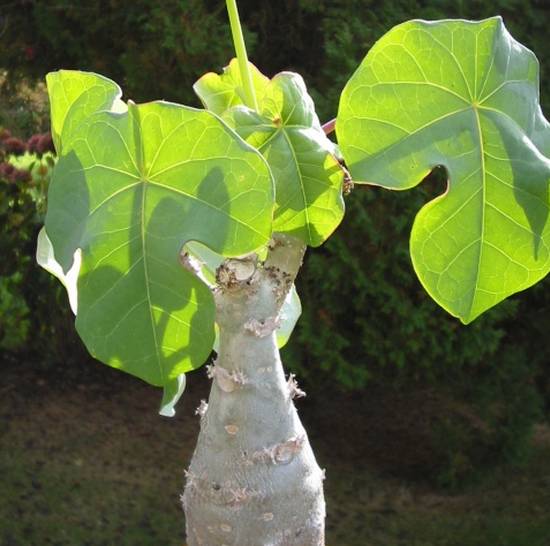
Its most remarkable feature is undoubtedly its swollen trunk at the base, called a caudex. This structure allows it to store water and withstand periods of drought, a major asset in its natural habitat. This greyish, almost sculptural trunk gives it an exotic and highly decorative look appreciated in indoor cultivation.

At the top of this thick base develop long stems bearing large bright green leaves, palmate and slightly lobed. These leaves, often compared to those of the fig tree, bring a tropical touch and contrast beautifully with the more austere base of the plant.

The Jatropha Podagrica is native to the tropical regions of Central America, notably Guatemala, Honduras and Nicaragua.

In its natural environment, it grows in dry to semi-humid areas, often on poor but well-drained soils, where it benefits from intense sunlight.
To ensure optimal growth of Jatropha Podagrica, light is essential:

🌞 Bright light: ideally several hours of direct sunlight per day.

🌤️ Indirect light tolerated: possible in a bright indoor space, but flowering will be reduced.

A lack of light leads to etiolated growth and reduced flowering.
The Jatropha Podagrica requires well-managed watering:

🌱 Spring / summer: moderate watering when the substrate is completely dry.

🍂 Autumn / winter: very spaced watering, or even complete stop if the plant loses its leaves.

Warning: excess water quickly causes caudex rot.
The Jatropha Podagrica appreciates warm climates:

🌞 Ideal: between 18°C and 30°C.

❄️ Minimum: 10°C (avoid any exposure to frost).

🏠 Advice: indoor cultivation recommended in temperate climates.
The Jatropha Podagrica requires a perfectly draining soil:

🪨 Recommended mix: cactus soil : Algoflash + 30 to 50% perlite and optionally pouzzolane
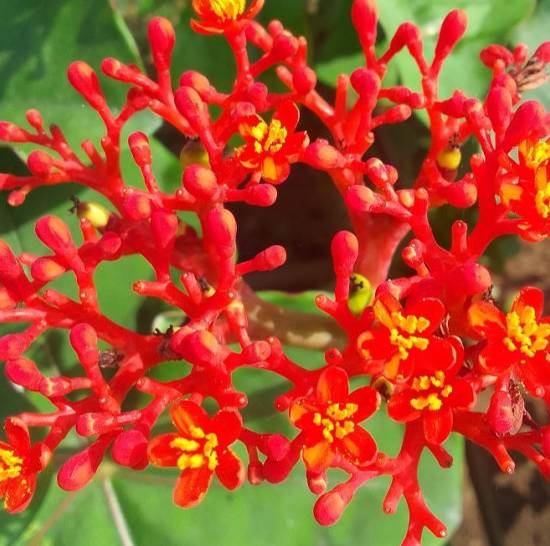
The flowering of Jatropha Podagrica is one of its greatest assets:

🌸 Period: from spring to autumn, sometimes all year round

🎨 Color: bright coral red

💡 Feature: frequent flowering even on young plants
FAQ - Jatropha Podagrica

Why does the Jatropha Podagrica lose its leaves in winter?
This is a normal phenomenon related to its dormancy period. Reduce watering and consult our advice.
How to make a Jatropha Podagrica bloom indoors?
Give it as much light as possible and use a suitable fertilizer like Fertiligene liquid fertilizer to stimulate flowering.
Is the Jatropha Podagrica toxic?
Yes, its sap is toxic. Avoid contact with skin and animals.
What substrate to use for a Jatropha Podagrica?
A very well-draining substrate is essential, like this cactus mix.
How often should you water a Jatropha Podagrica?
During the growing season, about every 2 to 3 weeks. In winter, space watering significantly.
Can Jatropha Podagrica be grown outdoors?
Yes in a warm climate. Otherwise, prefer growing it in a pot indoors with good light.
Why is the caudex of the Jatropha Podagrica becoming soft?
Often due to excess water. Improve drainage with pozzolana.
Should you fertilize the Jatropha Podagrica and with which fertilizer?
Yes, in spring and summer with a fertilizer like this specialized fertilizer.
Does the Jatropha Podagrica grow quickly indoors?
Its growth is slow to moderate, which makes it easy to maintain in a pot.
Where to place a Jatropha Podagrica in the house for good growth?
Place it near a very bright window, ideally south-facing to promote its growth and flowering.