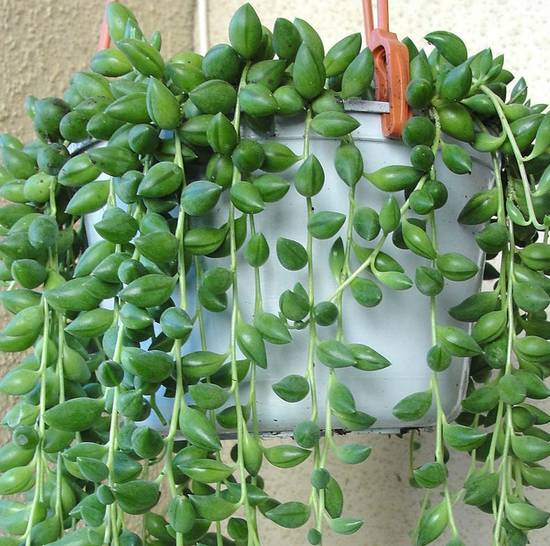
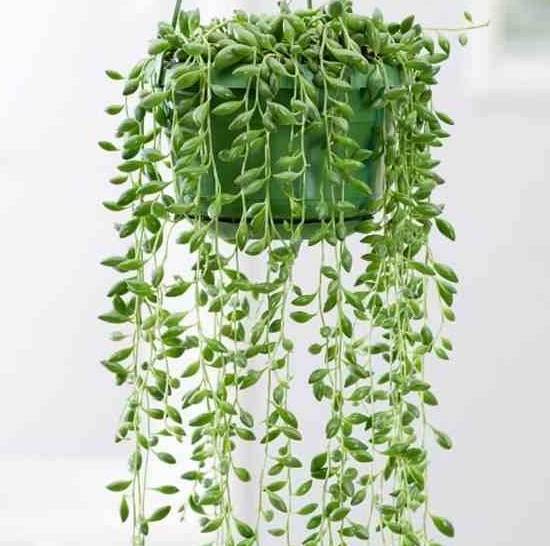
Senecio Herreianus
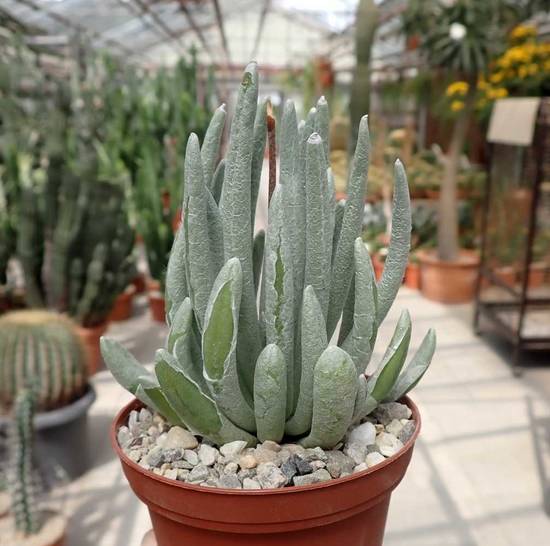
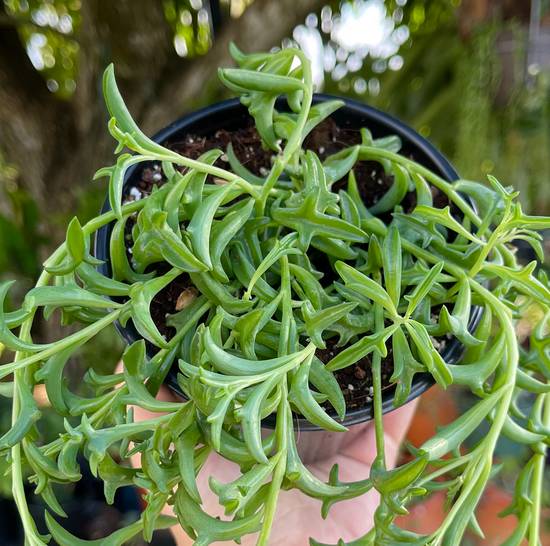
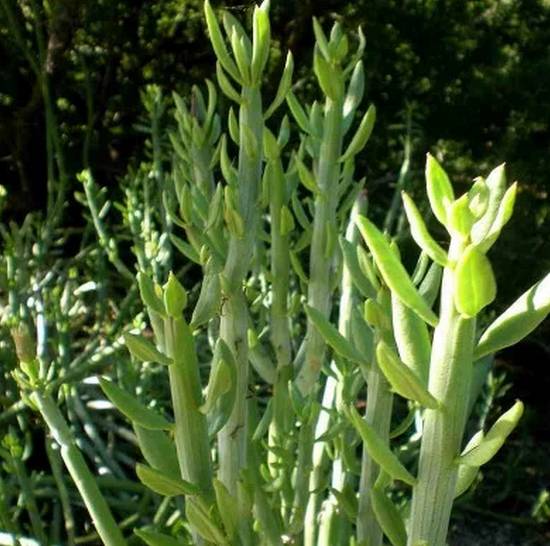
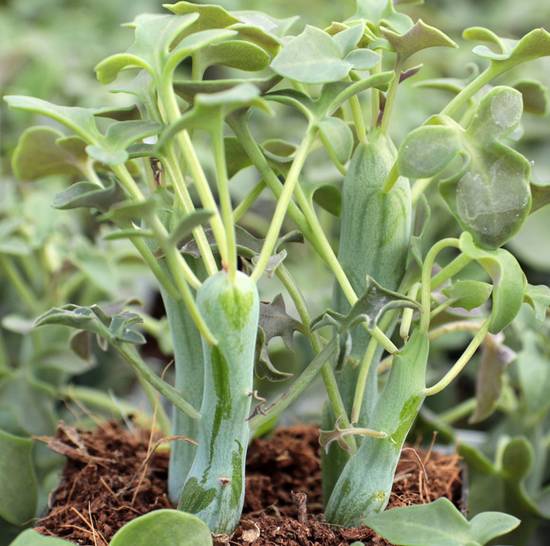
The Senecio Herreianus, often nicknamed “string of oval pearls”, is a trailing or cascading succulent plant, highly appreciated for its original and decorative foliage. Cousin of the more famous Senecio Rowleyanus, it differs by thicker leaves shaped like elongated drops, sometimes striped with fine translucent lines called “leaf windows”. It is a plant that attracts attention with its elegance while offering relatively easy cultivation.
Its stems can reach several dozen centimeters, making it an excellent choice for hanging baskets or to edge a pot placed high up. When well exposed, the foliage sometimes takes on a slightly purplish tint, especially on the leaf edges. During the flowering period, it produces small creamy-white tubular flowers with a soft, sometimes slightly spicy fragrance.
The Senecio Herreianus is often grown indoors in our temperate climates, but can absolutely thrive outdoors in regions with mild winters. Easy to propagate, fast growing, undemanding, it combines aesthetics and simplicity of care, making it an ideal companion for lovers of original plants.
🌞 Soft direct sun : Bright light is necessary, ideally 4 to 6 hours per day of indirect or filtered sun. Morning full sun is perfect.
🌤️ Indoors : Place it close to a well-exposed window, ideally facing south or west.
⚠️ Too little light makes stems etiolated and leaves spaced apart: the plant becomes less compact and loses its beauty.
🌱 Spring / summer : Water when the substrate is completely dry on the surface, approximately every 2 to 3 weeks depending on exposure.
🍂 Autumn / winter : Water very rarely (once a month or even less), as the plant enters dormancy.
💧 Too much or not enough water? : Soft or translucent leaves indicate excess water. Conversely, if they wrinkle and shrivel, it is time to water.
🌡️ Ideal temperature : between 18°C and 28°C.
❄️ Minimum : It tolerates down to 5°C but does not withstand frost. Below 10°C, bring it indoors or into a cold greenhouse.
🪨 Use a substrate suitable for succulents, which you can lighten with perlite or pozzolana granules for better aeration.
🌼 Period : at the end of winter or at the beginning of spring.
🌸 Appearance : small white flowers with a tubular base, reminiscent of daisy flowers.
🕑 Duration : they last a few days and mainly appear on mature and well-established plants.