Mammillaria Plumosa
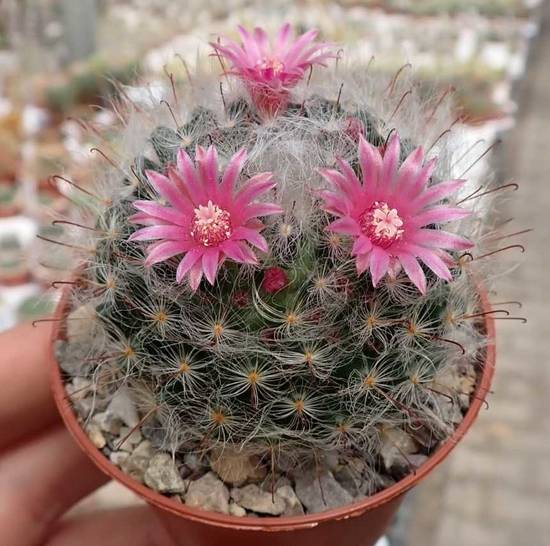
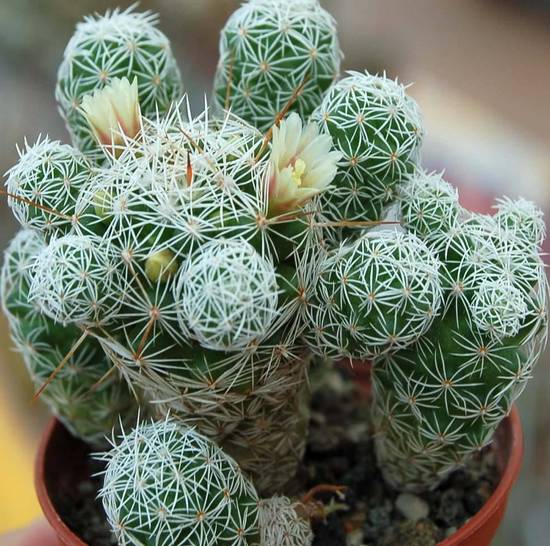
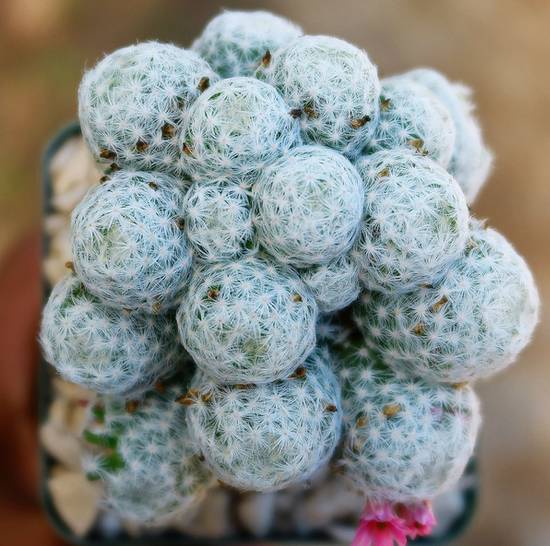
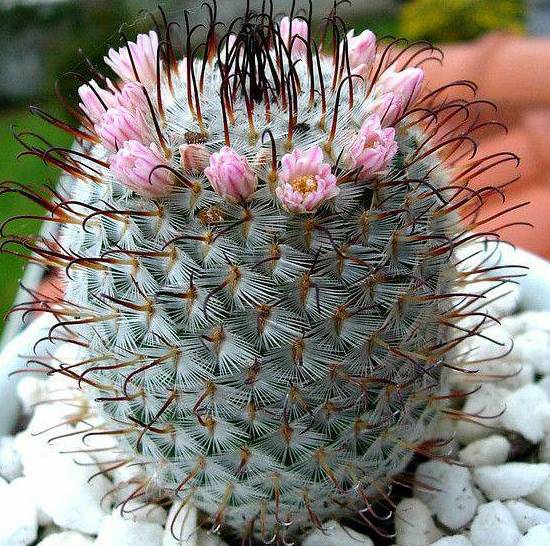
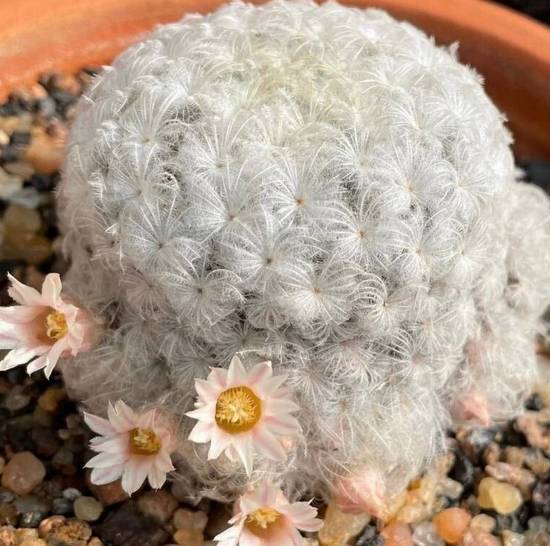
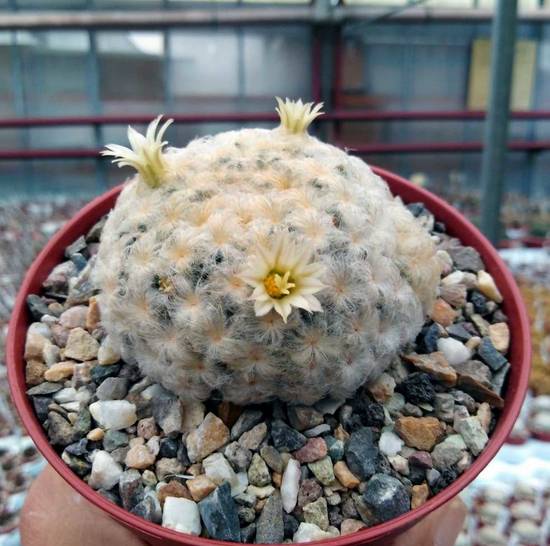
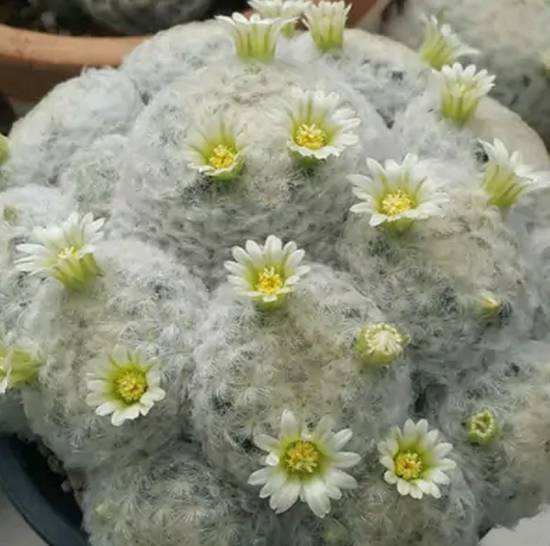
The Mammillaria Plumosa is a species that captivates with its exceptional texture and soft, airy appearance. Covered with fine white spines resembling down, it looks more like a ball of feathers than a classic cactus. This unique feature has earned it the nickname “feather cactus”.
Compact, globular and slow-growing, it forms dense clumps made up of many small heads. Highly appreciated in pots or arrangements, it inevitably draws attention with its delicate, cottony look that makes you want to touch it… mistakenly! Because despite its apparent softness, its spines are very real, though extremely fine.
This cactus is an excellent choice for lovers of original, easy-care plants that stand out visually.
The Mammillaria Plumosa is native to northeastern Mexico, more precisely the regions of Coahuila, Nuevo León and Tamaulipas. It grows on hillsides in arid, rocky and sunny environments. This adaptation to dry and hot habitats makes it a hardy and undemanding cactus in cultivation.
Its white down plays a protective role against intense sun and water loss, making it an excellent example of natural adaptation.
Its white down plays a protective role against intense sun and water loss, making it an excellent example of natural adaptation.
Bright light is essential to ensure proper growth and compactness of the cactus.
🌤️ Outdoors: Direct sun in the morning or filtered light during the day, especially in summer when the down may not be sufficient to prevent burns on young plants.
🏠 Indoors: Place near a very bright window. A south or west orientation is ideal.
⚠️ Warning: Insufficient light causes etiolation (the cactus stretches and loses its shape).
🌤️ Outdoors: Direct sun in the morning or filtered light during the day, especially in summer when the down may not be sufficient to prevent burns on young plants.
🏠 Indoors: Place near a very bright window. A south or west orientation is ideal.
⚠️ Warning: Insufficient light causes etiolation (the cactus stretches and loses its shape).
Like all Mammillaria, watering must be carefully controlled to avoid excess moisture.
💦 Spring / summer: Water every 15 to 20 days, only when the substrate is dry deep down.
❄️ Autumn / winter: Stop watering. This cactus needs a dry winter rest.
💡 Tip: Use a well-draining, airy substrate to limit the risk of rot.
💦 Spring / summer: Water every 15 to 20 days, only when the substrate is dry deep down.
❄️ Autumn / winter: Stop watering. This cactus needs a dry winter rest.
💡 Tip: Use a well-draining, airy substrate to limit the risk of rot.
The Mammillaria Plumosa is hardy in dry conditions but sensitive to cold moisture.
🌡️ Ideal temperature: 20 to 28 °C.
❄️ Minimum tolerance: Down to 2 °C if the pot is perfectly dry.
🏠 Overwintering: A cool (between 5 and 10 °C), bright place is ideal to encourage spring flowering.
🌡️ Ideal temperature: 20 to 28 °C.
❄️ Minimum tolerance: Down to 2 °C if the pot is perfectly dry.
🏠 Overwintering: A cool (between 5 and 10 °C), bright place is ideal to encourage spring flowering.
Well-drained soil is essential to keep this species healthy.
🪨 Recommended mix: 50 % cactus potting soil + 30 % perlite or drainage granules + 20 % pumice.
⛏️ Drainage: Always place a drainage layer at the bottom of the pot.
🪨 Recommended mix: 50 % cactus potting soil + 30 % perlite or drainage granules + 20 % pumice.
⛏️ Drainage: Always place a drainage layer at the bottom of the pot.
Although discreet, this cactus can offer delicate flowering.
📆 Period: In spring, often after overwintering.
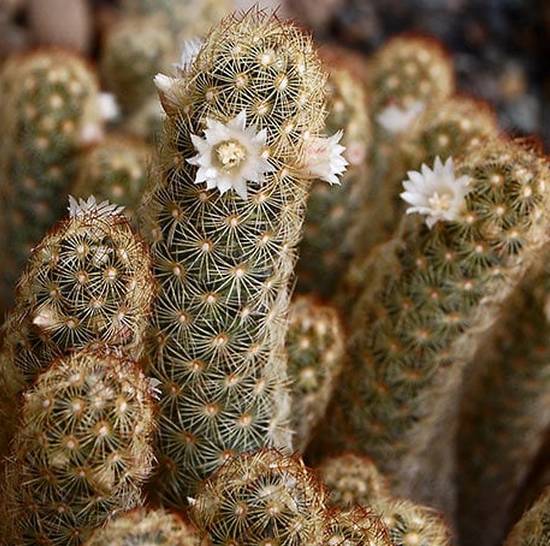
🌼 Flowers: Small, white or pale yellow, appearing at the base of the areoles.
💡 Encouraging flowering: Respect the dry winter rest and apply cactus fertilizer in spring.
📆 Period: In spring, often after overwintering.
🌼 Flowers: Small, white or pale yellow, appearing at the base of the areoles.
💡 Encouraging flowering: Respect the dry winter rest and apply cactus fertilizer in spring.
FAQ - Mammillaria Plumosa
What is the origin of Mammillaria Plumosa?
Mammillaria Plumosa originates from northeastern Mexico, where it naturally grows in rocky, arid, and sunny environments.
What type of substrate should be used for Mammillaria Plumosa?
Use a well-draining mix made of special cactus potting soil, perlite or drainage granules, and pumice to ensure proper aeration and prevent root rot.
How should Mammillaria Plumosa be watered?
Water every 2 to 3 weeks in summer, only when the substrate is completely dry. No watering is recommended in winter.
Can Mammillaria Plumosa bloom?
Yes, it produces small white or cream flowers in spring. A dry winter rest encourages blooming.
How can I tell if I have overwatered my Mammillaria Plumosa?
Signs of rot at the base or general softening may indicate overwatering. It is crucial to maintain a well-draining substrate and reduce watering immediately.
What is the minimum temperature tolerated by Mammillaria Plumosa?
It can tolerate temperatures down to 2°C if the substrate is perfectly dry.
Can Mammillaria Plumosa live indoors?
Yes, it adapts very well indoors, provided it has a very bright location, such as a south-facing window.
Should Mammillaria Plumosa be fertilized?
Yes, in spring, use a cactus fertilizer to stimulate healthy growth and flowering.
What is the mature size of Mammillaria Plumosa?
It is a small cactus that forms clusters of several heads, usually reaching 10 to 15 cm in diameter.
Is Mammillaria Plumosa easy to care for?
Yes, it is an ideal species for beginners. Simply respect its needs for light, drainage, and a proper winter rest.