Ferocactus Schwarzii
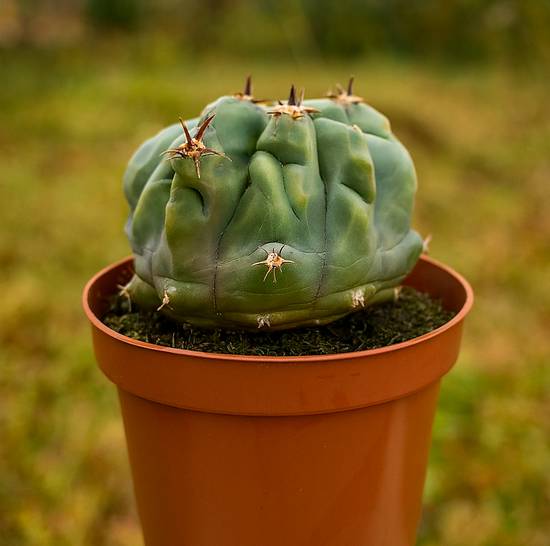
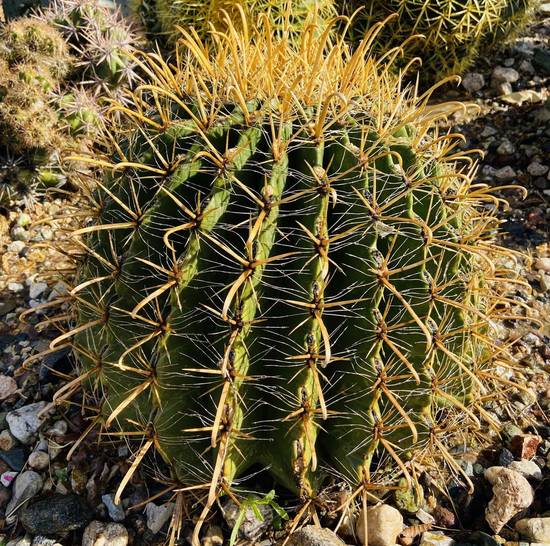
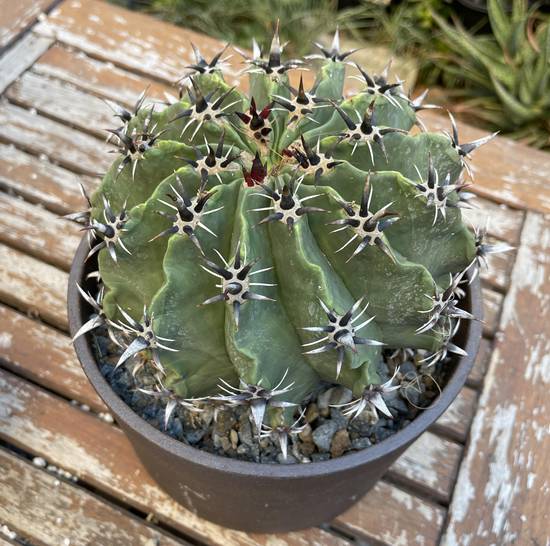
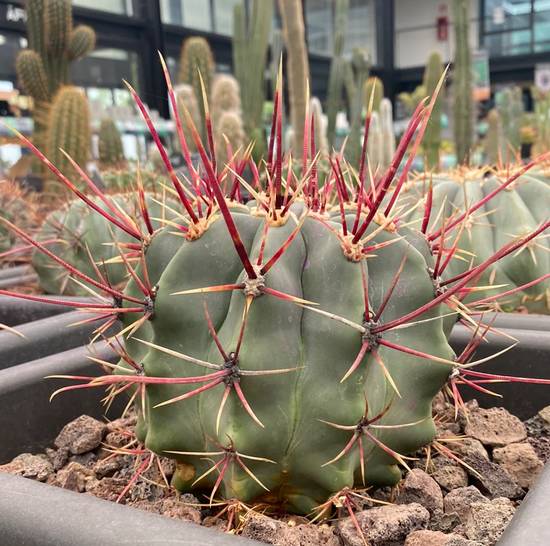
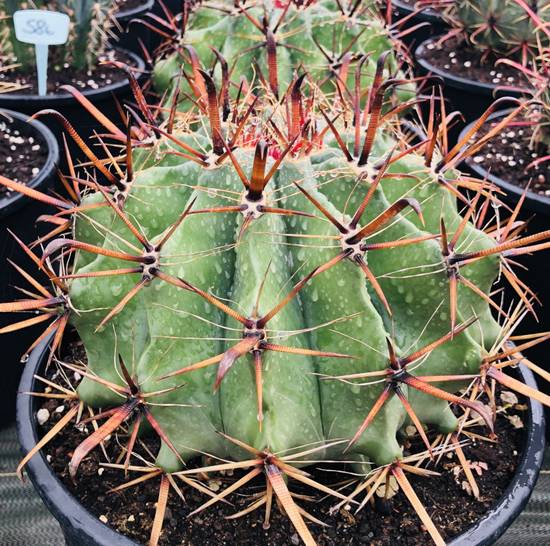
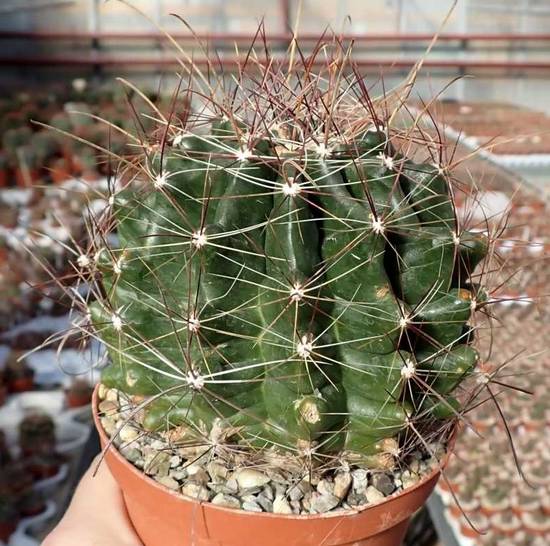
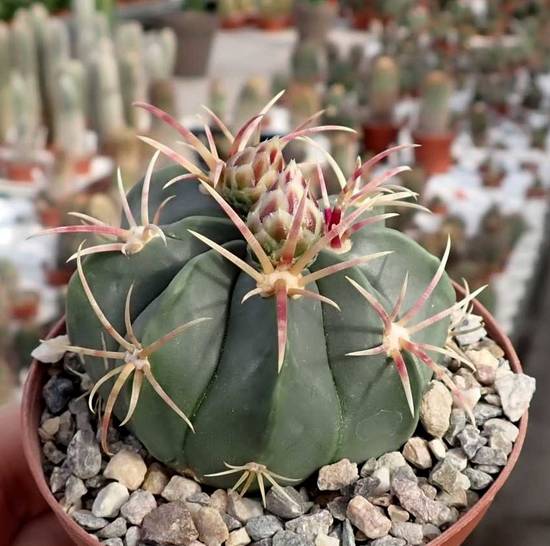
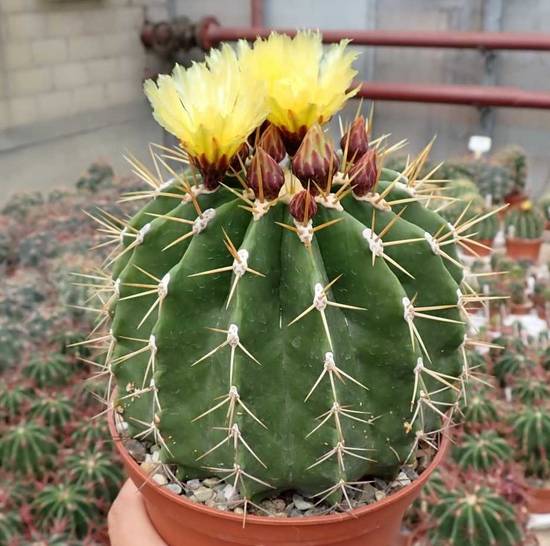
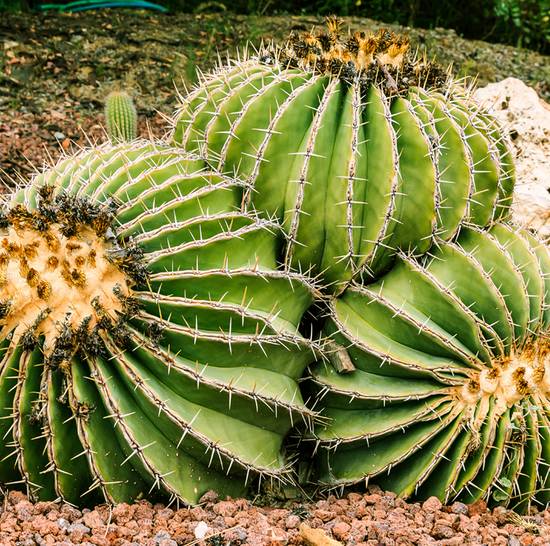
The Ferocactus Schwarzii is a rare and fascinating cactus species native to Mexico, highly prized for its long reddish spines and robust silhouette. It belongs to the large family of Ferocactus, but stands out for the dense arrangement of its ribs and closely spaced areoles, often adorned with formidable curved spines. This cactus generally develops a globular shape when young, gradually becoming cylindrical over time.
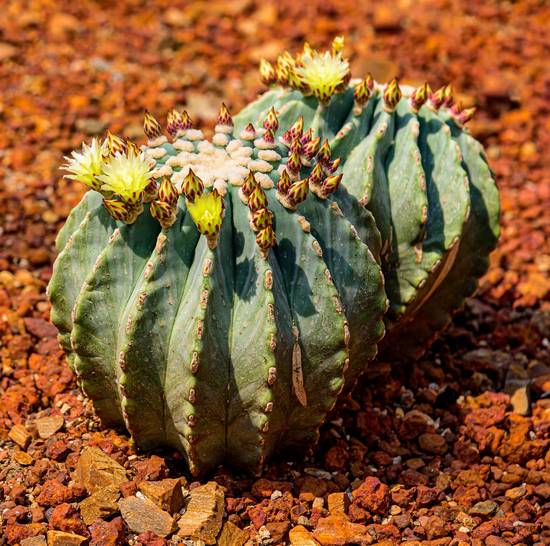
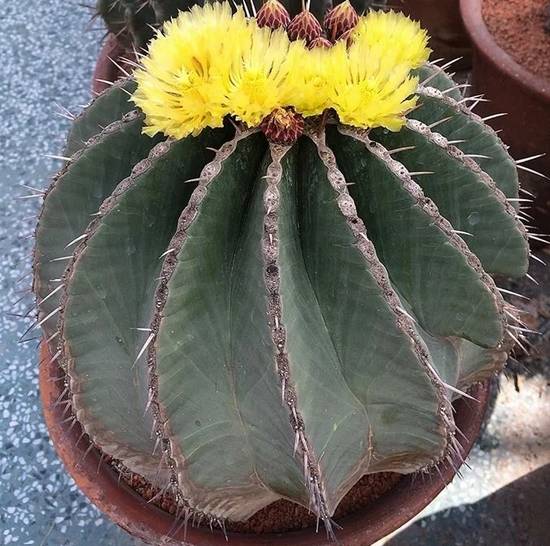
Its epidermis displays a beautiful dark green to olive-green hue, accentuated by the shine of its blood-red spines that turn dark brown as they age. It can reach 40 to 60 cm in height in cultivation, or even more in its natural habitat. When well exposed and mature, the Ferocactus Schwarzii produces elegant yellow flowers with orange highlights, forming a crown at the top of the plant.
🌞 Full sun: It enjoys at least 5 to 6 hours of direct sunlight per day. The more light it receives, the more compact its growth and the more vibrant its colors.
🌤️ Summer protection: During intense heat above 35 °C, provide light shade during the hottest hours.
🏡 Indoor cultivation: Place it near a south- or west-facing window. In winter, you can compensate for the lack of sunlight with a suitable grow light.
💧 Spring / Summer: One watering approximately every 3 weeks, allowing the substrate to dry thoroughly between waterings.
❄️ Autumn / Winter: No watering is required during dormancy. Standing water in winter is a common cause of rot.
💡 Tip: Use a perfectly draining substrate to avoid excess moisture.
🌡️ Ideal: Between 20 and 30 °C during the day.
❄️ Minimum: Down to 4 °C occasionally, provided the substrate is completely dry.
🏠 Wintering: A winter rest between 5 and 10 °C in a bright indoor location stimulates flowering in spring.
🪨 Composition: 50 % cactus soil + 30 % perlite + 20 % gravel or pumice.
⛏️ Drainage: Place a layer of drainage material at the bottom of the pot to prevent excess water.
🌸 Period: Between June and August.
🌼 Flowers: Golden yellow to pale orange, bell-shaped, blooming in a crown at the top of the cactus.
💡 Tip: Keep it dry during winter and apply a cactus fertilizer in spring to encourage flowering.