Ferocactus Glaucescens
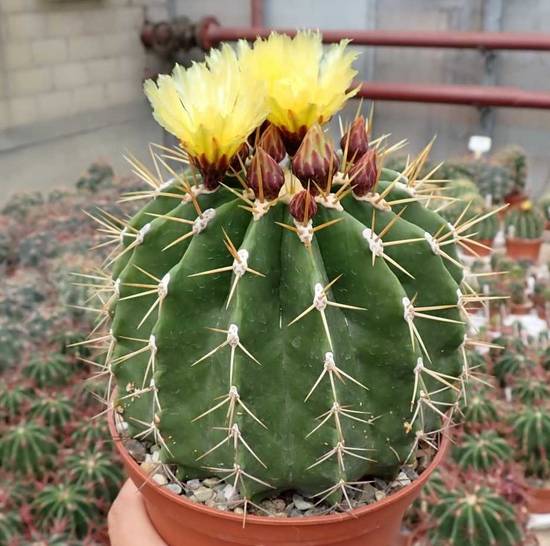
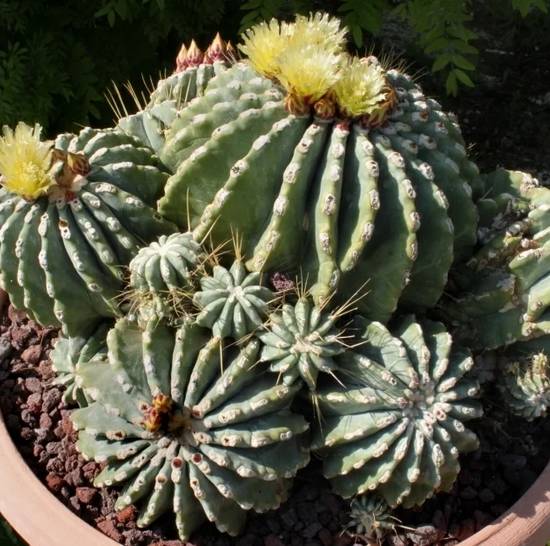
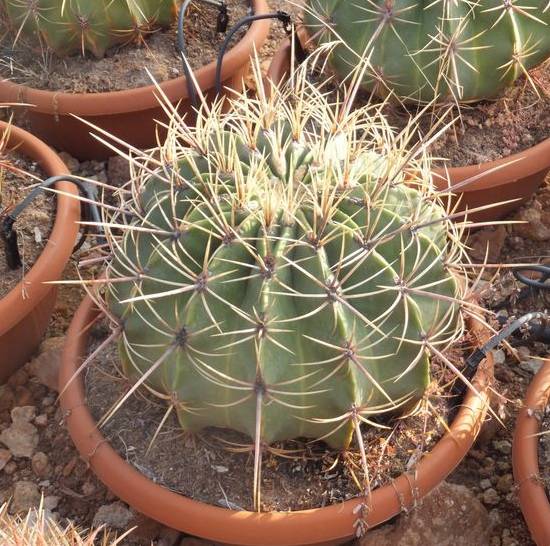
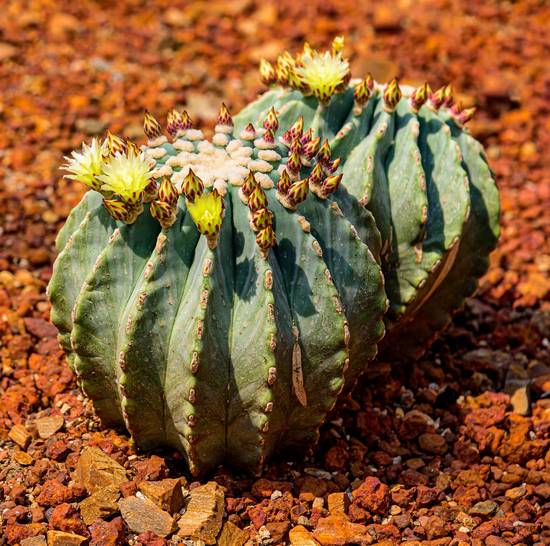
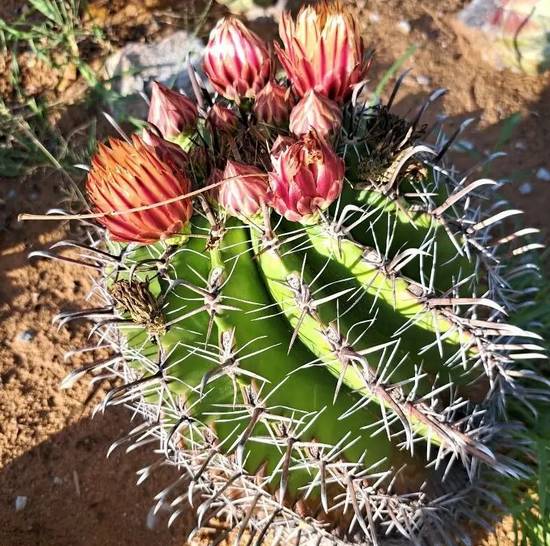
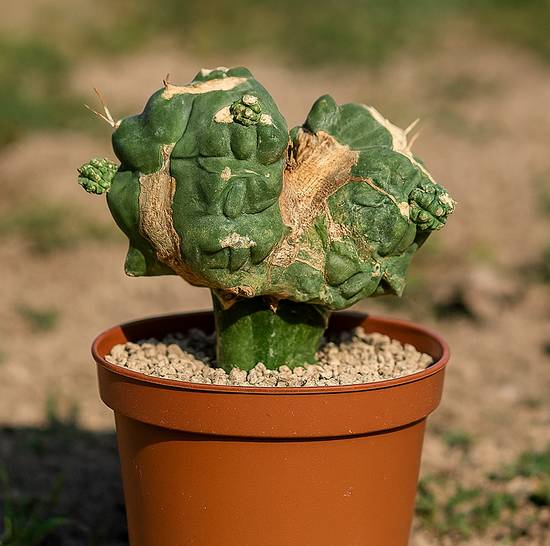
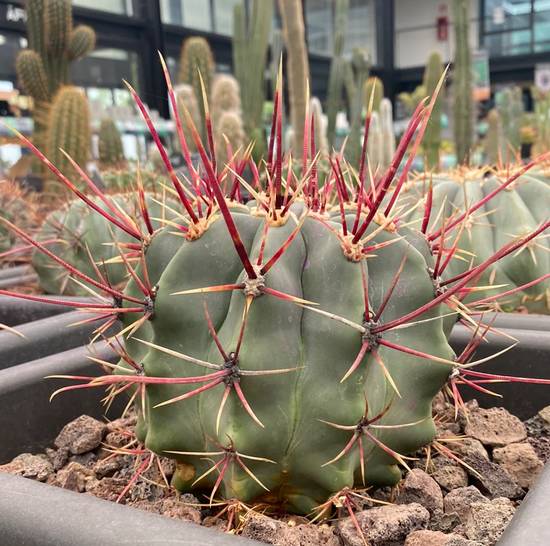
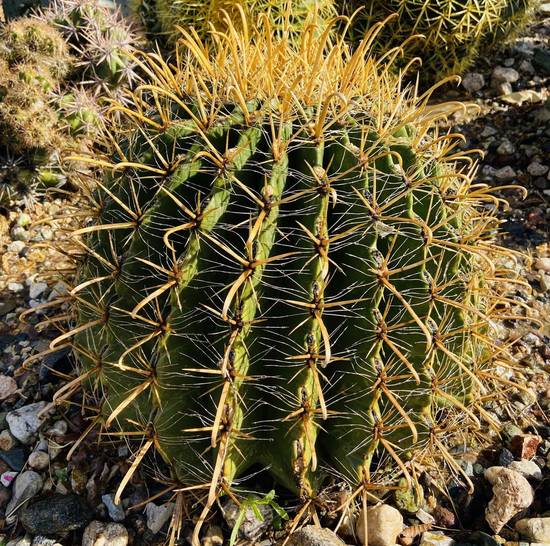
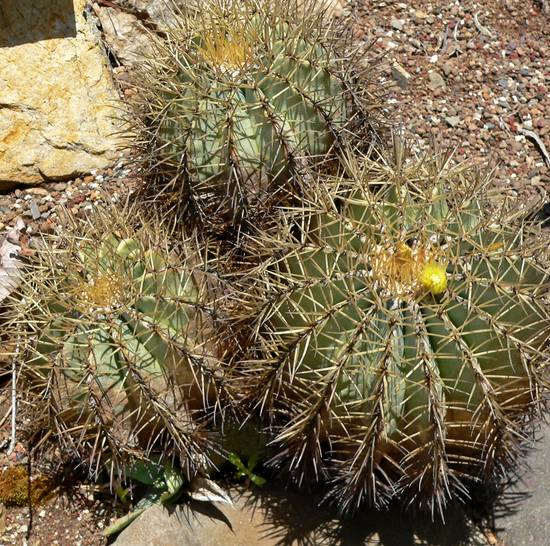
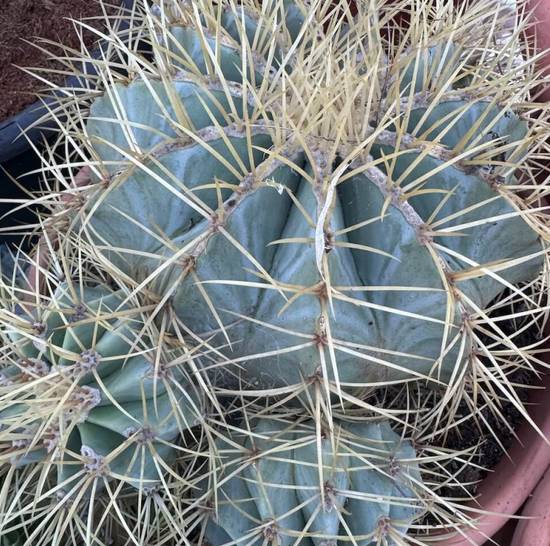
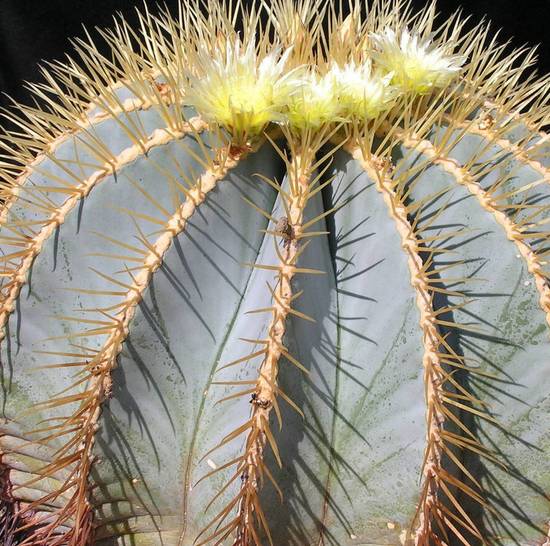
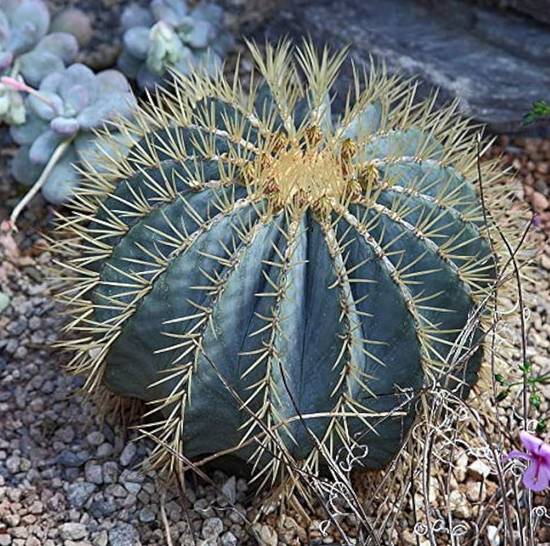
The Ferocactus Glaucescens is an impressive cactus with a globular shape and a bluish to glaucous green coloration, often enhanced by a waxy coating. Native to Mexico, this cactus stands out for its pronounced ribs, its long yellowish to whitish spines, and its exceptional robustness. It is highly appreciated by collectors for its sculptural appearance and its summer flowering.
Its spherical habit can reach up to 40 cm in diameter with age, sometimes more when grown in open ground in a suitable climate. Its massive and geometric appearance makes it a centerpiece in any cactus collection.
The Ferocactus Glaucescens is ideal for those looking for an aesthetic cactus that is heat-resistant and easy to care for, whether grown in a pot or in a rock garden.
Over time, it may produce offsets at its base, forming small colonies. Its yellow flowers appear in a crown around the apex in summer, adding a bright touch to its imposing silhouette.
In its natural habitat, it grows on rocky hills and limestone soils, often exposed to intense sunlight, prolonged drought, and significant temperature variations. These conditions have allowed it to develop high tolerance to water stress and slow but steady growth.
🌞 Optimal exposure: full sun, at least 6 hours per day.
🌤️ Summer tip: if grown in a pot, gradually acclimate it to full sun to avoid skin burns.
Insufficient light leads to slowed growth and dull coloration.
🌱 Spring / summer: water approximately every 3 weeks, only when the substrate is completely dry.
🍂 Autumn / winter: completely stop watering unless indoor heating causes excessive dryness.
💡 Tip: use bottom watering to properly moisten the roots without excess.
🌡️ Ideal temperature: between 20°C and 30°C during the growing season.
❄️ Minimum tolerated: down to 0°C, provided the substrate is dry.
🏠 Winter advice: overwinter in a bright location protected from frost.
🪨 Recommended mix: 1/3 cactus soil, 1/3 pumice, 1/3 pozzolana
🌸 Season: between June and August
🌼 Shape: funnel-shaped flowers at the apex
🎨 Color: bright yellow
⚡ Flowering tip: plenty of sun and dry winter rest promote blooming.