Ferocactus Gracilis
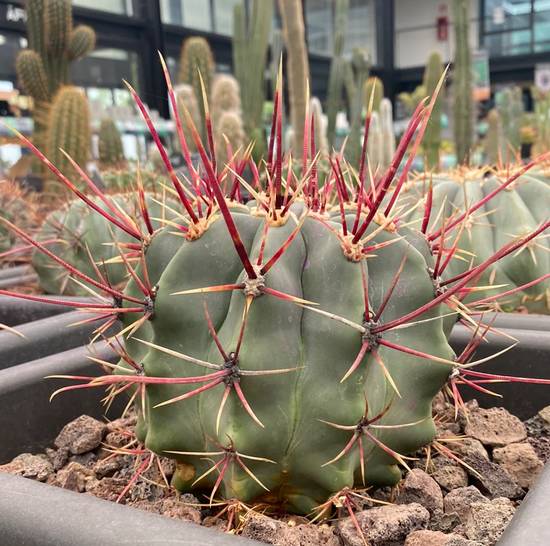
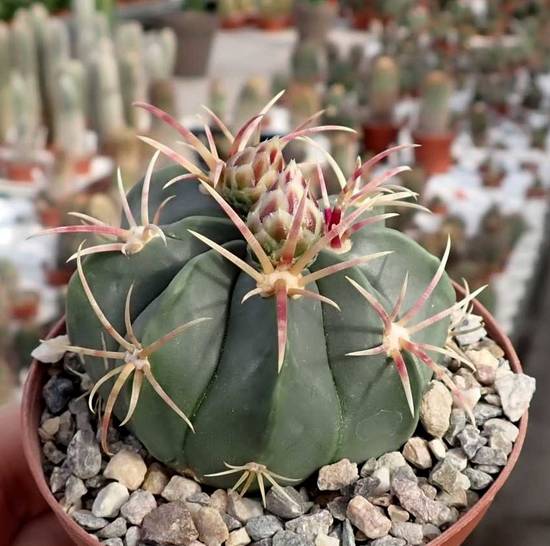
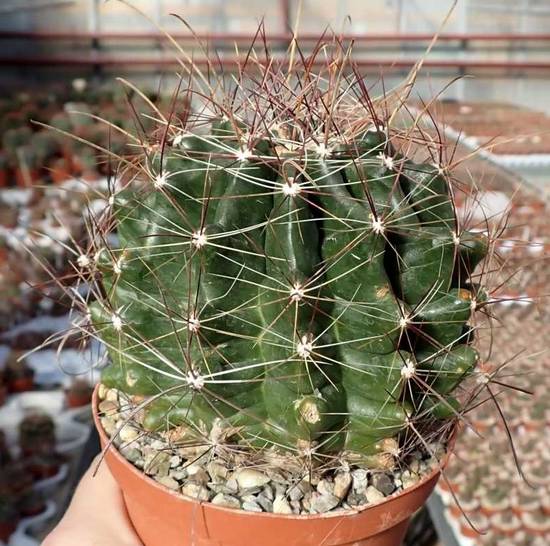
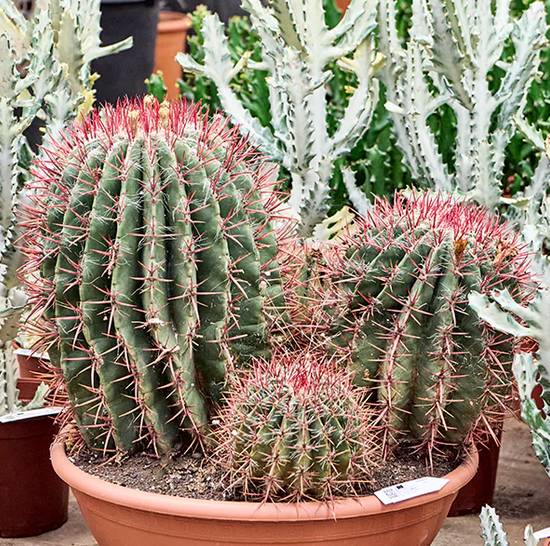
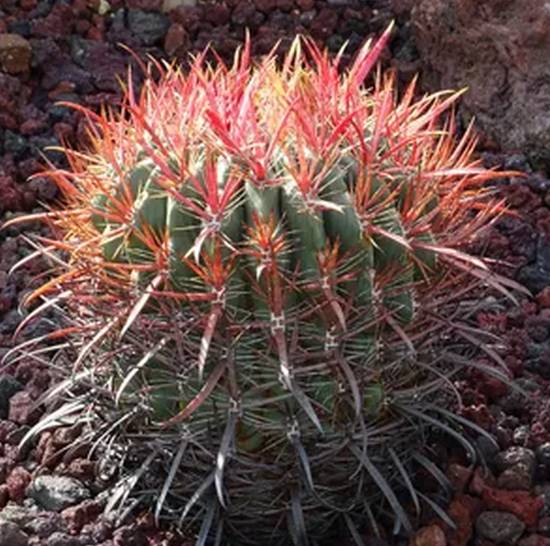
The Ferocactus Gracilis, sometimes nicknamed the “graceful barrel cactus”, is a spectacular cactus species native to Mexico. It stands out thanks to its long, bright red spines that strongly contrast with the light green to bluish epidermis of its stem. It is one of the most decorative cylindrical cacti for enthusiasts of bold forms and vivid colors.
This cactus develops a columnar growth habit, sometimes slightly leaning with age, and can reach 50 to 70 cm in height in cultivation. It features well-defined ribs lined with dense areoles bearing very rigid spines, some exceeding 5 cm in length. Their coloration ranges from deep red to purplish red depending on light exposure and genetics.
The Ferocactus Gracilis is highly appreciated in collections for its graphic and imposing appearance. It is also hardy in dry regions, but requires strong sunlight and well-draining soil to prevent rot.
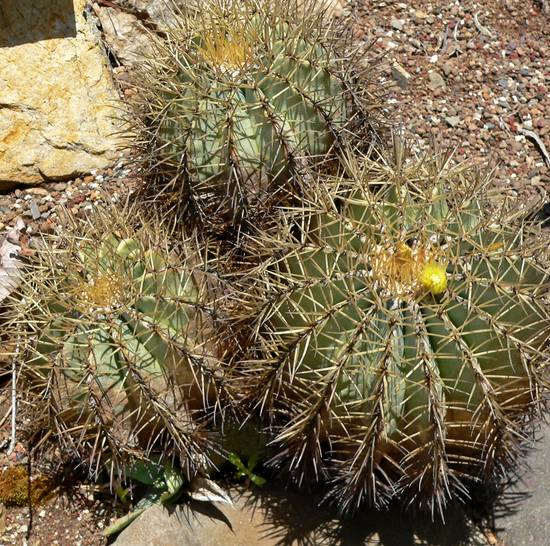
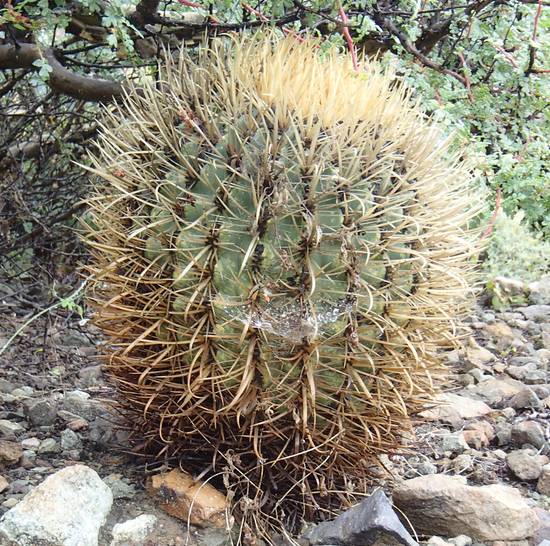
In its natural habitat, it develops in mineral soils, under full sun, sometimes alongside other cactus or agave species.
🌞 Full sun: at least 6 hours per day for the spines to develop their intense red coloration.
🌤️ Protection: for young plants, light shading is recommended during extreme heat waves.
A lack of light will cause elongated, deformed growth and loss of color.
🌱 Spring / summer: water every 2 to 3 weeks, allowing the substrate to dry completely between waterings.
🍂 Autumn / winter: drastically reduce watering or stop entirely once temperatures drop below 10°C.
⚡ Golden rule: excess water can cause irreversible rot. Always prefer slight water stress.
🌞 Ideal temperature: between 20°C and 35°C.
❄️ Minimum tolerance: down to 5°C, only if kept dry. Below this, irreversible damage may occur.
🏠 Wintering: keep indoors in a bright, dry place as soon as temperatures fall below 10°C.
🪨 Recommended substrate: 40% cactus potting soil + 30% pumice stone + 30% pozzolana.
💡 Tip: add a layer of gravel at the bottom of the pot to further improve drainage.
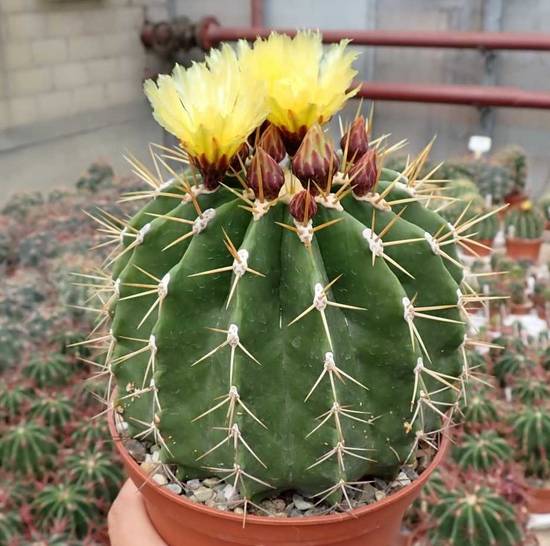
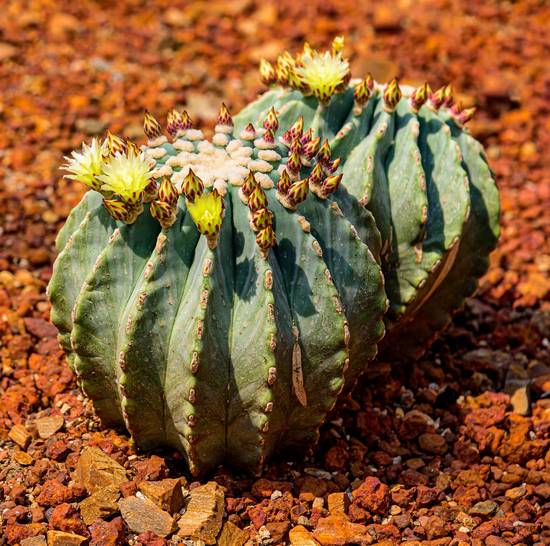
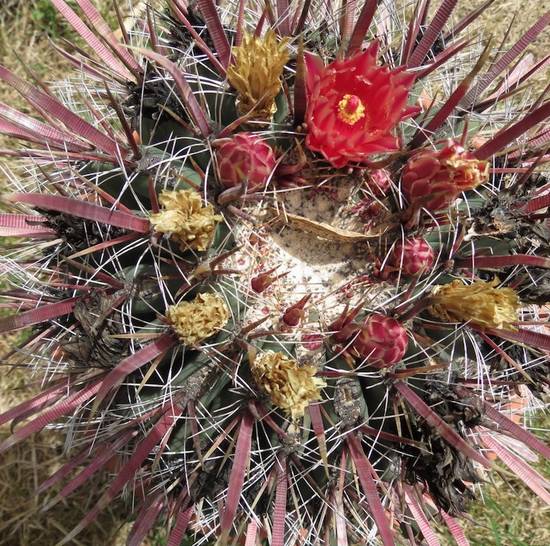
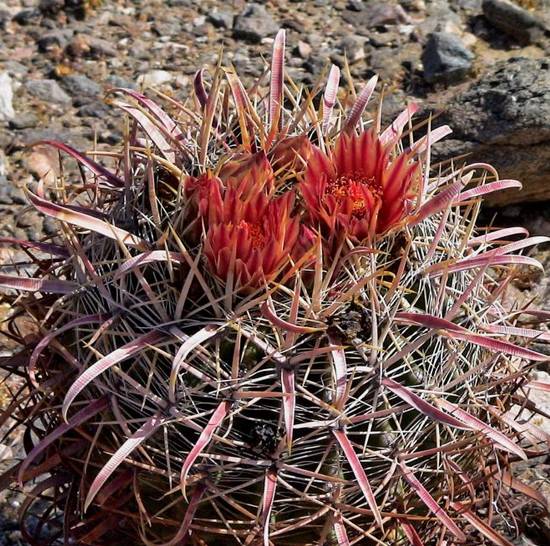
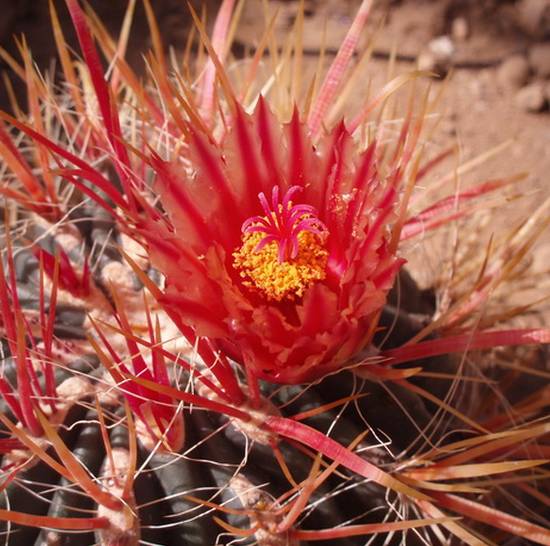
🌸 Season: usually in summer, on mature and well-established plants.
🎨 Color: bright yellow to orange flowers, arranged in a crown at the top.
🕑 Duration: a few days, sometimes several times per season under optimal conditions.