Dyckia Marnier-Lapostollei
The Dyckia Marnier-Lapostollei is a remarkable plant belonging to the Bromeliaceae family, native to Brazil. Unlike its tropical epiphytic relatives, this species grows directly in rocky and arid environments, making it closer to a succulent than to a classic bromeliad.
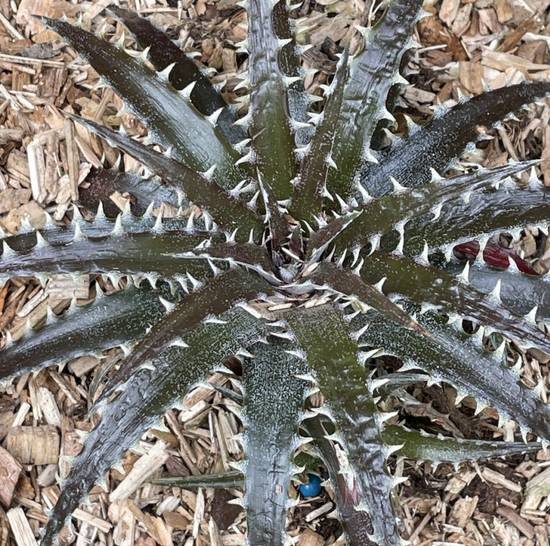
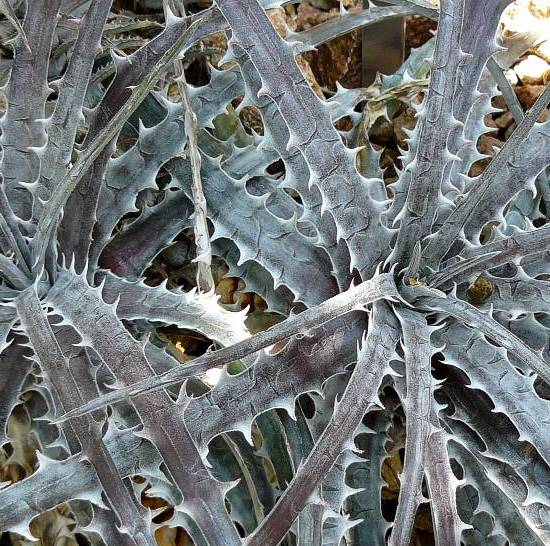
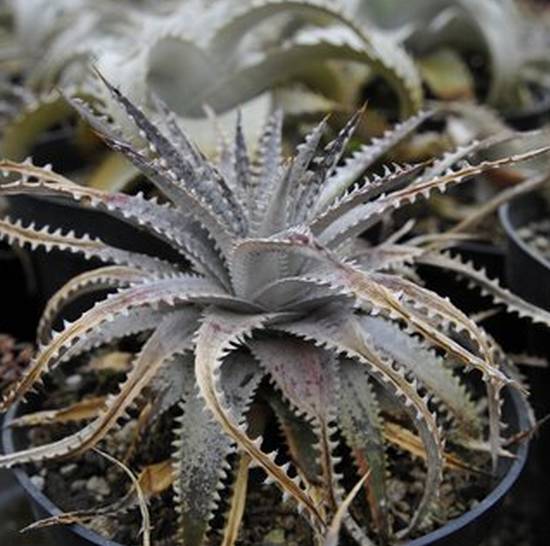
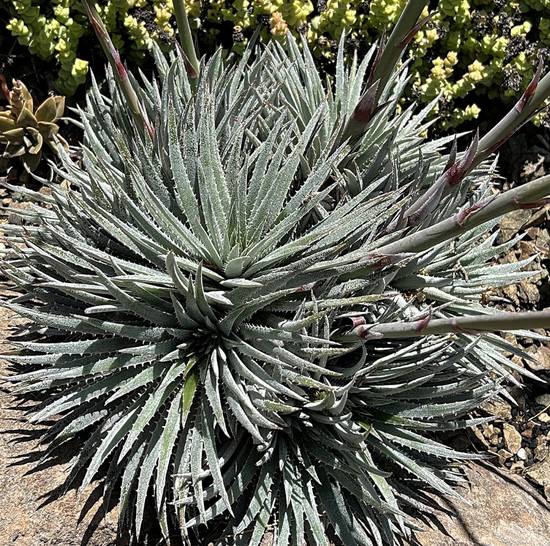
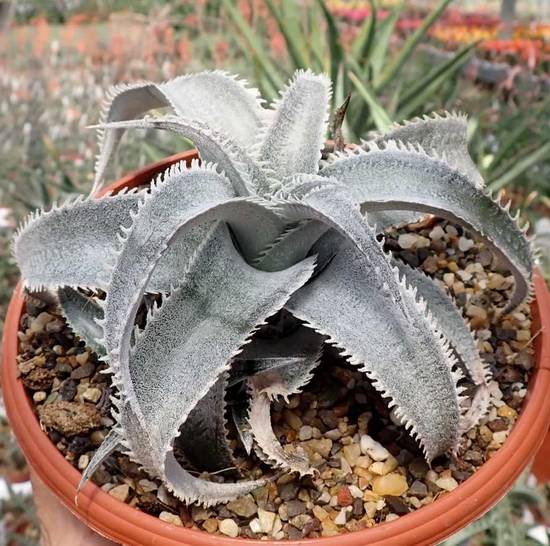
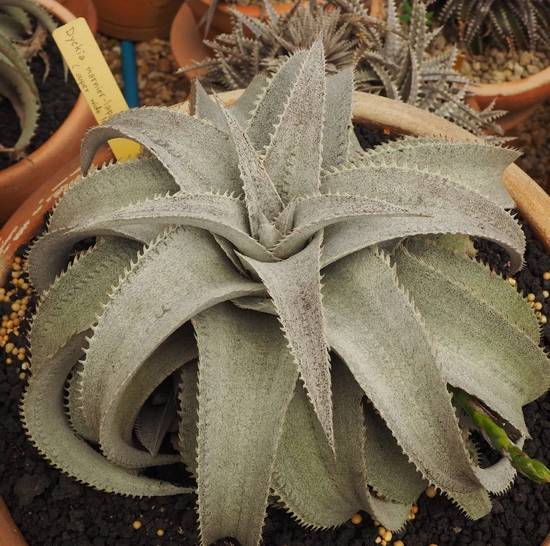
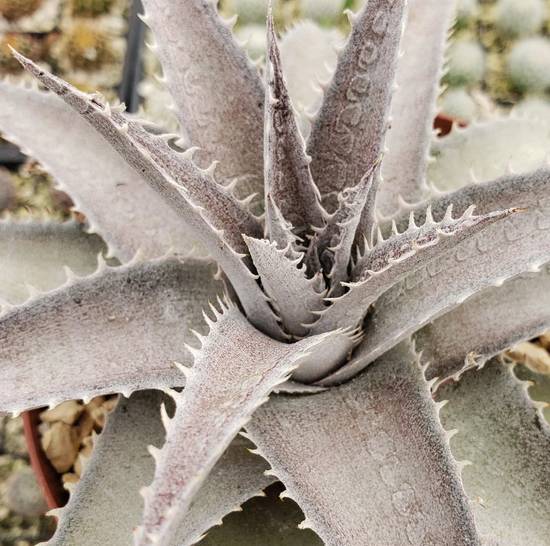
With its silvery rosettes composed of long, rigid leaves edged with fine but sharp spines, it immediately catches the eye. Its silver-grey, almost metallic foliage creates a striking contrast in pots or rock gardens. Over time, it can form dense clumps, as each mother rosette produces numerous lateral offsets.
Its primitive and graphic appearance makes it an exceptional plant, appreciated by both collectors and dry-garden enthusiasts.
The Dyckia Marnier-Lapostollei is native to the semi-arid regions of southeastern Brazil, particularly in the states of Minas Gerais and Goiás. It grows on rocky outcrops, often in full sun, in areas where rainfall is irregular and temperatures can vary significantly.
This plant has adapted to harsh conditions: intense heat, poor substrates and prolonged drought. It is therefore naturally hardy and resilient when grown in pots or in the ground in warm regions.
This plant has adapted to harsh conditions: intense heat, poor substrates and prolonged drought. It is therefore naturally hardy and resilient when grown in pots or in the ground in warm regions.
Light is essential to ensure vigorous growth and well-colored foliage for your Dyckia.
☀️ Outdoors: Full sun exposure is ideal. The plant also tolerates partial shade, but it will be less compact.
🏠 Indoors: Place it near a south-facing window. Insufficient light will cause etiolation.
☀️ Outdoors: Full sun exposure is ideal. The plant also tolerates partial shade, but it will be less compact.
🏠 Indoors: Place it near a south-facing window. Insufficient light will cause etiolation.
The Dyckia Marnier-Lapostollei does not require much water, but it still benefits from regular watering during the growing season.
💦 Spring / Summer: Water moderately once the substrate is completely dry. Watering every 10 to 15 days is sufficient.
❄️ Winter: Greatly reduce watering, or stop completely if the plant is dormant in a cool room.
⚠️ Tip: Never leave standing water in the saucer, as this encourages root rot.
💦 Spring / Summer: Water moderately once the substrate is completely dry. Watering every 10 to 15 days is sufficient.
❄️ Winter: Greatly reduce watering, or stop completely if the plant is dormant in a cool room.
⚠️ Tip: Never leave standing water in the saucer, as this encourages root rot.
Hardy down to around -4 °C if the soil remains perfectly dry, the Dyckia Marnier-Lapostollei can tolerate brief light frosts.
🌡️ Ideal: 18 to 28 °C.
❄️ Winter care: When grown in pots, bring it indoors once temperatures drop below 5 °C.
🌡️ Ideal: 18 to 28 °C.
❄️ Winter care: When grown in pots, bring it indoors once temperatures drop below 5 °C.
The substrate must be very well drained, as this plant does not tolerate stagnant moisture.
🪨 Ideal mix: 40% special cactus potting soil, 30% perlite or gravel, 30% pumice.
⛏️ A terracotta pot with a drainage hole is highly recommended.
🪨 Ideal mix: 40% special cactus potting soil, 30% perlite or gravel, 30% pumice.
⛏️ A terracotta pot with a drainage hole is highly recommended.
Although it is not its main ornamental feature, the Dyckia Marnier-Lapostollei can produce very attractive flower stalks.
📅 Period: Late spring to early summer.
🌼 Flowers: Small, tubular, yellow-orange in color, arranged in clusters on long floral stalks.
💡 Tip: A well-fed plant combined with light water stress encourages more frequent flowering.
📅 Period: Late spring to early summer.
🌼 Flowers: Small, tubular, yellow-orange in color, arranged in clusters on long floral stalks.
💡 Tip: A well-fed plant combined with light water stress encourages more frequent flowering.
FAQ - Dyckia Marnier-Lapostollei
What type of substrate is suitable for Dyckia Marnier-Lapostollei?
It requires a very well-draining substrate to prevent excess moisture. A mix of cactus soil and mineral drainage materials is ideal.
How should Dyckia Marnier-Lapostollei be watered?
Water moderately in spring and summer, only when the substrate is dry. In winter, reduce or completely stop watering.
Is Dyckia Marnier-Lapostollei cold hardy?
Yes, it can tolerate temperatures down to about -4°C if the soil is perfectly dry. In pots, it is safer to bring it indoors once temperatures approach 5°C.
Where should Dyckia Marnier-Lapostollei be placed indoors?
Place it near a bright window, ideally south-facing. It needs plenty of light to maintain a compact growth habit.
Should Dyckia Marnier-Lapostollei be fertilized?
Yes, apply a cactus fertilizer once a month in spring and summer to stimulate growth.
Does Dyckia Marnier-Lapostollei bloom in a pot?
Yes, with strong light and moderate water stress, it can produce orange-yellow flowers in spring.
What is the difference between Dyckia and a succulent?
Dyckia is a terrestrial bromeliad, but its rigid foliage and drought tolerance make it similar in appearance and care to many succulents.
How can Dyckia Marnier-Lapostollei be propagated?
Propagate by separating offsets. Wait until a pup has developed its own roots before detaching and replanting it.
What pests can affect Dyckia Marnier-Lapostollei?
It may be affected by mealybugs. Check leaf axils regularly and treat promptly if infestation occurs.
How can leaf burn be prevented on Dyckia Marnier-Lapostollei?
During extreme heat, provide light shade for young plants. Mature specimens tolerate full sun well.