Dyckia Cabernet
The Dyckia Cabernet is a spectacular succulent plant native to Brazil, renowned for its graphic foliage and deep burgundy coloration that gives it its evocative name. It belongs to the genus Dyckia, a group of plants related to bromeliads but distinguished by their high drought tolerance and terrestrial growth. This cultivar immediately appeals to collectors of rare plants thanks to its almost architectural appearance and uncompromising robustness.
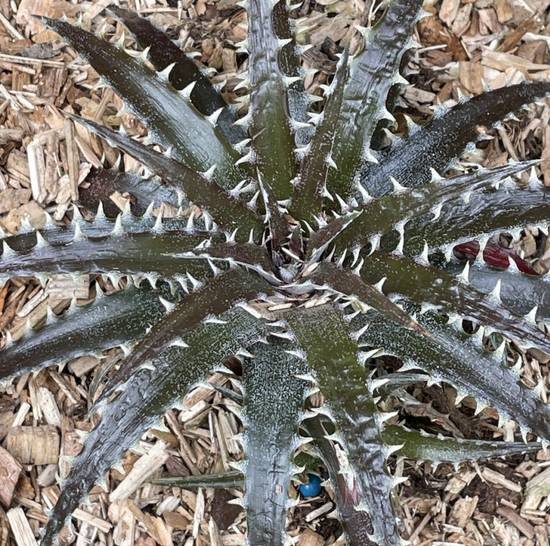
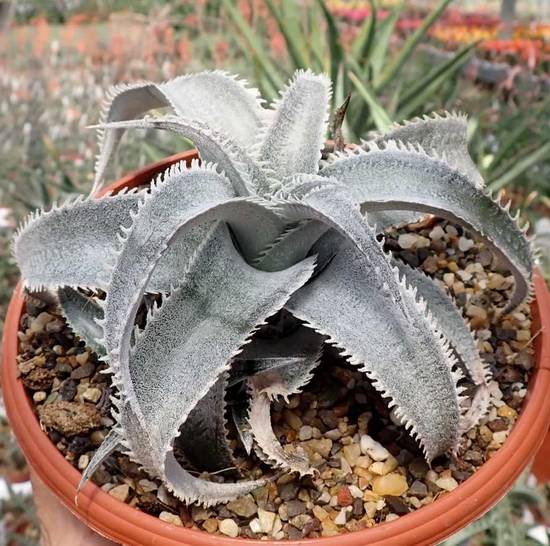
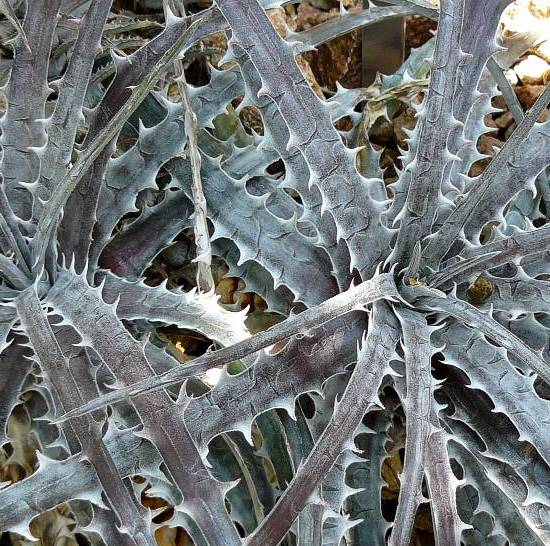
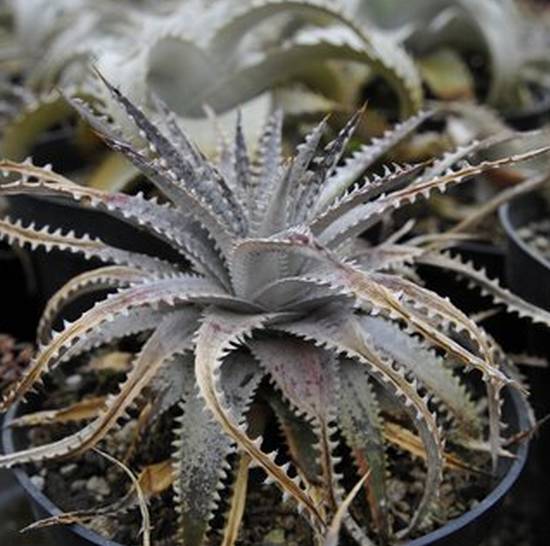
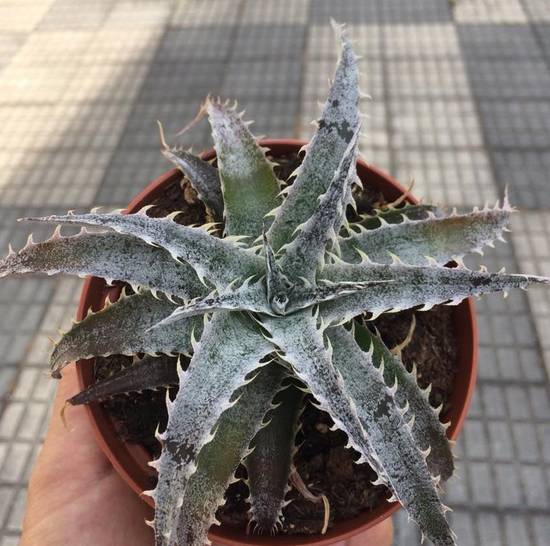
This Dyckia forms a dense rosette composed of numerous rigid, fleshy leaves edged with regular, sharp spines. The leaves take on a deep wine-red hue, sometimes almost black depending on sun exposure, hence the name “Cabernet,” evoking the intense color of red wine. This distinctive coloration intensifies under strong light, contrasting beautifully with the silvery teeth along the margins and giving the plant a striking appearance.
☀️ Outdoors: Place it in full sun or light partial shade in very hot regions. The more intense the light, the more the anthocyanin pigments responsible for its purple tones will develop.
🏡 Indoors: A sun-filled veranda, bay window, or south-facing room is ideal. Avoid overly dark areas, which may dull its color and slow growth.
💦 Spring / summer: Water moderately every 10 to 15 days, always allowing the substrate to dry completely between waterings. Avoid letting water stagnate in the rosette.
❄️ Autumn / winter: Greatly reduce watering (once a month or less), especially as temperatures drop.
⚠️ Tip: Excess moisture can cause root rot. Slight drought stress is preferable to overwatering.
🌡️ Ideal: Between 18 and 28 °C for optimal growth.
❄️ Cold tolerance: Down to about -4 °C for short periods, provided the soil is perfectly dry. Below 0 °C, it is best to protect or bring the plant indoors.
🪨 Recommended mix: 50% cactus potting soil, 25% perlite or coarse sand, and 25% pumice or other mineral material to ensure excellent root aeration.
🪴 Drainage: Always place a layer of gravel or clay pebbles at the bottom of the pot.
📅 Period: From late spring through summer.
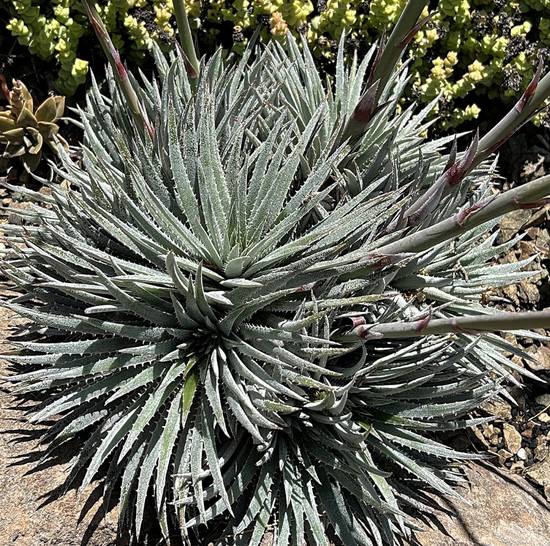
🌼 Flowers: Tubular, bright orange to red, carried on a floral stalk that can reach up to 50 cm in height.
🌿 Tip: A dry winter rest and good light exposure help promote flowering.