Dyckia Goehringii

Dyckia Goehringii
Dyckia Goehringii
Dyckia Goehringii

Dyckia Goehringii

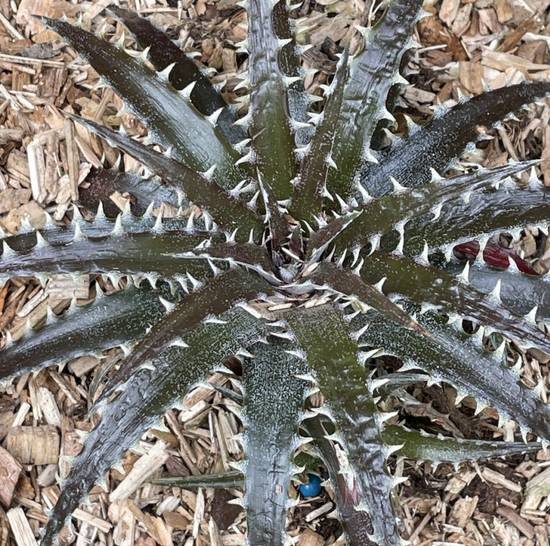
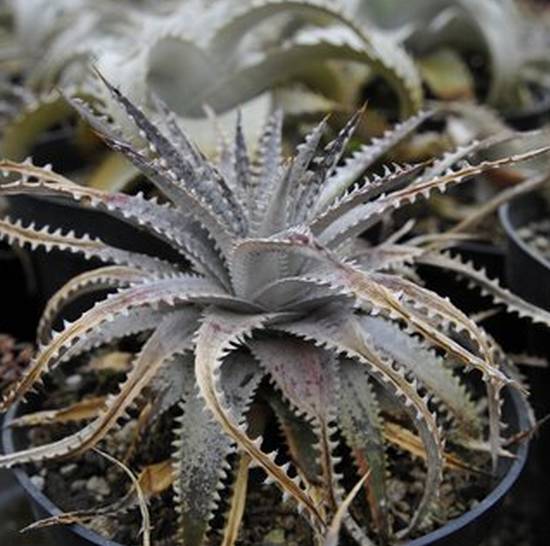
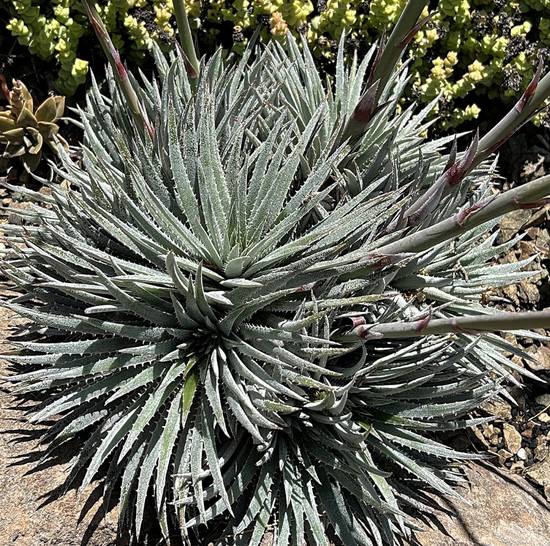
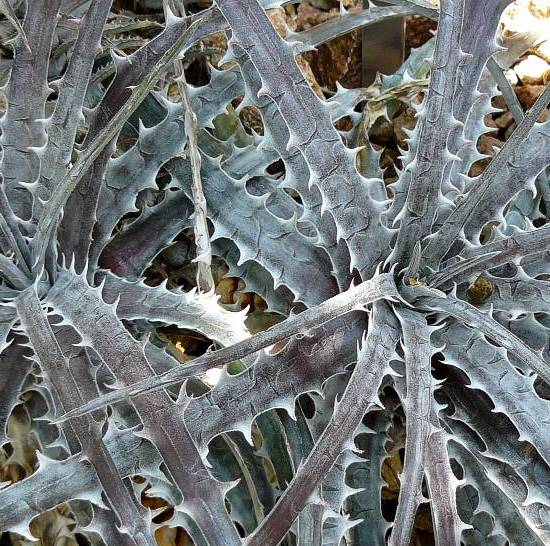
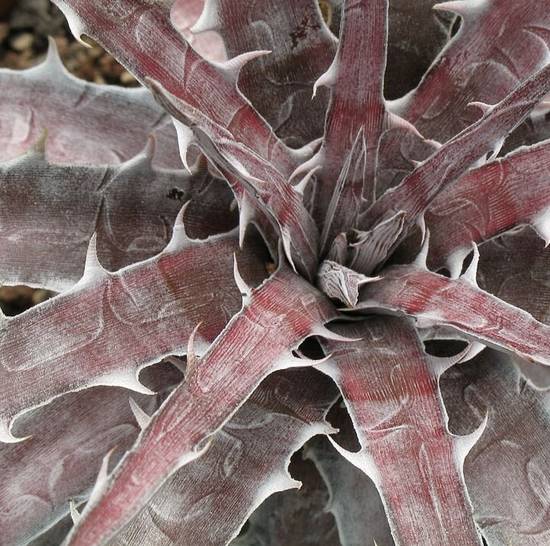
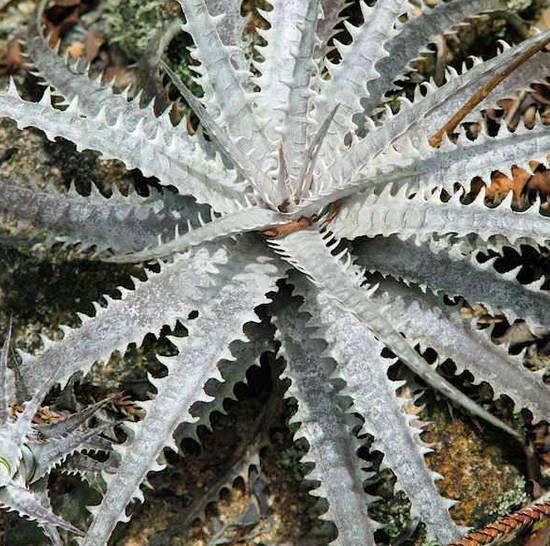
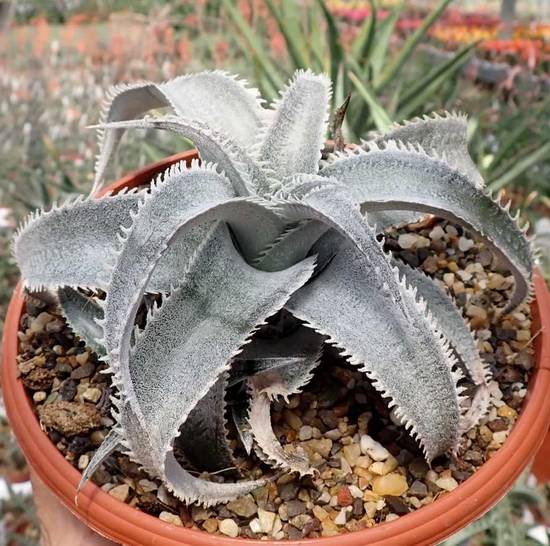
The Dyckia Goehringii is one of the most fascinating botanical gems of the genus Dyckia. Native to Brazil, this succulent plant from the Bromeliaceae family stands out thanks to its dense rosette habit, rigid leaves covered with sharp teeth, and its often silvery or metallic blue tones. Its appearance evokes a cross between a terrestrial bromeliad and a desert plant, combining toughness with striking graphic appeal. This Dyckia attracts both rare plant collectors and landscape designers seeking a dramatic accent for rock gardens or statement containers.

The uniqueness of Dyckia Goehringii lies in its texture and contrasts: the leaves form highly symmetrical, compact rosettes, often armed with small whitish teeth that create a remarkable play of light. Foliage color can range from ash grey to deep violet depending on exposure and growing conditions. Over time, the plant produces basal offsets, forming a dense and spectacular clump. Once mature, it sends up an upright inflorescence composed of small yellow-orange flowers, highly attractive to pollinating insects.

The Dyckia Goehringii is native to southern Brazil, mainly from the semi-arid regions and rocky outcrops of Minas Gerais. In its natural habitat, it often grows on hillsides or exposed rocks under intense sunlight. This harsh environment explains its excellent tolerance to heat, drought, and poor soils. Unlike more tropical bromeliads, it does not require high ambient humidity and thrives perfectly well in drier conditions.
The Dyckia Goehringii loves light. Full sun exposure is ideal to maintain its compact shape and enhance its spectacular colors.

🌤️ Outdoors: Place it in full sun or light partial shade. The more light it receives, the more intense the foliage coloration.

🏠 Indoors: Requires a well-exposed window (south or west). Avoid low-light locations, which may cause the rosette to stretch.
This succulent stores water in its thick leaves, making it highly drought tolerant.

🌱 Spring / Summer: Water every 10 to 15 days, only once the substrate is completely dry. Underwatering is preferable to excess moisture.

❄️ Autumn / Winter: Very infrequent or no watering at all, especially if kept in a cool environment.

⚠️ Warning: Avoid any standing water around the crown.
The Dyckia Goehringii is more cold-tolerant than it appears.

🌡️ Optimal range: Between 20 °C and 35 °C.

❄️ Cold tolerance: Can withstand brief drops down to -4 °C if kept completely dry.

🏠 Winter care: Bring the plant indoors if temperatures remain below 0 °C.
Good drainage is essential. Use a mineral, cactus-like substrate.

🪨 Ideal mix: 50% cactus potting soil, 25% pumice, and 25% perlite.

⛏️ Drainage tip: A layer of gravel or clay pebbles at the bottom of the pot helps prevent excess moisture.
Although discreet, the flowering of Dyckia Goehringii is charming.

📆 Period: Usually in spring or early summer.

🌼 Flowers: Yellow to orange, borne in clusters on upright flower stalks.

💡 Tip: A dry rest period followed by thorough watering can trigger flowering.
FAQ - Dyckia Goehringii

How should Dyckia Goehringii be watered to avoid rot?
Water only when the substrate is completely dry. In summer, watering every two weeks is sufficient. In winter, reduce to a minimum. Avoid stagnant moisture and always use a highly draining substrate.
What is the best location for Dyckia Goehringii?
It prefers very bright locations. Place it in full sun or light partial shade. Indoors, a south-facing window is ideal.
Can Dyckia Goehringii stay outdoors in winter?
Yes, provided temperatures do not drop permanently below -4°C and the soil remains dry. In cold and humid climates, it is safer to bring it indoors.
What type of soil is suitable for Dyckia Goehringii?
It requires a highly mineral, well-draining mix. Use cactus soil combined with perlite and volcanic rock to ensure proper drainage.
How can flowering be encouraged in Dyckia Goehringii?
A dry winter rest followed by regular watering in spring helps trigger flowering. Adding a suitable fertilizer can also support bloom production.
Is Dyckia Goehringii toxic or dangerous?
It is not toxic, but its rigid, spiny leaves can cause injury. Handle with care, especially around children or pets.
Can Dyckia Goehringii be grown in a pot on a terrace?
Absolutely. It performs very well in pots as long as drainage is excellent. It tolerates heat and wind well.
Should Dyckia Goehringii be fertilized?
Yes, but moderately. Apply a succulent fertilizer in spring every 6 to 8 weeks.
Why are the leaves of my Dyckia Goehringii changing color?
This is normal. Sun exposure intensifies its grey, purple, or silvery tones. In low light, the plant may turn greener.
How can Dyckia Goehringii be propagated?
Propagate by dividing basal offsets. Detach them carefully, let wounds dry for two days, then replant in well-draining substrate.