Dyckia Hebdingii
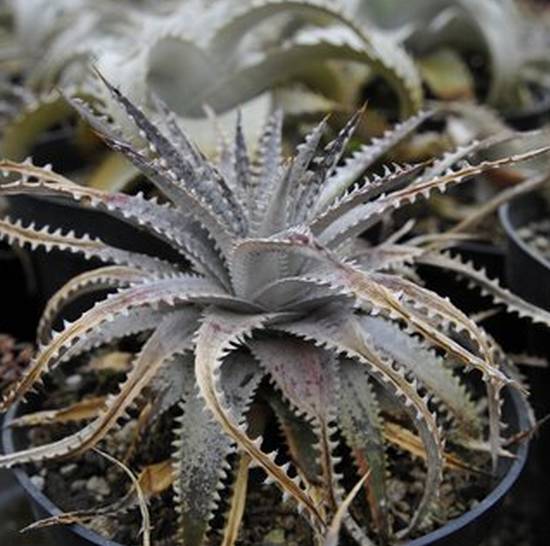
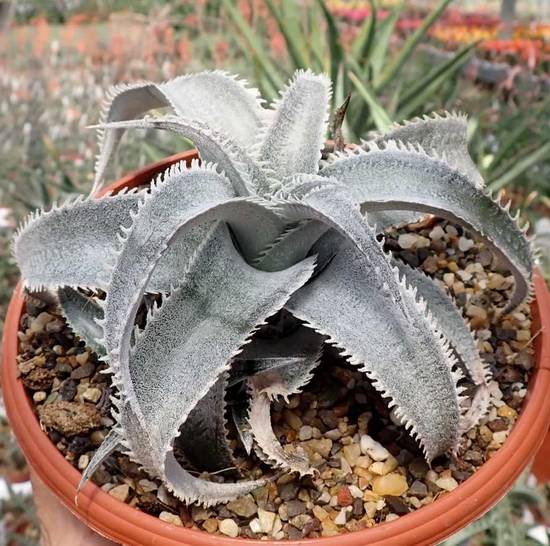
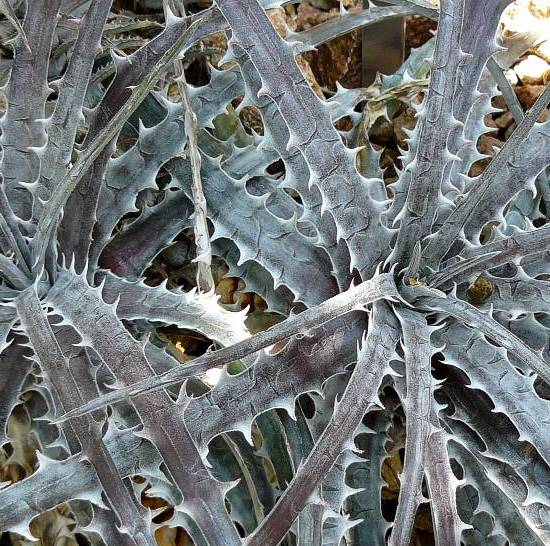
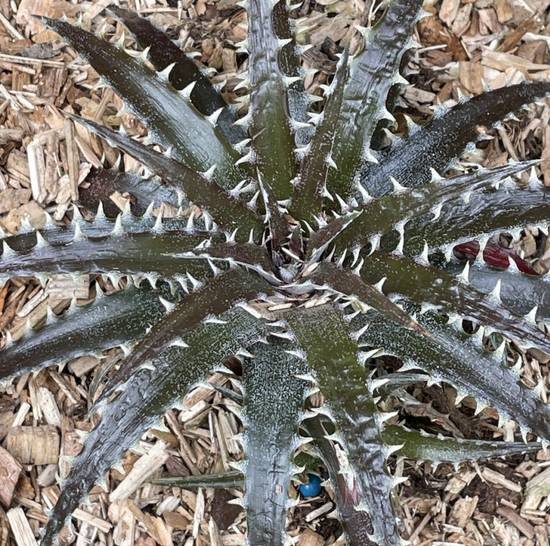
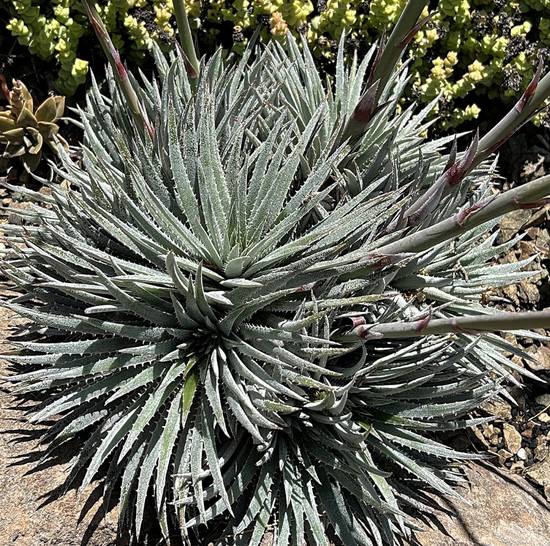
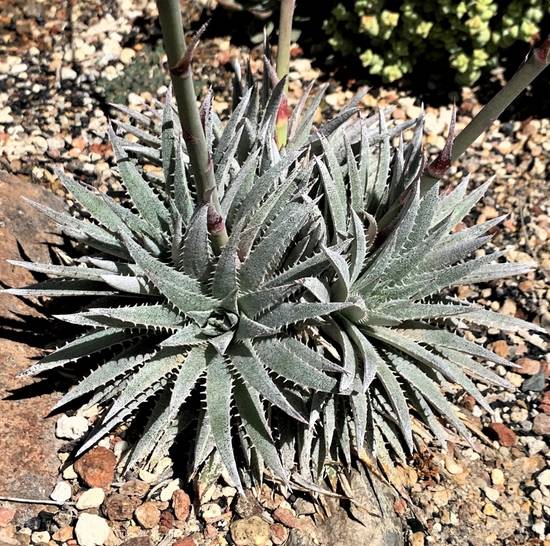
The Dyckia Hebdingii is a fascinating plant belonging to the Bromeliaceae family, just like pineapples. Native to Brazil, this hardy species stands out for its rigid, highly graphic rosette composed of thick, stiff and spiny leaves with silvery grey-green tones. Its sculptural form and almost metallic foliage make it a top ornamental choice for dry gardens and botanical collections.
Unlike many other bromeliads, the Dyckia does not grow in humid tropical forests, but rather in arid, dry and rocky environments, which makes it extremely tolerant of heat and drought.
The Dyckia Hebdingii is endemic to the arid regions of southeastern Brazil, particularly in Minas Gerais. It naturally grows in mountainous areas on granitic or schist substrates, in full sun and under sometimes extreme climatic conditions. This dry, rocky climate explains its high tolerance to heat and low water requirements.
Its adaptation to drought is impressive: its thick leaves allow it to store moisture and withstand long periods without watering.
Its adaptation to drought is impressive: its thick leaves allow it to store moisture and withstand long periods without watering.
The Dyckia Hebdingii loves light. Bright exposure is crucial to maintain foliage coloration and prevent etiolation.
☀️ Outdoors: Plant it in full sun or partial shade in very hot regions. It tolerates direct sunlight perfectly, even in summer.
🏠 Indoors: Place it near a very sunny window. Lack of light can cause dull foliage and leaf collapse.
☀️ Outdoors: Plant it in full sun or partial shade in very hot regions. It tolerates direct sunlight perfectly, even in summer.
🏠 Indoors: Place it near a very sunny window. Lack of light can cause dull foliage and leaf collapse.
This plant prefers drought to excess moisture. Infrequent watering is more than sufficient.
🌱 Spring / Summer: Water moderately every 10 to 15 days, allowing the substrate to dry completely between waterings.
🍂 Autumn / Winter: Reduce watering to once a month, or stop completely depending on temperature.
⚠️ Warning: Never allow water to stagnate in the center of the rosette, as this can cause rot.
🌱 Spring / Summer: Water moderately every 10 to 15 days, allowing the substrate to dry completely between waterings.
🍂 Autumn / Winter: Reduce watering to once a month, or stop completely depending on temperature.
⚠️ Warning: Never allow water to stagnate in the center of the rosette, as this can cause rot.
Although it originates from warm regions, the Dyckia is relatively hardy once mature.
🌡️ Ideal temperature: Between 18 °C and 30 °C.
❄️ Cold tolerance: Can withstand light frosts (down to -4 °C) if the substrate is dry and well drained. In pots, bring it indoors once temperatures drop below 5 °C.
🌡️ Ideal temperature: Between 18 °C and 30 °C.
❄️ Cold tolerance: Can withstand light frosts (down to -4 °C) if the substrate is dry and well drained. In pots, bring it indoors once temperatures drop below 5 °C.
The Dyckia Hebdingii prefers very mineral, well-drained substrates. Its root system is vigorous but does not tolerate stagnant moisture.
🪨 Recommended substrate: A mix based on cactus potting soil, with 50% draining components such as perlite or pumice.
⛏️ Bottom drainage: Do not forget a thick drainage layer to avoid excess water.
🪨 Recommended substrate: A mix based on cactus potting soil, with 50% draining components such as perlite or pumice.
⛏️ Bottom drainage: Do not forget a thick drainage layer to avoid excess water.
The Dyckia Hebdingii can flower once mature. Its bloom is striking and decorative, although infrequent in pots.
📅 Period: Usually in spring or summer.
🌼 Flower: Bright orange to red, tubular, carried on a long floral stalk rising above the rosette.
🌿 Flowering tip: Light water stress, bright exposure and a small nutrient input can stimulate flowering.
📅 Period: Usually in spring or summer.
🌼 Flower: Bright orange to red, tubular, carried on a long floral stalk rising above the rosette.
🌿 Flowering tip: Light water stress, bright exposure and a small nutrient input can stimulate flowering.
FAQ - Dyckia Hebdingii
How should Dyckia Hebdingii be cared for indoors?
Place it near a bright window, water moderately, and use a well-draining substrate to prevent root rot.
Does Dyckia Hebdingii tolerate frost?
Yes, but only briefly and if the soil is completely dry. In pots, bring it indoors during winter.
What is the best substrate for Dyckia Hebdingii?
A mix of 50% cactus soil and 50% mineral material such as volcanic rock or perlite is ideal.
Does Dyckia Hebdingii flower easily in a pot?
It is relatively rare, but possible if the plant is mature, well established, and receives abundant light with slight water stress.
How can Dyckia Hebdingii be propagated?
Propagate by separating basal offsets or by seed, though seed propagation is slower.
Is Dyckia Hebdingii toxic?
It is not toxic, but its rigid and sharp spines require caution, especially around children and pets.
When and how should Dyckia Hebdingii be repotted?
Repot every 2–3 years in spring. Handle with gloves and provide fresh, well-draining substrate in a slightly larger pot.
Can Dyckia Hebdingii be grown outdoors year-round?
Yes, in mild and dry climates. Otherwise, grow it in a pot so it can be brought indoors during winter.
Why is my Dyckia Hebdingii not growing?
Lack of light or overwatering are common causes. Also check that the substrate is sufficiently draining.
What is the ideal watering frequency for Dyckia Hebdingii?
In summer, water about every two weeks. In winter, water very sparingly. Always allow the substrate to dry completely between waterings.