Portulacaria Afra
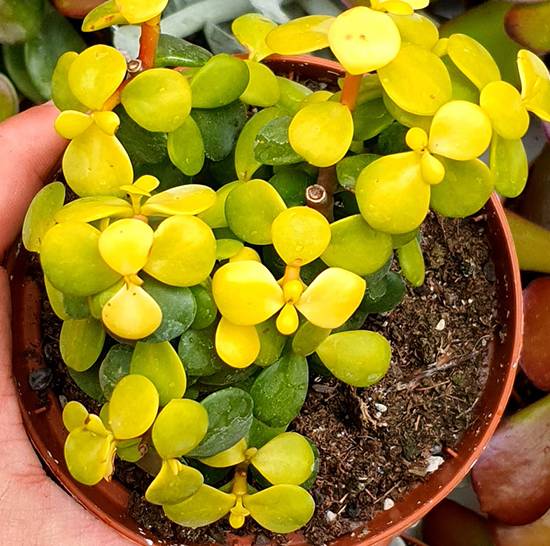
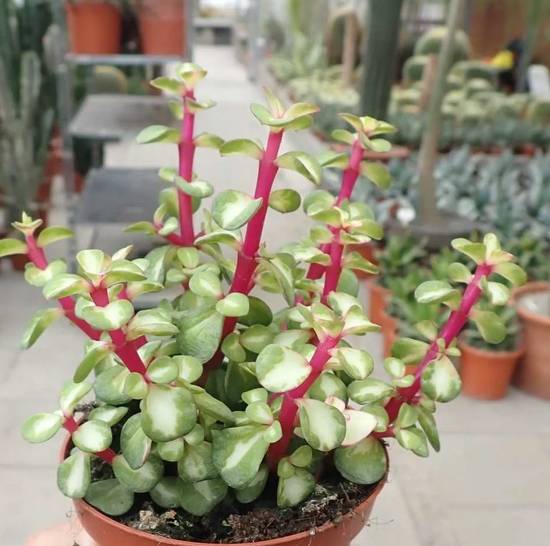
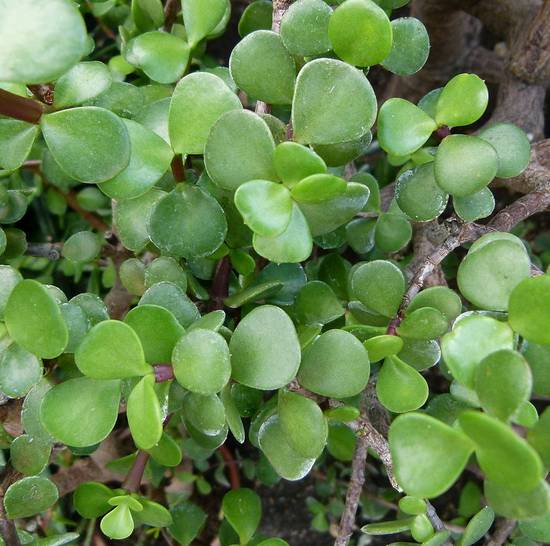
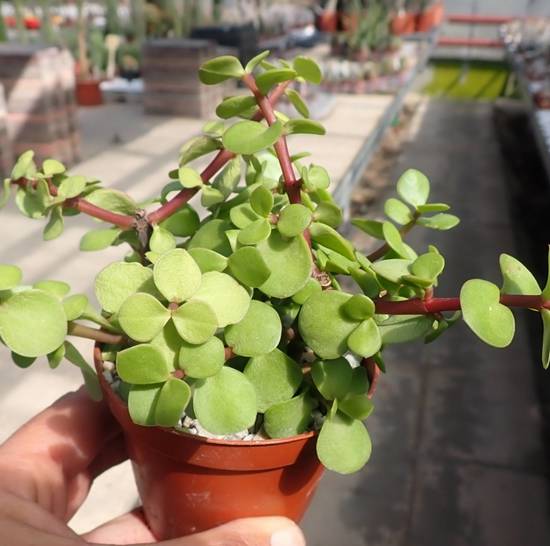
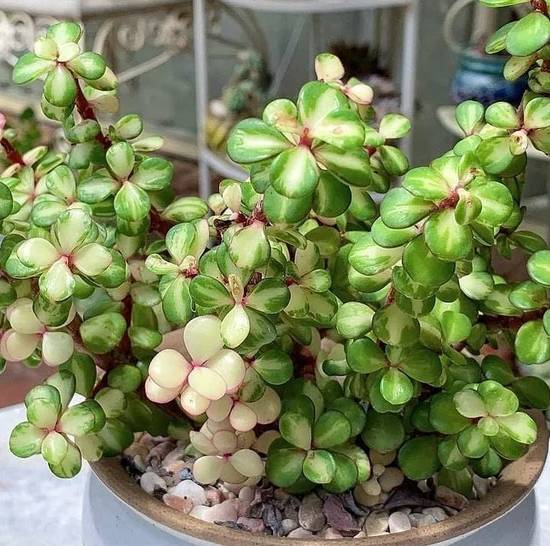
The Portulacaria Afra, often nicknamed "elephant bush" or "mini baobab", is a succulent native to southern Africa, with dense foliage and a shrubby habit. It is extremely popular in ornamental cultivation for its easy care, rapid growth, and great drought tolerance. In pots, it resembles a small bonsai, with its woody red to brown stems covered in small bright green rounded leaves. At maturity, it can reach up to 1 to 2 meters in height if properly trained, and lends itself very well to artistic pruning.
This plant is not only aesthetic: it plays an important ecological role in its natural environment, retaining soil moisture and serving as food for local wildlife, especially elephants. Its foliage is also edible for humans, with a slightly tangy flavor sometimes used in traditional South African cuisine. In pots, it becomes a living plant sculpture that can be shaped as a bonsai, allowed to grow freely, or pruned to densify its branching.
☀️ Ideal exposure : Place it in a very bright location, indoors near a well-exposed window or outdoors in direct sunlight.
🧤 Proper protection : During the first summer exposures, avoid sunburn by gradually acclimating the plant to direct rays.
💧 Warm period : Water every 2 to 3 weeks, only when the substrate is completely dry.
❄️ Cold period : In winter, drastically limit water supply to avoid any risk of root rot.
🌡️ Optimal range : Between 20 and 30 °C during the growing season.
❄️ Tolerance threshold : Do not expose below 5 °C. Bring it indoors at the first signs of cold.
🪨 Ideal soil : Use a cactus substrate mix enriched with 30 to 50% perlite or pozzolana to ensure maximum root aeration and prevent water stagnation.
🌸 Flowers : Small, pink to purplish, in airy clusters.
🌿 Conditions : Good sunlight and a period of slight water stress may encourage its appearance.