Pilosocereus Pentaedrophorus
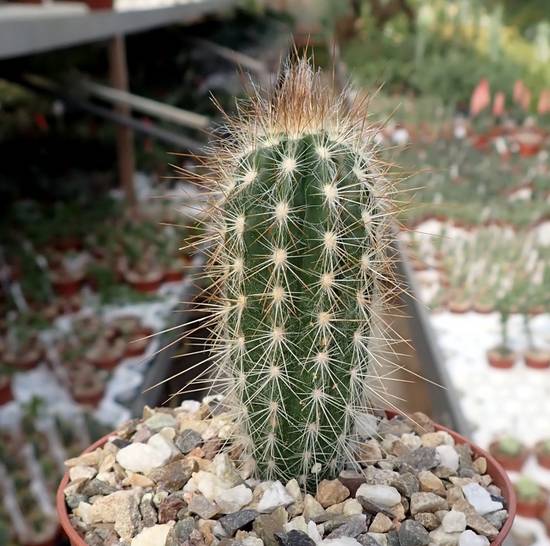
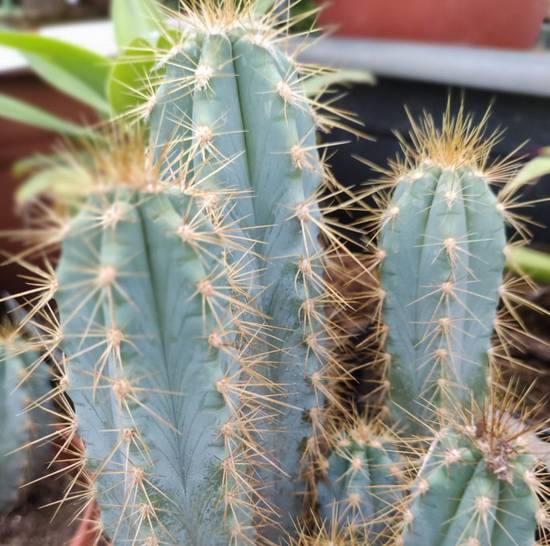
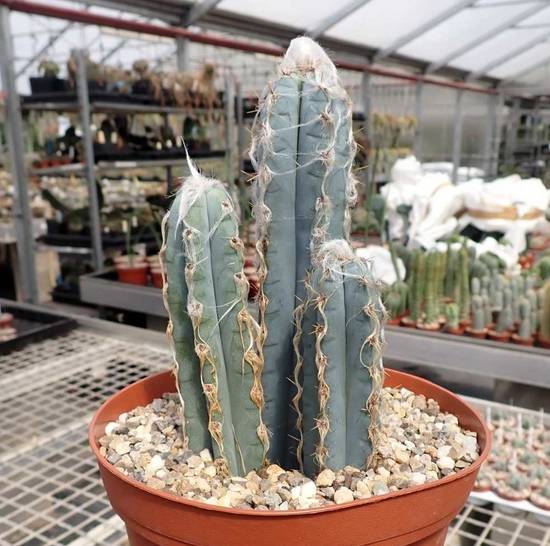
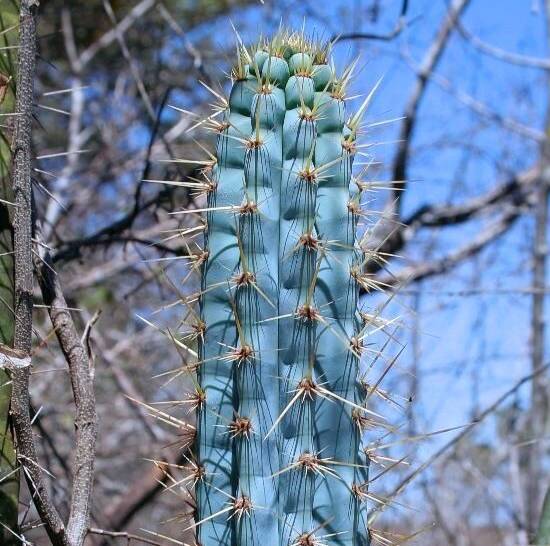
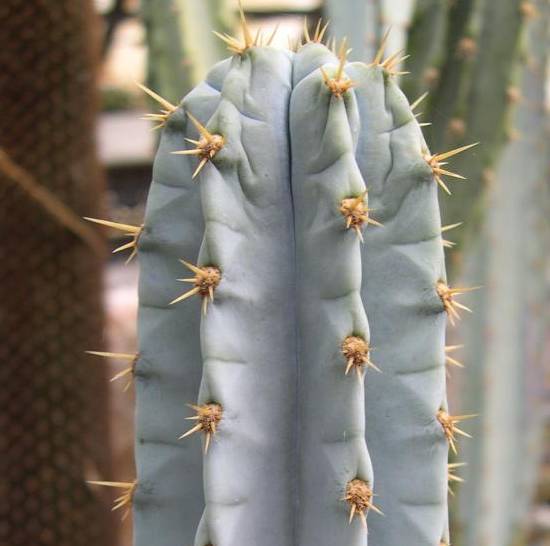
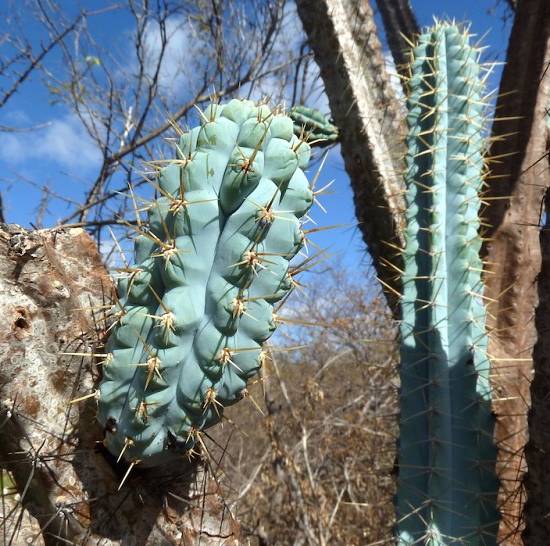
Pilosocereus Pentaedrophorus is a majestic columnar cactus, recognizable by its slender stems and five prominent ribs that give it an impressive architectural appearance.
Its blue-green epidermis, sometimes covered with a fine silvery bloom, is highlighted by areoles bearing long yellow to light brown spines. Its growth, faster than that of many columnar cacti, allows it to reach several meters in height in its natural habitat, forming spectacular silhouettes in the desert landscape.
Native to the hot and dry regions of South America, it is perfectly adapted to arid climates and easily withstands intense heat. Once well established, it produces large white to cream tubular flowers in summer, opening at night to attract nocturnal pollinators such as bats and certain moths.
It colonizes well-exposed rocky areas where the soil is poor in organic matter but highly draining. Rainfall is rare and concentrated over only a few months of the year, while sunlight remains intense almost year-round. Its five distinct ribs are an adaptation that strengthens stem rigidity while reducing the surface exposed to dehydration.
🌞 Direct sun: at least 6 to 8 hours of light per day.
🌤️ Acclimation: for young plants or those coming from shaded greenhouses, gradually introduce full sun to avoid burns.
⚠️ Lack of light slows growth and dulls the bluish color of the epidermis.
🌱 Spring / summer: moderate watering every 3 to 4 weeks, when the substrate is completely dry.
🍂 Autumn / winter: greatly reduce or completely stop watering if temperatures drop below 15°C.
⚡ Tip: prefer soaking watering and allow excess water to drain fully.
🌞 Ideal: between 22 and 35°C.
❄️ Minimum: occasionally tolerates 8°C if the soil remains dry, but does not withstand frost.
🏠 Overwintering: in cold climates, overwinter in a heated greenhouse or very bright indoor location.
🪨 Recommended substrate: cactus mix.
➕ Improve with 30 to 50% mineral materials such as perlite or pozzolana.
🌸 Period: summer.
🎨 Color: white to cream, sometimes tinged with pink on the outer petals.
🕑 Duration: each flower opens at night and fades the following morning.
💡 To stimulate flowering: plenty of sun, a deep pot, and light cactus fertilizer in spring.