Pilosocereus Azureus
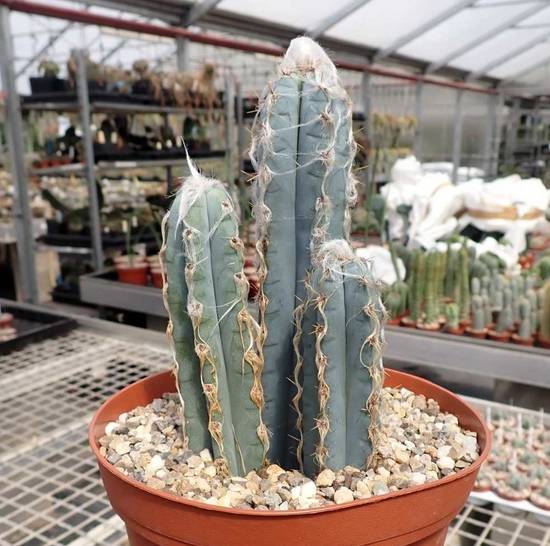
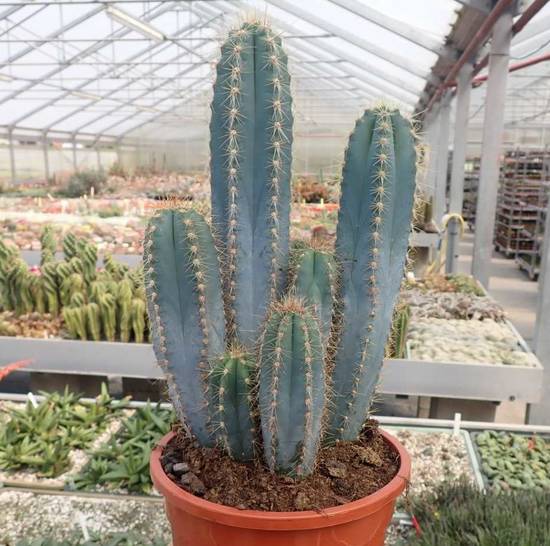
The Pilosocereus Azureus is undoubtedly one of the most spectacular cacti in the Cactaceae family. Native to Brazil, this giant of arid environments impresses with its imposing vertical silhouette and especially its unique blue, almost metallic coloration, which has earned it several nicknames such as blue cactus or steel cactus.
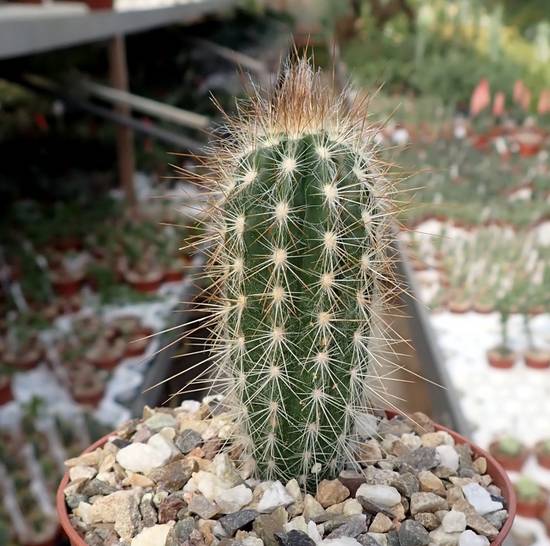
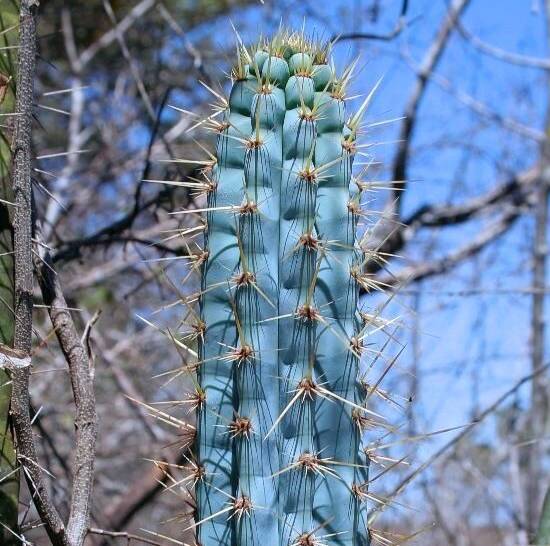
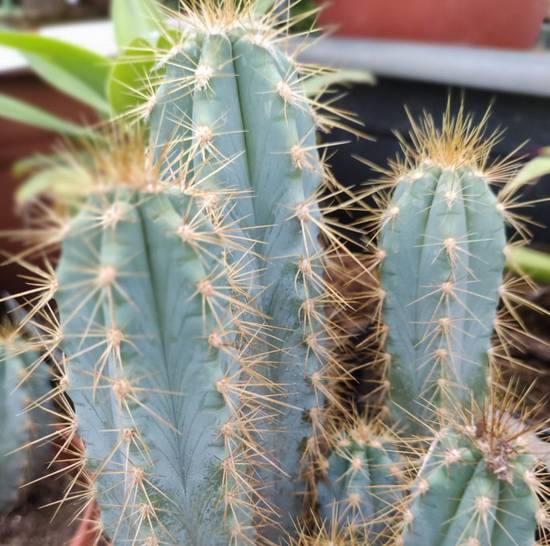
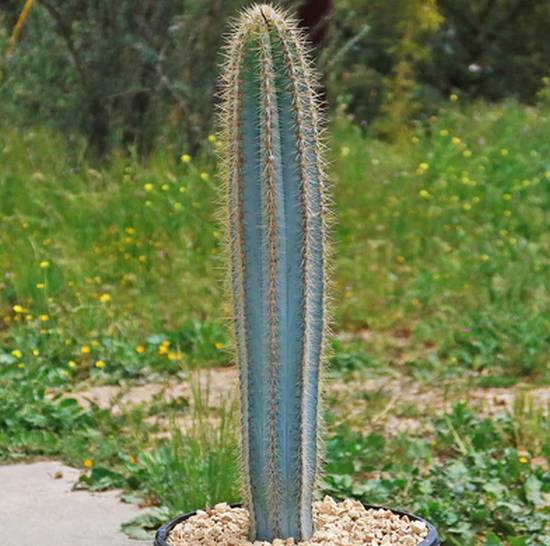
Its growth habit is upright, branching at the base or higher up, forming erect columns that can exceed 4 to 5 meters in the ground under tropical climates. In a pot, it remains more modest, easily reaching 1 to 2 meters depending on growing conditions. Its smooth skin is marked by pronounced ribs, decorated with fine areoles bearing a light white down and pale yellow to light brown spines.
But it is its color that fascinates collectors: a powdery blue-gray, enhanced by sunlight, sometimes with silvery or steel-blue reflections. A true living sculpture with a modern and minimalist design.
The Pilosocereus Azureus is a very resilient cactus, perfect for balconies, terraces, bright verandas, or contemporary interiors. It alone adds strong decorative value, whether placed in a raw terracotta pot, designer concrete container, or minimalist planter.
In these hot and dry regions, it grows on rocky plateaus exposed to intense sunlight and in very poor but perfectly drained soils. This origin explains its high tolerance to drought and its preference for light, mineral soils.
🌤️ Gradual adaptation: when placing it outdoors in spring, gradually acclimate it to sunlight to avoid sunburn on its sensitive skin.
🏠 Indoors: place behind a south-facing window or under a skylight.
🍂 Autumn / Winter: stop watering completely. The cactus enters dormancy and tolerates winter dryness very well.
⚠️ Excess water is fatal: too much humidity is the primary cause of rot.
❄️ Minimum tolerance: the Pilosocereus Azureus can tolerate temperatures down to 5°C occasionally but does not withstand frost.
🏠 Wintering: bring it indoors as soon as temperatures drop below 10°C.
🪨 Ideal composition: cactus soil mixed equally with pumice or pozzolana.
Good drainage is the key to success with this cactus.
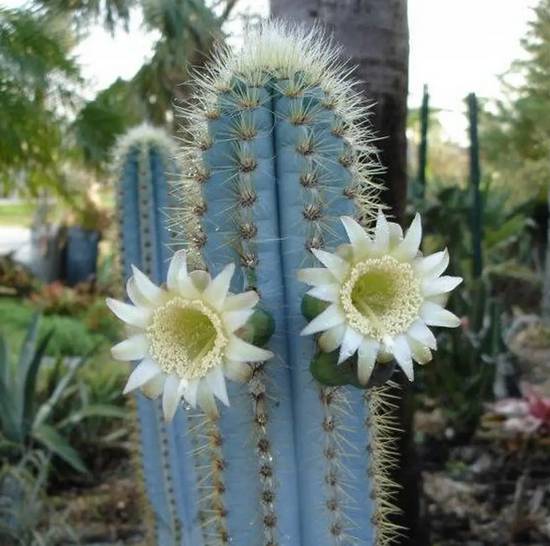
🌼 Flowers: tubular, cream to white, sometimes pink.
🕒 Appearance: in summer, at the tops of the most mature stems, especially if the plant has experienced slight water stress.