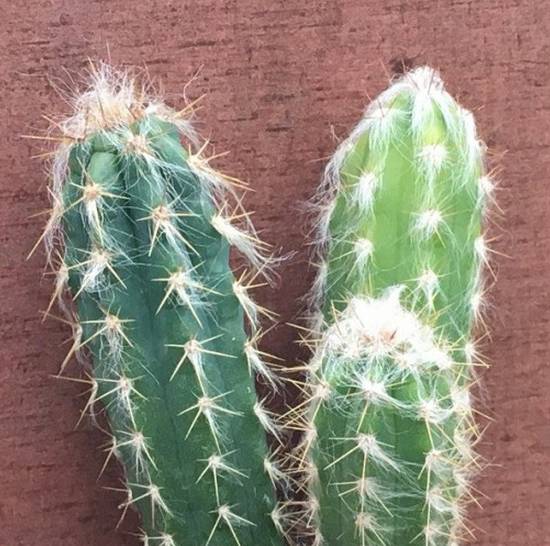
Pilosocereus Glaucescens
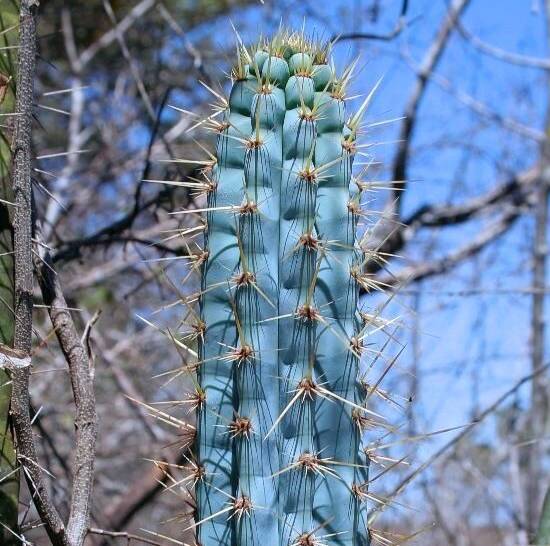
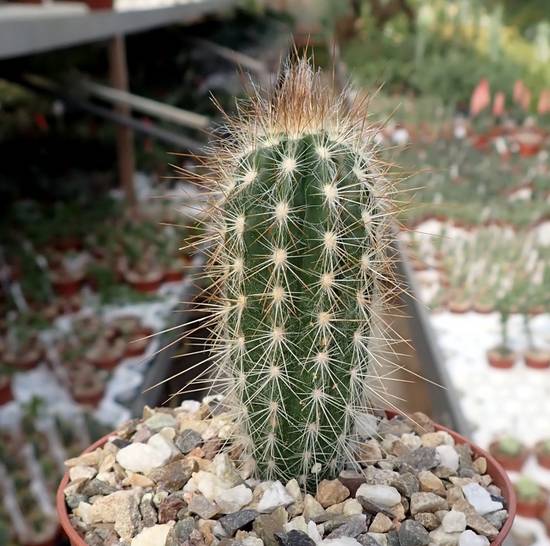
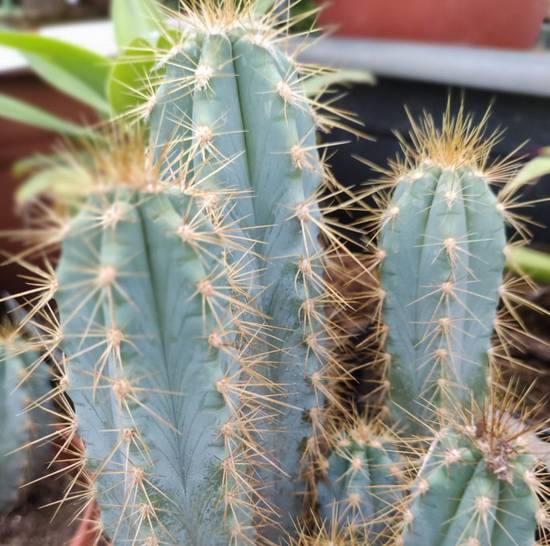
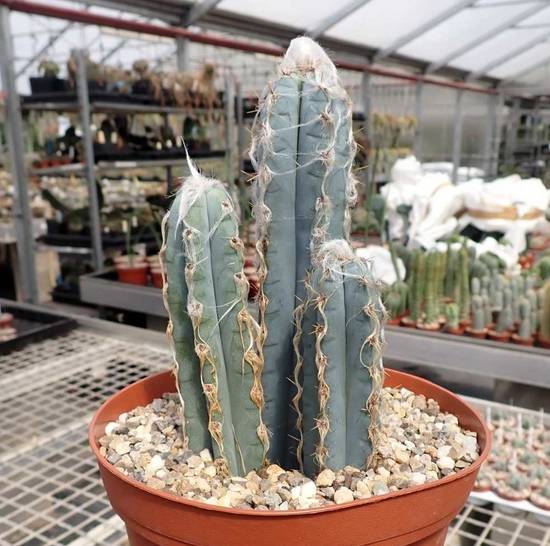
Pilosocereus Glaucescens is a spectacular species, often referred to as the “blue cactus” due to its distinctive hue ranging from blue-gray to silvery green. Native to Brazil, this columnar cactus draws all eyes with its slender silhouette, well-defined ribs, and golden spines that create a striking visual contrast.
Its upright habit and rapid growth make it an ideal plant to add height and structure to a cactus collection. Unlike more compact species, Pilosocereus Glaucescens stands out for its ability to become a centerpiece in a dry garden or sunny veranda. In optimal conditions, it can exceed two meters in height, even in a pot, while maintaining a harmonious appearance.
Its bluish color, particularly intense when grown in full sun, is due to a fine waxy coating that covers its stems. This natural layer protects against UV rays and evaporation, giving Pilosocereus Glaucescens an almost metallic look, highly sought after by collectors.
🌞 Ideal exposure: Full direct sun at least 6 hours per day.
🌤️ Acclimation: If grown indoors or in a greenhouse, gradually acclimate it to outdoor sun to avoid burns.
☁️ Indoor cultivation: Place it near a south-facing bay window or under strong grow lights.
🌱 Spring / Summer: Water every 2 to 3 weeks, only when the substrate is completely dry.
🍂 Autumn / Winter: Drastically reduce watering, or stop during dormancy, especially if temperatures are cool.
⚠️ Excess water can quickly cause rot, particularly at root level.
🌡️ Optimal range: between 20 and 32°C during the growing period.
❄️ Minimum resistance: It can tolerate short periods at 5°C, but it is advisable to overwinter it dry once temperatures fall below 10°C.
🏠 Overwintering: Bring it into a bright and well-ventilated room in winter to protect it from cold.
🪨 Recommended mix: cactus soil (50%) + perlite (25%) + pozzolana (25%) for perfect drainage
This mix prevents any water stagnation and mimics the rocky soil of its natural habitat.
🌸 Period: Summer, generally at night
🎨 Appearance: Large white or cream flowers, slightly fragrant, opening in the evening.
🕑 Duration: Each flower lasts only one night, but blooming may continue for several consecutive days.
🧼 Prune dry parts after flowering to maintain a beautiful silhouette.