Pachypodium Succulentum

Pachypodium Succulentum

Pachypodium Succulentum

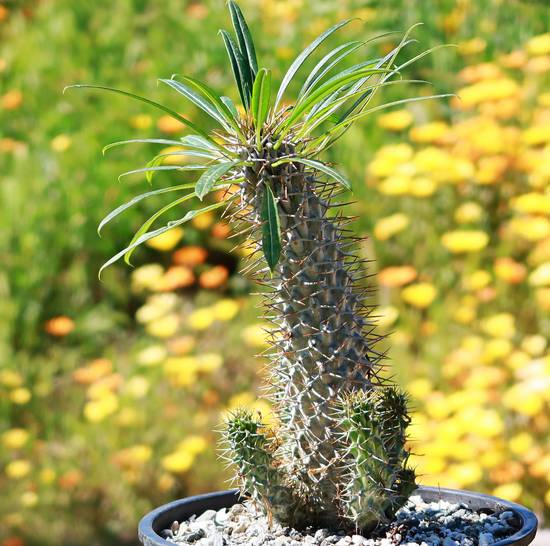
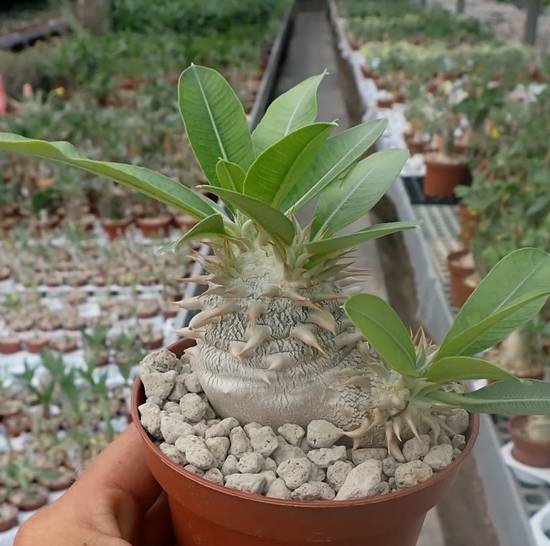
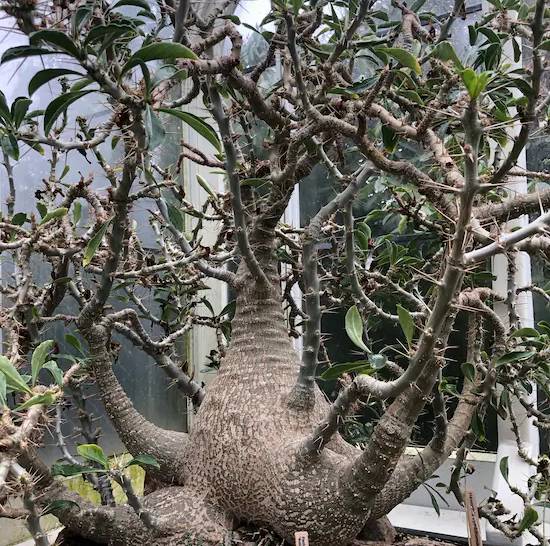
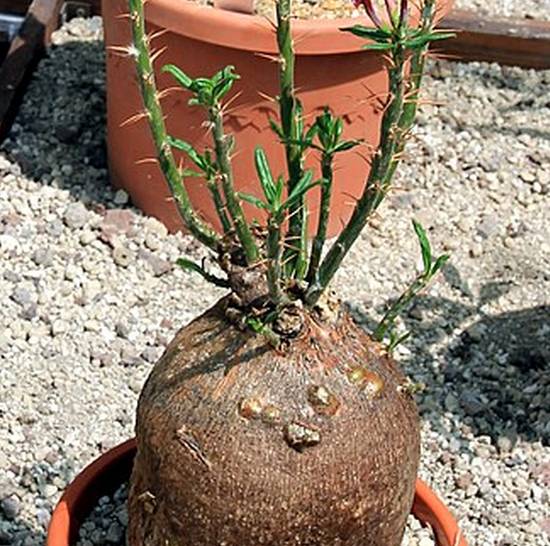
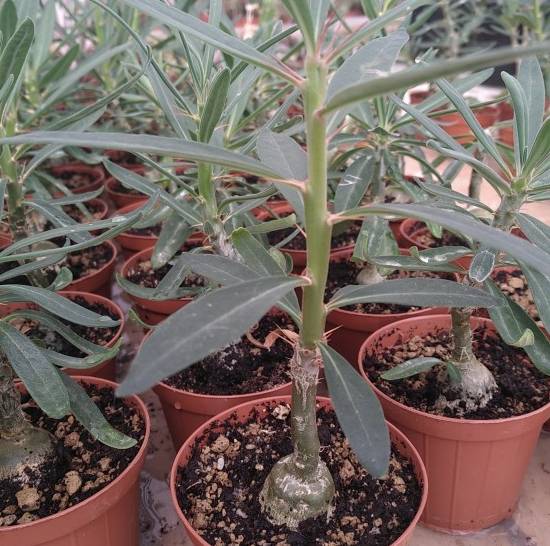
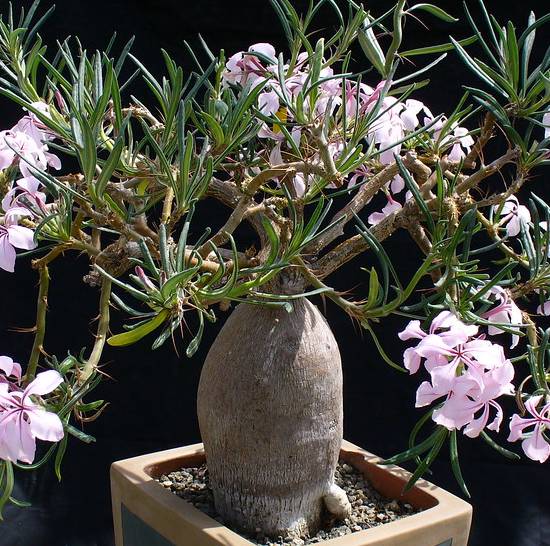
The Pachypodium Succulentum is a semi-shrubby succulent plant native to southern Africa, more specifically South Africa. It belongs to the Apocynaceae family, like other Pachypodiums, but stands out due to its unique morphology. This species combines two highly valued aesthetic features: a fleshy, swollen caudex that forms an underground water reserve, and long spiny stems that can be erect or trailing, producing deciduous foliage and vivid flowers.

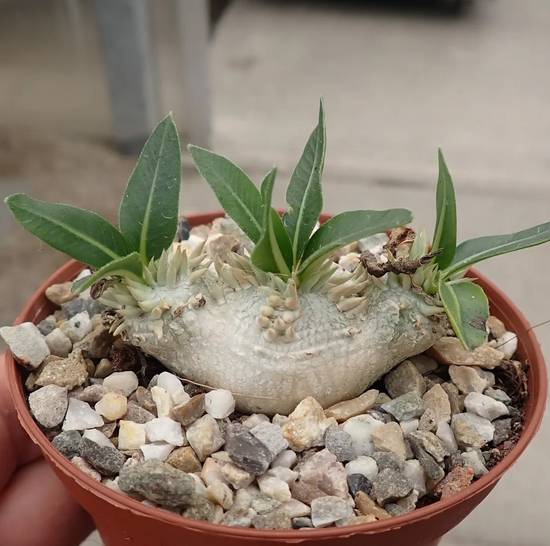
The Pachypodium Succulentum is a botanical marvel for caudiciform plant enthusiasts. The caudex, often partially buried, can become massive with age, reaching several tens of centimeters in diameter. From this subterranean trunk emerge thin, branched stems bearing small, dark green lanceolate leaves. It is particularly attractive when grown in a wide, shallow pot, which highlights the caudex while allowing the stems to develop freely.

The Pachypodium Succulentum is endemic to the semi-arid Karoo region of South Africa, an area known for its extreme climate, poor rocky soils, and wide temperature fluctuations. In the wild, it often grows between rocks or on sandy slopes, benefiting from intense sunlight and excellent drainage. The caudex allows the plant to survive prolonged dry periods, while the spiny stems spread out to capture light and morning dew. This adaptation gives it excellent resilience in cultivation, provided its xerophytic nature is respected.
To ensure healthy growth of your Pachypodium Succulentum, a bright exposure is essential:

🌞 Direct sun: At least 5 to 6 hours of direct sunlight per day, especially in spring and summer.

🌤️ Bright indoor position: If grown indoors, place it behind a south-facing window. Insufficient light will cause stem elongation.

Full sun promotes dense foliage, regular flowering, and healthy caudex development.
Like many caudiciform plants, the Pachypodium Succulentum prefers spaced but regular watering during its growth phase:

🌱 Spring / summer: Wait until the substrate is completely dry before watering again. Generally, watering every 10 to 15 days is sufficient.

🍂 Autumn / winter: During dormancy, drastically reduce watering, or stop completely if the caudex remains firm.

Golden rule: Excess water is the main danger for this species. Constantly moist substrate quickly leads to caudex rot.
The Pachypodium Succulentum is relatively tolerant of both heat and mild cool conditions:

🌞 Optimal growth temperature: Between 20°C and 30°C.

❄️ Minimum tolerance: Down to 5°C if the substrate is dry. However, it is recommended not to expose it to temperatures below 10°C.

🏠 Wintering: Bring the plant indoors as night temperatures drop. A bright, cool place (10–15°C) is ideal for winter rest.
The Pachypodium Succulentum requires a very well-draining substrate to avoid water retention.

🪨 Recommended substrate: 50% cactus potting soil + 25% perlite + 25% pumice or volcanic gravel.
The flowering of the Pachypodium Succulentum is as discreet as it is delicate:

🌸 Season: Spring or summer, depending on growing conditions.

🎨 Color: Bright pink to magenta, sometimes striped with white.

🕑 Duration: Several days, with successive blooms on mature stems.

💡 Flowering depends on good sunlight, slight water stress, and overall plant maturity.
FAQ - Pachypodium Succulentum

What is the best exposure for Pachypodium Succulentum?
It prefers bright light, ideally full sun. A south-facing exposure is recommended, especially indoors. Lack of light may cause stem elongation and poor flowering.
How often should Pachypodium Succulentum be watered?
During the growing season, water every 10 to 15 days when the substrate is completely dry. In winter, reduce watering significantly or stop entirely. It is better to underwater than overwater this type of plant.
What substrate should be used for Pachypodium Succulentum?
A very well-draining soil is crucial. Mix a suitable substrate with perlite and volcanic rock to ensure optimal drainage.
Can Pachypodium Succulentum bloom in a pot?
Yes, it can bloom in spring or summer if it receives sufficient light and is well established. Slight drought stress and a suitable fertilizer may stimulate flowering.
How can I tell if my Pachypodium Succulentum needs water?
A slightly soft caudex may indicate a need for water. However, always check that the substrate is completely dry before watering. When in doubt, wait a few more days.
Does Pachypodium Succulentum tolerate frost?
No, it does not tolerate freezing temperatures. Bring it indoors as soon as temperatures drop below 10°C, especially in humid conditions.
Should Pachypodium Succulentum be pruned?
Pruning is not essential, but you may remove dead or overly long stems to maintain a compact shape. Use clean tools and wear gloves due to the spines.
Is it normal for Pachypodium Succulentum to lose its leaves?
Yes, this is normal in autumn and winter. The plant enters dormancy and limits water loss. Leaves will regrow the following spring.
How should Pachypodium Succulentum be fertilized?
Use a diluted cactus fertilizer once a month during the growing season. Do not fertilize in winter.
Is Pachypodium Succulentum toxic?
Yes, like many Apocynaceae, it contains potentially irritating sap. Handle with care and keep away from children and pets.