Pachypodium Brevicaule
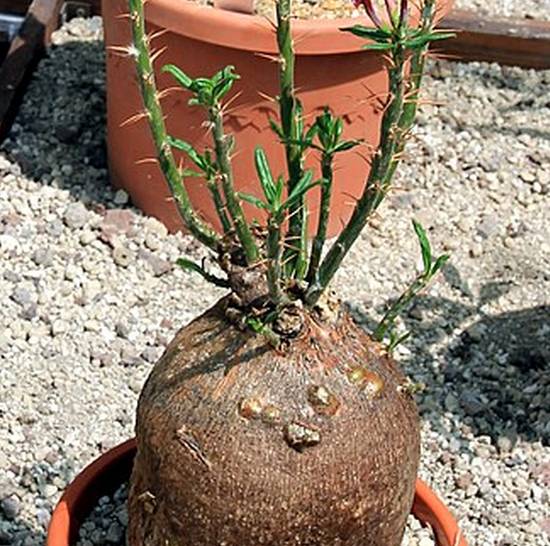
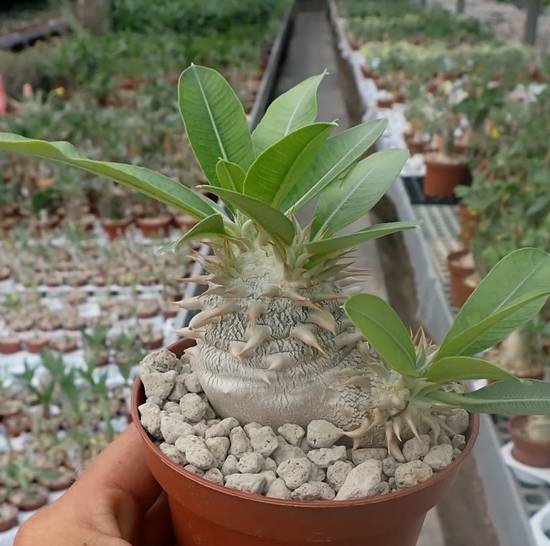
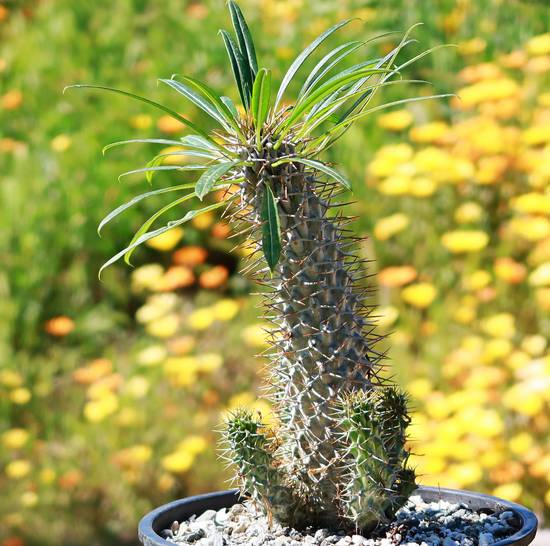
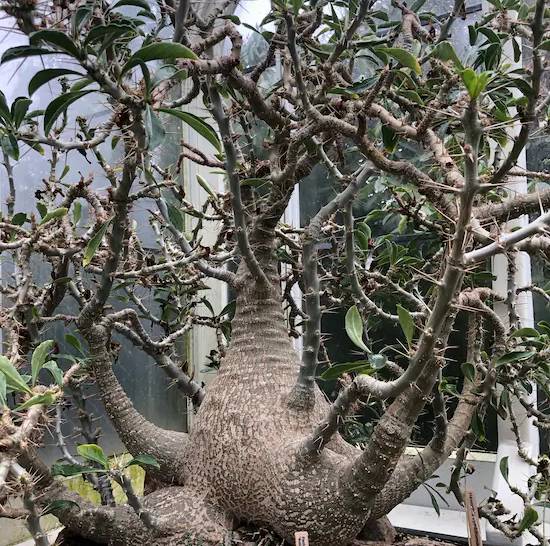
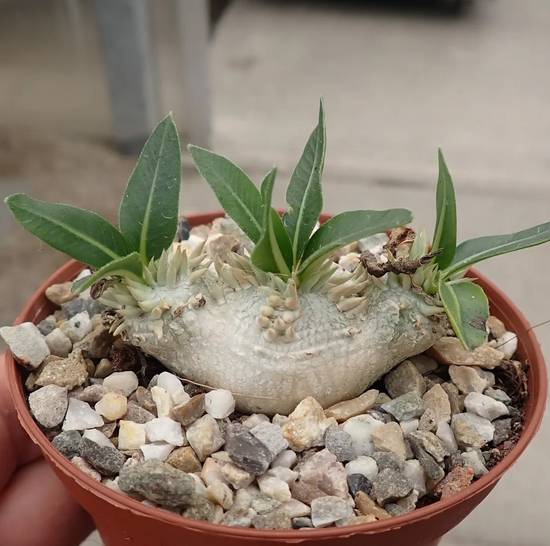
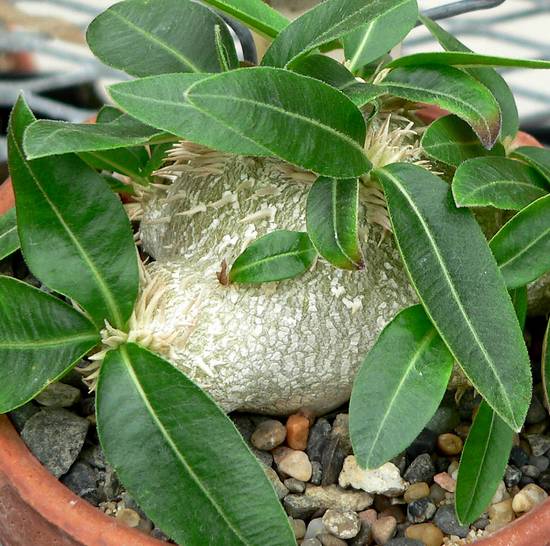
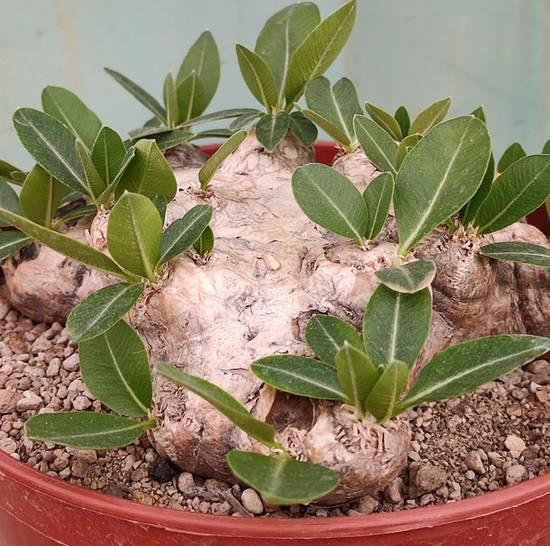
The Pachypodium Brevicaule is a fascinating succulent plant, emblematic of Madagascar’s endemic flora. A member of the Apocynaceae family, it stands out for its unique appearance: a very low, highly branched cushion with an almost mineral look. At first glance, this species does not resemble a tree like other Pachypodiums, but rather a living rock formation covered with small light green leaves. Its natural form reflects an extreme adaptation to a harsh environment, as it grows in the wild on arid rocky outcrops, sometimes even in limestone rock crevices.
This plant develops a very wide, flattened caudex, often shaped like an irregular dome, covered with short, thick branches. At maturity, a single specimen can reach up to 30 cm in diameter while being only 5 to 10 cm tall, giving the impression of a small green stone cushion dotted with leaves. Each branch bears a few gray or blackish spines, clearly visible but harmless to careful growers. During the growing season, the Pachypodium Brevicaule produces small obovate leaves arranged in rosettes at the tips of the branches, and in summer it can produce beautiful star-shaped yellow flowers.
🌞 Ideal exposure: Full direct sun for at least 6 hours per day.
🏠 Indoors: Place it in front of an unshaded south-facing window.
⚠️ Tip: In summer, avoid suddenly moving the plant outdoors without gradual acclimation.
🌱 Spring / summer: Water every 15 to 20 days, only when the substrate is completely dry.
🍂 Autumn / winter: Almost completely stop watering. The caudex stores sufficient water.
❗ Important: Never allow water to stagnate at the bottom of the pot.
🌡️ Optimal temperature: Between 22°C and 32°C.
❄️ Lower limit: Not below 10°C, even briefly. Cold and damp conditions are fatal.
🏠 Indoor cultivation: Ideal for apartments or well-heated sunrooms.
🪨 Recommended substrate: 40% cactus potting soil, 30% perlite, 30% pumice.
🌼 Flowers: Yellow, star-shaped, sometimes veined with light green.
📅 Season: Generally in summer, on mature plants.
🧡 Special feature: The flowers are relatively large compared to the size of the plant, creating a striking contrast.