Pachypodium Eburneum

Pachypodium Eburneum

Pachypodium Eburneum

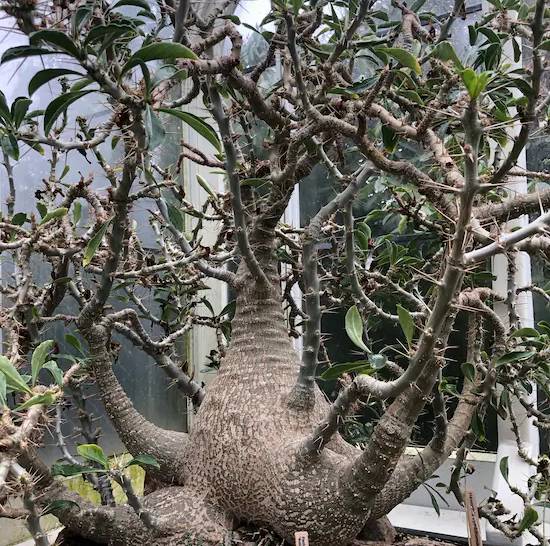
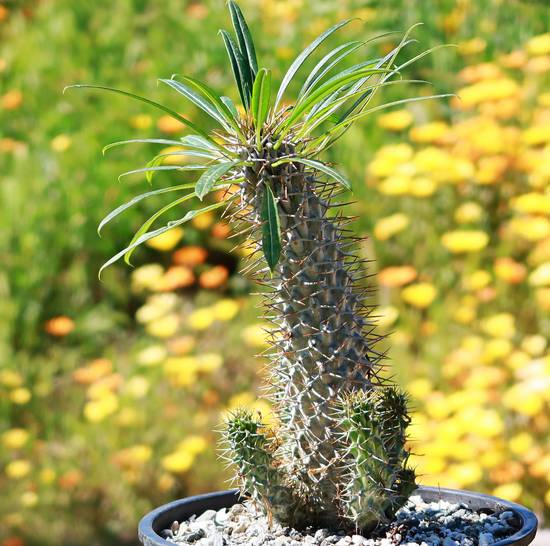
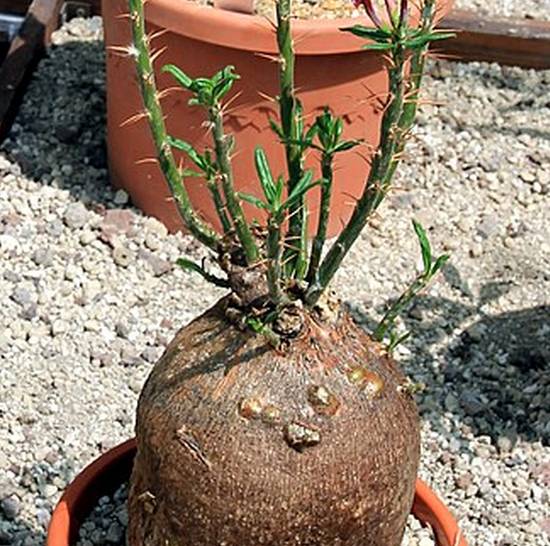
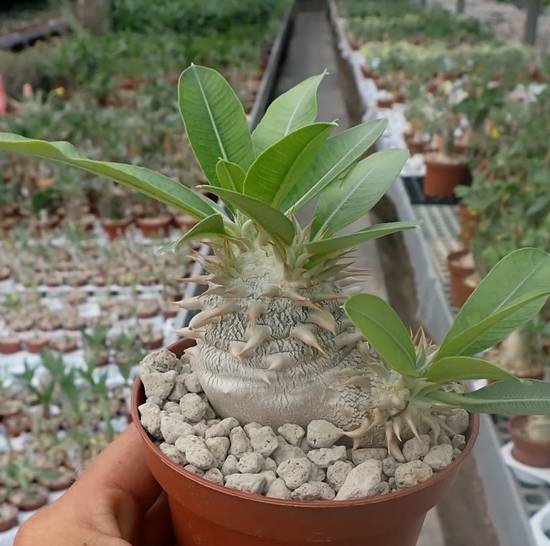
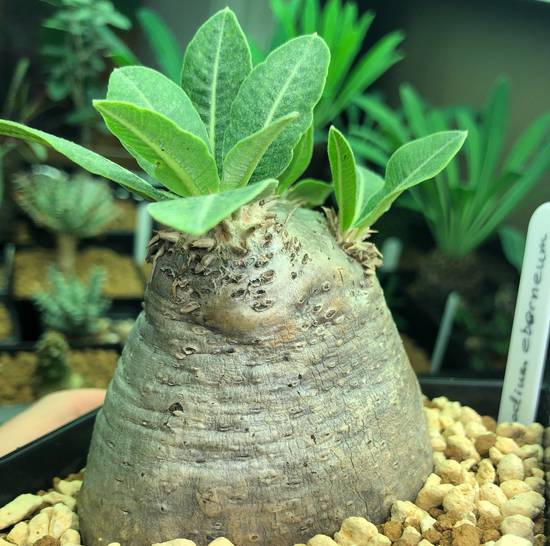
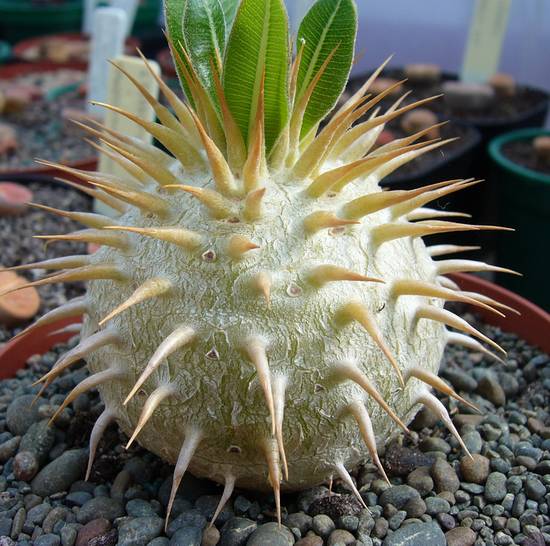
The Pachypodium Eburneum is a rare and spectacular caudiciform plant native to southern Madagascar. Belonging to the Apocynaceae family, this species immediately draws attention with its very thick caudex, globular to conical in shape, and pale, almost ivory coloration—hence the name "eburneum". This slow-growing plant forms a low, compact structure from which flowering stems emerge in summer, sometimes topped with white to pale yellow flowers. Its silhouette is sober and elegant, almost mineral, evoking the arid landscapes of its native habitat.

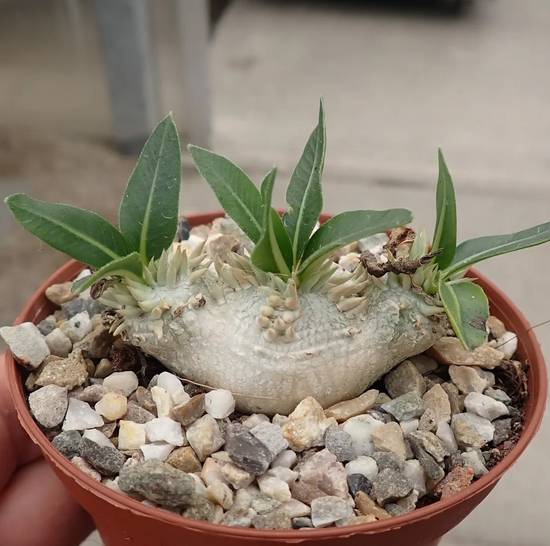
Unlike some of its relatives such as other Pachypodium species that develop elongated or branched trunks, Pachypodium Eburneum generally remains compact, making it ideal for pot cultivation, especially in caudex collections. It is particularly prized for the sculptural beauty of its body, whose smooth surfaces and creamy tone catch the light.

This species is relatively demanding in cultivation, as it fears both excess moisture and low temperatures. However, when grown correctly, it can live for several decades and produce an elegant flowering that contrasts strongly with its austere appearance.

The Pachypodium Eburneum grows in extreme environments, often fully exposed to the sun on rocky or sandy soils where very little vegetation can survive. It has developed a thick caudex to store water during periods of drought.
The Pachypodium Eburneum requires very intense light to remain compact and healthy:

🌞 Outdoors: Direct sun for at least 6 hours per day, especially in spring and summer.

🏠 Indoors: Full south-facing exposure or under a grow light in winter.
Like all Pachypodium species, Pachypodium Eburneum tolerates excess water very poorly:

🌱 Spring / summer: Moderate watering every 15 to 20 days, only when the substrate is completely dry.

🍂 Autumn / winter: Stop watering entirely if the plant enters dormancy.

⚠️ Tip: If the caudex becomes soft, it is often due to excess moisture.
The Pachypodium Eburneum is a tropical species that does not tolerate cold:

🌡️ Ideal: Between 22°C and 30°C.

❄️ Absolute minimum: 10°C. Below this, tissues become sensitive to fungi and rot.
Drainage is crucial for Pachypodium Eburneum:

🪴 Recommended mix: 50% cactus potting soil + 30% perlite + 20% pumice.
The flowering of Pachypodium Eburneum is discreet but elegant:

🌼 Color: White to pale yellow tubular flowers, grouped on upright flowering stems.

📅 Period: Late spring to early summer.

🧡 Note: Flowering occurs only on mature plants with sufficient light.
FAQ - Pachypodium Eburneum

What is the ideal exposure for Pachypodium Eburneum?
It requires very intense light. Place it in full sun or indoors under strong lighting.
What substrate is suitable for Pachypodium Eburneum?
A well-draining mix composed of cactus soil combined with mineral materials such as perlite and volcanic rock is ideal.
How should Pachypodium Eburneum be watered?
Water very sparingly. Only water when the substrate is completely dry. Stop watering entirely in winter.
Does Pachypodium Eburneum tolerate cold?
No, it should never be exposed to temperatures below 10°C.
When and how should Pachypodium Eburneum be repotted?
Repot every 3 years in spring using a very well-draining substrate and preferably a terracotta pot.
How can Pachypodium Eburneum be encouraged to bloom?
Provide strong sunlight, a dry rest period, and a suitable fertilizer in spring to encourage blooming.
Is Pachypodium Eburneum toxic?
Yes, it produces an irritating sap. Wear gloves when handling the plant.
Is Pachypodium Eburneum suitable for indoor cultivation?
Yes, provided it receives very strong light. A sunroom or greenhouse is ideal.
Why is the caudex of my Pachypodium Eburneum becoming soft?
Overwatering or a compact, poorly draining substrate are the main causes. Ensure excellent drainage.
Can Pachypodium Eburneum be propagated easily?
Propagation is only done by seed, which is slow and difficult. Cuttings are not viable.