Monadenium Schubei
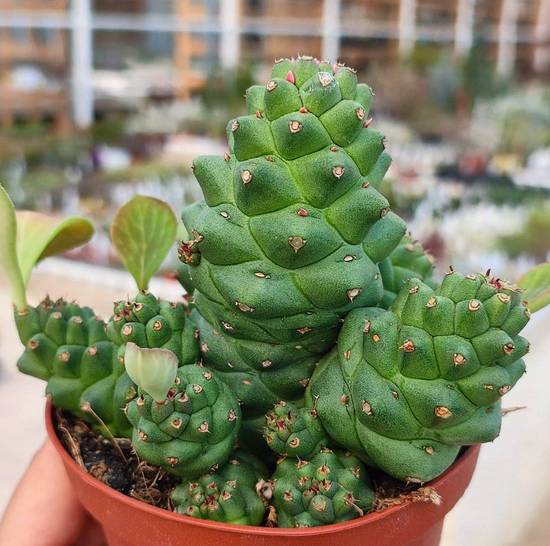
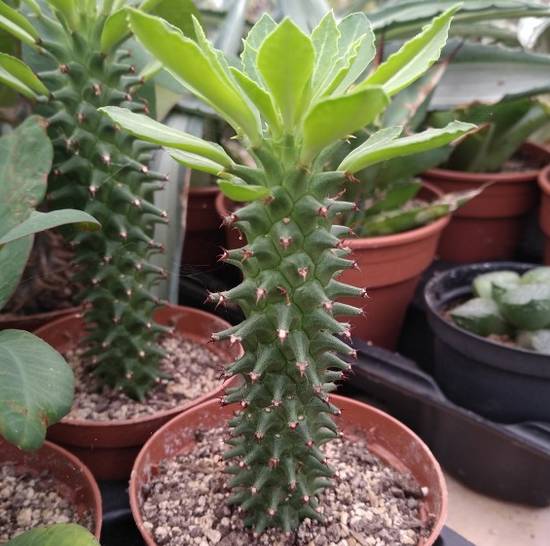
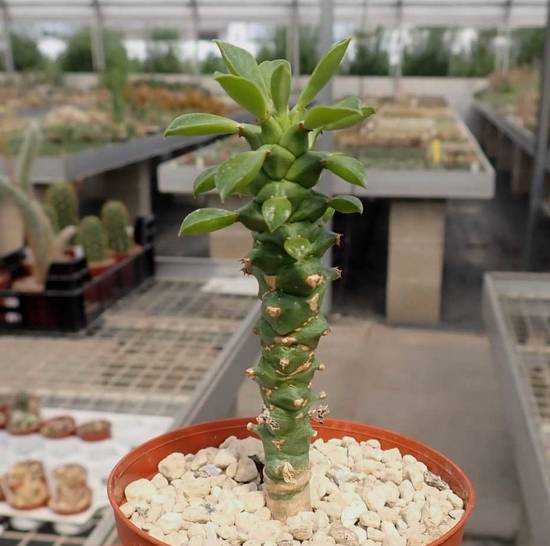
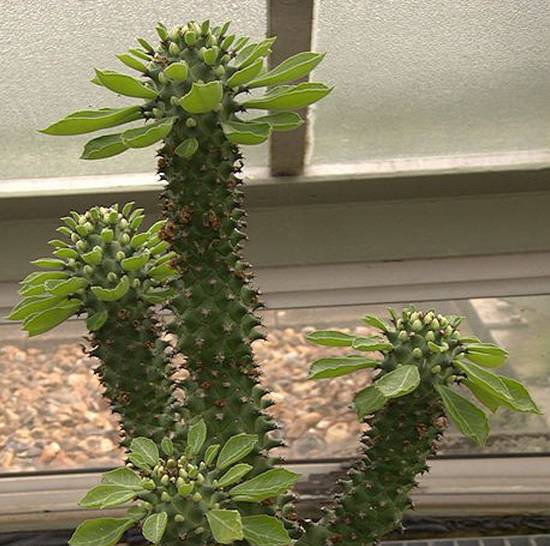
The Monadenium Schubei is a succulent plant with a striking appearance, featuring an upright habit and stems decorated with small regular outgrowths. Closely related to the Euphorbia genus, to which it has sometimes been attached, this East African native seduces with its vertical silhouette and original inflorescences. Little known to the general public, it remains a gem for lovers of rare plants and collectors of unusual forms.
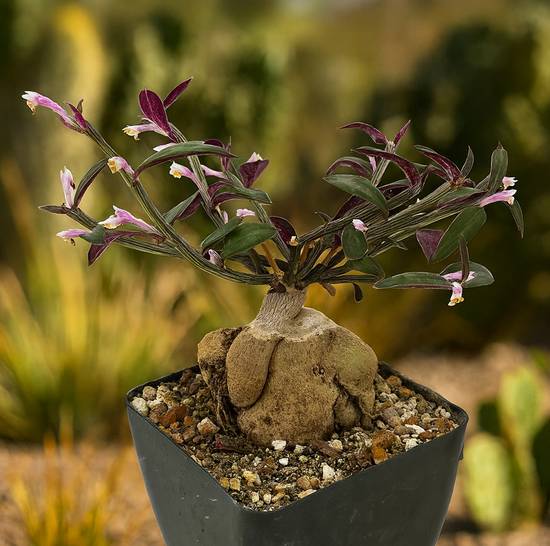
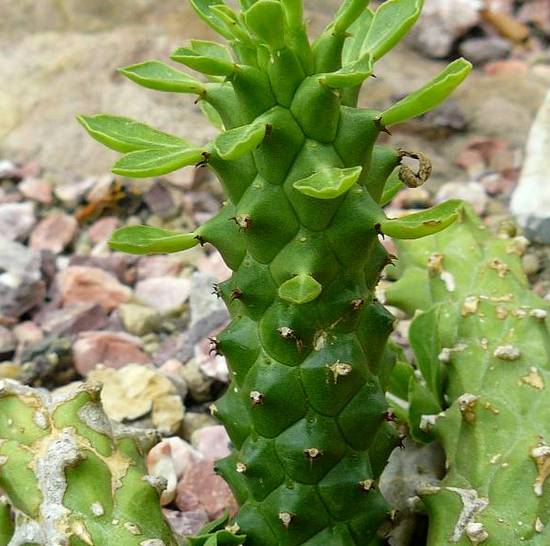
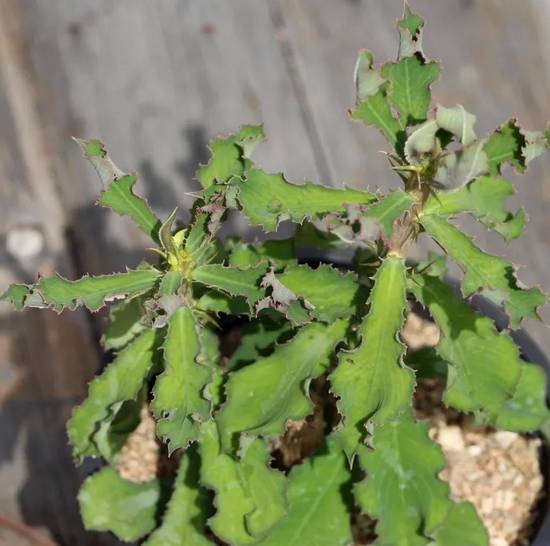
This Monadenium develops thick light green stems, slightly segmented and bordered with spiral tubercles. At the top or in the axils of these tubercles, small ephemeral leaves may appear, and above all atypical flowers shaped like red or purple horns. The overall effect is highly graphic and contemporary, ideal in a modern interior or a collector’s greenhouse.
Over time, the Monadenium Schubei can form a small branched shrub. It remains compact but needs a well-lit space to express its full potential. Easy to care for, it mainly requires good drainage and well-controlled watering to avoid any risk of rot.
🌞 It appreciates bright light, without scorching sun during the hottest hours.
🌤️ A filtered south-facing exposure or east/west with a few hours of sun is perfect.
🚫 Lack of light can lead to etiolation and weakening of the plant.
💧 During the growing season (spring to early autumn), water when the substrate is completely dry, about every 15 days depending on the heat.
🍂 In winter, enter vegetative rest and reduce watering to once a month, or even less.
⚠️ Too much water is far more dangerous than forgetting: it is better to wait a few extra days than to water too early.
🌡️ It thrives between 20 and 30 °C during its active period.
❄️ It tolerates drops down to 10 °C, but must never be exposed to frost.
🏠 Indoors, keep it away from cold drafts in winter.
🪨 To grow well, the Monadenium Schubei needs a light, porous and well-draining soil. A substrate that is too compact would retain moisture around the roots, quickly causing rot. The best option is to use a special cactus soil, to which mineral elements such as perlite or pumice are added. This creates an airy soil, close to that of its natural habitat.
🌺 It mainly takes place in summer, after a period of active growth.
🌸 The flowers are small, tubular, often reddish or purplish, and arranged near the apex of the stems.
🌿 Although discreet, they add a unique exotic touch to the overall plant.