Monadenium Heteropodum
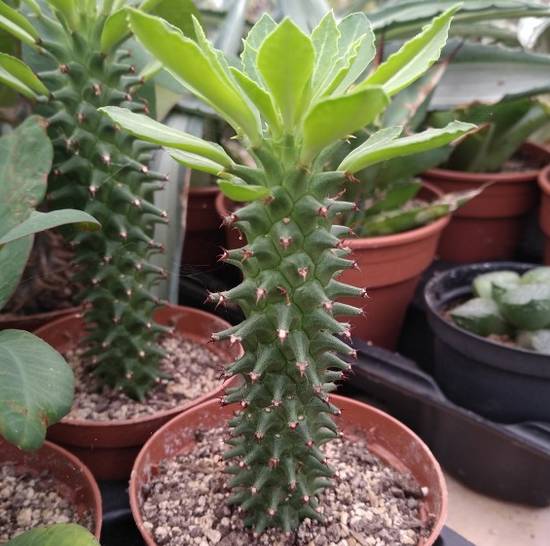
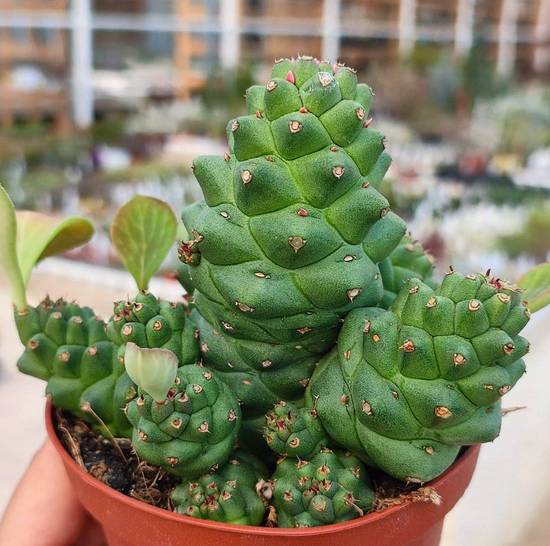
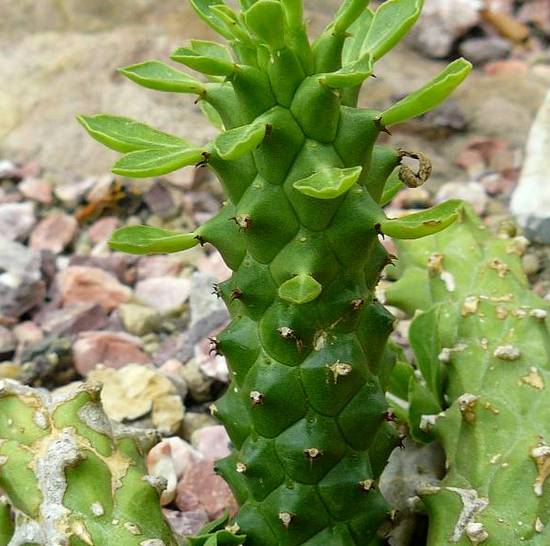
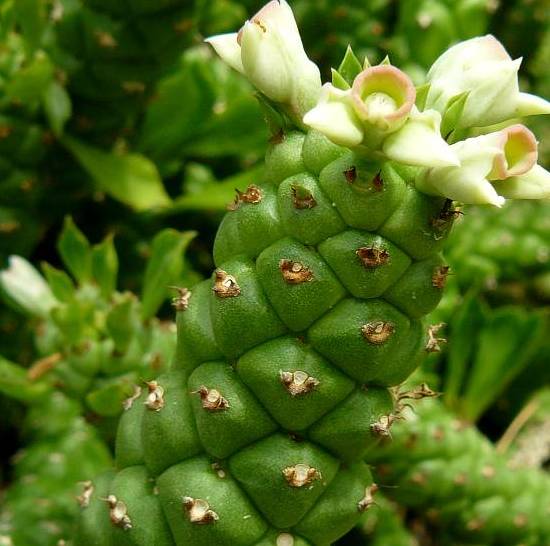
The Monadenium Heteropodum is a fascinating succulent plant native to East Africa, often confused with euphorbias due to its milky sap and architectural habit. Discreet yet elegant, this Monadenium develops thick, cylindrical and upright stems marked with small protuberances reminiscent of aligned nipples. Perfect for lovers of unusual shapes, it stands out as both decorative and robust.
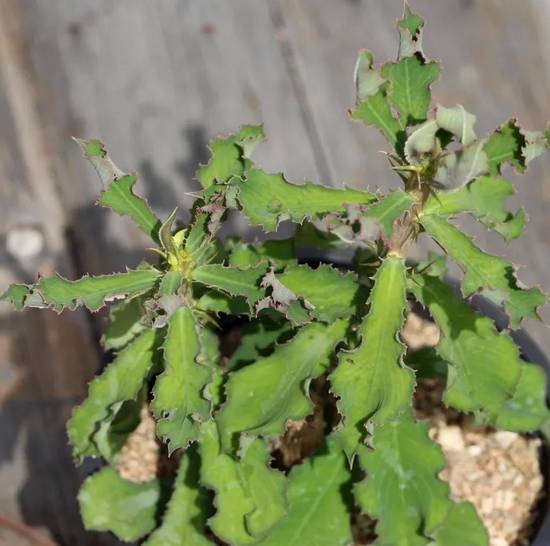
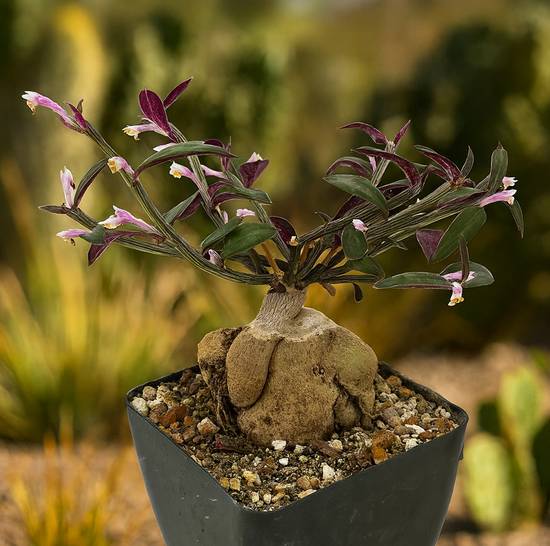
Its slightly futuristic appearance, with stems often pale green or dark green dotted with small deciduous leaves, immediately catches the eye in a succulent collection. During the warm season, it produces red or burgundy flowers, discreet but surprising, at the axils of the tubercles. Its growth is rather slow, but steady when it benefits from good light and a suitable substrate.
Capable of adapting to arid conditions, the Monadenium Heteropodum is very easy to grow in pots, on a windowsill or in a greenhouse. Its minimal care requirements, combined with a sculptural look, make it an ideal plant for beginners as well as experienced collectors.
🌞 Place it in a bright location, with at least 4 to 6 hours of natural light per day.
🌤️ It tolerates direct morning sun, but beware of heatwaves in midsummer.
🌑 Indoors, a south- or west-facing windowsill will be ideal for its development.
💧 During the warm season (from March to October), water when the soil is completely dry, about every two weeks.
❄️ In winter, almost completely stop watering: the plant enters dormancy and no longer needs water.
⚠️ Excess water easily causes collar or root rot: it is better to forget than to overwater.
🌡️ Ideal temperature: between 22 °C and 30 °C in summer.
❄️ Minimum temperature: 10 °C – below this, it should be brought indoors.
🏠 For wintering, choose a bright, dry place without cold drafts.
🛒 To create this perfect mix, use a adapted substrate to which you can add pumice or perlite.
🌺 It occurs in summer, especially on well-established plants.
🌸 The small purple-red flowers appear at the top or on the sides of the stems.
👃 They are not fragrant but provide a beautiful contrast with the foliage.