Echeveria Tolimanensis
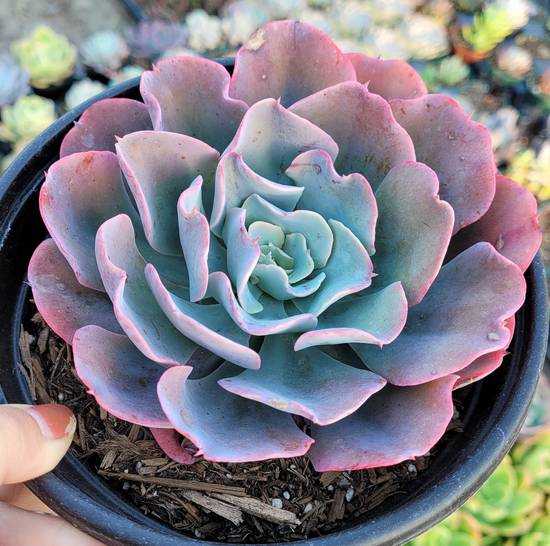
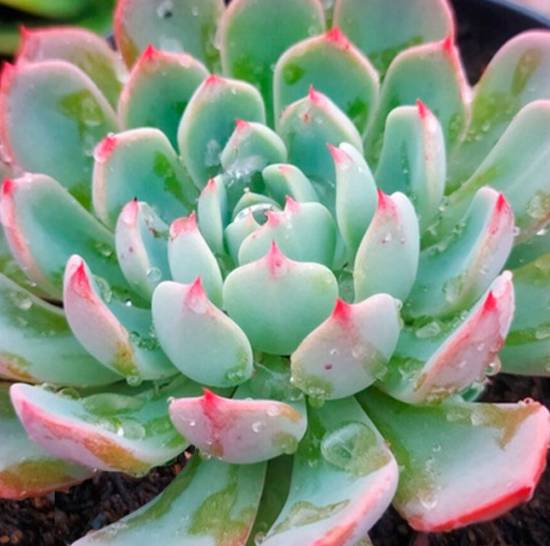
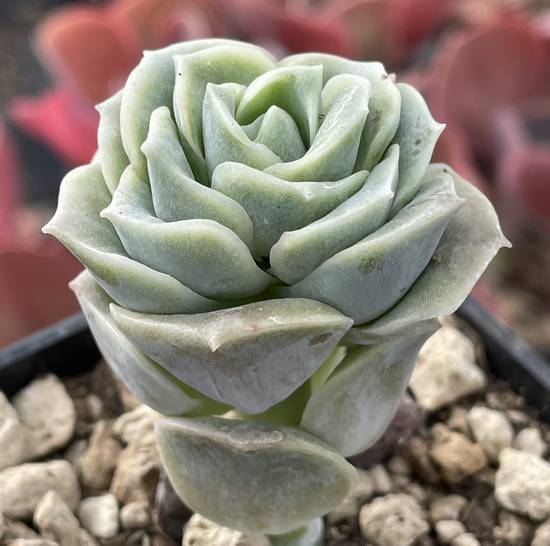
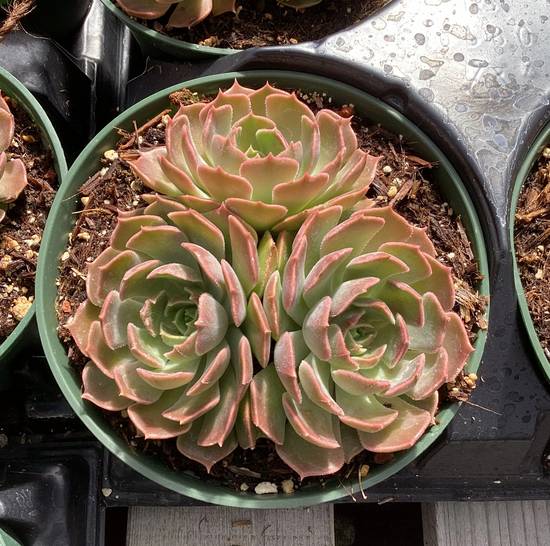
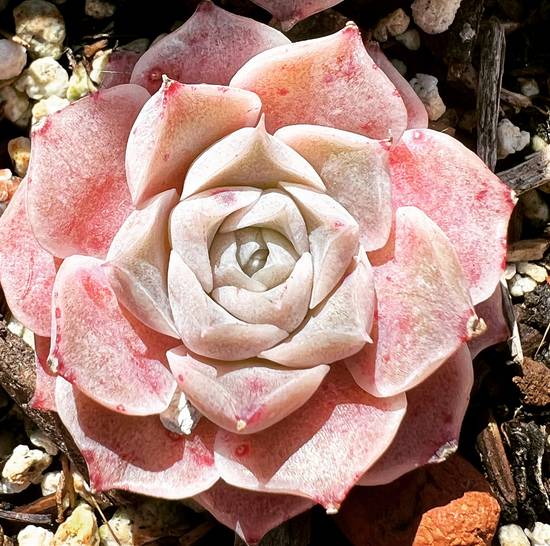
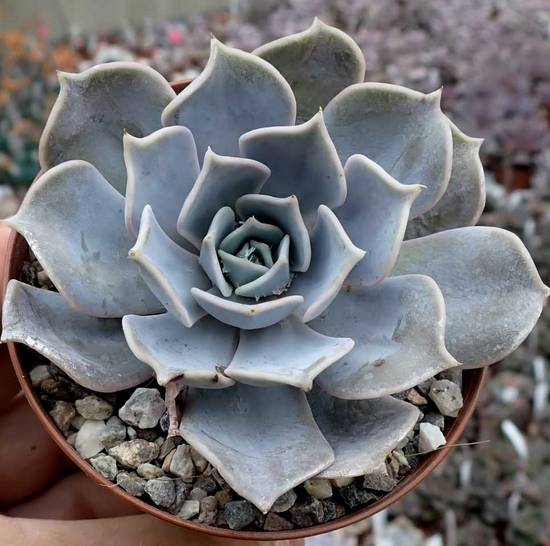
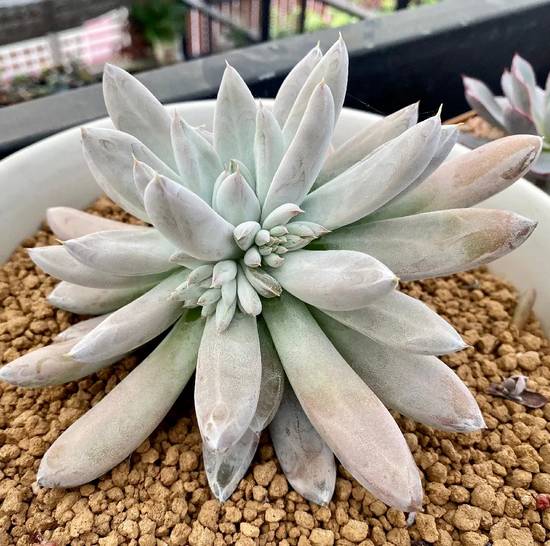
Echeveria Tolimanensis is an elegant succulent with a subtly powdery hue, native to Mexico. Though discreet, this specimen charms with the regularity of its rosette, the softness of its blue-green foliage sometimes tinged with pink, and its remarkable robustness. Its name comes from the Tolimán region, where it originates, making it an authentic plant rooted in a rich, sun-drenched desert terroir.
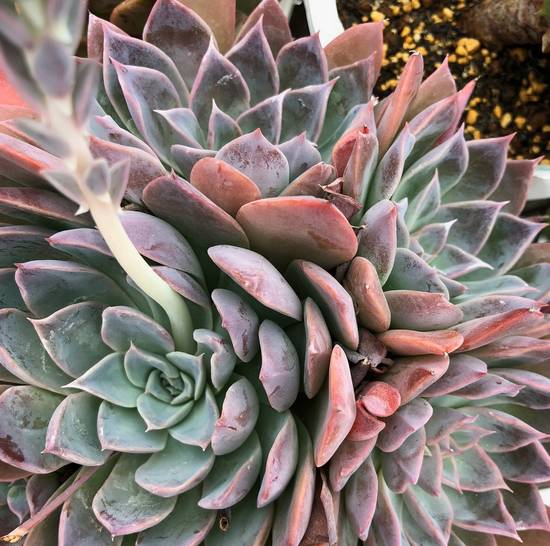
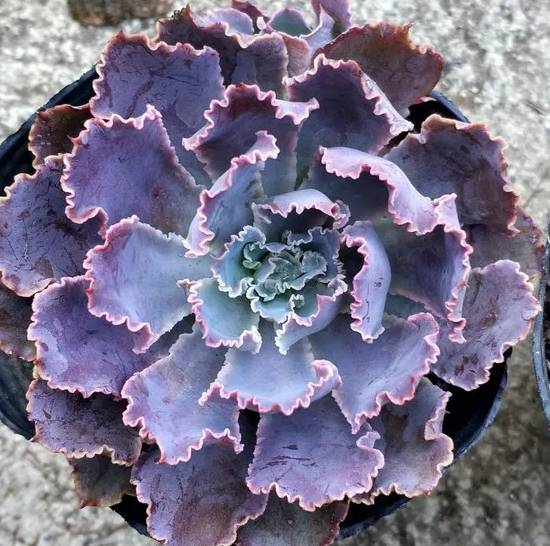
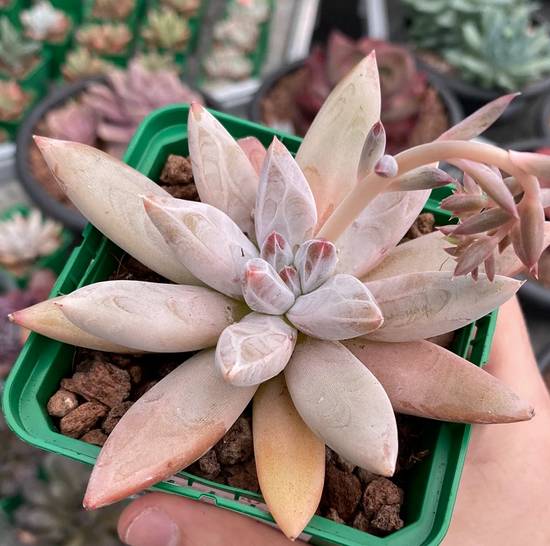
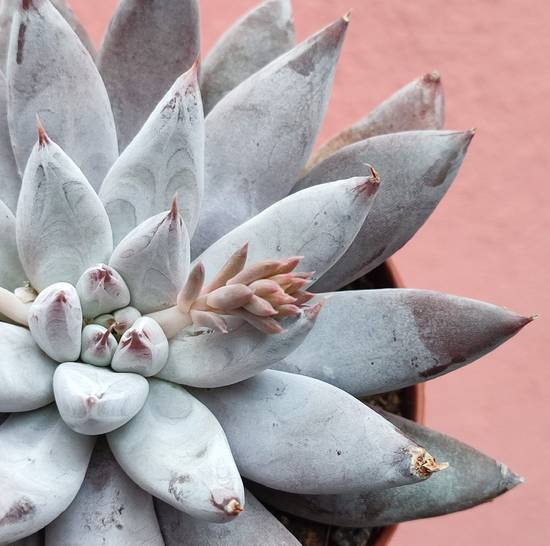
Its thick, spoon-shaped leaves form compact rosettes that can reach up to 20 cm in diameter at maturity. Each leaf displays a light farina that gives it that characteristic “frosted” look. When grown in good conditions, Echeveria Tolimanensis can develop beautiful pink to purplish tones, especially during periods of light or water stress.
Appreciated both for its ease of care and its ornamental potential, it is perfect in an individual pot, in arrangements, or even in dry rock gardens in mild climates. It is a must-have for lovers of succulents with pure shapes and natural colors.
🌞 Ideal: Direct light 5 to 6 hours per day, especially in the morning or late afternoon.
🌤️ In summer: Avoid direct midday sun without acclimation. Light shade during the hottest hours is beneficial.
☁️ Indoors: Place it near a well-exposed window, ideally south- or west-facing.
🌱 Growing period (spring-summer): Water every 2 to 3 weeks, allowing the substrate to dry completely between waterings.
🍂 In winter: Drastically reduce watering, or stop entirely if temperatures drop.
💡 Tip: Excess water promotes rot, especially at the base of the rosette.
🌡️ Optimal temperature: between 20 and 28°C
❄️ Tolerance threshold: down to 4–5°C if the substrate remains completely dry
🏠 Overwintering: In cold regions, place it in a cool, bright room from October onward.
🪨 Recommended substrate: cactus soil or succulent substrate + perlite + pozzolana on the surface or mixed in for perfect drainage
🌸 Period: Late spring to summer
🎨 Appearance: Slender flower stalks bearing small orange or coral bell-shaped flowers
🕑 Duration: The stalks last several weeks and may appear multiple times during the year
✂️ Remove flower stalks after blooming to encourage vegetative growth.