Ariocarpus Scaphirostris

Ariocarpus Scaphirostris

Ariocarpus Scaphirostris

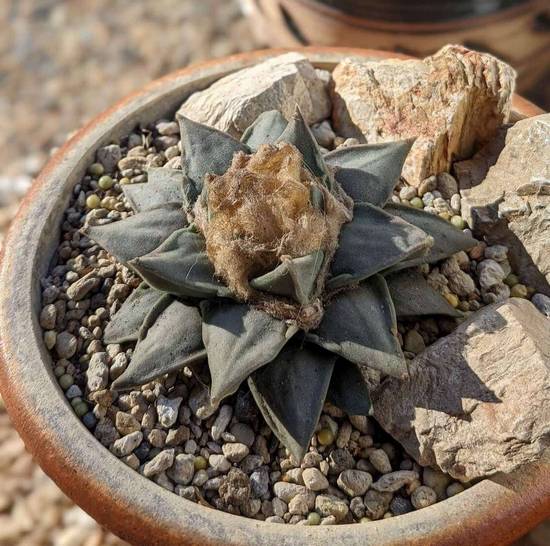
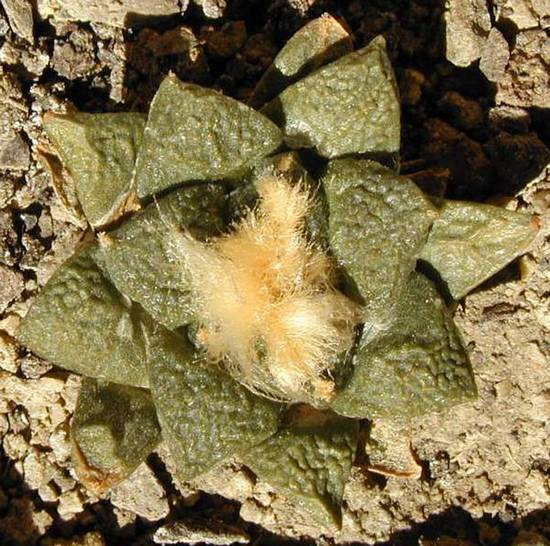
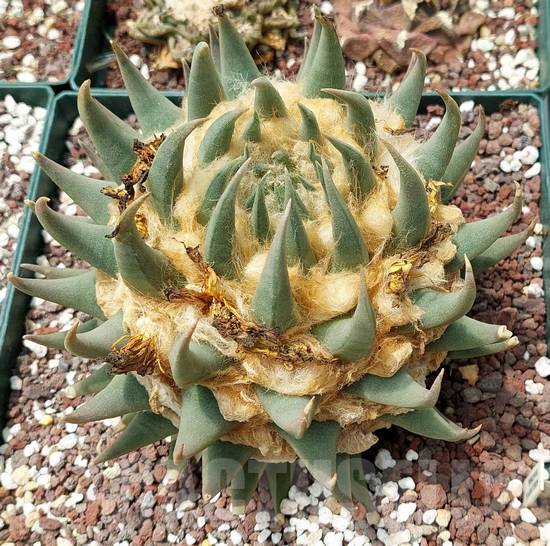
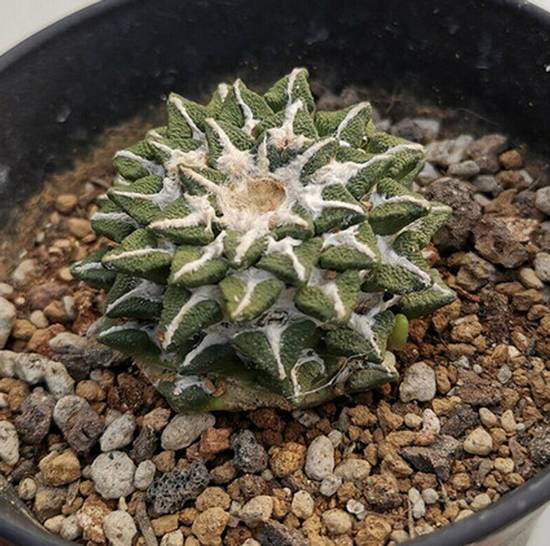
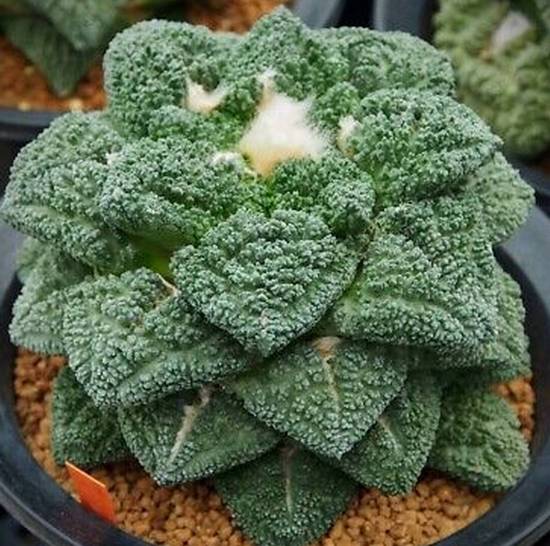
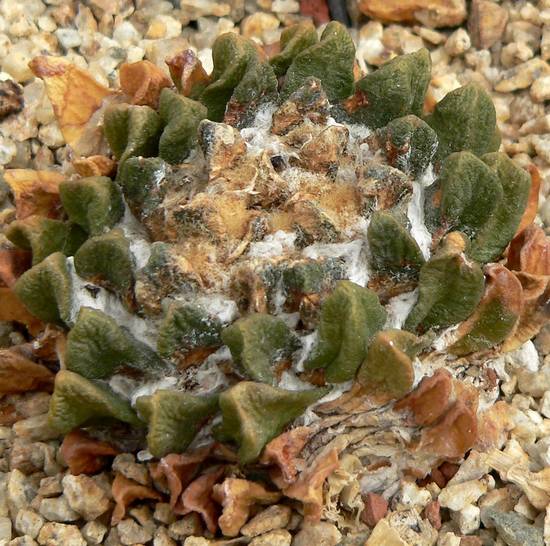
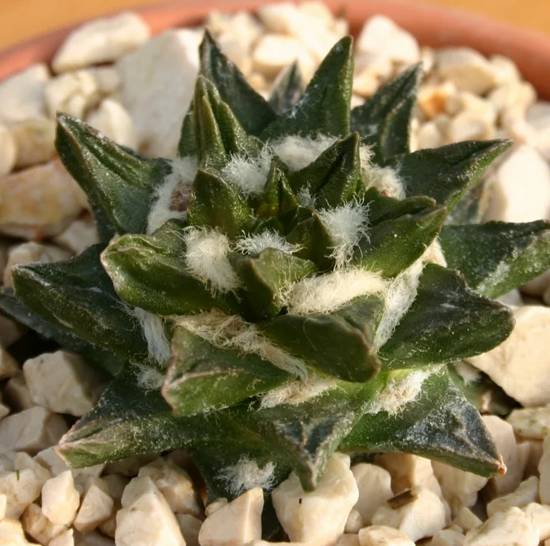
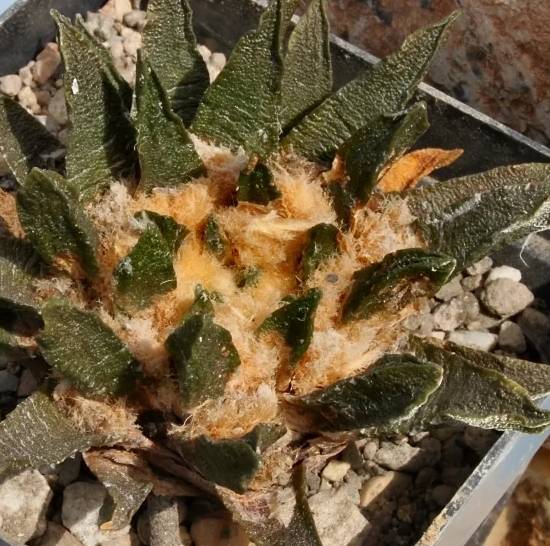
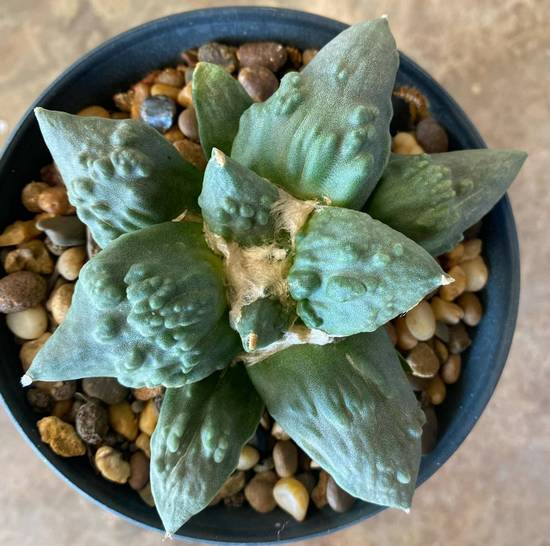
An icon among geophytic cacti, Ariocarpus Scaphirostris resembles a mineral sculpture emerging from gravel. Its flattened rosette of triangular tubercles, finely striated and often woolly at the apex, forms a starry pattern of hypnotic precision. Grey-green, sometimes dusted with a glaucous veil, it appears “melted” into a rocky setting and invites close observation: each angular, matte tubercle plays with light and casts sharp shadows that reveal its geometry. With age, Ariocarpus Scaphirostris gains relief without losing compactness; it becomes a true miniature totem, dense and low in profile, whose beauty lies as much in restraint as in fine detail.

A character piece in collections, Ariocarpus Scaphirostris combines rarity with sobriety. Its naturally slow growth preserves the balance of a shallow pot for a long time and offers a very contemporary visual stability: nothing spills over, everything is contained tension. The eye is drawn to the regular pattern of tubercles, the discreet wool of the areoles, the closed center like an enigma. On a mineral tray, alongside miniature agaves, Anacampseros or light gravel, it becomes the silent focal point of a “modern desert” composition.

Native to northeastern Mexico, Ariocarpus Scaphirostris inhabits limestone outcrops and pale gravel of the Sierra Madre Oriental, where its low rosette blends into the rock. Reproducing this bright, well-drained scree spirit stabilizes its cultivation in pots.
Clean geometry and dense rosette: Ariocarpus Scaphirostris thrives under abundant light acquired progressively.

🌞 Ideal: gentle morning sun + strong brightness in the afternoon; acclimate after winter.

🏠 Indoors: bright south/east exposure or LED 10–12 h with good ventilation.
A true xerophytic geophyte, Ariocarpus Scaphirostris prefers “thorough watering then a long pause.”

🌱 Mild season: water deeply when the mix is dry at depth, then drain completely.

🍂 Rest period: space watering greatly; substrate almost dry between applications.
Sober and resilient when dry, Ariocarpus Scaphirostris mainly fears cold humidity.

🌡️ Ideal: 18–28 °C; moving air.

❄️ Minimum: about 5–7 °C dry; no frost.
To mimic its limestone slabs, Ariocarpus Scaphirostris requires a very draining, mineral mix.

🪨 Base: lightened cactus substrate or soil + perlite; clean pozzolana top dressing at the collar.
When the cycle is respected, Ariocarpus Scaphirostris opens silky blooms at the heart of the rosette.

🌸 Period: late summer to autumn, often after summer rest.

🎨 Colors: pink to magenta, pale center, large golden stamens.

🕑 Keys: tight pot, maximum brightness, very moderate feeding.
FAQ - Ariocarpus Scaphirostris

How to recognize Ariocarpus Scaphirostris compared to other Ariocarpus?
Fine triangular tubercles, very flat rosette and woolly apex; keep neat in airy cactus substrate.
Which pot best showcases a solitary Ariocarpus Scaphirostris?
A low terracotta bowl with pumice mulch on the surface to highlight its geometry.
Is Ariocarpus Scaphirostris interesting when grafted?
Grafting speeds growth but alters appearance; for collectors, own-root plants are more aesthetic.
How to photograph Ariocarpus Scaphirostris?
Use soft side lighting, neutral background and tight framing; light mulch enhances relief.
What soil mix works for Ariocarpus Scaphirostris?
A light specialized mix: cactus potting soil plus perlite, topped with clean pumice mulch.
Can Ariocarpus Scaphirostris stay in a small pot for a long time?
Yes, very slow growth and low habit; choose a stable pot and repot rarely but carefully.
What feeding schedule for a compact Ariocarpus Scaphirostris?
Very diluted micro-feeds in season with cactus fertilizer, never on dry substrate.
Is Ariocarpus Scaphirostris suitable for a very bright display case?
Yes if air circulates; optionally add 10–12 hours of LED and always empty the saucer after watering.
Which decorative pairings suit Ariocarpus Scaphirostris?
Dwarf Agaves, Anacampseros and light gravel; mineral décor enhances its fossil-like effect.
Tip to keep the crown of Ariocarpus Scaphirostris immaculate?
Keep a neat pumice mulch and space watering; use clean, well-drained cactus substrate.