Ariocarpus Fissuratus
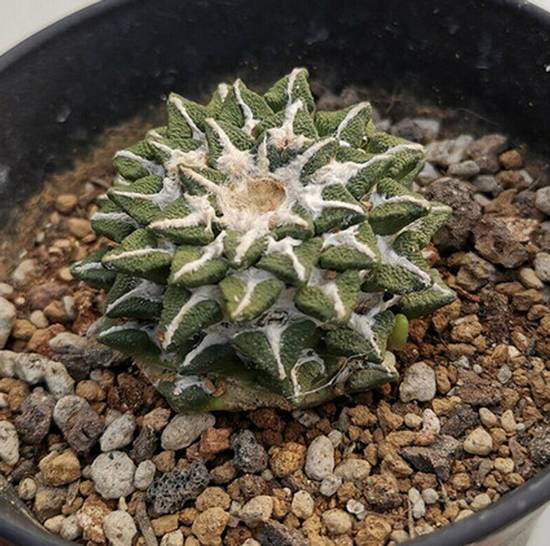
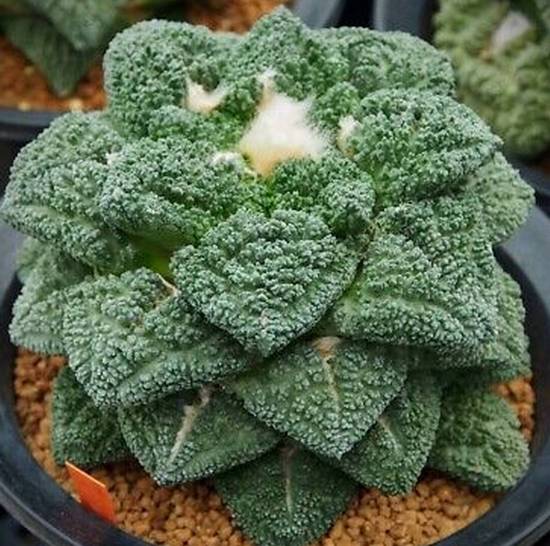
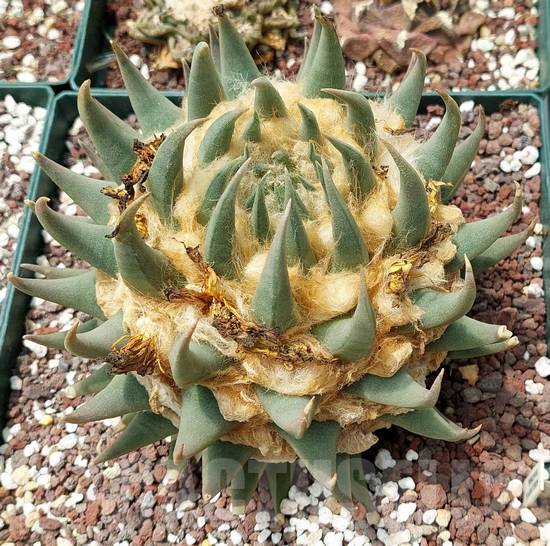
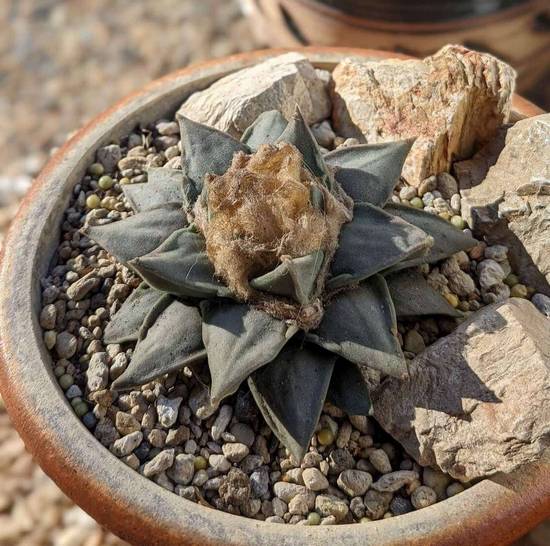
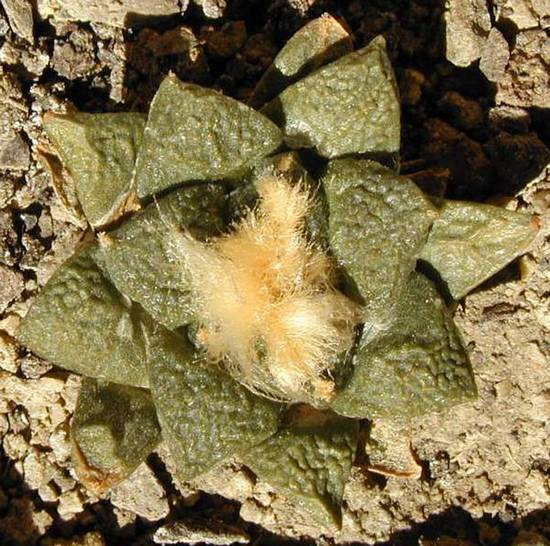
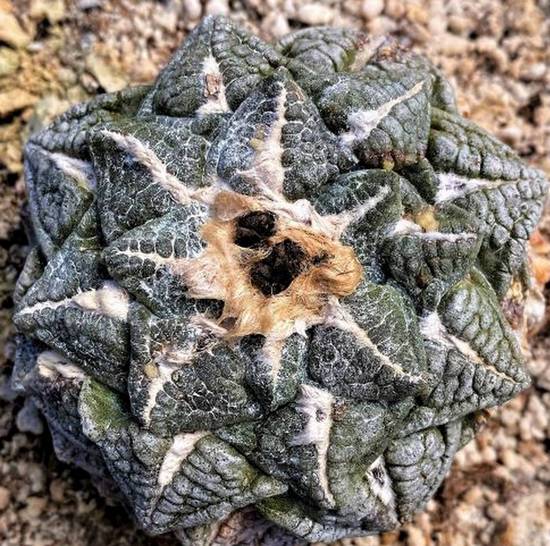
The Ariocarpus Fissuratus is an emblematic and distinctive species in the world of cacti. Its compact, flattened form, almost embedded in the ground, gives it the appearance of a living stone. This natural camouflage allows it to blend perfectly into its arid environment, making it a discreet but incredibly resilient plant.
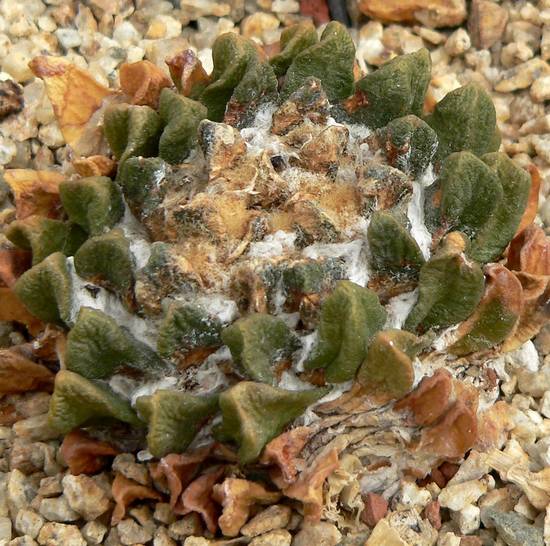
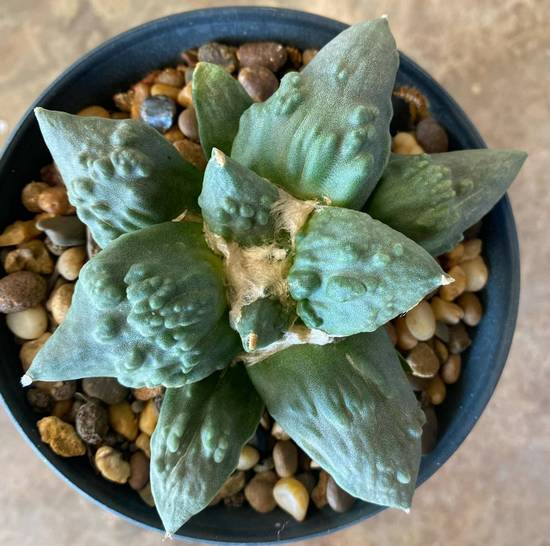
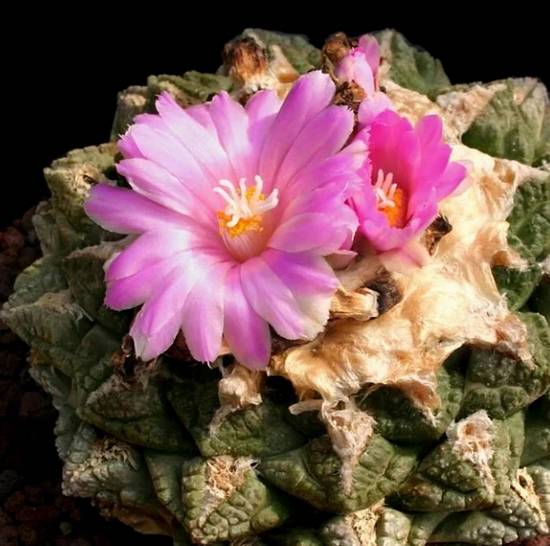
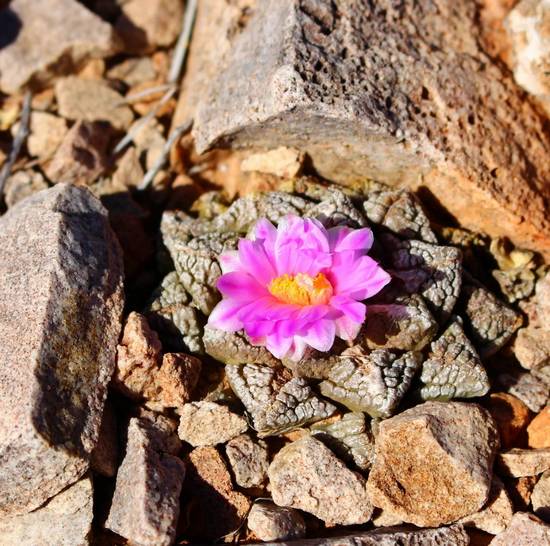
This cactus grows very slowly and develops a dense rosette of triangular, thick and fissured tubercles (hence its name), often covered with a gray or brown bloom. Without visible spines, it looks more like a fossil than a living plant — until it reveals its bright pink flowers!
The Ariocarpus Fissuratus is native to the desert areas of northern Mexico (Chihuahua, Coahuila) and Texas.
It grows in limestone or gypsum soils, embedded among stones, often half-buried. Its mineral appearance allows it to escape predators and the extreme conditions of its natural environment.
The Ariocarpus Fissuratus appreciates a very bright exposure:
🌞 Exposure: full sun or partial shade in very hot regions
🌤️ Warning: acclimate gradually after an indoor winter to avoid burns
🌞 Exposure: full sun or partial shade in very hot regions
🌤️ Warning: acclimate gradually after an indoor winter to avoid burns
Like all Ariocarpus, the Fissuratus fears humidity:
🌱 Spring / summer: moderate watering every 3 to 4 weeks, only if the substrate is completely dry
🍂 Autumn / winter: no watering from October onward
⚠️ Excess water is its main cause of mortality. Never leave standing water at the bottom of the pot.
🌱 Spring / summer: moderate watering every 3 to 4 weeks, only if the substrate is completely dry
🍂 Autumn / winter: no watering from October onward
⚠️ Excess water is its main cause of mortality. Never leave standing water at the bottom of the pot.
This cactus is more hardy than it appears:
🌡️ Ideal temperature: between 20°C and 30°C
❄️ Cold tolerance: can survive down to -5°C occasionally if perfectly dry, but it is preferable to overwinter it at +5/10°C
🌡️ Ideal temperature: between 20°C and 30°C
❄️ Cold tolerance: can survive down to -5°C occasionally if perfectly dry, but it is preferable to overwinter it at +5/10°C
An extremely mineral substrate is imperative:
🪨 Recommended mix: 60% pumice + 30% pozzolana + 10% cactus potting soil
🌿 An unglazed terracotta pot is ideal to promote evaporation.
🪨 Recommended mix: 60% pumice + 30% pozzolana + 10% cactus potting soil
🌿 An unglazed terracotta pot is ideal to promote evaporation.
The flowering of the Ariocarpus Fissuratus is an unexpected spectacle:
🌸 Season: from September to November
🎨 Color: bright pink to magenta
🕑 Duration: 3 to 6 days depending on conditions
💡 It appears only if the plant has been well exposed all summer and respected in its natural rhythm
🌸 Season: from September to November
🎨 Color: bright pink to magenta
🕑 Duration: 3 to 6 days depending on conditions
💡 It appears only if the plant has been well exposed all summer and respected in its natural rhythm
FAQ - Ariocarpus Fissuratus
Can Ariocarpus Fissuratus be grown without grafting?
Yes, and it is even the most natural method. Although very slow, Ariocarpus fissuratus can live on its own roots for decades. Grafting is sometimes used to accelerate growth or to save an unhealthy specimen, but it is not mandatory.
Is it normal for Ariocarpus Fissuratus to be half buried?
Yes, it is completely normal! In its natural habitat, it grows almost entirely embedded in the soil, which protects it from intense heat and wind. It can be planted slightly recessed in cultivation, as long as the collar remains dry.
What type of pot is best suited for Ariocarpus Fissuratus?
An unglazed terracotta pot is ideal. It allows better evaporation of moisture and prevents water accumulation around the roots, which is essential to prevent rot.
Can Ariocarpus Fissuratus bloom in a pot?
Yes, but it requires patience and discipline. It needs plenty of light, little watering, a respected seasonal cycle, and above all not to be disturbed at the end of summer. Autumn flowering is the sign of a well-balanced cactus.
How to recognize excess moisture in Ariocarpus Fissuratus?
Excess moisture appears as softening of the tubercles, a color change (grey-yellow or translucent) and sometimes the appearance of mold. Stopping all watering is essential in case of doubt.
How to know if Ariocarpus Fissuratus lacks water?
Its tubercles become slightly wrinkled or soft to the touch, and its color may slightly dull. During the growing season (summer), light watering can restore its firmness.
Is Ariocarpus Fissuratus toxic to animals?
No, it is not toxic. It presents no particular danger to pets. However, its rough texture and unusual shapes may attract the curiosity of cats… it is better to keep it out of reach.
Is it necessary to fertilize Ariocarpus Fissuratus?
Yes, but sparingly. A dose of very diluted liquid cactus fertilizer, once a month in summer, is sufficient. Excess can harm its balance and promote soft growth.
What is the lifespan of an Ariocarpus Fissuratus?
This plant can live for several decades. Some specimens over 50 years old are still visible in botanical and private collections.
Can Ariocarpus Fissuratus be grown in an outdoor rock garden?
Only in very dry and warm regions, with perfect drainage and protected from rain. In France, outdoor cultivation is rarely recommended, except in desert-like environments arranged under a cold greenhouse.