Ariocarpus Kotschoubeyanus
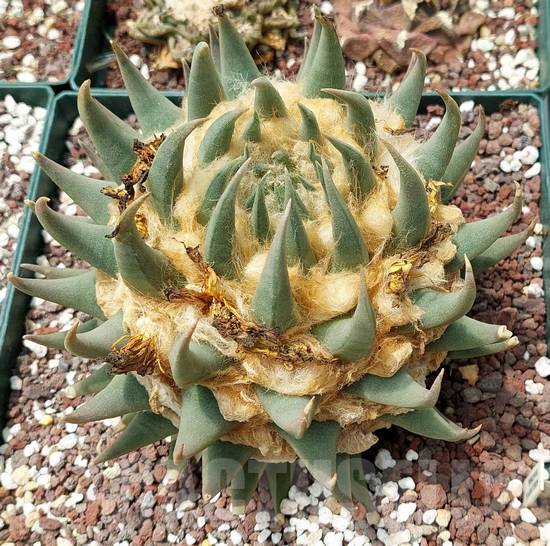
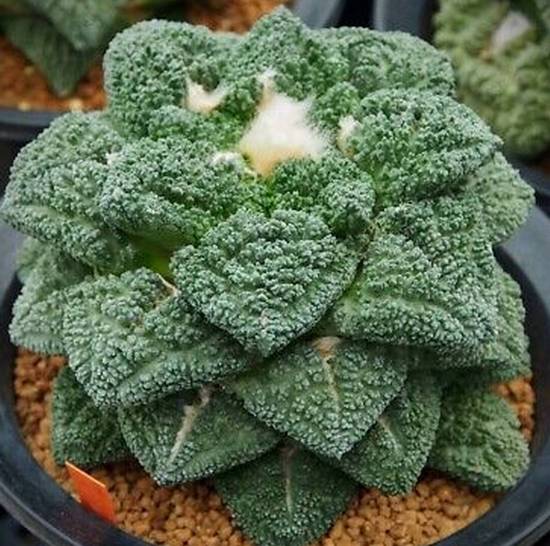
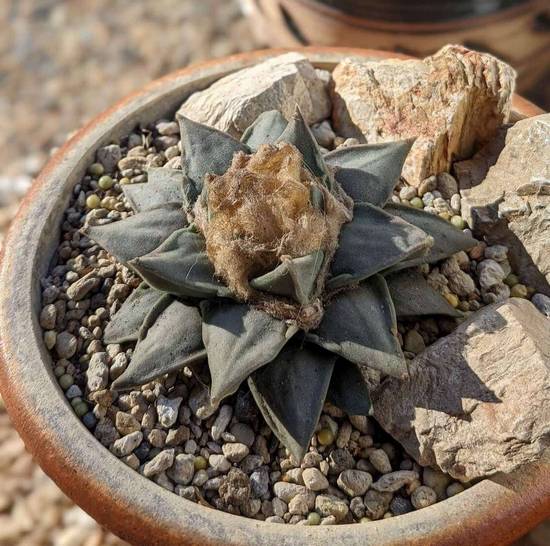
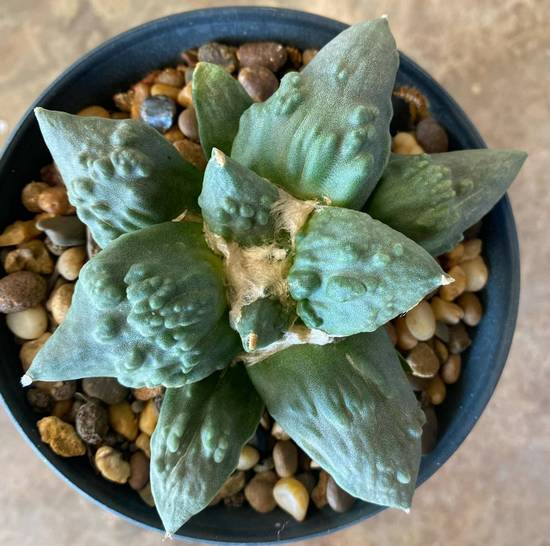
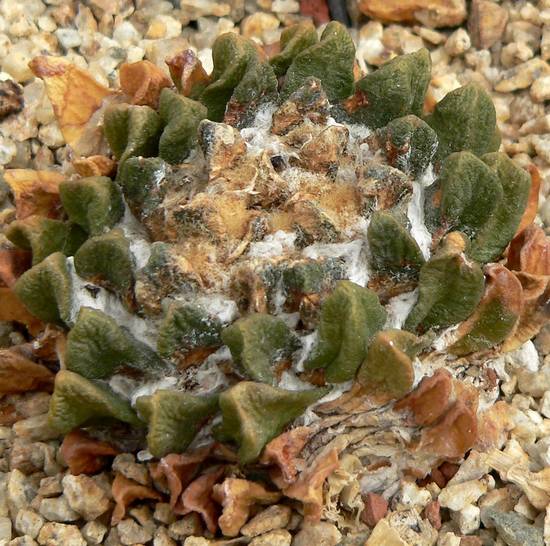
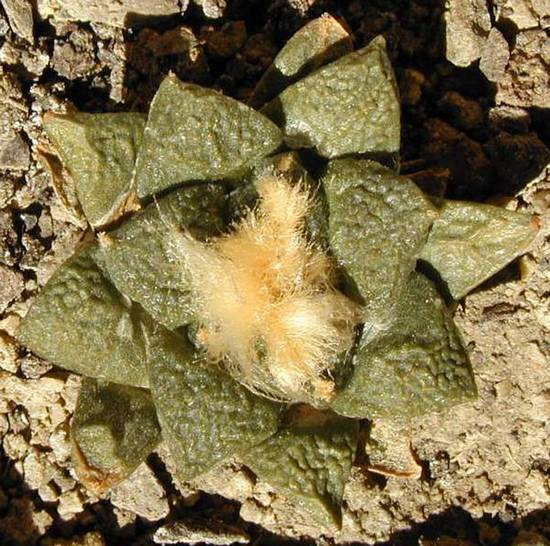
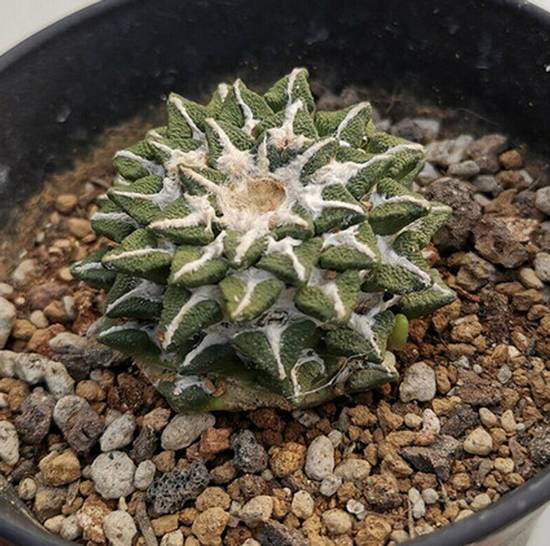
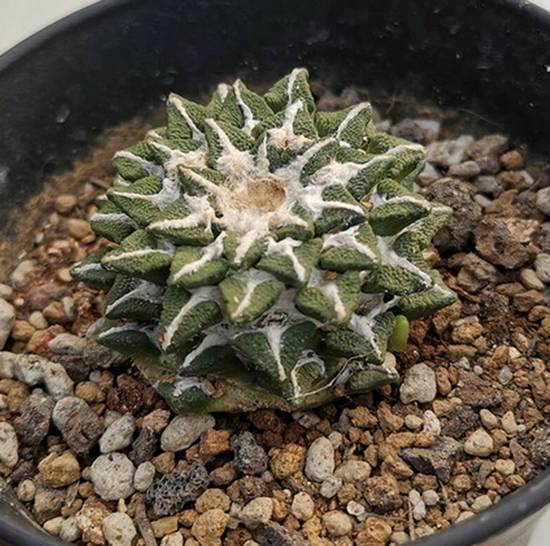
The Ariocarpus Kotschoubeyanus is a small botanical jewel, discreet in size but exceptional in beauty. It is one of the smallest representatives of the Ariocarpus genus, measuring only a few centimeters in diameter at maturity. Its star-shaped form and finely arranged flattened tubercles in a rosette give it the appearance of a mineral embroidery.
Unlike other desert cacti, it has no spines and its growth is very slow. Its colors range from olive green to purplish brown depending on exposure, age, and growing conditions. Although rare, it is highly sought after for its graphic form and its striking flowers that surprise on such a discreet body.
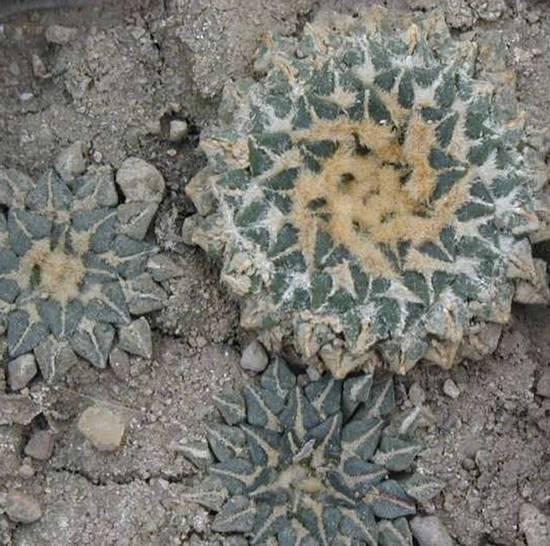
The Ariocarpus Kotschoubeyanus naturally grows in the desert plains of northeastern Mexico (San Luis Potosí, Nuevo León, Tamaulipas).
It lives in clay or gypsum soils, often partially buried to protect itself from extreme conditions. Its ability to blend in with the soil is a survival strategy against herbivores and heat.
This cactus requires good brightness but tolerates moderate indirect light:
🌞 Exposure: full sun or bright partial shade
🌤️ Tip: bright light promotes flowering and a compact form
🌞 Exposure: full sun or bright partial shade
🌤️ Tip: bright light promotes flowering and a compact form
Its small root volume makes watering delicate:
🌱 Spring / summer: very moderate watering every 3 to 4 weeks
🍂 Autumn / winter: never water to avoid rot
⚠️ It is better to deprive it of water than to risk excessive humidity
🌱 Spring / summer: very moderate watering every 3 to 4 weeks
🍂 Autumn / winter: never water to avoid rot
⚠️ It is better to deprive it of water than to risk excessive humidity
The Ariocarpus Kotschoubeyanus tolerates heat well, but fears cold humidity:
🌡️ Ideal: 20 to 30°C
❄️ Minimum: 5°C when dry — bring indoors in winter to a cool and bright room
🌡️ Ideal: 20 to 30°C
❄️ Minimum: 5°C when dry — bring indoors in winter to a cool and bright room
A mineral substrate is essential to avoid suffocating its delicate roots:
🪨 Recommended mix: 60% pumice + 30% pozzolana + 10% cactus potting soil
🪨 Recommended mix: 60% pumice + 30% pozzolana + 10% cactus potting soil
The flowering of the Ariocarpus Kotschoubeyanus is spectacular considering its small size:
🌸 Season: autumn, between September and November
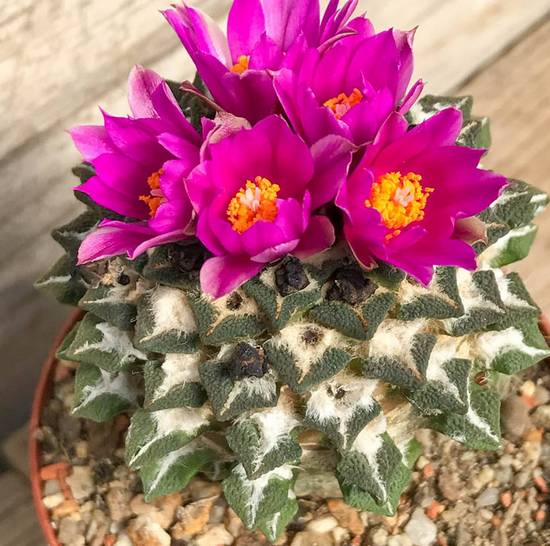
🎨 Color: bright pink to magenta
🕑 Duration: 2 to 4 days
💡 A slight stress (heat, dry substrate) at the end of summer can stimulate the appearance of flowers
🌸 Season: autumn, between September and November
🎨 Color: bright pink to magenta
🕑 Duration: 2 to 4 days
💡 A slight stress (heat, dry substrate) at the end of summer can stimulate the appearance of flowers
FAQ - Ariocarpus Kotschoubeyanus
Why is Ariocarpus Kotschoubeyanus so difficult to find in garden centers?
Its very slow growth and specific requirements make its production long and expensive. It is often reserved for collectors or sold by nurseries specialized in rare cacti.
How to successfully germinate Ariocarpus Kotschoubeyanus seeds?
Sow in a very fine mineral substrate, maintain constant warmth around 25 °C, and avoid any excess moisture. Germination is slow (15 to 45 days) and the seedlings are very fragile at first.
How to know if Ariocarpus Kotschoubeyanus lacks water?
Its tubercles may appear slightly shriveled or dull. A subtle loss of turgidity may indicate that light watering is necessary, only in summer.
How to recognize excess moisture in an Ariocarpus Kotschoubeyanus?
Excess water causes softening at the base, translucent or black spots, and general collapse. At this stage, watering must be stopped immediately and repotting in dry substrate should be considered.
Can Ariocarpus Kotschoubeyanus be grown indoors all year round?
Yes, but only if the plant receives very strong light, such as behind a south-facing window. In case of low light, a grow light is recommended to avoid etiolation.
What is the lifespan of an Ariocarpus Kotschoubeyanus?
This cactus is extremely long-lived. With good growing conditions, it can live 30 to 50 years, or even more, while maintaining its compact shape.
Does Ariocarpus Kotschoubeyanus need fertilizer?
Yes, but very lightly. A liquid cactus fertilizer diluted to ¼ strength once a month in summer is more than enough. Never fertilize in winter.
Can it be grown in a very small pot?
Yes, it is even recommended. Its root system being poorly developed, a small terracotta pot is sufficient, with a draining and dry substrate.
Is it a good choice to start with Ariocarpus?
Yes and no. It is more resistant than some other species of the genus, but still requires great rigor in watering and exposure. It is better suited to an informed amateur than to a true beginner.
What is the typical flowering of Ariocarpus Kotschoubeyanus?
Bright pink flowers emerging from the center of the rosette in autumn. They strongly contrast with the small size of the plant, offering a striking display on such a small surface.