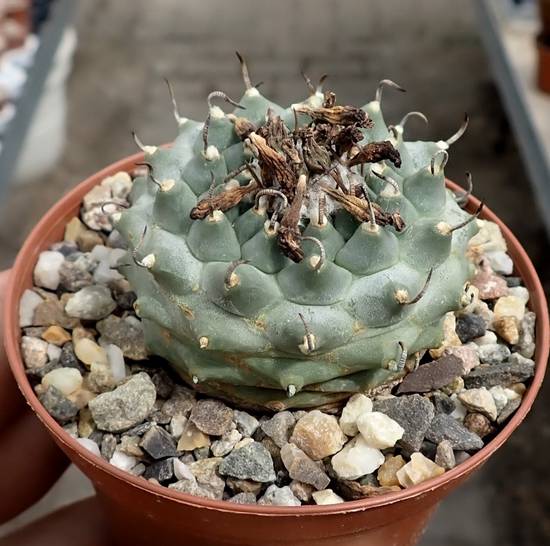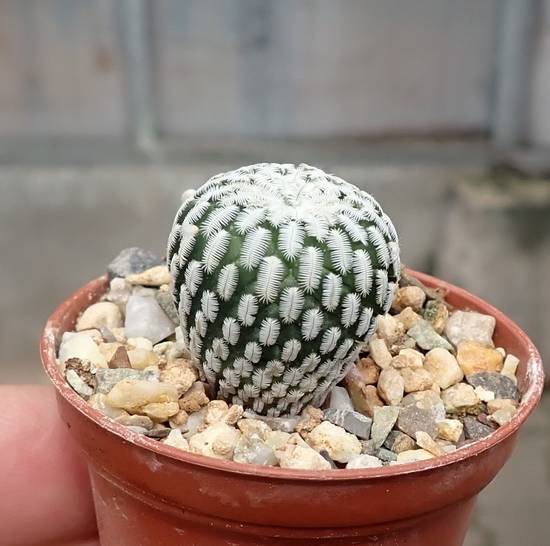
Turbinicarpus Valdezianus
Cristata

Turbinicarpus Valdezianus Cristata

Turbinicarpus Valdezianus Cristata

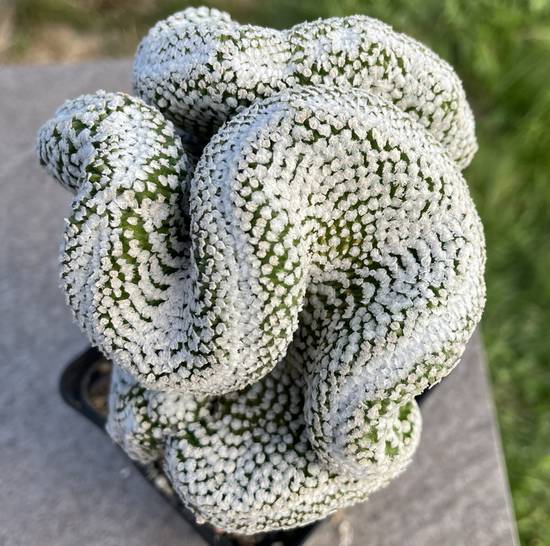
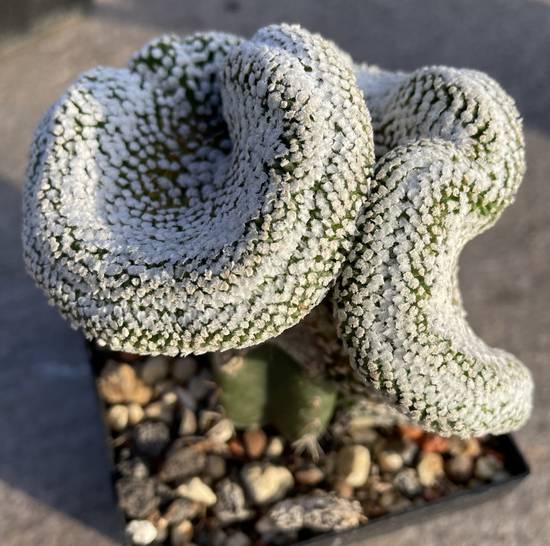
The Turbinicarpus Valdezianus Cristata is a rare and fascinating form of the famous miniature Mexican cactus. Unlike the typical form, this “crested” mutation does not develop a classic rounded body, but instead forms sinuous crests that unfold like small mineral waves. This genetic mutation creates a captivating visual effect, highly prized by collectors and enthusiasts of unusual botanical forms.

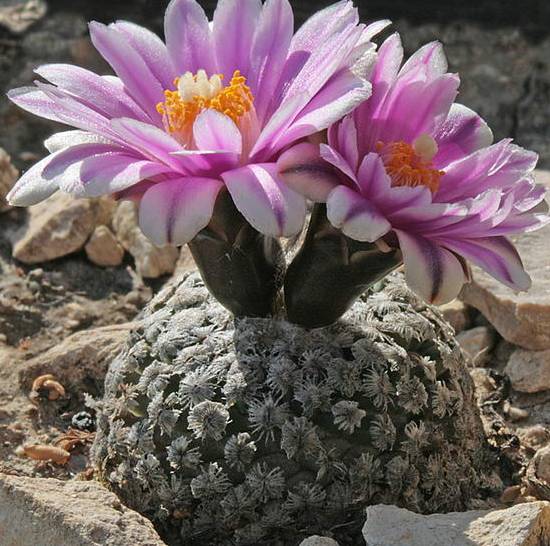
Its surface is covered with a whitish down made of fine, soft spines, giving the impression of a sculpted snow cushion. Its small size, delicate flowers, and unusual crested structure make it a choice cactus, both for display and precision cultivation.

Like all Turbinicarpus, it remains very compact, rarely exceeding a few centimeters in height, but the crested form can spread laterally by developing new lines and unpredictable branching over time.

The Turbinicarpus Valdezianus Cristata originates from spontaneous mutations observed in botanical collections. It descends from the botanical form native to northeastern Mexico, particularly in the arid regions of Coahuila and San Luis Potosí. The crested form does not exist in the wild, but reflects the extraordinary morphological plasticity of this species.
Like the standard form, this crested mutation requires bright light to maintain its compact shape.

🌤️ Indoors: Bright indirect light or filtered morning sun.

🌞 Outdoors: Gentle sun, avoiding extreme heat waves. Take care not to burn the delicate exposed tissues.
Its crested structure requires increased attention to moisture.

💧 Spring / Summer: Light watering every 3 to 4 weeks, only when the substrate is completely dry.

🍂 Winter: No watering. Vegetative rest is essential to prevent rot.

⚠️ Advice: Water at the base, avoiding wetting the woolly crests to prevent fungal issues.
The Turbinicarpus Valdezianus Cristata tolerates temperature variations but requires very dry conditions.

🌡️ Ideal: Between 20 and 28 °C.

❄️ Minimum: 5 °C when dry. Protect from cold humidity.

🏠 Wintering: Light and dry air provide ideal winter conditions.
The soil must be mineral, light, and perfectly draining.

🪨 Recommended mix: 30 % cactus potting soil + 70 % minerals (pumice, limestone sand, perlite).

💡 Tip: Place a drainage layer at the bottom of the pot.
Despite its mutation, this cactus retains its ability to flower.

🌸 Flowering: March to May. Pale pink flowers with yellow centers, often several times per season.

🎯 Optimal conditions: Dry winter rest, good light, and optionally a moderate feeding.
FAQ - Turbinicarpus Valdezianus Cristata

Is Turbinicarpus Valdezianus Cristata more fragile than the classic form?
Yes, its crested form retains more moisture and is more prone to rot.
How should Turbinicarpus Valdezianus Cristata be watered?
Water only in summer, at the base, every 25 to 30 days.
What substrate for Turbinicarpus Valdezianus Cristata?
A well-draining mineral mix is essential.
Can Turbinicarpus Valdezianus Cristata be exposed to full sun?
Yes, but only with gradual acclimatization to avoid burns.
Should Turbinicarpus Valdezianus Cristata be fertilized?
Yes, in spring, with a light cactus fertilizer.
Does the crested form also flower?
Yes, although a bit less frequently. The flowers are pink, small but numerous.
Which pot should be chosen for Turbinicarpus Valdezianus Cristata?
A shallow pot with mineral mulch on the surface to stabilize moisture.
Is cristation natural?
Yes, it is a spontaneous mutation. It can occur naturally or through cultivation.
Is this cactus suitable for beginners?
No, it is more suited to enthusiasts who already have good experience with sensitive cacti.
Where should this cactus be placed indoors?
Near a south-facing bay window or under a suitable grow light.