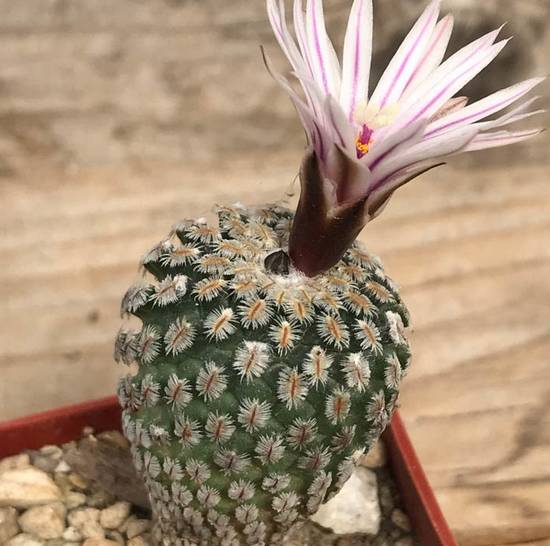
Turbinicarpus Pseudopectinatus

Turbinicarpus Pseudopectinatus

Turbinicarpus Pseudopectinatus

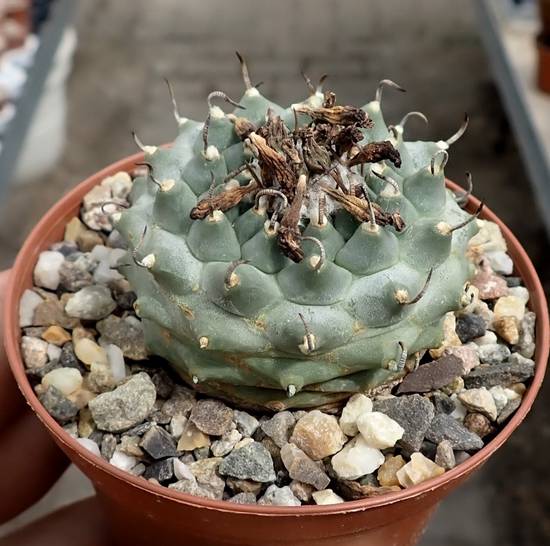
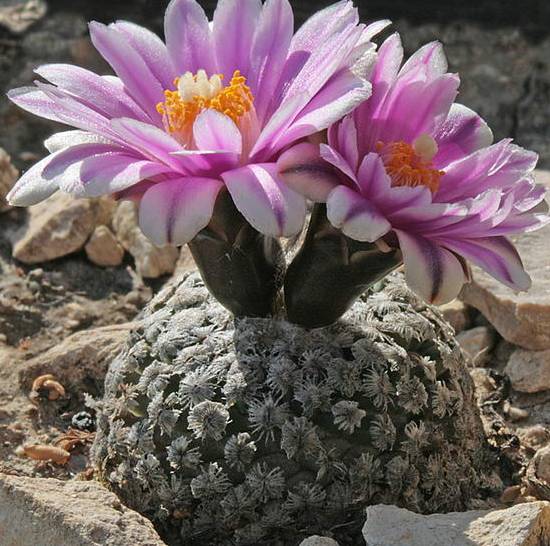
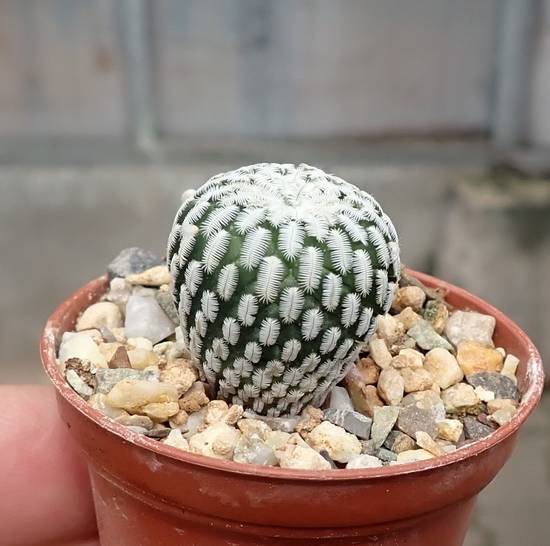
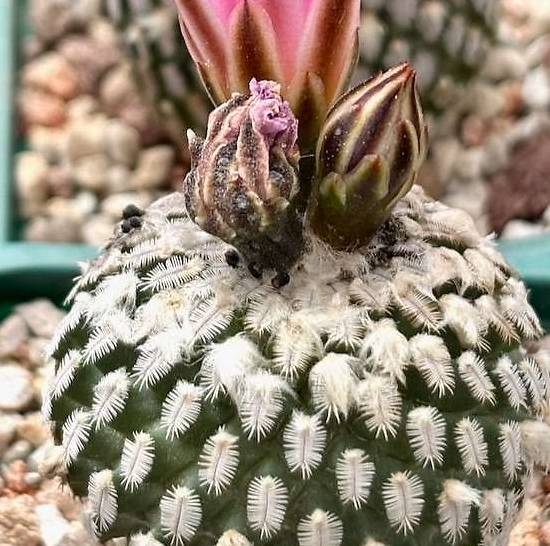
The Turbinicarpus Pseudopectinatus is a small globular cactus that has become iconic among collectors: almost erased ribs, fine tubercles, and tight pectinate spines forming a silky halo around the body. Growth is slow but steady if you follow its golden rule: plenty of light, little water, and a very mineral substrate. At maturity, it crowns itself in spring with pale pink to magenta flowers, often striped with a darker midline — an irresistible contrast against the bluish grey-green epidermis.

Its taproot enjoys exploring a rocky, poor but airy mix. In pots, choose a narrow and deep container, a substantial drainage layer, and a mineral blend that dries quickly. Turbinicarpus Pseudopectinatus poorly tolerates stagnant moisture: a thorough watering followed by a long dry rest is far better than frequent small amounts.

Native to northeastern Mexico (semi-desert limestone areas), Turbinicarpus Pseudopectinatus nestles in mineral fissures where rainfall is brief and ventilation constant. In cultivation, mimic these conditions with a highly draining substrate, generous sunlight and slightly cooler nights in spring.
To maintain its compact shape and highlight its pectinate spines, Turbinicarpus Pseudopectinatus needs strong but well-balanced light.

🌞 Outdoors: 5–6 h of gentle direct sun (morning/late afternoon), bright light the rest of the day.

🌤️ Summer: filter during the hottest hours behind south-facing glass.

🏠 Indoors: very bright south/east windowsill or grow lights; avoid shade which elongates the body.
Accustomed to brief showers followed by long dry periods, Turbinicarpus Pseudopectinatus prefers thorough but spaced watering on a completely dry mix.

🌱 Spring/Summer: every 2–3 weeks only if the substrate is fully dry at depth.

🍂 Autumn/Winter: dry (or almost); cold moisture is its number one enemy.

Tip: a mineral-rich mix speeds drying and protects fine roots.
Small body, high standards: Turbinicarpus Pseudopectinatus thrives in warmth but fears cold dampness.

🌡️ Ideal: 18–28 °C with good ventilation.

❄️ Minimum: 5 °C when dry (some strains tolerate slightly less), but no frost.

🏠 Rest: bright, cool and almost dry winter to program flowering.
To imitate its limestone screes, Turbinicarpus Pseudopectinatus requires a very mineral and ultra-draining mix.

🪨 Recommended base: cactus soil mixed with 60–70% minerals: coarse sand, perlite and pozzolana. A gravel/pozzolana top dressing limits splashing and keeps the collar dry.
When days lengthen and winter rest has been respected, Turbinicarpus Pseudopectinatus adorns itself with a delicate crown of flowers lasting several days and appearing successively over weeks.

🌸 Period: late winter to spring, sometimes again in summer under mild climates.

🎨 Shades: pale pink to magenta, often with darker midline; yellow center.

🕑 Keys: generous sun, cool dry rest, light low-nitrogen feeding during the growing season.
FAQ - Turbinicarpus Pseudopectinatus

How to trigger flowering of Turbinicarpus Pseudopectinatus?
Provide a bright, cool winter rest, almost dry, then strong light in spring with light applications of cactus fertilizer every 4 weeks.
What is the ideal substrate for Turbinicarpus Pseudopectinatus in a small pot (5–7 cm)?
A cactus potting soil mixed 60–70% with minerals: perlite + pumice for rapid drying.
How often should Turbinicarpus Pseudopectinatus be watered in summer?
Every 2–3 weeks after complete drying; perlite speeds up drying between waterings.
Can Turbinicarpus Pseudopectinatus live only indoors?
Yes, near a very bright south/east-facing window or under a grow light, in an airy mix based on cactus potting soil + minerals.
What is the minimum temperature for Turbinicarpus Pseudopectinatus?
Ideally not below 5 °C and always kept dry if temperatures drop; a top dressing of pumice limits cold moisture at the crown.
Which fertilizer should be used for Turbinicarpus Pseudopectinatus without swelling the tissues?
A low-nitrogen, diluted fertilizer such as liquid cactus fertilizer, once per month during the growing season, on moist substrate.
How to repot Turbinicarpus Pseudopectinatus without damaging the taproot?
Use a slightly larger pot and a very mineral fresh mix; add perlite + pumice; first watering 5–7 days later.
Is Turbinicarpus Pseudopectinatus suitable for beginners?
Yes, if strong light, spaced watering and a mineral substrate are respected; a light fertilizer helps during the active season.
How to propagate Turbinicarpus Pseudopectinatus?
Sow in a very well-draining tray (cactus soil + perlite), with gentle warmth and filtered light; moderate misting.
What mistakes should be avoided with Turbinicarpus Pseudopectinatus?
Avoid oversized pots, frequent watering and heavy organic mixes; prefer a mineral substrate and an occasional boost of very diluted succulent fertilizer in spring.