Mangave Mission to Mars

Mangave Mission to Mars

Mangave Mission to Mars

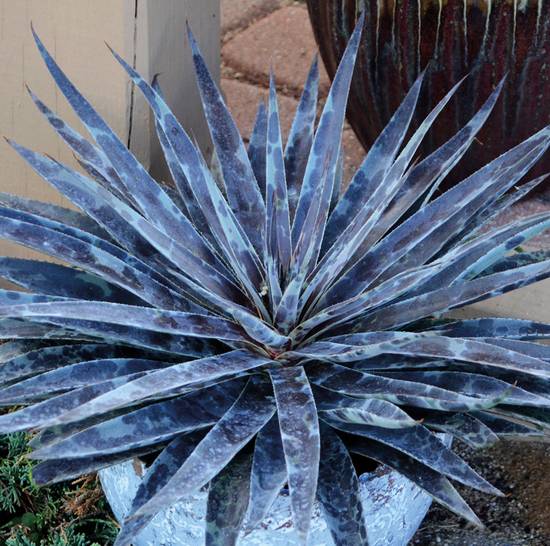
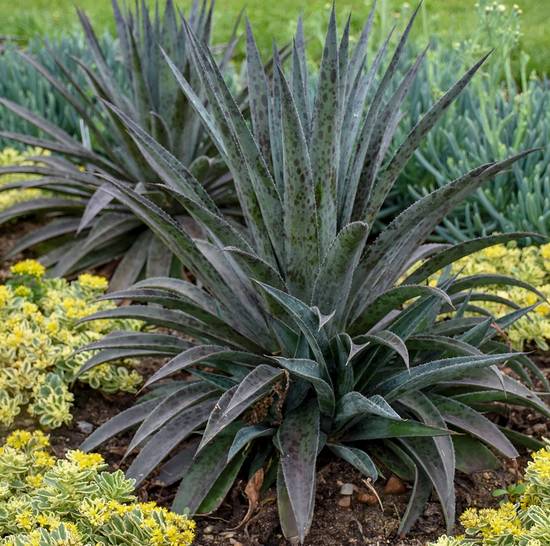
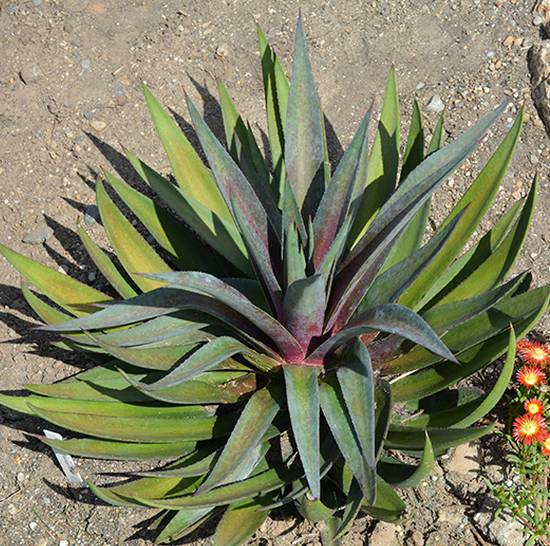
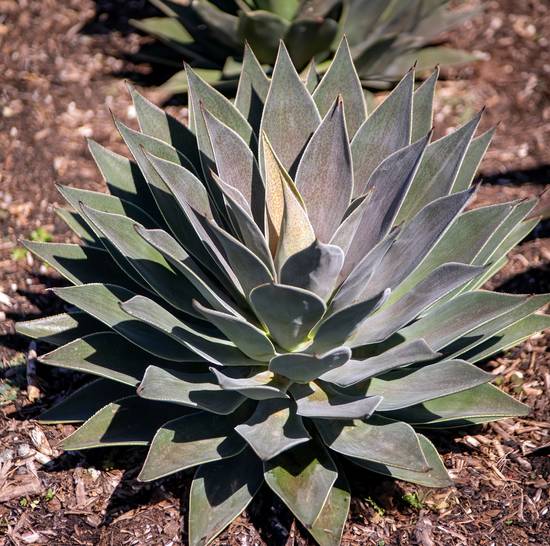
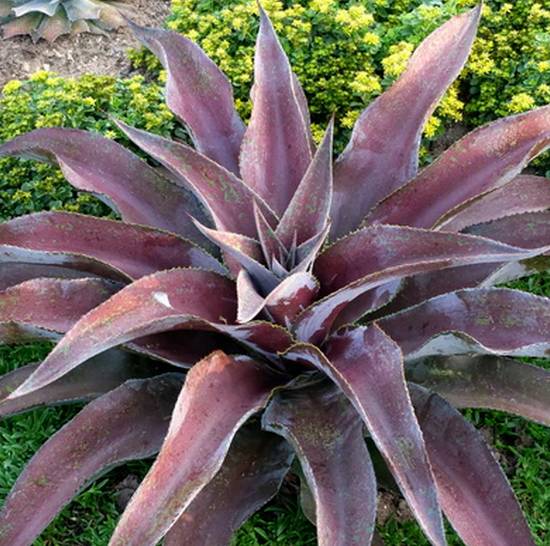
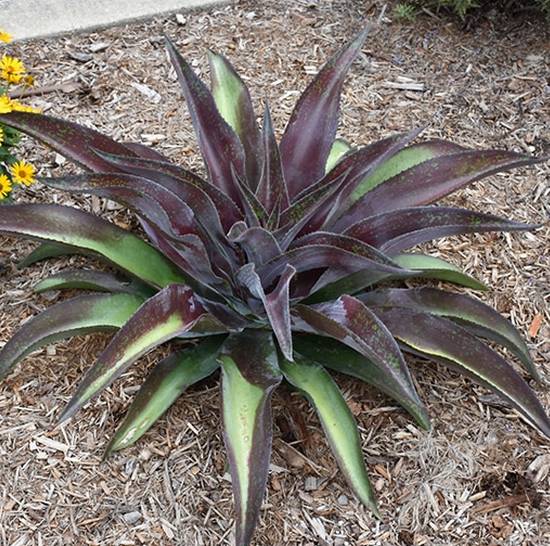
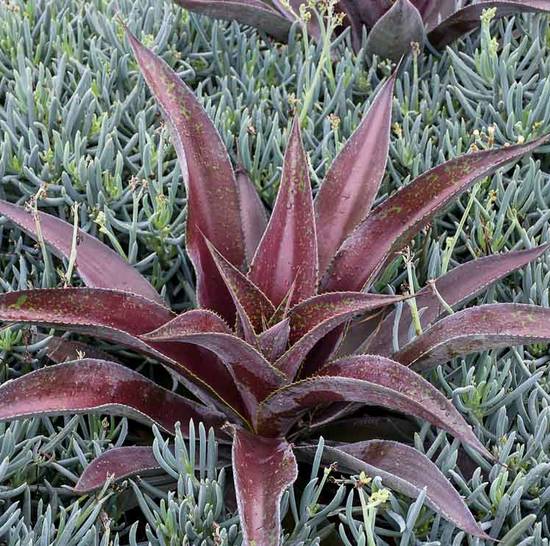
The Mangave Mission to Mars is a spectacular succulent with brick-red foliage speckled with dark purple, evoking the imaginary landscapes of the planet Mars. This hybrid plant, resulting from the cross between an Agave and a Manfreda, captivates with its intense color, dense texture and flared, graphic rosette shape. Each leaf, slightly wavy along the edges and sometimes bordered with small soft teeth, gives the plant a character that is both wild and futuristic.

The reddish shade intensifies under strong sunlight, making it a dynamic plant with evolving character. With relatively fast growth for a succulent, Mangave Mission to Mars can reach around 45 cm in height and 60 cm in spread. In pots or in the ground (in mild climates), it quickly becomes a focal point in a landscape composition.

This plant does not exist in the wild. Mangave Mission to Mars is an American horticultural creation, designed in the laboratories of Hans Hansen, a specialist in succulent hybrids. It is part of a series of modern cultivars with striking appearances, designed for dry gardens as well as bright interiors.
Good sunlight is the key to enhancing its intense red color:

🌞 Full sun : 6 to 8 hours of sun per day strengthen pigments and stimulate compact growth.

🌤️ Partial shade : Tolerated, but the color will be less vivid and the habit more spread out.
Mangave Mission to Mars follows the classic needs of a succulent, with moderate watering:

💧 Summer : Water every 15 to 20 days when the substrate is completely dry.

❄️ Winter : Stop watering or space it widely to avoid any risk of root rot.
It loves heat and tolerates occasional cooler temperatures:

🌡️ Ideal : Between 20°C and 30°C during the growing period.

❄️ Cold resistance : Down to -4°C in dry substrate, but protect in case of prolonged frost.
To ensure perfect drainage, a lightened substrate is essential:

🪨 Use a good cactus substrate enriched with perlite to promote aeration and pozzolana to stabilize moisture and improve drainage. Avoid soils that are too rich or clayey.
Rare in cultivation, flowering is discreet but interesting:

🌸 When : Generally at maturity, in summer.

🎨 Color : Tubular flowers beige to pale pink, borne on a long and slender stalk.

💡 Note : After flowering, the rosette may decline, but new offsets ensure continuity.
FAQ - Mangave Mission to Mars

What type of substrate should be used for Mangave Mission to Mars?
Mangave Mission to Mars requires a very well-draining substrate, supplemented with perlite to improve airflow and a bit of pumice to stabilize the soil.
How should Mangave Mission to Mars be watered properly?
During warm periods, water only when the soil is dry deep down. Avoid wetting the leaves. In winter, drastically reduce watering as the plant enters dormancy.
Is Mangave Mission to Mars cold hardy?
It tolerates brief light frost down to -4°C, but the substrate must remain dry. In cold or humid climates, it is best grown in a pot and brought indoors.
Why is my Mangave Mission to Mars turning green?
Lack of light is the main cause. Place it in full sun or increase exposure time to restore its beautiful red tones.
How can flowering be stimulated in Mangave Mission to Mars?
Flowering requires a mature, well-established plant exposed to full sun and subjected to slight water stress. It may take several years.
What fertilizer should be used for Mangave Mission to Mars?
Choose a low-dose cactus fertilizer, applied once a month during the growing season.
Can Mangave Mission to Mars be propagated?
Yes, by separating offsets that appear at the base of the rosette after a few years. Use well-draining substrate when replanting.
What are the signs of overwatering in Mangave Mission to Mars?
Leaves that yellow, soften, or turn black are warning signs. Stop watering and let the substrate dry thoroughly before resuming.
Can Mangave Mission to Mars grow indoors?
Yes, provided it is placed in a very bright location near a south- or west-facing window. Without enough light, it will lose its vibrant color.
Is Mangave Mission to Mars suitable for beginners?
Absolutely! It is a robust, low-maintenance plant, perfect for discovering the world of succulents while enjoying a bold aesthetic.