Espostoa Lanata
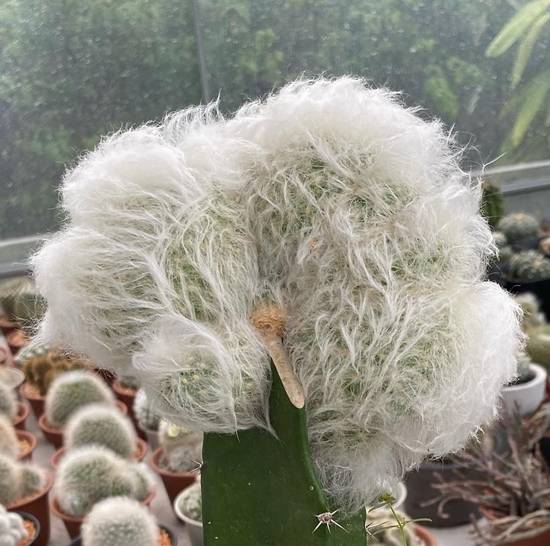
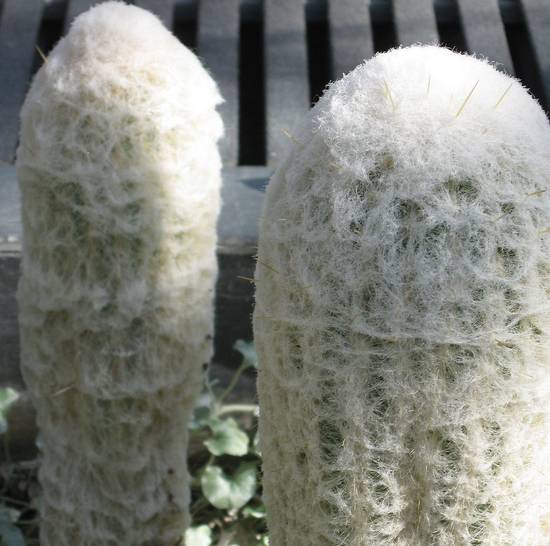
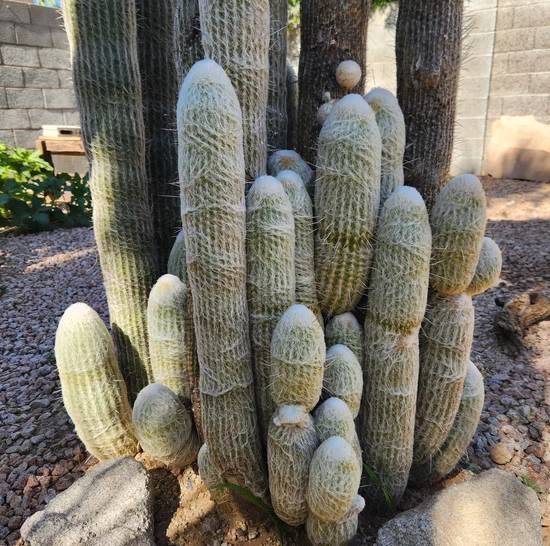
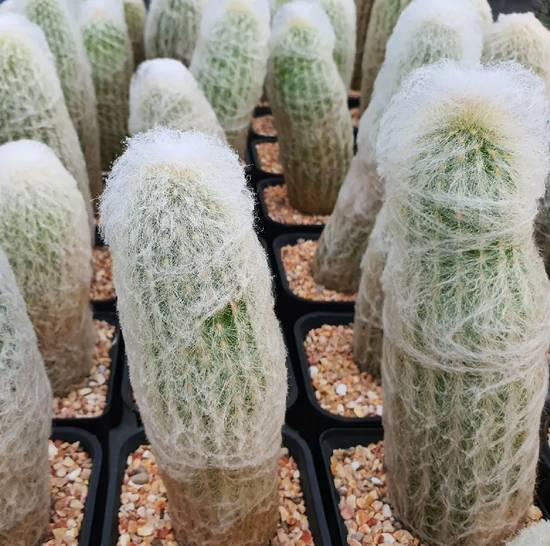
The Espostoa Lanata, sometimes nicknamed the "Old Man of Peru", is a spectacular columnar cactus admired for its tall silhouette and dense white woolly coat. Native to South America, it belongs to the Cactaceae family and naturally grows on arid, rocky Andean slopes. Its abundant hair is not only decorative: it protects the plant from intense sunlight and strong temperature variations in its native habitat.
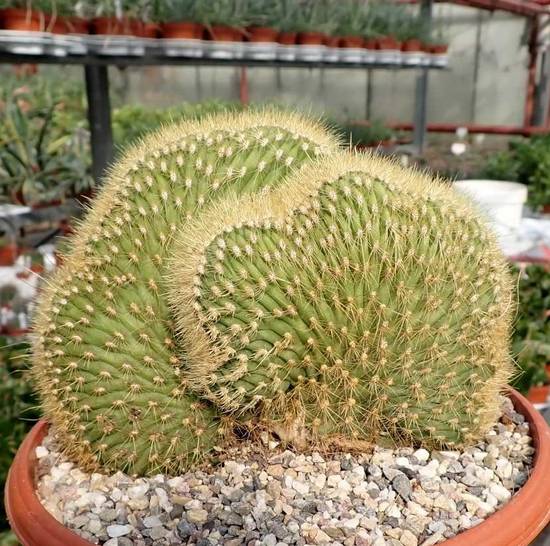
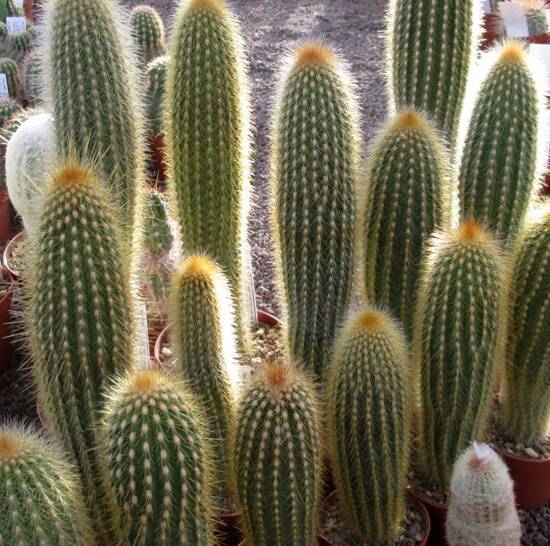
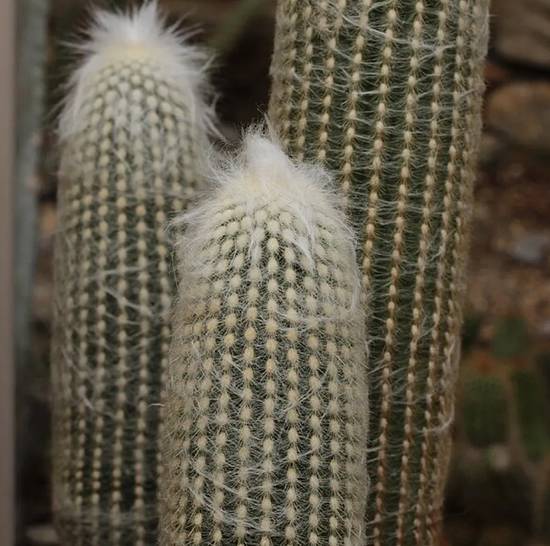
The cactus body is cylindrical, usually bluish-green beneath its woolly covering. In its natural environment, it can reach several meters in height, but remains more compact in pots, generally between 80 cm and 1.5 m. It is marked by numerous pronounced ribs bearing areoles densely covered with silky white hairs and sometimes hidden rigid spines.
Its growth is slow but steady, making it a long-lasting companion for lovers of large, graphic cacti. With age, Espostoa Lanata may develop a flowering zone called a cephalium, from which tubular nocturnal flowers emerge.
🌞 Outdoors: Full sun for at least 6 hours per day. It can be grown on a sheltered balcony or terrace.
🌤️ Indoors: Place it near a south-facing window. Lack of light may cause thinner stems and reduced wool density.
⚠️ Warning: Gradually acclimate it to spring sunlight to avoid sunburn.
🌱 Spring to summer: Water every 2 to 3 weeks, once the substrate is completely dry.
🍂 Autumn to winter: Stop watering if the plant is overwintered in cool conditions.
💧 Tip: Water at the base to avoid wetting the wool, which may encourage fungal issues.
🌡️ Optimal temperature: 20 to 30°C.
❄️ Minimum tolerance: 5°C when dry. It does not tolerate frost.
🏠 Overwintering: Place it in a cool, bright room without watering to simulate its rest period.
🌵 Recommended mix: 60% mineral components (pumice, coarse sand, perlite) + 40% cactus soil.
🪨 Drainage: Add a drainage layer at the bottom and surface of the pot.
🌸 Season: Summer, mainly at night.
🎨 Flowers: Tubular, white to pale pink, emerging from the woolly cephalium.
💡 Encouraging flowering: Provide a cool, dry winter rest and abundant light.